Why startup hiring hinges on founder grit and 'naughtiness'
The gist
Startup hiring success hinges less on pedigrees and more on founder grit, creative 'naughtiness,' and a relentless focus on cultural fit over credentials.
What to know
- Founders like Brian Halligan and Ben Horowitz argue that traits like decisiveness, self-awareness, and even a dash of rule-bending are essential for building resilient, high-performing teams.
- Practical frameworks—like LOCKS and psychometric DNA profiles—help startups hire for humility, growth mindset, and mission alignment, often using trial projects, tough references, and unconventional interviews.
- Real-world examples from Zipline and SeatGeek show that prioritizing passion and swiftly firing poor fits, rather than clinging to impressive resumes, is critical to avoiding cultural drift as startups scale.
Founder DNA Drives Teams
Startup team resilience hinges on founders who embrace diverse personalities, unconventional thinking, and psychometric self-awareness—traits that shape hiring far more than traditional credentials.
Founder traits profoundly shape hiring decisions and team dynamics, as exemplified by Brian Halligan's LOCKS framework and his advocacy for hiring 'spicy' candidates who bring distinctive personalities rather than consensus picks, fostering diverse and complementary teams akin to the 2004 Red Sox model. This approach underscores the importance of leadership styles that embrace diversity and challenge conventional norms to build resilient, high-performing startup teams.
Self-awareness and original thinking emerge as critical founder traits for attracting top talent and effective leadership, with Ben Horowitz emphasizing that great founders 'think for themselves' and lead by inspiring curiosity and followership. Horowitz also cautions against early-stage dual leadership structures like having a COO, advocating instead for flatter organizations where the founder’s leadership style directly influences talent density and company momentum.
Psychometric assessments such as the Founder DNA Profile have become pivotal tools for founders and investors alike, providing objective insights into six core traits—grit, discipline, self-belief, execution, leadership, and vision—that often outweigh market or product factors in predicting startup success. Leading VCs like EQT Ventures and Antler leverage these profiles to identify psychologically resilient founders, enabling deliberate team building with complementary trait mixes and avoiding costly cultural or leadership misalignments before equity splits or hiring decisions are finalized.
Beyond raw determination, which founders often overestimate, execution and 'naughtiness'—a measure of resourcefulness and rule-bending creativity—are decisive traits that YC and other top accelerators prioritize in founder evaluations. Founders who demonstrate hyper-specific, honest reflections on challenges, domain expertise born from lived experience, and leadership qualities that foster candidness and intellectual rigor are more likely to build effective teams and secure funding, as Paul Graham notes that founders must be people others want to 'go to war alongside.'
Marlon Nichols highlights that successful founders must be talent magnets, prolific in sales, adept in product management, and possess technical knowledge to build strong teams and navigate tough periods effectively. This multifaceted skill set, combined with self-awareness and a leadership style that aligns with team needs, is crucial for startup resilience and long-term success, reinforcing the theme that founder traits directly impact hiring quality and team cohesion.
Practical hiring pitfalls reveal that founders often err by 'logo shopping'—overvaluing candidates from prestigious companies rather than assessing actual performance and cultural fit through trial tasks and communication. Founders like Jasper advocate for hiring based on demonstrated capabilities rather than resumes, emphasizing the importance of matching candidate seniority to company stage and clearly communicating role expectations to avoid early turnover and dissatisfaction.
Decisiveness under uncertainty stands out as the most critical founder trait for effective team building and scaling, as Brian Elliott, a former US Army Ranger and CEO, asserts that founders must own decisions despite limited information. The dichotomy between 'Nevered' founders, who leverage youthful naivety for bold moves, and 'Weathered' founders, who apply experience and pattern recognition, illustrates how different founder archetypes can succeed. However, as companies grow, founders like Melanie Perkins of Canva demonstrate the necessity of evolving leadership from generalist operators to managers who bring in specialists to sustain scaling.





Culture Embedded in Hiring
Founders instill startup culture by prioritizing humility, relentless curiosity, and deep mission alignment through hands-on interviews and ownership-focused hiring, not just by stating values.
Founders embed startup culture by prioritizing humility, growth mindset, and curiosity over raw intelligence or credentials, fostering a team environment where self-critical honesty and continuous improvement are valued. For example, Zipline’s Keller Clifton emphasizes hiring practical problem solvers with low ego who rapidly learn and adapt, while Sierra combines seasoned executives with young, high-agency talent to blend experience with competitive intensity. Interview techniques such as storytelling about life decisions, unique curiosity exercises, and blind references help founders assess candidates’ intrinsic motivation, ownership mentality, and cultural fit beyond traditional resumes.
Mission alignment and ownership mentality are central to embedding startup culture through hiring, with founders like those at True Foundry and Legora ensuring every new hire deeply believes in the vision and embraces a founder mindset from day one. This cultural embedding is reinforced by founders’ continued involvement in hiring, founder interviews for all candidates, and by giving employees whole problems to own, reducing micromanagement and fostering accountability. As Baseten’s CEO notes, a clear cultural rubric helps identify aligned candidates and minimize turnover, while Block Party’s founder highlights the challenge of finding hires truly resonant with the mission outside traditional networks.
Embedding culture requires more than formal values; it lives in daily actions, leadership modeling, and consistent hiring practices that test accountability, curiosity, and team perspective. As articulated in April 2026 analyses, interviews serve as cultural artifacts that not only evaluate candidates but also signal the company’s true values, with founders paying close attention to how candidates take responsibility and respond to feedback. Small social interactions and immersive onboarding, such as co-locating teams or having new hires live alongside existing staff, further reinforce belonging and cultural alignment, especially in distributed or hardware-focused startups like Zipline and Legora.
Founders sustain and scale startup culture by making highly selective, values-driven hiring decisions that prioritize attitude, coachability, and mission obsession over impressive resumes or prior company prestige. This approach includes rigorous reference checks—sometimes even unlisted ones as Netskope’s Sanjay Beri does—and unconventional interview methods to reveal true personality and cultural fit. Leaders like Hala Jawwani of Rivio emphasize trusted leadership hires who can propagate culture as the company grows, while others adopt slow-to-hire, quick-to-fire strategies to protect culture. The discipline to say 'no' to high producers who don’t align culturally ensures long-term cohesion and signals to the team that culture is paramount.




Hiring Beyond Resumes
Rigorous, role-specific hiring processes—trial projects, behavioral interviews, and team veto power—help founders avoid costly mis-hires by testing for real-world fit and startup grit.
Founders often falter in hiring when they lack a deep understanding of the specific roles they are filling, particularly in areas like sales where cultural and mindset differences from engineering are stark. Ben Horowitz highlights this challenge, noting that CEOs sometimes err by hiring candidates who fit an engineering mold rather than true sales talent, underscoring the importance of founders immersing themselves in the role—trying it firsthand or consulting experienced CEOs—to grasp its unique demands and set clear performance expectations such as commission-based incentives.
Practical hiring frameworks increasingly emphasize trial periods and project-based assessments as vital tools to reduce mis-hires and improve fit. Sierra’s blend of senior enterprise-experienced hires with high-agency young talent, Zipline’s focus on innate traits like practical problem-solving and low ego, and Legora’s insistence on collaborative engineers illustrate the power of combining cultural and role-specific evaluations. These approaches allow founders to observe candidates in real work scenarios, ensuring alignment with both tactical requirements and startup grit before full commitment.
Structured and repeatable hiring processes that integrate behavioral interviewing, standardized scorecards, and multi-step evaluations including cognitive tests, video submissions, and paid test projects significantly enhance candidate assessment. As demonstrated by founders like Jasper Carmichael-Jack and companies employing the MOC (Missions, Outcomes, Competencies) framework, these methods clarify role expectations and provide objective data on candidate capabilities and cultural fit. Moreover, involving the existing team with veto power fosters ownership and improves new hire integration.
A critical yet often overlooked aspect of practical hiring is the willingness to 'hire slowly and fire fast,' a principle echoed by leaders like Chuck Robbins and Keith Rabois. This approach balances thorough evaluation—through trial periods, reference checks including off-list contacts as practiced by Netskope CEO Sanjay Beri, and blameless retrospectives on hiring failures—with swift action to remove mis-hires before they erode team dynamics. Founders who embrace this mindset maintain high standards and continuously refine their hiring processes, recognizing that even top managers only get about 75% of hires right and that ongoing calibration is essential as startups scale.




Outcome Over Process
Founder-CEOs win loyalty and drive results by owning outcomes and fostering radical candor, not by managing process minutiae or relying solely on polished managerial skills.
Founder-CEOs often distinguish themselves by prioritizing outcome responsibility over traditional process management, as Kaz Nejatian of OpenDoor explains, emphasizing that while professional managers focus on appearances and process, founders own the ultimate results. This leadership style, though sometimes lacking in conventional management skills, earns respect and loyalty from teams who value vision and decisive action over micromanagement, illustrating a nuanced balance between leadership and management in startup scaling.
Building and scaling a world-class executive team is less a milestone and more the core journey of startup growth, requiring founders to assemble leaders who combine grit, adaptability, and a growth mindset rather than relying solely on pedigree. This team must cultivate a culture of psychological safety paired with radical candor, where open debate and dissent are normalized and leveraged as tools for clarity, with founders setting the tone by actively inviting and thoughtfully responding to challenges, thereby fostering alignment and operational excellence.
As startups scale, founders face the critical challenge of evolving leadership roles and team dynamics, necessitating clear role ownership and alignment to prevent dysfunction and competing priorities, especially within product teams. This evolution demands deliberate hiring strategies that emphasize potential and cultural fit over mere experience, alongside ongoing development and tough decisions around role transitions, as highlighted by Keith Cowing and others who stress continuous candid communication and trust as foundational to sustaining growth and operational coherence.
Successful scaling hinges on founders’ ability to upgrade and realign their executive teams in step with company growth, a process that involves balancing internal promotions with external hires to blend institutional knowledge and fresh perspectives. Leaders like Mark Smucker and Tigran Sloyan advocate for disciplined role-by-role assessments and upskilling, while Hala Jawwani and others underscore the importance of trusted culture carriers who can grow into broader leadership roles, ensuring continuity and preserving company culture amid rapid expansion.



Ownership Mindset at Scale
Delegating outcomes instead of tasks and enforcing high standards for accountability enables founders to build independent, resilient teams and avoid the trap of micromanagement.
By early 2026, thought leaders like Kaz Nejatian emphasized that founders must anchor their leadership in owning outcomes rather than micromanaging processes, delegating operational design to trusted team members such as a COO to foster accountability and independence. This approach contrasts sharply with traditional professional managers who often prioritize process over truth, underscoring that founder power derives from responsibility for results, not control over minutiae. Nejatian’s long-term collaboration with his COO Jung across multiple ventures exemplifies how complementary roles enable founders to step back and scale sustainably.
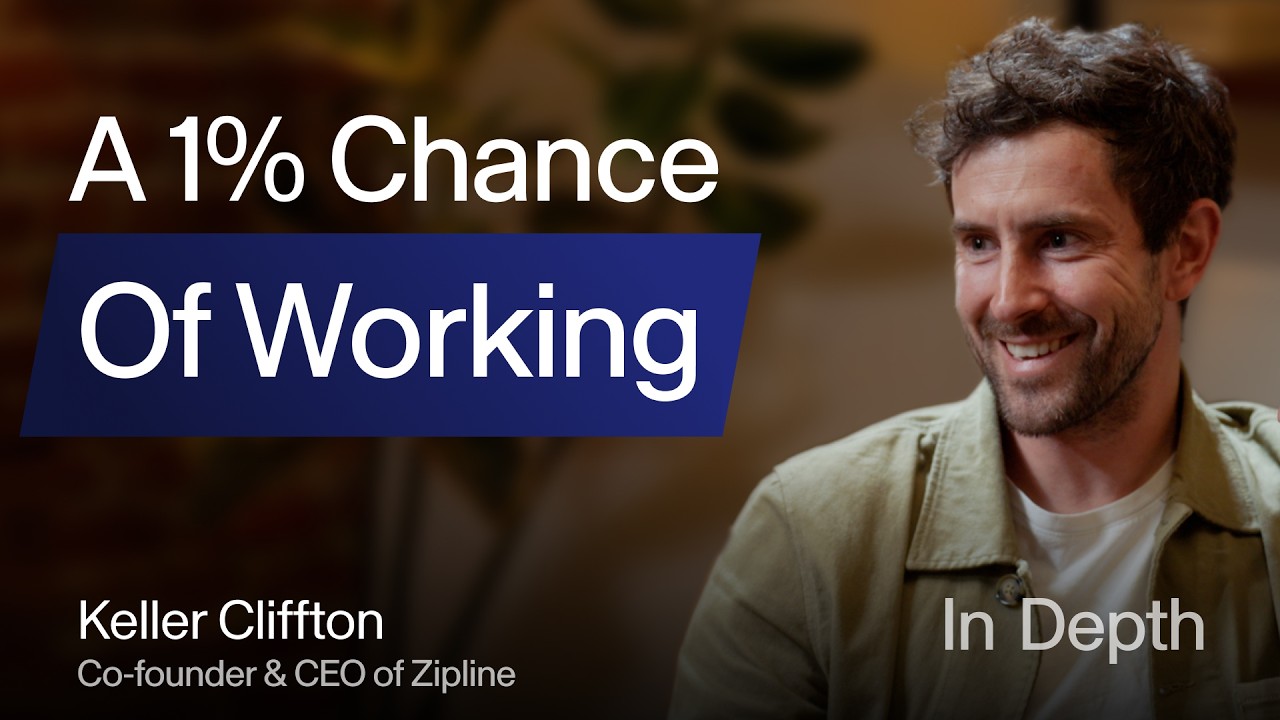
Zipline’s unconventional hiring strategy, championed by CEO Keller Cliffton, illustrates the power of cultivating an ownership mindset by prioritizing initiative and accountability over credentials—hiring teenagers instead of PhDs who act as 'heat-seeking missiles for pain.' Their secret leadership playbook encourages transparency and swift firing of hires who lack ownership, reinforcing a resilient team culture that empowers founders to delegate effectively and avoid bottlenecks. This brutal but necessary approach aligns with broader advice to 'hire slow and fire fast,' recognizing that not every hire will embody owner-level thinking but maintaining high standards is critical for scaling.
Founders like Gavin Bell and Chad Janis highlight that avoiding micromanagement is essential to building teams that operate independently and take full responsibility for outcomes, not just tasks. Bell’s experience at Yatter demonstrates how micromanagement stifles ownership by teaching teams to seek constant approval, whereas empowering hires to own entire outcomes reduces founder pressure and creates businesses that can thrive without the founder’s constant involvement. Janis echoes this by advocating for anti-micromanaging leadership that trusts experts within their domains, acknowledging that no founder has all the answers or bandwidth to do everything.
Cultivating true ownership requires founders to resist the urge to 'rescue' their teams and instead gradually delegate responsibility with controlled risk, accepting that mistakes and short-term failures are part of the growth process. This mindset shift, supported by insights from multiple leaders, involves giving hires power over small decisions initially and expanding their scope as they prove capable, fostering autonomy and accountability. Additionally, hiring for cultural fit, transparency, and a low-ego, collaborative environment—as practiced by Baseten and others—helps attract owner-operators who thrive without micromanagement and enable founders to step back confidently.




Swift Firing, Relentless Adaptation
Startups thrive when founders prioritize passion over pedigree, enforce swift firing of poor fits, and are willing to evolve leadership as the company scales—even if it means replacing early team members.
Zipline's unconventional hiring philosophy, championed by co-founder Keller Cliffton, underscores the value of passion and resilience over traditional credentials, exemplified by their preference for hiring 17-year-olds instead of PhDs. This approach is buttressed by rigorous processes like blind references to ensure cultural fit and reliability, reflecting a deliberate strategy to cultivate a scrappy, problem-solving team rather than relying solely on pedigree. Such hiring rigor proved vital as Zipline navigated near-death pivots and a disastrous launch, highlighting the necessity of adapting hiring strategies dynamically to evolving business realities.
The imperative of swift and decisive firing emerges repeatedly as a hard-earned lesson among startup leaders. Keller Cliffton’s 'brutal firing advice' and leadership interviews alike stress that holding on to poor talent—often out of misplaced loyalty or optimism—disrupts culture and drags down high performers, making early conflict resolution and the principle of 'hire slow, fire fast' essential. Founders who delay these tough decisions risk not only operational inefficiency but also long-term cultural damage, as seen in SeatGeek’s reflection on early hiring missteps that nearly derailed their team dynamics.
Founders face a unique and difficult challenge in evolving their leadership and hiring strategies as startups scale. A London School of Economics study of 5,000 seed-funded companies found that the strongest predictor of successful exits was a founder’s ability to upgrade their executive team to match growth phases, even when it means confronting emotional hurdles like telling long-time team members they’ve outgrown their roles. This transition often involves founders stepping back from daily operations to focus on vision and culture, while bringing in seasoned operators as COOs or presidents, a shift that balances founder passion with operational expertise.
Early hiring mistakes frequently stem from overvaluing expertise at the expense of cultural alignment and genuine mission enthusiasm. Interviews reveal that candidates who are 'enthralled by expertise' but lack authentic excitement for the startup’s unique mission often fail to thrive, as prior experience can be a poor predictor in uncharted startup territories where much is being built anew. This underscores the critical importance of intentional early hiring, as the first hires set the cultural tone for the entire company—SeatGeek’s founder warns that culture is 'pretty freaking easy' to shape when small but nearly impossible to change once the team grows large.
