XPeng robotics’ $900m bet: hype, doubts, and humanoid ambitions
The gist
XPeng Robotics just landed a record $900 million to mass-produce humanoids, but investor excitement is shadowed by financial headaches and EV sector turmoil.
What to know
- XPeng Robotics secured $900 million in funding at a $6.3 billion valuation, with heavyweight backing from Tencent and Alibaba.
- Their IRON robot packs 76 degrees of freedom and three custom AI chips, and XPeng aims to pump out 1,000 units a month by end of 2026 using its car-making muscle.
- Despite the robot hype, XPeng’s core EV business is bleeding cash and investors are uneasy about the lack of transparency and unclear path to profitability.
China’s Humanoid Funding Frenzy
XPeng Robotics’ record-breaking $900 million raise not only signals a seismic shift in China’s AI landscape but also marks a rare alliance between Tencent and Alibaba to back the country’s most ambitious physical AI spinout yet.
XPeng Robotics achieved a landmark $900 million funding round at a $6.3 billion valuation, setting a new record as the largest single-round private financing in China’s embodied AI industry. This milestone not only underscores the rapid growth and investor enthusiasm for advanced humanoid robotics but also establishes a standalone market valuation that highlights XPeng’s transition from automotive to physical AI leadership.
The funding round was spearheaded by IDG Capital and featured strategic investments from tech giants Tencent and Alibaba, each contributing around $100 million, alongside Gaorong Ventures and internal XPeng stakeholders. This rare collaboration between Tencent and Alibaba, despite their competitive dynamics, signals strong shared confidence in XPeng’s technology roadmap and commercialization potential, while also bringing critical ecosystem advantages such as cloud computing, AI infrastructure, and access to real-world application scenarios.
Approximately two-thirds of the $900 million came from external investors, with the remainder funded by an XPeng subsidiary and company leadership, reflecting a balanced mix of external validation and internal commitment. XPeng is concurrently spinning off its robotics assets into a standalone subsidiary while retaining majority ownership, a move designed to unlock focused growth, provide financial clarity, and enable flexible incentive programs critical for attracting top talent amid intensifying competition in the humanoid robotics sector.
This substantial capital injection will fuel XPeng Robotics’ ambitious plans to advance its in-house physical AI technology stack, scale mass-production infrastructure, and accelerate global commercialization efforts. CEO He Xiaopeng envisions the company not only as a leader in China’s humanoid robotics space but also as a global pioneer in physical AI, leveraging strategic investor support to expand its ecosystem and drive large-scale adoption of advanced general-purpose humanoid robots and autonomous driving technologies.

IRON Robot: Specs and Scale
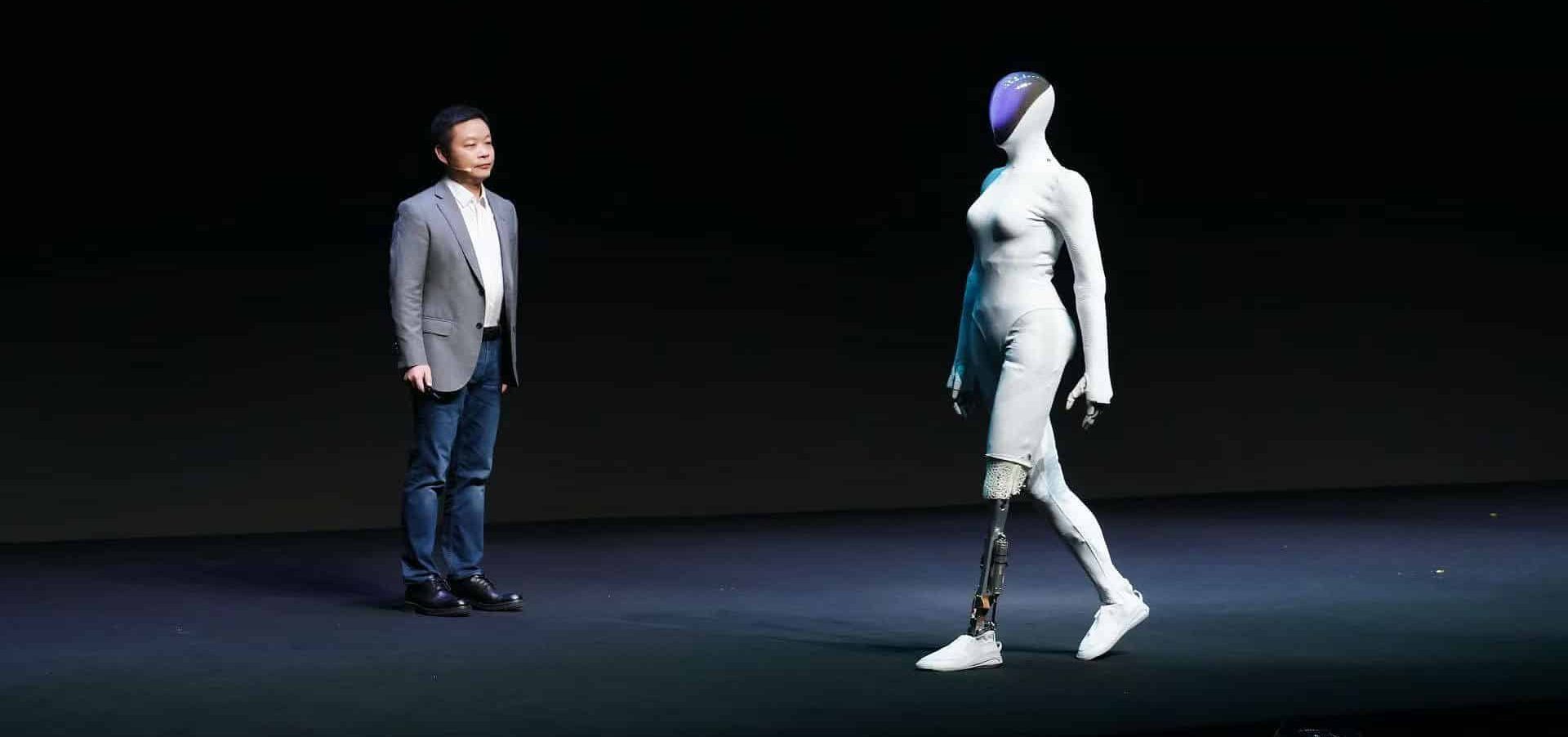
With 76 degrees of freedom and custom AI chips, IRON is designed for autonomous real-world deployment—powered by XPeng’s auto-grade factories and a data-driven strategy to accelerate global commercialization.
XPeng’s humanoid robot IRON showcases cutting-edge technical sophistication with 76 degrees of freedom across its body—including 21 in each tendon-driven hand sized like an adult human’s—wrapped in a synthetic flexible lattice skin designed to balance safety with a human-like appearance. Powered by three proprietary Turing AI chips delivering a combined 2,250 trillion operations per second (TOPS), IRON achieves autonomous complex task execution on-device without reliance on remote computing, underscoring XPeng’s commitment to integrating advanced AI and robotics hardware seamlessly.
Leveraging over a decade of automotive R&D, manufacturing, and AI expertise, XPeng aims to mass produce IRON at automotive-grade quality standards by the end of 2026, targeting a monthly output of 1,000 units. This ambitious scale-up will utilize XPeng’s well-established supply chain and factory infrastructure originally built for electric vehicles, positioning the company uniquely among humanoid robot developers who typically outsource chip design and manufacturing, thereby enabling tighter integration and cost efficiencies.
XPeng’s commercialization strategy for IRON hinges on creating a continuous data flywheel through large-scale deployment in real-world environments such as retail stores and industrial campuses, where operational robots generate behavioral data to iteratively enhance AI models and expand capabilities. Supported by a $900 million funding round primarily dedicated to software and hardware R&D, Physical AI model training, and international commercialization, XPeng is restructuring its robotics business into a standalone subsidiary to sharpen market focus and accelerate global expansion starting in 2027.

Robots Built on EV Muscle
XPeng Robotics leverages its parent’s massive automotive supply chain, sharing over 85% of suppliers and technology, to mass-produce humanoid robots at unprecedented cost and scale.
XPeng Robotics capitalizes on the company's robust automotive manufacturing infrastructure and supply chain, enabling large-scale production of humanoid robots with automotive-grade quality standards. By leveraging XPeng's existing factories and aiming for a monthly IRON robot capacity exceeding 1,000 units, the robotics division benefits from the scale and operational efficiencies driven by XPeng's rapid automotive delivery growth, which reached over 103,000 vehicles in Q2 2026, up nearly 65% quarter-over-quarter.
A critical competitive advantage for XPeng Robotics lies in its deep integration with XPeng's automotive supply chain, sharing over 85% of suppliers and components such as lidar sensors, Nvidia chips, and battery cells. This extensive overlap not only drives significant cost reductions through bulk purchasing but also allows XPeng to avoid the financial risks of building new manufacturing facilities from scratch, effectively treating the humanoid robot as a 'four-wheeled robot' that reuses automotive parts and supply networks.
Technological synergies are equally pivotal, as XPeng transfers its advanced automotive AI expertise and proprietary Turing AI chips—delivering a combined 2,250 TOPS of on-device compute power—into the IRON humanoid robot. This integration enables autonomous operation without reliance on remote data centers, underscoring a shared technological foundation that spans chip design, AI model training, and full-stack in-house R&D capabilities, positioning XPeng as a uniquely comprehensive Physical AI company in China.
The strategic integration between XPeng's automotive and robotics divisions is not only operational but also financial and organizational, with independent financing of XPeng Robotics fostering flexible equity incentives and talent acquisition critical for competing in humanoid robotics. This focused approach reduces capital pressure on the broader XPeng group while enabling the robotics unit to scale rapidly, with management targeting over 60,000 monthly vehicle deliveries and IRON robot deployments in showrooms by the end of 2026 to validate these synergies.

Profit Worries and Skepticism Mount
Despite the robotics hype, investors and analysts are alarmed by XPeng’s deepening losses, opaque financials, and the questionable commercial logic of deploying costly humanoid robots as sales staff.
XPeng's core electric vehicle business is grappling with intense domestic competition and razor-thin profit margins, as evidenced by a vehicle margin decline to 12.1% in Q2 2026 and a net loss of RMB 1.34 billion despite revenue growth to RMB 19.74 billion. This pressure is compounded by a prolonged downturn in China's car sales, which fell for the tenth consecutive month in July, leading to missed revenue guidance and cautious analyst outlooks, including Barclays' downgrade to Underweight and Freedom Broker's reduced price target.
Investor enthusiasm for XPeng Robotics is notably tempered by concerns over the unit's financial transparency and lack of a clear profitability timeline. Management’s decision to consolidate robotics and EV financials obscures the true cash burn of the robotics division, which reported widening net losses and no disclosed revenue or profitability guidance, fueling skepticism among Wall Street analysts like Goldman Sachs' Tina Howe who pressed for separate profit reporting.
Skepticism extends beyond financials to the practical deployment of XPeng’s humanoid robots, with analysts questioning the commercial rationale behind using highly advanced robots as showroom salespeople and tour guides. While management emphasizes the robots’ 'emotional value' and human-like synthetic skin to build consumer trust, this narrative has been met with incredulity, viewed by some as a financial absurdity amid the pressing challenges in the core EV business.
Despite XPeng founder He Xiaopeng’s strategic pivot toward robotics as a potentially more profitable frontier given the razor-thin margins in automotive, investor confidence remains cautious. The robotics unit’s $6.3 billion valuation and record $900 million funding round are tempered by structured deal terms offering redemption rights if a public listing is not achieved within seven years, signaling that investors view the robotics venture more as a high-risk experimental bet than a guaranteed growth driver.
