Yen’s reflexive spiral, XRP’s institutional surge: japan’s market turmoil reshapes global flows and crypto confidence
The gist
Japan’s weakening yen and fiscal turmoil are shaking global markets and fueling an institutional XRP surge, but liquidity cracks and investor fear hint at brewing risks beneath the surface.
What to know
- Japanese investors are fleeing local bonds for US Treasuries as inflation and a spiraling yen expose deep fiscal distress, not monetary tightening success.
- XRP’s institutional adoption hit new highs—Swiss-listed ETFs saw record inflows, tokenized real-world assets on the XRP Ledger jumped 45% to $3B, and Japan’s regulatory clarity is supercharging confidence.
- Despite strong ETF inflows and tech endorsements, XRP’s exchange liquidity dropped to six-year lows and retail investors remain gripped by extreme fear, warning of potential volatility ahead.
Japan’s Fiscal Spiral Exposed
The yen’s relentless slide and rising bond yields signal deep fiscal distress in Japan, breaking classic market correlations and sending investors scrambling for safety abroad.
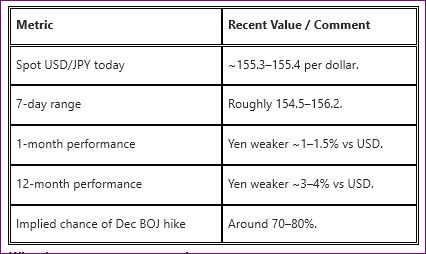
Japan’s macroeconomic landscape in late 2025 reveals a complex reflexive loop where persistent inflation above target fuels a weakening yen, which in turn imports more inflation and pushes Japanese Government Bond (JGB) yields higher. This dynamic, intensified by the Bank of Japan’s (BoJ) cessation of yield curve control, illustrates the paradox that inflationary pressures from currency depreciation outweigh the dampening effects of rising yields on the economy. However, early signs such as the flattening of the 10s30s and 2s10s JGB yield curves suggest this feedback loop may be losing momentum, potentially easing the inflation and currency depreciation spiral.
Contrary to widespread assumptions, rising JGB yields are not driving up US Treasury yields; rather, US yields have been falling relative to Japanese yields even as the yen depreciates against the dollar. This challenges the narrative that yen weakness would trigger a US rate spike and instead points to a loss of confidence in Japan’s sovereign creditworthiness, as evidenced by the yen weakening despite rising yields—a scenario inconsistent with traditional carry trade unwinds. Japanese investors are increasingly moving capital abroad to escape domestic fiscal risks, supported by record foreign demand at US Treasury auctions, underscoring Japan’s deep fiscal distress rather than successful monetary tightening by the BoJ.
Japan’s pivotal role in global carry trades and cross-collateralized financial markets means its evolving fiscal and monetary policies reverberate worldwide. The yen’s depreciation, coupled with Japan’s status as a net importer of commodities, amplifies inflation feedback loops that influence global liquidity and carry trade flows. Moreover, Japan’s massive holdings of US Treasuries tightly link its financial markets with global interest rate dynamics, making local policy shifts highly reflexive and capable of transmitting shocks rapidly through exchange rates, interest rate differentials, offshore funding markets, and derivatives—highlighting Japan as a fulcrum of global financial interconnectedness.
By early 2026, the yen’s role as a funding currency in global carry trades remains robust but increasingly precarious. While the BoJ’s hawkish signals appear largely performative with minimal rate hikes expected to avoid triggering a debt crisis, the yen continues to weaken even as US-Japan rate differentials widen, suggesting the carry trade is evolving rather than ending. However, empirical research confirms the yen’s safe-haven status, appreciating significantly during risk-off episodes, and recent dollar weakness amid hawkish Fed expectations hints at a potential yen carry trade unwind. This is underscored by the yen’s tentative higher lows supporting the dollar, which could catalyze a reversal as funds borrowed cheaply in yen to invest in US tech and indices may rush to unwind positions.



Carry Trades and Global Shockwaves
Japan’s evolving bond and currency dynamics are now transmitting financial shocks globally, with its massive US Treasury holdings and carry trade flows amplifying risk across major asset classes.
Japan's unique economic position as a net exporter to the US and a net importer of commodities, especially food and energy, creates a complex backdrop for global carry trade flows. The country's rising inflation, fueled by a weakening yen that imports more inflation, has generated a reflexive loop pushing Japanese Government Bond (JGB) yields higher while simultaneously weakening the currency. This dynamic sustains carry trade activity rather than triggering systemic risk, as evidenced by the flattening of the JGB yield curve (10s30s and 2s10s), signaling a marginal stagflationary environment where nominal imports outpace real imports and the impulse driving yields and currency shifts begins to fade.
Japan's status as the largest foreign holder of US Treasuries intricately links its financial markets with the US Treasury market, creating a high degree of cross-collateralization that amplifies the global impact of any shifts in Japan's policy stance. This interconnectedness, combined with Japan's leverage through JGBs and the yen at the center of vast carry trades and collateral chains, means that structural changes in Japanese yields or currency can cascade rapidly across major global asset classes. Local shocks in Japan now transmit globally through exchange rates, interest rate differentials, offshore funding markets, and derivative exposures, underscoring Japan's systemic importance in global finance.
Contrary to conventional carry trade unwind narratives, rising JGB yields reflect fiscal distress and sovereign credit concerns rather than successful monetary tightening, leading to a weakening yen despite higher yields. Japanese investors are not repatriating capital but are instead increasing foreign investments, particularly in US Treasuries, signaling capital flight from domestic fiscal risk. The Bank of Japan's hawkish signals appear largely performative due to Japan's shrinking economy and a debt-to-GDP ratio exceeding 260%, which constrains meaningful rate hikes and sustains fiscal dominance over monetary policy. This evolving carry trade dynamic sees capital rotating selectively toward quality US growth equities like MongoDB, rather than panic liquidation, with the yen/JGB yield relationship serving as a critical indicator of fiscal crisis fears and carry trade viability.
By early 2026, the Japanese yen's role as the low-yield currency in global carry trades remains pivotal in systemic risk dynamics, as its appreciation during financial crises stems from the unwinding of yen-denominated loans. Despite hawkish Federal Reserve expectations, the US dollar's weakness—propped up mainly by the yen—signals potential shifts in carry trade flows. A potential higher low in the yen could catalyze a significant unwind of the yen carry trade, where funds borrowing yen at low rates to invest in US tech and indices might reverse positions, triggering impactful global capital flow adjustments and heightened systemic risk.
XRP’s Institutional Pivot Accelerates
XRP’s transformation is marked by record ETF inflows, plummeting retail activity, and a surge in real-world asset tokenization, cementing its shift from speculative token to institutional infrastructure.
By early 2026, XRP's evolution from a retail speculation asset to an institutional mainstay became increasingly evident through robust inflows into Swiss-listed XRP ETPs and XRP-linked ETFs, which saw their strongest inflow week in three months. This institutional momentum was further bolstered by Japan's progressive regulatory environment, particularly the crypto reclassification bill that favored XRP's substantial retail presence via SBI Holdings, creating a structural tailwind for liquidity and market stability.
The transition towards institutional adoption is underscored by a marked decline in retail-driven activity: new daily XRP addresses plummeted 85% from December 2024 to May 2026, while monthly active supply fell 73%. Concurrently, whale sell pressure dropped to its lowest since 2021, with Binance inflows shrinking from 2.6 billion XRP in early March to just 736 million by May, signaling reduced large-holder liquidation and enhanced market stability.
Institutional engagement accelerated through pioneering real-world asset tokenization on the XRP Ledger, exemplified by a landmark pilot involving Ripple, Ondo Finance, JPMorgan's Kinexys, and Mastercard that executed the first real-time cross-border settlement of tokenized U.S. Treasuries. This sector surged to over $3 billion in valuation by May 2026, a 45% increase in 30 days, with tokenized U.S. Treasuries alone exceeding $403 million, reflecting growing institutional liquidity and blockchain adoption catalyzed by regulatory clarity classifying XRP as a digital commodity.
Despite XRP's institutional ascent, liquidity dynamics reveal complexity: large whale movements, including a notable 34.94 million XRP outflow to private wallets during a major market event, raised concerns about potential liquidity manipulation and market stability. Simultaneously, significant withdrawals of approximately 403 million XRP from Binance since May indicate strategic repositioning by large holders. Yet, XRP's liquidity on major exchanges like Binance has plunged to six-year lows, and exchange inflows hit their lowest point in 2026, suggesting a shift toward stable, institutionally held positions even as the token continues to attract fresh ETF investments amid broader market sell-offs.



Asia’s Regulatory Tailwind for XRP
Clear crypto rules and major ETF launches in Japan and Asia have fueled XRP’s rise as a preferred institutional asset, driving both confidence and cross-border payment innovation.
Japan’s regulatory clarity, particularly the reclassification of cryptocurrencies as financial instruments, has created a robust structural tailwind for XRP adoption, leveraging SBI Holdings’ dominant market presence. This regulatory environment not only supports retail participation but also underpins institutional confidence, as evidenced by Ripple’s proactive engagement through events like the XRP-Tokyo 2026 Conference, which highlighted cross-border payment innovations and regulatory pathways across Asia-Pacific. Such developments have solidified XRP’s position in Japan and neighboring markets, fostering increased trading activity and investor interest.
Institutional interest in XRP is surging across Asia, propelled by significant inflows into XRP-linked ETFs and ETPs, especially those listed in Switzerland, which accounted for 70% of global flows totaling $120 million. SBI Holdings’ ambitious plan to launch Bitcoin and XRP ETFs on the Tokyo Stock Exchange, targeting $32 billion in assets under management, further signals growing regulatory acceptance and the potential for enhanced market liquidity. These ETF inflows have sustained XRP’s price momentum, with the token leading large-cap gains and maintaining a strong base ahead of CME’s anticipated 24/7 trading launch.
The evolving regulatory landscape in both the U.S. and Asia, marked by the SEC and CFTC’s classification of XRP as a digital commodity, has accelerated institutional adoption, shifting the market dynamic from retail speculation to institutional usage. This transition is reflected in an 85% plunge in new daily XRP addresses and a 73% drop in monthly active supply, underscoring a move towards ‘institutional rails.’ Collaborative milestones involving Ripple, Ondo Finance, JPMorgan's Kinexys, and Mastercard in real-time cross-border settlements on the XRP Ledger exemplify growing market confidence and practical adoption within key Asian corridors.
XRP’s dominance in regional trading volumes, particularly in South Korea where its XRP-won pair recently surpassed Bitcoin and Ether with $110.9 million in 24-hour volume, highlights strong investor appetite amid geopolitical headwinds affecting other cryptocurrencies. While Bitcoin faced significant selling pressure due to U.S.-Iran tensions and heavy ETF redemptions, XRP’s relative resilience and sustained ETF inflows in Asia underscore how geopolitical factors are indirectly benefiting its market growth and investor sentiment in the region.
Tokenized Assets Redefine XRP
A booming ecosystem of tokenized US Treasuries and real-world assets on XRP Ledger is drawing institutional giants and tech leaders, positioning XRP as a backbone for next-gen finance.
By early 2026, XRP's transition from retail speculation to institutional utility became unmistakable, as evidenced by an 85% plunge in new daily addresses and a 73% drop in active supply, signaling a strategic pivot toward serving institutional rails. This shift was catalyzed by regulatory clarity from the SEC and CFTC classifying XRP as a digital commodity, which emboldened major financial institutions like JPMorgan to adopt public blockchain infrastructure for real-time cross-border settlements, exemplified by a landmark pilot transaction involving Ripple, Ondo Finance, JPMorgan's Kinexys, and Mastercard that tokenized U.S. Treasuries on the XRP Ledger.
The XRP Ledger's burgeoning ecosystem of tokenized real-world assets (RWAs) has become a cornerstone of its institutional appeal, with the sector ballooning to $3.03 billion in valuation—a 45% surge within just 30 days. Tokenized U.S. Treasuries alone surpassed $403 million, underscoring the platform's growing role in bridging traditional finance with blockchain technology. Nancy Beaton, President of Uphold U.S., highlights that this expansion, coupled with increasing yield opportunities on XRP holdings, is attracting both retail and institutional investors eager to capitalize on the fusion of tangible assets and decentralized finance.
Adding a powerful technological endorsement to XRP's institutional narrative, Samsung's reported integration of XRP’s settlement rails into its broader crypto infrastructure strategy signals a major vote of confidence from a global tech titan. This move not only enhances XRP's utility and visibility but also aligns with the platform’s expanding ecosystem, potentially accelerating adoption by embedding XRP into everyday transactional frameworks and reinforcing its stature as a backbone for next-generation financial services.
Despite these advances, the ecosystem faces challenges in maintaining institutional trust, as highlighted by significant token movements—such as the 34.94 million XRP outflow from exchanges to private wallets within a single day—raising concerns about liquidity manipulation by whales. Transparent monitoring and robust governance mechanisms are thus critical to sustaining market stability, a prerequisite for deepening institutional confidence and ensuring that XRP's technological innovations translate into resilient, scalable financial infrastructure.
XRP’s Resilience Amid Uncertainty
Despite surging institutional inflows and stablecoin growth, XRP’s price faces extreme fear and liquidity lows, as analysts warn that macro turmoil may not trigger the rally some expect.
The 'XRP Domino Theory,' articulated by analyst Jake Claver, posits that a cascading crisis involving oil prices, Japan’s economic shifts, stablecoins, and banking sectors could ultimately benefit XRP and the broader crypto ecosystem. This theory gains nuance as XRP demonstrated notable resilience amid turbulent markets in early June 2026, buoyed by four consecutive weeks of ETF inflows and maintaining a stable price base around $1.34 ahead of CME’s 24/7 trading launch, underscoring XRP’s capacity to outperform even as major cryptocurrencies like Bitcoin succumbed to geopolitical pressures and heavy ETF redemptions.
Despite Ripple’s dollar-backed stablecoin RLUSD surpassing a $1.7 billion market cap, market sentiment around XRP remains entrenched in extreme fear, revealing a stark disconnect between stablecoin growth and XRP price optimism. This divergence is further complicated by XRP’s price weakening alongside the broader market sell-off, even as it continues to attract fresh institutional ETF investments—a rare phenomenon in 2026—highlighting contrasting signals that reflect both sustained institutional confidence and underlying liquidity challenges, with XRP’s liquidity hitting a 2020 low.
Market skepticism tempers bullish narratives linking Japan’s monetary policy shifts, particularly a potential yen unwind, to an immediate XRP rally. Analyst Eri challenges expectations of a sharp XRP surge triggered by Japan’s policy moves, arguing that the current macroeconomic environment—including risk-off sentiment driven by the U.S.-Iran escalation, record ETF outflows totaling $2.8 billion over nine sessions, and rising real yields following softer inflation data—does not support such an immediate catalyst, thereby injecting caution into the XRP price outlook despite ongoing institutional interest.