InsightsLatest
Latest from Drip
Deep dives, recaps, weekly briefs, trends, and expert answers, newest first.
Deep dive
AI Arms Race Fuels Cybersecurity Boom—But Wall Street Remains Wary Amid Surging Revenues and Shaky Stocks
AI is fueling record-breaking growth in cybersecurity revenues, but Wall Street remains skittish as margin pressures, costly acquisitions, and leadership shakeups send stocks on a rollercoaster ride.

Deep dive
Crunchafi Turbocharges Thomson Reuters’ Audit AI—But Investors Remain on the Sidelines
Thomson Reuters’ AI-powered audit overhaul with Crunchafi is turbocharging CPA workflows—but skeptical investors are still hitting pause.
Deep dive
C-Suite Faces Reality Check as AI Hype Meets Hard Limits
C-suite optimism about AI is colliding with harsh operational, regulatory, and workforce realities—forcing leaders to rethink what it really takes to make AI work at scale.

Deep dive
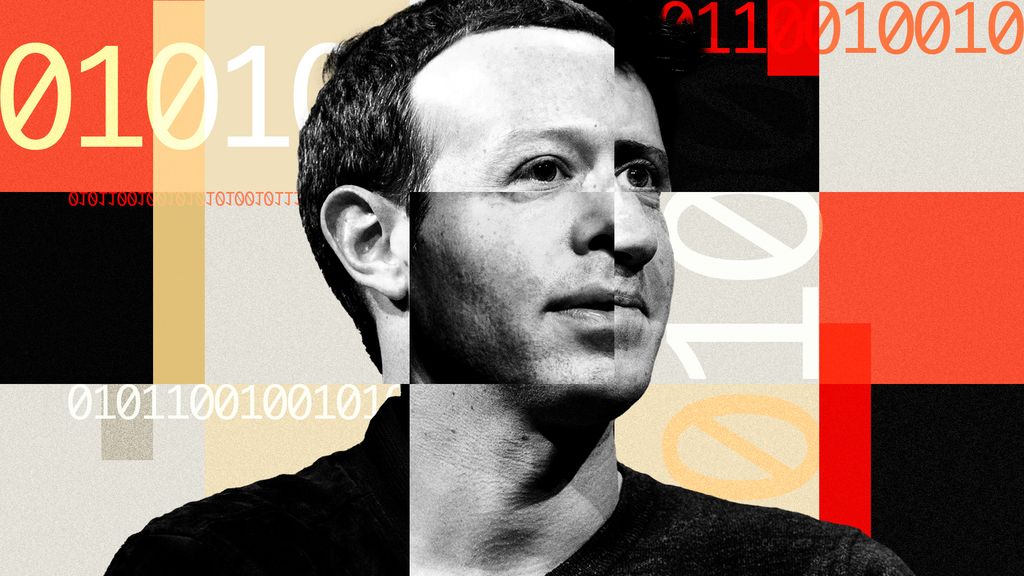
Meta’s AI Optimism Faces Backlash Amid Cost, Controversy
Mark Zuckerberg’s $135 billion AI optimism crusade is colliding headfirst with spiraling costs, internal turmoil, and growing skepticism about Meta’s vision and leadership.
Deep dive
Netflix, Omnicom Take AI Ad Alliance Global
Netflix and Omnicom are fusing AI, massive audience data, and digital twins to supercharge streaming ads—fueling global expansion and a fierce debate over privacy and personalization.

Deep dive
China’s AI Romance Ban Sparks Emotional Fallout, Industry Pivot
China’s sweeping July 2026 ban on AI romantic companions has triggered mass virtual heartbreak and forced tech giants to kill off digital lovebots overnight.

Deep dive
Gen Z Delays Milestones as Income Rises, Costs Soar
Gen Z and Millennials are earning more than previous generations—but record-high housing costs, soaring debt, and delayed milestones mean the road to adulthood looks radically different.

Trend
AI Job Apocalypse Fizzles, but Layoff Anxiety and 'Doom Loop' Hiring Roil 2026 Workforce
The arc of 2026’s workforce story shifts from “AI job apocalypse” to a more complex reality: AI is expected to automate roughly a quarter of work hours while also generating new roles, but the transition is turbulent. The drivers are productivity-driven restructuring, global competitive pressure, and uneven reskilling capacity, which leave workers facing repeated layoffs and executives grappling with morale and ethical constraints. Meanwhile, AI-powered hiring has degraded into a “doom loop” where bots mediate both resumes and screening, reducing graduate opportunities and intensifying distrust on both sides.
Trend
Hormuz on the Brink: Iran’s Blockade Roils Oil Markets, Exposes US Stumbles, and Stokes Global Jitters
Iran’s IRGC has tightened its grip on the Strait of Hormuz, using ship seizures and a de facto blockade to weaponize uncertainty rather than pursue a clear, negotiated confrontation. With peace talks stalled and US ceasefire proposals lacking Iranian passage rights, nearly one-fifth of global energy exports face disruption, driving crude prices above $100 and prompting potential supply cuts from regional producers. The resulting shock is amplified by thin inventories and fragile supply chains, while markets—spanning oil, equities, and even crypto—whipsaw on rumors and military signals. This matters because it accelerates a broader geopolitical realignment in energy security, raising the risk of a sustained, systemic energy crisis.
Trend
Offshore Drillers Flex Muscle: Noble and Transocean Rack Up Contracts, Slash Debt, and Cash In on Premium Rigs
The offshore drilling sector is entering a new profitability cycle as operators secure multi-year, premium-rig contracts that expand backlogs to multi-year highs. The underlying shift is a move toward “leaner, higher-utilization fleets,” driven by selective fleet upgrades, tighter capacity management, and customers’ preference for proven performance in key basins. At the same time, aggressive debt reduction is improving balance-sheet resilience and enabling greater operating leverage. This matters because it raises cash generation and margin durability, making the market less dependent on spot pricing swings.
Trend
AI Cold War: U.S.-China Risk Talks Stalled by Mistrust, Export Standoffs, and Bipartisan Alarm
The arc centers on an emerging “AI cold war” in which U.S.-China risk talks stall because mistrust and export-control standoffs have shifted competition from hardware to the more sensitive domains of model outputs, IP, and deployment timelines. Washington’s tightening restrictions and new anti-theft legislation drive Chinese demands for reciprocal concessions before meaningful dialogue, while fragmented U.S. policy and industry pushback limit negotiators to modest, parallel steps. As AI capabilities accelerate faster than governance can keep up, bipartisan alarm is pushing for nuclear-style, multilateral safety frameworks—yet the immediate outcome remains incremental coordination rather than binding cooperation.
Trend
Quantum Computing Leaps Forward: Error Correction Breakthroughs, Hybrid AI Synergy, and a Race to Real-World Impact
Quantum computing’s throughline is a shift from fragile, proof-of-concept experiments toward engineering-driven fault tolerance, enabled by major advances in error correction—especially targeting dominant gate faults such as erasure errors. That progress is being accelerated by hybrid quantum-AI systems that combine quantum exploration with AI-driven reasoning to solve complex optimization and simulation tasks faster than classical or quantum-only approaches. The market impact is a commercialization race fueled by government investment, industry alliances, and rapidly improving hardware reliability, even as talent shortages and a fragmented ecosystem remain key constraints.
Trend
DraftKings Bets Big: Alberta Launch, AI Edge, and Political Power Plays Shake Up Sports Betting
Sports betting in North America is shifting from a state-by-state rollout toward a more coordinated, technology- and politics-driven expansion. The arc centers on operators using AI to boost brand visibility while tightening compliance and responsible-gaming transparency, then accelerating market entry with timed launches such as Alberta ahead of major events like the 2026 World Cup. At the same time, industry players are increasingly funding political campaigns to shape legalization outcomes at the state level, even as federally regulated prediction markets introduce new competition and regulatory friction. This matters because it redraws who can scale fastest—and under what ethical and legal constraints—across the broader sports wagering market.
Trend
From $500 a Month to Millionaire: The Long Game of Dividend Investing Pays Off
The throughline of this dividend-investing arc is a shift from chasing quick gains to building long-horizon, cash-flow–oriented wealth through disciplined monthly contributions and compounding. Its core drivers are consistent investing (often $500–$1,500 per month), a blended portfolio that pairs diversified ETFs with diversified dividend stocks to balance yield and growth, and practical goal-setting that links income targets to required portfolio size and yield. This matters at the market and industry level because it reinforces demand for income-focused strategies, portfolio-tracking tools, and community platforms that make passive income milestones measurable and sustainable over decades.
Trend
AI Won’t Steal Your Job—But Outdated Leadership Might: CEOs Double Down on Human-Centric AI and Entry-Level Hiring
As AI adoption accelerates in 2026, a growing leadership consensus is shifting the narrative from “AI will replace workers” to “AI will augment human judgment,” particularly for entry-level roles. This change is driven by persistent organizational friction—such as workflow mismatch and governance gaps—along with rising concerns about workforce trust, career resilience, and ethical oversight. Market-wide, companies are reframing AI as a precision tool that boosts productivity while pairing it with transparent controls and continuous reskilling, making human agency the differentiator that determines whether adoption sustains jobs or erodes them.
Trend
AI-Human Power Duos Dominate Wealth Management as Next-Gen Heirs Demand More Than Algorithms
Wealth management is shifting from “AI-only” automation toward hybrid advisory power duos that pair AI-driven analytics with human judgment and relationship management. The change is driven by two forces: rapid AI capability gains that can handle prediction, compliance, and routine execution, and the accelerating $124 trillion intergenerational wealth transfer, which is raising expectations for values-driven, transparent, jargon-free guidance. As younger investors demand more voice, empathy, and direct involvement, firms increasingly use AI to sharpen decisions while humans steer behavior, interpret context, and correct AI errors—making hybrid models the dominant market standard.
Trend
School Phone Bans Deliver Mixed Results: Modest Gains, Equity Concerns, and No Lasting Digital Detox
A growing wave of state and district smartphone bans in schools—driven by worries about student well-being, academic performance, and bullying—has produced only modest, uneven results. Early-2026 research finds that strict, all-day enforcement can improve grades and reduce bullying primarily for girls and lower-performing, low-income students, while overall test scores and attendance show little change. The approach also raises equity and discipline concerns when enforcement is inconsistent, sometimes increasing suspensions for Black students. More broadly, bans have not delivered a lasting “digital detox,” because they do not build digital self-control or provide the support and infrastructure needed to change habits beyond school hours.
Trend
MBA Mobilizes Mortgage Army: Grassroots Push Targets FHA Policy Fixes Amid Election Frenzy
The Mortgage Bankers Association’s ongoing push reflects a broader shift toward election-year, grassroots-driven housing advocacy aimed at fixing FHA policy and regulatory friction. As lawmakers weigh the Senate’s 21st Century ROAD to Housing Act, the industry is mobilizing loan officers and member networks to spotlight how outdated or inconsistent FHA rules, credit frameworks, and state-federal misalignment can block lending, raise costs, and worsen affordability. The campaign’s urgency is driven by looming elections and the need to translate borrower-level pain points into legislative priorities. This matters because it reframes housing finance reform as a coordinated, data-backed policy effort rather than a slow, technocratic process.
Trend
Private Equity’s AI Revolution Hits Scale—But Systemic Gains Remain Elusive Amid Dealmaking Turmoil
Private equity has moved from isolated AI pilots to portfolio-wide, board-mandated deployment, reflecting an underlying shift toward AI as a core operational lever rather than a discretionary experiment. The change is driven by tougher dealmaking conditions, margin pressure, and deeper integration with leading AI developers through multi-billion partnerships that embed technical teams across thousands of companies. However, systemic gains remain elusive: only a minority of firms report meaningful EBIT improvement as AI’s fast-moving capabilities disrupt traditional deal modeling and encounter organizational inertia that limits enterprise-wide value capture.
Trend
Greg Abel Puts His Stamp on Berkshire: Bold Bets, Big Cash, and a Break from Buffett’s Playbook
The throughline of this arc is Berkshire Hathaway’s transition from Warren Buffett’s long, delegation-heavy playbook to a more operationally hands-on, centralized model under Greg Abel. Driven by record liquidity—cash reserves reaching roughly $382 billion—plus a need to modernize amid shifting market conditions, Abel’s tenure emphasizes tighter oversight, portfolio consolidation, and faster, more decisive capital allocation. The story matters because it signals how legacy conglomerates are adapting: using large cash buffers and active management to pursue targeted, transformative bets rather than relying primarily on patience and tradition.