Age and wealth rule: public demands end to elite grip
The gist
Public rage is boiling over as aging and wealthy elites tighten their grip on politics, business, and academia—fueling demands for radical reforms to end the era of gerontocratic dominance.
What to know
- By 2026, UK business elites secured 23 times more political access than civil society groups, with 63% of Britons backing donation caps to curb their sway.
- In the US, older, wealthier voters and donors dominate government and policy, sparking calls for age limits, youth quotas, and even weighted voting for younger citizens.
- Over 60% of Britons and a staggering 80% of Americans believe the system is rigged, driving bipartisan momentum for campaign finance reform and anti-gerontocracy movements.
Elites Engineer Access Gap
Business interests outpace civil society 23-to-1 in UK policymaker meetings, while entrenched age and class hierarchies in the US cement older, wealthier voters’ grip on power and policy.
By early 2026, research such as Spotlight on Corruption and Oxfam revealed how economic elites in the UK consolidate political power through disproportionate access to policymakers, with business stakeholders securing meetings at a staggering 23 to 1 ratio compared to civil society groups. This structural imbalance is reinforced by limited state capacity, skewed media incentives, and ideological capture favoring wealthy interests, contributing to a democratic deficit that 63% of Britons recognize, as they support reforms like political donation caps advocated by Transparency International UK.
In the United States, Samuel Moy highlights that gerontocratic power is not solely a function of aging politicians but is deeply intertwined with an older, wealth-dominant voter base and campaign donors, who skew political influence through entrenched mechanisms like incumbency advantages and policy frameworks favoring older, wealthier elites. Moy’s analysis links age and class inequality, noting how federal benefits and tax protections disproportionately reward the elderly, thereby perpetuating a cycle where age becomes the modality through which class is experienced and political power is maintained.
Institutional and procedural factors further entrench gerontocratic dominance by creating barriers to youth political participation and leadership succession. Moy proposes reforms such as age limits for office, youth quotas, weighted voting that amplifies younger voices, and practical voting reforms—including federal voting holidays and easier registration—to counteract the skewed influence of older voters. Meanwhile, organizational hierarchies often stall younger leaders’ advancement as older incumbents cling to power, driven by a cultural 'cult of longevity' that discourages retirement and renewal, ironically perpetuating a system that can produce policies detrimental even to the elderly themselves.



Oldigarchy Fuels Discontent
Rising public anger targets tech billionaires and aging leaders whose dominance leaves younger generations with mounting costs and little say in shaping the future.
By early 2026, widespread public concern about wealth inequality—where 80% of Americans feel the system is rigged in favor of the top 5%—has deeply eroded trust in democratic institutions. The rise of tech oligarchs like Elon Musk, who owns more wealth than 53% of American households, exemplifies how concentrated wealth translates into disproportionate political influence, fostering anti-democratic tendencies among elites and undermining the legitimacy of electoral competition.
Gerontocracy exacerbates generational inequality by concentrating political power and wealth in the hands of older Americans who prioritize preserving their accumulated entitlements. As Samuel Moyn and others highlight, this 'oldigarchy' stalls leadership renewal and policy innovation, leaving younger generations burdened with unaffordable housing, healthcare, and education costs while critical future-oriented issues like climate change and immigration reform are neglected.
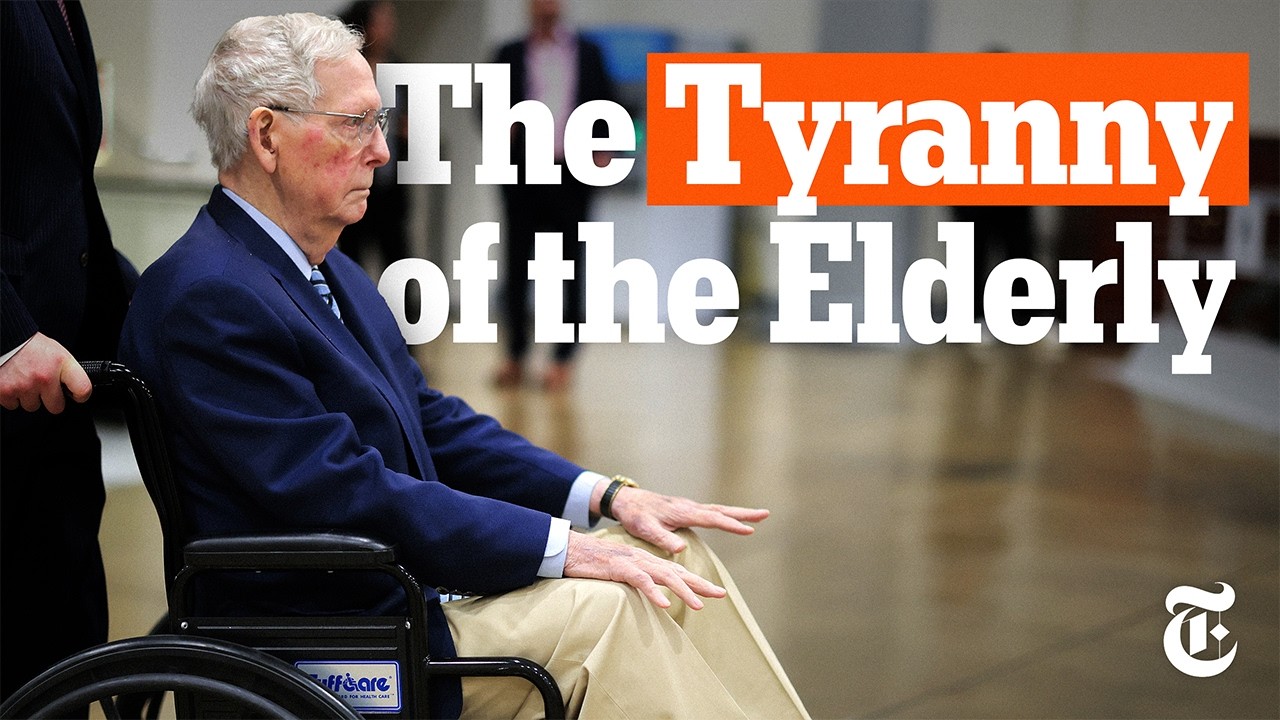
The persistence of aging leaders in political and economic spheres—exemplified by figures like Senator Mitch McConnell and the late Ruth Bader Ginsburg—reflects a cultural 'cult of longevity' that discourages retirement and succession. This dynamic not only distorts democratic renewal but also fuels political disengagement among youth, who feel excluded from leadership and decision-making processes, thereby weakening the intergenerational compact essential for a healthy democracy.
Addressing the democratic distortions caused by gerontocracy requires bold reforms such as age limits, youth quotas, weighted voting, and easier voter registration to rebalance power and foster leadership renewal. Importantly, scholars and commentators like Moyn and Ross Douthat emphasize the need for intergenerational solidarity—balancing care for the elderly with creating space for younger generations to lead—to restore democratic legitimacy and ensure equitable policy outcomes across age cohorts.





Gerontocracy Beyond Politics
Aging elites tighten their hold across business, academia, and the economy, blocking both innovation and upward mobility for younger generations.
The grip of aging elites extends far beyond the political arena, deeply entrenching itself within corporate leadership and academia, thereby reinforcing systemic power imbalances and stifling innovation. By early 2026, analyses revealed that the aging of American leadership is not limited to politicians but includes Silicon Valley CEOs, whose average age has been rising rapidly, and faculties at elite universities that have grown substantially older. This broad gerontocracy limits opportunities for younger generations to ascend and innovate, perpetuating a status quo where aging elites maintain disproportionate control across multiple influential sectors.
Institutional structures and demographic realities underpin this pervasive gerontocracy. Unlike Western Europe, where mandatory retirement ages and the absence of life tenure for judges help curb elderly dominance, the United States’ lack of such reforms allows aging elites to entrench their power. This phenomenon is compounded by an older electorate and wealth accumulation patterns that are age-inflected, meaning that as Americans age, their economic and political influence intensifies, creating a feedback loop that sustains gerontocratic leadership across sectors.
Economic dominance by older Americans, particularly those in higher socioeconomic strata, is reinforced through asset bubbles, tax privileges, and the abolition of mandatory retirement, which have disproportionately benefited them since the late 20th century. For instance, property tax protections originating from California’s property tax revolts have effectively shielded older homeowners’ wealth from taxation, thereby blocking new housing developments and stifling innovation in the housing market. This dynamic not only preserves older generations’ wealth but also creates systemic barriers for younger generations seeking economic mobility and housing opportunities.
The wealth of older generations is often locked in illiquid assets like homes, fostering incentives to hold rather than sell or reinvest, which further entrenches systemic power imbalances. As one analysis put it, many relatively wealthy older individuals cannot access their wealth easily because it is tied up in housing, yet the prevailing incentive structure discourages them from selling. This phenomenon not only consolidates economic power within aging elites but also limits the circulation of assets necessary for younger generations to gain footholds in the economy and innovate within their fields.
Moneyed Politics, Hollow Democracy
Corporate cash and elite access have turned politics into a staged performance, deepening voter alienation and fueling bipartisan calls for donation caps and transparency.
By early 2026, public frustration in both the UK and the US had crystallized around the disproportionate influence of wealthy elites and corporate money in politics, with polls showing that over 60% of Britons believed the very rich wield excessive political power, and 69% felt disenfranchised from government decisions. This widespread discontent is fueled by structural imbalances where business interests secure vastly more access to policymakers—Spotlight on Corruption found a 23-to-1 ratio favoring economic elites over civil society groups—while ideological capture narrows the policy agenda to favor these entrenched interests, perpetuating a vicious cycle of inequality and eroding democratic representation.
The political landscape is often described as a 'Kabuki theater,' where politicians act out scripted roles heavily influenced by lobby money, with early-stage investments in candidates ensuring long-term elite control. As one analyst put it, politicians 'will do and say anything' to secure reelection, effectively turning electoral politics into a 'vending machine' for moneyed interests. This dynamic is exacerbated by campaign spending focused on negative advertising, obscuring genuine political debate and deepening voter disgust with the cash-for-access culture that permeates even low-dollar donations.
Growing public demand for reform is evident in bipartisan support for measures like capping political donations and increasing transparency, exemplified by Bernie Sanders’ proposal to limit super PAC contributions to $5,000 and Maine’s 2024 referendum that passed with 75% backing to restrict corporate political spending. Despite skepticism about politicians’ willingness to curtail their own funding sources, grassroots movements and legislative efforts are pushing for incremental changes to dismantle the opaque 'dark money' networks that fuel political campaigns and restore integrity to democratic processes.
Public perception of elite influence is reinforced by high-profile examples of unequal treatment and policy outcomes favoring the wealthy, such as the 'partygate' scandal and the failure to reform capital gains tax despite expert consensus. This has contributed to a broken social contract and voter appetite for politicians who resist special interest sway, like Bernie Sanders and Thomas Massie, even as their campaigns attract out-of-state money aimed at unseating them. Emerging political factions—including libertarian and anarchist groups—reflect grassroots responses to entrenched party machines and elite dominance, though the long-term impact of these movements remains uncertain.


Reform or Entrenchment?
Bold proposals—from age limits and youth quotas to public campaign funding and tax reforms—aim to break the cycle of gerontocratic power and return democracy to the many, not the few.
Campaign finance reform emerges as a cornerstone for restoring democratic balance and curbing gerontocratic influence, with proposals ranging from capping super PAC contributions—as championed by Bernie Sanders' bill limiting donations to $5,000—to implementing small-dollar public funding systems that have already transformed states like Connecticut, where 78% of elected officials abandoned large donations. These reforms aim to dismantle the entrenched 'farm league for K Street' culture, where nearly half of Congress members between 1998 and 2004 transitioned into highly paid lobbyist roles, perpetuating a cycle of money-driven access and influence that privileges wealthy, often older donors over average citizens. By eliminating all forms of cash-for-access politics, including low-dollar donations, these measures seek to re-center political power in the hands of the broader public rather than billionaires and special interest groups.
Addressing the gerontocracy requires bold structural reforms that recalibrate political representation to reflect the stakes younger generations hold in the future. Yale professor Samuel Moyn advocates for age limits on political office, youth quotas, and the controversial but conceptually grounded idea of weighted voting, which grants younger voters greater influence proportional to their longer-term investment in policy outcomes—a system already mirrored in the Senate and Electoral College. Complementing these are practical electoral reforms such as instituting a federal voting holiday, simplifying registration for mobile younger workers, and reducing off-cycle elections that disproportionately favor older voters. Together, these reforms aim not to dilute older citizens' votes but to balance representation across lifetimes, fostering a more equitable and dynamic democratic process.
Tax reforms and mandatory retirement policies are proposed as essential tools to dismantle the intertwined age and class inequalities that sustain gerontocratic dominance. Moyn highlights that older Americans benefit from outsized federal benefits and tax protections, which, coupled with their disproportionate political influence, exacerbate wealth concentration and hinder leadership succession. Reform advocates suggest raising taxes on wealthy seniors and providing incentives for downsizing, while carefully preserving entitlements for vulnerable older adults to maintain a humane social safety net. Mandatory retirement in various sectors is also floated as a mechanism to open pathways for younger leaders, ensuring democratic renewal without sacrificing care for the elderly.
Fostering intergenerational solidarity is critical to overcoming the cultural and psychological barriers posed by entrenched gerontocracy, which often triggers defensive backlash from older generations, as seen in the hostile reactions Moyn encountered from Baby Boomers on LinkedIn. Building a politically engaged youth constituency akin to the AARP for seniors could transform younger Americans into a 'New universal class' acting for collective benefit rather than generational revenge. This coalition-building requires honest, open conversations about age and politics that move beyond scapegoating and recognize the middle-aged demographic’s unique challenges, ultimately aiming to balance economic growth, innovation, and a guaranteed floor of care for all ages in a renewed democratic compact.

