Agentic AI grows up after production hell
The gist
Forget bigger models—agentic AI finally matured by ditching chaos for modular, production-ready systems that actually work (and don’t break the bank).
What to know
- By 2025-2026, leaders like Stripe and Databricks replaced complex multi-agent chaos with streamlined, modular AI that prioritized robust APIs, error handling, and developer productivity over sheer model size.
- Scaling revealed 'production hell'—debugging nightmares, 300% token cost spikes, and stochastic failures—pushing the industry to adopt hybrid architectures with 92.5% human oversight for reliability.
- Multi-agent breakthroughs like ledger-based state management (Gas Town), context forks, and self-refactoring systems (MiniMax M2.7) slashed token usage up to 95% and boosted performance 30%—all without needing bigger models.
Modularity Over Model Size
Agentic AI’s leap in reliability and efficiency came from modular architectures, reflective agent patterns, and dynamic memory—shifting engineering focus from bigger models to robust APIs and composable systems.
The foundational shift in reliable agentic AI architectures involves moving away from complex multi-agent handoffs toward streamlined single-model orchestration, as demonstrated in a 2025 financial advisory prototype where context loss after just three agent handoffs caused cascading failures. This evolution emphasizes modularity and composability, exemplified by pairing specialist models with planners to outperform larger monolithic models while reducing token consumption, shifting engineering focus from inter-agent communication to robust API design and error handling. Companies like Databricks and Vercel have further advanced this modular approach by decoupling prompting from tool implementation and simplifying tool invocation through code execution interfaces, achieving significant gains in execution speed, success rates, and token efficiency.
Progressive autonomy and architectural safeguards form critical pillars for production-grade agentic AI reliability, with frameworks incorporating circuit breakers, intelligent retry logic, and human-in-the-loop validation to address compounding failure rates in multi-step workflows. Antonio Gulli’s 2025 introduction of 21 agentic design patterns, including the Reflection pattern where agents plan, execute, and critique their outputs, marks a paradigm shift from stimulus-response bots to reflective agents that significantly reduce hallucinations. These patterns also standardize communication protocols like Model Context Protocol (MCP) and Agent-to-Agent communication, enabling seamless integration and collaboration among specialized agents and external tools, thereby enhancing system robustness and maintainability.
Memory and tool-use architectures have matured from static, limited recall systems to dynamic, executive control layers that prune irrelevant reasoning and enable temporal awareness, addressing the 'goldfish problem' of forgetting in long interactions. Innovations like OpenClaw’s isolated execution contexts and the transition to hooks-based super memory graphs ensure fresh, updated, and temporally aware context injection, overcoming previous limitations of stale memory and state leakage. Concurrently, tool invocation has evolved from static API calls to dynamic code synthesis and evolution during inference, as seen in Test-Time Tool Evolution, empowering agents to create problem-driven tools on the fly and enhancing both reliability and scalability in real-world deployments.
Robust observability, incremental deployment, and engineering fundamentals underpin the transition from prototypes to production-ready agentic AI systems. Techniques such as decoupling RAG core logic from serving interfaces, implementing vendor-neutral metrics for latency and cost, and employing incremental traffic migration with legacy fallbacks have proven essential to operational reliability. Stripe’s Minions architecture exemplifies this by prioritizing isolated environments, hybrid orchestration, curated context, and fast feedback loops, while emphasizing that investments in developer productivity and test infrastructure outweigh model selection in ensuring dependable agentic AI. This holistic approach transforms agentic AI from a black box into an engineered system with measurable performance and reliability guarantees.




Engineering Out of Production Hell
Teams beat scaling chaos by adopting deterministic routing, hybrid human-LLM workflows, and relentless observability, turning brittle agentic systems into reliable, cost-controlled business tools.
By late 2025, practitioners recognized that agentic AI systems demand robust engineering practices beyond model improvements, emphasizing the necessity of built-in testing harnesses, deterministic routing logic, and comprehensive documentation to enable clear evaluation and debugging. As one expert put it, “Routing needs to be boring, deterministic, and debuggable,” underscoring the importance of preserving model capacity for reasoning rather than guesswork. Manual categorization of failure modes further enhanced visibility, transforming agents into tools that augment human analysis rather than replace it, while artifacts like binders and schema docs became integral to the collaborative culture underpinning resilient agentic systems.
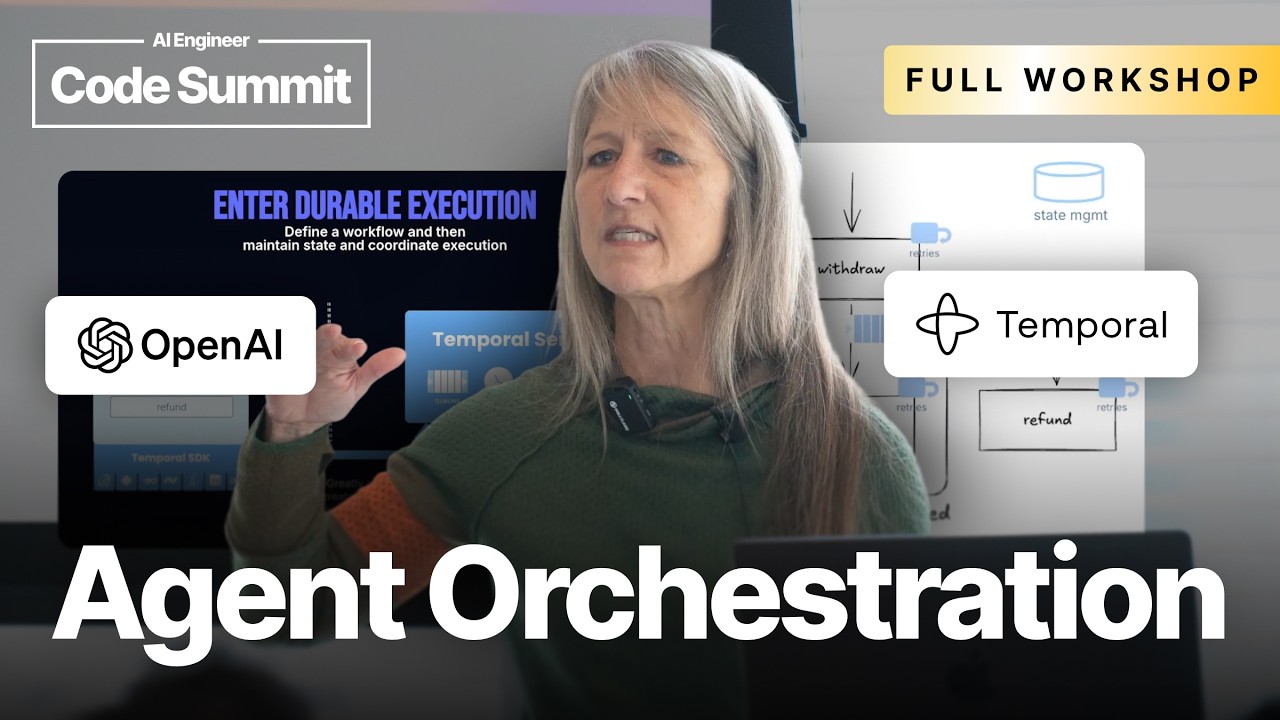
Entering 2026, the operational realities of scaling agentic AI revealed a harsh 'production hell' marked by unpredictable stochastic behaviors, escalating costs, and fragile infrastructure. Organizations like OpenAI partnered with Temporal to leverage durable execution frameworks that address flaky networks and long-running process stability, while cost analyses exposed that chaining multiple GPT-4 calls inflated expenses from fractions of a cent to several dollars per task attempt, with some deployments seeing token usage spike 300%. Debugging remained notoriously difficult due to non-deterministic failures and opaque logs, prompting adoption of transparency tools like DeepSeek R1, which improved visibility but also introduced new vulnerabilities.
To escape production hell, teams pivoted towards hybrid architectures blending deterministic state machines with LLM-powered flexibility, often finding a 40/60 split outperformed fully autonomous agents on reliability and cost metrics. Human oversight remained paramount, with 92.5% of deployed agents delivering outputs to humans rather than other software, supported by confidence thresholds and audit trails to maintain control. Comprehensive observability—structured logging, distributed tracing, and failure classification—became standard, enabling rapid iteration and operational metrics tied to business outcomes such as cost per successful task and retry rates, which proved critical for managing brittleness and scaling effectively.
By mid-2026, the industry consensus solidified around treating agentic AI as engineered systems rather than black boxes, with reliability hinging on pragmatic design, rigorous observability, and structural guardrails rather than solely on model advances. Stripe’s Minions exemplified this approach by layering isolated environments, hybrid orchestration, curated context, and fast feedback loops to tame complexity, while Temporal emphasized state management and developer experience to close the loop from build to production. Crucially, failures increasingly stemmed from system design flaws and integration challenges rather than model hallucinations, highlighting that sustainable scaling requires systematic engineering disciplines including sandboxing, prompt management, and well-defined operational metrics.



Ledgers and Forks: Multi-Agent Breakthroughs
Ledger-based state management, context forking, and modular skills transformed multi-agent coordination, enabling scalable, token-efficient collaboration without context pollution.
By early 2026, innovations in multi-agent coordination pivoted around ledger-based state management and context forking to overcome the limitations of lossy compaction and context pollution. Steve Yaggi's Gas Town project exemplified this shift by persisting work state on a getbacked ledger called beads, enabling seamless scaling to 20-30 agents with robust features like agent mailboxes and structured handoffs. Complementing this, the introduction of 'context fork' attributes in agent skill metadata allowed subagents to execute isolated tasks in clean contexts, preventing the main conversation from becoming cluttered while feeding back only final outputs, thereby enhancing efficiency in repetitive or token-heavy operations.
Claude Code advanced multi-agent orchestration by formalizing subagents as isolated execution units defined via markdown files with YAML front matter, enabling precise control over model selection, tool access, and task scoping. This hierarchical approach allowed subagents to operate with limited permissions—such as restricting a research agent to web searching only—while the main agent dynamically invoked subagents based on metadata, effectively treating them as specialized tool calls. Built-in subagents like explore, plan, and general purpose further streamlined modular workflows, demonstrating a mature framework for scalable, secure, and context-aware multi-agent collaboration.
The emergence of modular 'skills' as an open standard adopted by over 25 tools revolutionized context management by enabling on-demand loading of capabilities that dramatically reduced startup token usage—from approximately 40,000 tokens down to 2,000 for 20 skills. Encapsulated in self-contained folders with metadata and instructions, skills facilitated hierarchical and dynamic agent behaviors that could be selectively invoked to avoid context overload. This modularity, combined with hierarchical agent structures that apply separation of concerns and tool specialization, optimized compute resources by deploying heavyweight models for complex planning at the top level and lighter models for focused subtasks, thus maintaining high signal-to-noise ratios and preventing tool saturation.
Recent advances in context engineering have embraced diverse sources and sophisticated tooling to support scalable multi-agent workflows. Agentic RAG architectures transformed retrieval from fixed pipelines into autonomous, iterative decision-making processes that dynamically orchestrate tools, memory, and planning components, enhancing accuracy despite increased latency and token costs. Complementing this, frameworks like Composio introduced granular, profile-based access controls and hierarchical context segmentation to balance security with operational effectiveness. Meanwhile, innovations such as RecursiveMAS at UIUC and Stanford replaced text-based inter-agent communication with continuous latent embeddings, achieving a 2.4x speedup and 75% token reduction, signaling a new frontier in efficient, scalable multi-agent coordination.



Observability Powers Reliable Agents
Causal tracing, isolated runtimes, and resilient infrastructure have become foundational, letting engineers pinpoint failures and safely scale thousands of autonomous agents in production.
By late 2025, the critical role of advanced observability in agentic AI systems became clear, transcending traditional monitoring by providing causal insights into decision-making processes rather than mere outcomes. Platforms delivering hierarchical traces and causal chain mapping enable engineers to pinpoint cost drivers, bottlenecks, and failure modes such as agents stuck in loops or invoking irrelevant tools repeatedly, which can cause unexpected cost spikes. This granular visibility is essential as agentic LLMs evolve into long-running, autonomous systems, demanding robust observability to ensure reliability and maintainability at scale.
Infrastructure innovations like Databricks’ lightweight modular AI agent framework and Temporal’s durable execution platform exemplify the shift towards decoupled, resilient, and scalable agentic AI deployments. Databricks’ approach separates prompting from tool implementation, enabling rapid iteration and safe experimentation, while their validation framework captures production snapshots replayed through updated agents with judge LLMs scoring accuracy and helpfulness. Meanwhile, Temporal’s open-source framework, integrated with OpenAI’s Agents SDK, addresses challenges such as network instability and rate limiting, providing state management and scalability for long-lived agents—demonstrating real-world production readiness in products like OpenAI’s Codex and image generation.
The emergence of isolated runtime environments—sandboxed micro virtual machines or containerized isolated compute units—has become foundational for safely executing unpredictable, resource-intensive agentic AI tasks. This approach, championed by multiple companies, effectively gives each agent its own 'computer,' tightly controlling access and preventing harmful actions while enabling autonomy and scalability; some customers now launch thousands of such isolated agents concurrently. This cloud-based isolation trend not only enhances security but also supports modularity and maintainability by limiting each agent’s scope, reflecting a broader industry move away from local execution towards managed, scalable infrastructure.
Ensuring safe, stable production AI agents requires a layered reliability architecture combining deterministic guardrails, confidence quantification, and comprehensive observability. Formal action schemas validate every agent action before execution, feeding back errors to the agent for correction and preventing catastrophic failures. Additionally, agents that reason about their confidence levels create natural human oversight breakpoints, with high-confidence actions proceeding automatically and uncertain ones flagged or blocked. This multi-tiered approach, coupled with extensive logging and auditability, builds trust and maintainability into autonomous AI systems, underscoring that AI engineering extends well beyond model building into robust system design integrating security, monitoring, and cost optimization.



System Design, Not Model Size, Wins
Sophisticated orchestration, self-optimizing memory, and recursive multi-agent frameworks now drive agentic AI’s progress, proving that system-level innovation—not just bigger models—delivers real-world gains.
By early 2026, the paradigm of AI advancement has decisively shifted from raw model improvements to sophisticated system-level design and orchestration. Stanford's January 2026 analysis highlights that large language models (LLMs) serve merely as substrates, with true capability gains emerging from orchestrating multi-agent systems through layered components such as retrieval-augmented generation, tool integration, and verification mechanisms that ensure grounding and safety. Google's Titans + MIRAS architecture exemplifies this trend by enabling long-term memory and improved accuracy over extended contexts with fewer parameters, underscoring that the future of agentic AI hinges on complex orchestration layers rather than bigger models alone.
Innovations in agent memory and self-optimization are redefining how AI systems maintain continuity and improve autonomously. The ML-Master 2.0 framework introduces hierarchical cognitive caching, treating ultra-long-horizon agency as a systems problem that separates transient execution details from stable knowledge, while MemoBrain elevates memory to an executive control function that prunes irrelevant reasoning paths akin to version control. Building on this, MiniMax M2.7’s self-refactoring architecture autonomously rewrites its own skills, memory, and workflow rules, achieving a remarkable 30% performance boost without any weight updates and demonstrating that continuous system-level adaptation in production is now feasible.
Recursive models and multi-agent frameworks are converging to unlock scalable, efficient, and powerful agentic AI systems. The integration of tiny recursive models (TRMs) with large-scale generalist models like Gemini promises a transformative leap by combining task-specific efficiency with broad generalization, while future directions point toward embedding recursive reasoning within latent semantic spaces for more scalable complex reasoning. RecursiveMAS, developed by researchers at UIUC and Stanford, operationalizes this by enabling agents to communicate via continuous latent embeddings, resulting in a 2.4x speedup in inference and a 75% reduction in token usage, and offering a scalable blueprint that co-evolves multi-agent systems more cheaply and effectively than traditional fine-tuning methods.
Layered AI architectures are dramatically extending the effective operational time horizons of agentic systems, moving from minutes to days and weeks by progressively stacking scaffolding layers such as ReAct loops, external tools, and memory mechanisms around core language models. The METR time-horizon scale reveals a doubling of effective duration approximately every four months, projecting a working day horizon by 2027 and a working week by 2028. Novel innovations like offloading agent state continuity into external markdown files combined with timers enable agents like Past-Claude and Future-Claude to maintain autonomous operation over extended periods, while the emerging frontier of self-extension empowers agents to autonomously detect and augment their own toolkits without human intervention.