AI adoption’s empathy-first trust playbook
The gist
AI adoption’s not just about algorithms—it demands leaders who can turn organizational anxiety into trust and resilience through empathy, vulnerability, and real human connection.
What to know
- Thought leaders like Sue Bethanis and Kristen Bell found that AI success hinges on leaders acting as empathetic daily change agents and deeply engaging with employees’ fears and behaviors.
- Superhuman’s CTO Loic Houssier showed that empowering internal champions and grassroots 'AI Guilds' builds psychological safety, boosting authentic AI adoption and measurable productivity gains.
- Research by Brené Brown warns that emotional intelligence, ethical sensitivity, and trust-building—not just technical chops—are now the indispensable skills for navigating AI-driven change.
Empathy as Leadership Currency
Leaders who embrace vulnerability and shift their mindset from control to partnership transform AI disruption into organizational resilience and trust.
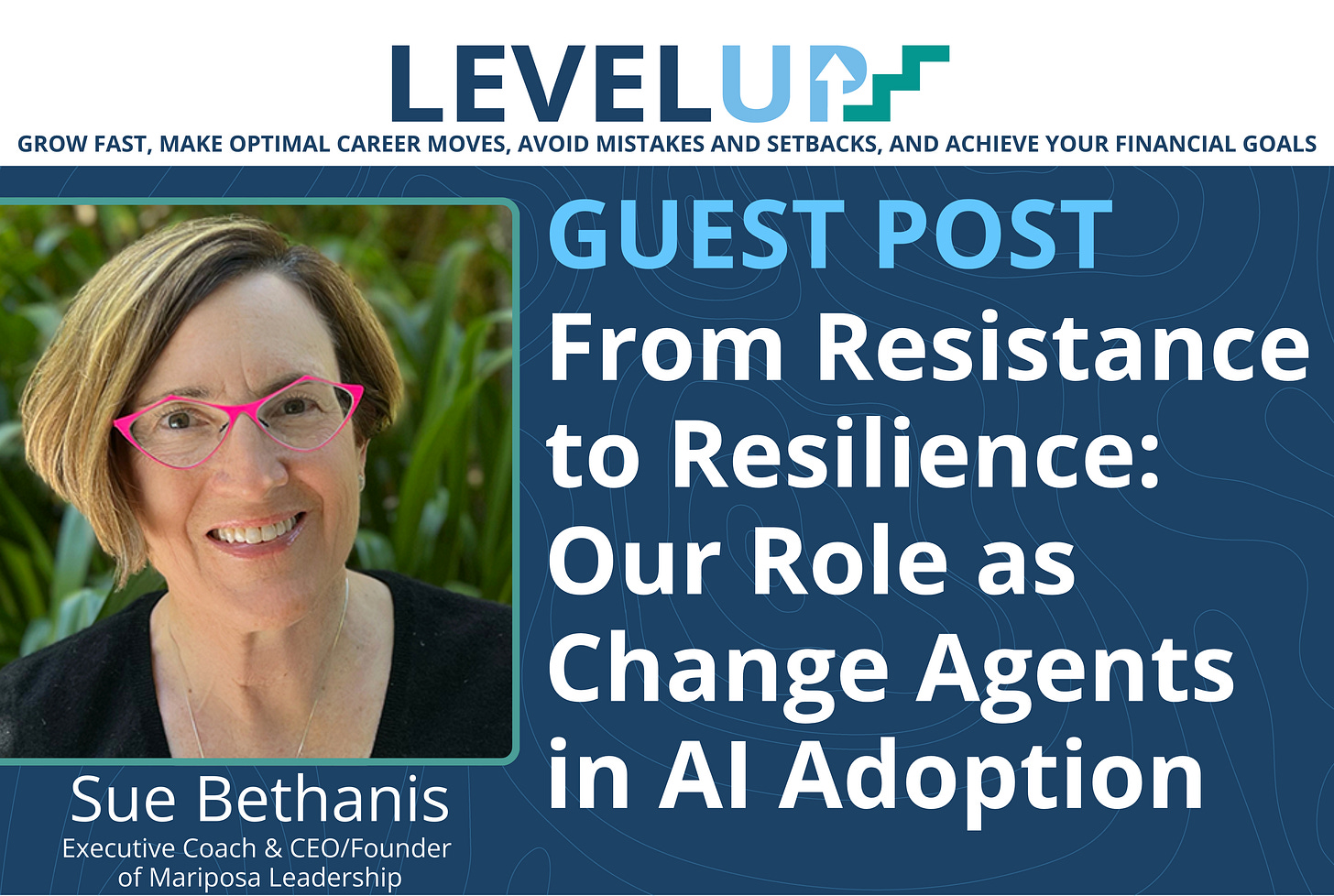
By mid-2025, thought leaders emphasized that successful AI adoption hinges on leaders fully embracing their roles as daily change agents who shift their mindset from viewing AI-driven change as a burden to an opportunity. This transformation requires leaders to elevate their practices toward greater empathy and inspiration, helping their organizations move from resistance to resilience amid the emotional upheaval AI integration causes, including fear and anxiety. Sue Bethanis and others underscored that this human disruption demands leaders who not only manage technology but also deeply engage with the human experience to foster partnership between employees and AI.
By early 2026, research revealed that AI adoption failures often stem not from lack of training but from leadership compatibility issues, particularly related to trust and identity threats. Leaders who see AI as a challenge to their expertise may superficially comply with training yet covertly undermine AI initiatives, as highlighted by diagnostic tools like the AI Leadership Matrix. This underscores the necessity for leaders to undergo mindset shifts and develop empathy to transition from managing people to effectively leading hybrid teams of humans and AI agents, a critical evolution for genuine AI integration.
Kristen Bell’s 2026 research and leadership philosophy crystallize the need for a human-centered approach to AI adoption, where leaders prioritize understanding employee fears and behaviors to design empathetic, engagement-focused programs. She contrasts traditional managerial styles with inspiring leadership that supports employees through technological transitions, noting that AI fundamentally alters workplace human dynamics more than previous innovations. This approach aligns with broader calls for leaders to foster collaborative decision-making across the C-suite, moving away from siloed AI ownership toward facilitative roles often embedded under CIOs or CTOs, thereby empowering teams and measuring success by their independent achievements.

Grassroots Guilds Drive Change
AI adoption accelerates when respected internal champions and bottom-up communities foster psychological safety and validate real productivity gains.
At Superhuman, CTO Loic Houssier demonstrated that overcoming AI skepticism hinges on empowering respected internal champions rather than relying on top-down mandates. By leveraging the Chief Architect to re-evaluate AI tools and fostering a bottom-up 'AI Guild,' the company cultivated grassroots support and psychological safety among engineers, enabling authentic adoption across seniority levels. This approach was complemented by pragmatic measurement strategies combining qualitative feedback with simple quantitative signals like PR labels, which validated engineers’ self-reported 20% productivity gains and helped build trust through transparent, authentic communication.
Highlighting tangible AI successes proved pivotal in converting skeptics at Superhuman, where a compliance task was reduced from days to just 90 minutes, illustrating AI’s practical value beyond abstract promises. This real-world impact, paired with a culture that encourages honest feedback and addresses scarcity mindsets, fosters psychological safety essential for sustained AI adoption. By early 2026, leadership expert Aiko Bethea emphasized that aligning leadership values with team behavior through frameworks like Anchored, Aligned, Accountable strengthens self-leadership and creates environments where employees feel safe to speak up, stay accountable, and authentically elevate their voices despite power dynamics.


Authenticity Over Authority
Sustained AI success depends on leaders’ self-awareness, honest accountability, and the courage to shed defensiveness in favor of genuine team connection.
By early 2026, it became clear that successful AI adoption in organizations hinges less on technical training and more on leaders' authentic self-awareness and accountability. As highlighted in the AI Leadership Matrix, diagnosing leader compatibility and readiness through tools like the Fail-Safe Simulation and Governance Test helps prevent performative adoption by ensuring leaders can build trust—a critical factor that training alone cannot instill. This trust is rooted in leaders grounding their actions in core values, which enables them to navigate the identity threats posed by AI rather than merely addressing utility doubts with skill development.
Authentic leadership demands that leaders genuinely believe in their vision and express it with present conviction rather than future aspirations. As one analysis cautions, speaking things into existence without heartfelt belief risks inauthenticity, while true relatedness within teams requires vulnerability—leaders and members shedding facades to be truly seen. This ongoing practice of belief and relatedness, akin to the unfeigned moments in sports where 'you can't fake it anymore,' forms the foundation for shaping team culture and driving sustainable change.
Honest self-reflection is indispensable for leaders aiming to foster authentic leadership and sustainable organizational change. Thought leaders like Philippe Silberzahn and Michael Timms emphasize that instead of blaming external factors or team members, leaders must confront their own contributions to failures and avoid reflexive defensiveness, which neuroscience shows triggers a brain response akin to physical attack, blocking learning. This accountability enables leaders to recognize legitimate team disagreements and adjust strategies accordingly, closing the gap between intentions and actual impact.
Leaders’ core values directly shape team behavior and culture, making self-leadership grounded in values, alignment, and accountability essential. Frameworks like Aiko Bethea’s Anchored, Aligned, Accountable model help leaders overcome internal barriers such as scarcity mindset and perfectionism—referred to as 'BS'—that hinder authentic leadership. By continuously engaging in self-awareness practices, soliciting honest feedback, and connecting actions to desired impact, leaders can model vulnerability and psychological safety, fostering cultures where teams feel safe to speak up and hold themselves accountable, ultimately driving meaningful and lasting change.




Hybrid Roles, Human Touch
The rise of hybrid leadership and frontier firms reveals that managing AI-human dynamics demands empathy, vision, and new organizational rituals for cohesion.
By late 2025, organizations like Madna pioneered hybrid leadership roles such as the Chief Human Technology Officer, merging HR and technology functions to better address the digital-human interface within workplaces. This evolution reflects the rise of 'frontier firms,' where human teams collaborate directly with agentic AI, demanding leaders who not only manage complex human-AI dynamics but also infuse empathy and vision to create environments where people genuinely want to coexist with technology. Despite advances in virtual collaboration, Madna’s experience underscores the enduring importance of physical co-location for onboarding and cultural cohesion, as many employees initially struggled to navigate traditional office norms after remote-only work.
As AI adoption accelerated into early 2026, hybrid leaders encountered distinct social friction patterns that varied sharply by function, necessitating nuanced, tailored management strategies. CEOs grappled with fragmented organizational motion despite unified strategic intent, often needing to clarify 'what must not be optimised away' to anchor coherence amid AI-driven complexity. Meanwhile, COOs faced workflow interruptions exacerbated by ambiguous authority boundaries, which they mitigated by redesigning escalation paths as formalized systems rather than relying on ad hoc personal judgment. HR leaders confronted heightened accountability ambiguities due to AI’s granular visibility into contributions, prompting a separation of decision quality from outcomes to foster learning without defensiveness. Learning and Development heads warned of accelerating individual learning rates outpacing organizational memory, advocating for learning designs that capture interpretive rationale to prevent knowledge silos and support both human and machine learning.


Modeling AI in Real Life
Leaders who openly experiment with AI in personal and professional contexts—and share both victories and failures—spark authentic team engagement and learning.
Effective AI adoption hinges on leaders who go beyond superficial uses and authentically integrate AI into both professional and personal realms, inspiring their teams through vivid, relatable examples. Instead of merely stating they used AI to draft emails or summarize documents, leaders share stories of leveraging AI for creative tasks like landscaping design, assisting children with homework, or managing health routines, thereby modeling a deeply personal and practical engagement that fosters genuine curiosity and innovation within their organizations.
Creating a psychologically safe environment where experimentation with AI is encouraged without mandates or fear of failure is crucial for cultivating adaptive teams. For instance, during AI Builders Week, over 1,000 cross-functional professionals—including product managers, designers, and engineers—blocked synchronous time to explore AI collaboratively, emphasizing that the primary goal was learning rather than immediate product outcomes. This approach reduces guilt and pressure, replacing the threat of forced adoption with a culture that celebrates iterative discovery and shared growth.
By early 2026, it became clear that leaders build lasting AI credibility not through one-off gestures but through sustained, visible, and honest engagement with AI tools themselves. Rather than delegating experimentation to junior staff or innovation teams, effective leaders openly share both successes and failures, such as candidly recounting how an AI assistant initially produced generic client meeting prep but ultimately uncovered overlooked risks. This transparency, coupled with consistent communication—like monthly leadership segments dedicated to AI learnings—signals authentic commitment and encourages wider team adoption.
True leadership in AI adoption demands prioritization that goes beyond adding AI initiatives on top of existing workloads; it requires deliberate sacrifice to demonstrate seriousness. For example, some leaders have cut down weekly status decks from twelve slides to five, replacing the remainder with AI-generated narratives, thereby signaling that AI is not a peripheral experiment but a strategic focus. This willingness to choose AI over other activities powerfully conveys commitment and helps embed AI into the organizational fabric.

Human Skills Trump Hype
Emotional intelligence, trust, and workplace well-being remain indispensable as AI-generated misinformation and old-school management threaten effective leadership.
Despite AI's rapid advancement, Brené Brown underscores that deeply human skills such as emotional granularity, trust building, and connection remain irreplaceable for leadership relevance, especially as AI-generated research is plagued by misinformation—with 70% of literature review entries being fabricated—highlighting the indispensable role of human critical thinking and discernment in navigating AI-driven environments.
Brown critiques traditional Welchian management for treating human qualities as liabilities rather than assets, a mindset that must evolve to meet today’s demands; she advocates for leadership that cultivates 'productive urgency'—strategic, thoughtful responses rather than reactive haste—emphasizing the freedom found in the pause between stimulus and response to enable better decision-making amid AI-driven change.
By early 2026, Kristen Bell builds on this human-centered leadership ethos by stressing that effective AI adoption hinges on balancing technical innovation with a profound understanding of human emotions, fears, and behaviors; her approach includes designing workplace programs—like onsite daycare and generous PTO—that foster employee engagement and trust, directly linking human well-being to organizational success.
Bell further highlights that addressing the widespread fear and resistance to AI requires leaders who combine technical savvy with emotional intelligence and ethical sensitivity, guiding teams through complex transitions with empathy and foresight; this balanced leadership is crucial as the 'positively correlated amount of fear' grows alongside increasingly intelligent systems, making emotional and ethical considerations central to AI-driven organizational change.
