AI agents rattle SaaS giants: anthropic’s $20 disruptors spark ‘SaaSpocalypse’ fears and market rout
The gist
Anthropic’s $20-per-month AI agents have triggered a SaaS sector meltdown, shaking up the future of enterprise software as investors panic over the death of the per-seat subscription model.
What to know
- Claude Fable 5 and Mythos 5 from Anthropic sparked a 3%–7.8% plunge in SaaS heavyweights like Zscaler, Workday, and Oracle, with Salesforce and Adobe down 43% and 49% year-to-date.
- Geopolitical shockwaves—like the US Apache helicopter incident near Oman—are fueling investor jitters and reinforcing fears of prolonged high interest rates, further hammering already-battered SaaS valuations.
- While AI infrastructure titans like Palantir (135% revenue surge) and Microsoft Cloud thrive, legacy SaaS stalwarts face shrinking ARR, with 17% of firms in the red and cybersecurity outliers like CrowdStrike bucking the trend.
AI Agents Trigger SaaS Panic
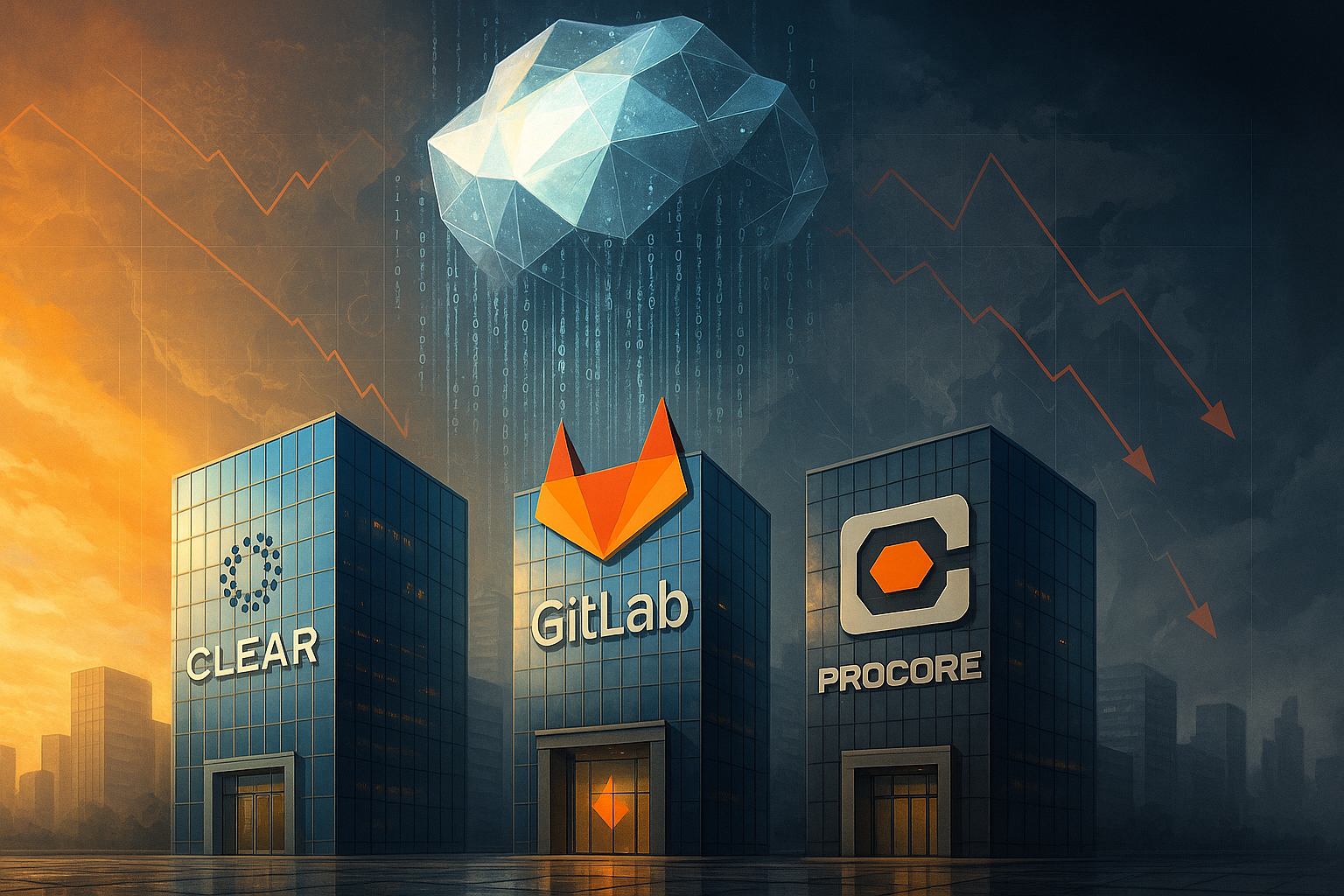
Anthropic’s ultra-cheap AI agents are forcing a reckoning with SaaS business models, driving a $285 billion market rout and fueling fears that high-priced software licenses are rapidly losing relevance.
Anthropic's release of Claude Fable 5 and Mythos 5 has reignited investor fears that advanced AI agents, capable of performing complex, multi-step knowledge work for as little as $20 a month, could fundamentally disrupt traditional per-seat enterprise software subscription models. This intensifying competitive pressure challenges the value proposition of expensive SaaS licenses, reinforcing the so-called 'SaaSpocalypse' thesis that AI advancements threaten to obsolete established software revenue streams. By early 2026, the market had already witnessed a $285 billion rout in software stocks following the launch of Anthropic's Claude Cowork, underscoring the sector's acute sensitivity to AI-driven disruption.
The immediate market reaction to these AI model releases has been broad and severe, with major SaaS companies across various sectors experiencing stock declines averaging around 3% to 7.8%. Notable examples include Zscaler (-3.5%), Dynatrace (-3.4%), Nutanix (-3.3%), Workday (-3.1%), Oracle (-3.1%), Palantir Technologies (-3.2%), and more pronounced drops in Five9 (-7.8%) and AppLovin (-7.4%). This widespread sell-off reflects investor skepticism about the sustainability of traditional enterprise software pricing amid accelerating AI capabilities, as well as the ongoing volatility and uncertainty permeating the software sector.
Despite these sharp declines, the broader software sector remains highly volatile rather than fundamentally broken, with stocks like Zscaler exhibiting frequent large price swings and the IGV software ETF showing a retail-driven rebound of over 20% since its April lows. Institutional investors appear cautious, often waiting for clearer signs of market stabilization before re-entering, signaling that while AI-driven disruption is reshaping competitive dynamics, the market has yet to fully recalibrate its long-term valuation models for enterprise software businesses.

Geopolitics Fuels Tech Volatility
The US-Iran flashpoint near Oman is compounding SaaS market chaos, as geopolitical risk and AI disruption collide to amplify investor anxiety and destabilize software valuations.
The US Apache helicopter incident near Oman, confirmed by US Central Command and framed by former President Trump as an Iranian attack demanding a US response, has injected a significant macroeconomic headwind into the software sector. This geopolitical flashpoint, occurring amid escalating US-Iran tensions over the Strait of Hormuz, compounds the already intense competitive pressures from AI innovations, thereby amplifying investor caution and sector volatility across major SaaS companies such as Workday, Oracle, and Palantir Technologies.
Geopolitical tensions surrounding the US-Iran conflict are reinforcing market fears of sustained higher interest rates, a critical concern for the software industry given its nature as a long-duration asset class reliant on discounted future cash flows. Developments like the Apache helicopter incident bolster the case for prolonged monetary tightening, which directly depresses valuations of SaaS stocks, intensifying the downward pressure on shares of companies including Zscaler, Dynatrace, Nutanix, and Elastic.
The convergence of geopolitical risks and AI-driven market disruptions is creating a feedback loop that heightens volatility and investor wariness within the SaaS sector. While sharp price drops in companies such as 8x8, SentinelOne, and BILL might present buying opportunities for discerning investors, the macroeconomic headwinds from US-Iran tensions exacerbate the challenges posed by Anthropic’s release of Claude Fable 5 and Mythos 5, making the current market environment particularly fraught and unpredictable.
Regulatory Fears and Talent Exodus
A wave of AI talent departures from Alphabet and mounting regulatory scrutiny are deepening doubts about the future of subscription-based software, accelerating selloffs in SaaS giants.
High-profile AI talent departures from Alphabet have exacerbated an already tense regulatory environment, creating a significant overhang that has pulled down the entire communication-services and software sectors. This confluence of talent flight and regulatory scrutiny has intensified investor fears that AI advancements will fundamentally disrupt the traditional subscription-based enterprise software models, triggering widespread selloffs across major SaaS companies.
Investor anxiety over AI cannibalizing the subscription revenue model has been a persistent theme throughout 2026, with notable declines in heavyweight SaaS stocks such as Salesforce, which has dropped roughly 43% year-to-date to near its 52-week low, and Adobe, which has fallen about 49% over the past year to levels not seen in over a decade. Despite these fears, some companies like Salesforce are proactively adapting by investing in AI-driven monetization strategies, including acquiring usage-based billing platforms like m3ter, signaling a strategic shift from seat-based licensing to usage-based revenue models.

Winners, Losers, and AI’s Divide
AI infrastructure leaders like Palantir and Microsoft are thriving while legacy SaaS firms suffer shrinking valuations, as investors rapidly shift billions from traditional software to AI-first platforms.
The software sector has undergone a dramatic repricing since late 2025, with the S&P Technology Software Index plunging 32% amid rapid Federal Reserve interest rate hikes and a structural pivot driven by AI innovation. While IT budget growth has slowed to a mere 3%, enterprises are redirecting over $660 billion toward hyperscaler AI infrastructure investments, intensifying volatility and signaling a reallocation from traditional software subscriptions to AI-centric platforms.
Investor sentiment reveals a stark divergence within the software landscape: while AI infrastructure giants like Palantir, Microsoft Cloud, and Oracle Cloud Infrastructure are posting explosive revenue growth—Palantir surged 135% with 121% US commercial revenue growth—traditional SaaS stalwarts such as Salesforce and Adobe face severe valuation compression despite steady revenue gains. Salesforce’s market cap fell by 25%, and Adobe’s forward P/E multiple contracted to about 10x even as it reported 12% annual revenue growth, underscoring deep investor skepticism about the sustainability of legacy subscription models amid AI disruption.
This sector-wide turbulence is further complicated by uneven company performances and polarized investor behavior, with 17% of software firms experiencing quarter-over-quarter ARR shrinkage—the second highest in five years—highlighting uneven confidence in growth prospects. Cybersecurity firms like CrowdStrike and Palo Alto Networks maintain resilience, trading near year-to-date highs, while traditional SaaS names including Adobe, Intuit, and DocuSign continue to languish, reflecting a market increasingly wary of entrenched software models vulnerable to AI-driven competitors such as Canva and Figma.