AI agents reshape sales teams, quotas soar amid GTM overhaul
The gist
AI agents are turbocharging sales teams, smashing response rates and quotas as GTM playbooks get rewritten for an autonomous, data-fueled future.
What to know
- AI-driven SDR agents like Piper now achieve 7% positive response rates—almost double the industry average—by personalizing outreach with real-time LinkedIn and web data.
- Go-To-Market engineering exploded since 2024, with 2,000+ pros building integrated AI-powered sales systems that let reps spend up to 70% of their time engaging customers.
- Unified data platforms from LangChain, Clay, and Ramp boost lead-to-opportunity conversion by 250%, flatten team structures, and enable sales reps to hit quotas up to 20x higher than before.
AI SDRs Rewrite Outreach Playbook
AI-powered SDR agents now craft hyper-personalized messages by scraping real-time web data, enabling scalable, multi-agent strategies that double engagement rates while freeing humans for high-value sales work.
Early AI SDR agents revolutionized sales outreach by shifting away from training on historical successful emails to dynamically scraping real-time data from sources like LinkedIn profiles, company websites, and funding announcements. This approach enabled AI to deliver highly personalized, value-driven messaging tailored to core buyer personas rather than relying on static templates, marking a fundamental change in how AI supports sales teams.
By late 2025, agentic AI SDRs such as Piper demonstrated significant improvements in customer engagement, particularly after hours, by providing real-time, personalized responses that traditional chatbots could not match. Although configuring these AI agents required substantial upfront effort—including setting data sources and guardrails—this investment freed human SDRs to focus on higher-value tasks and enabled the AI to handle diverse buyer personas with consistent, tailored messaging.
SaaStr’s early adoption case study highlighted AI SDRs’ ability to scale outbound outreach dramatically, sending nearly 20,000 messages over six months and achieving a 7% positive response rate—almost double the industry average. Customizing multiple specialized AI agents for different audience segments allowed hyper-personalized follow-ups at scale, automating not only lead generation but also ticket sales for lower-priced events, though ongoing human collaboration remained essential to oversee and consolidate AI outputs.
In parallel, AI agents began transforming customer support by maintaining conversational context and reducing transfers between human agents, effectively capturing and qualifying leads while blurring traditional boundaries between sales, marketing, and support. Tools like Intercom’s Fin achieved over 80% automation of customer service interactions and extended into sales qualification, while autonomous AI customer success VPs like SaaStr’s QB managed sponsor communications at scale, sending hundreds of personalized emails overnight and outperforming human teams in engagement and issue resolution.



Rise of the GTM Engineer
Go-to-market engineers have become indispensable architects, blending technical and sales expertise to build AI-driven systems that slash headcount, boost pipeline, and command premium compensation across the industry.
The emergence of Go-To-Market (GTM) engineering as a distinct and vital discipline reflects a transformative shift in how organizations bridge sales and technology. Initially focused on automating outbound workflows, GTM engineers now architect AI-driven systems that span inbound, outbound, install-based sales, and broader go-to-market functions, enabling sales teams to spend up to 70% of their time engaging directly with customers. Companies like Vercel and Ramp exemplify this evolution, with GTM engineers building sophisticated AI agents that integrate diverse data sources and continuously iterate with sales teams to scale winning playbooks, dramatically reducing headcount while increasing pipeline generation.
Since late 2024, the GTM engineer role has rapidly expanded in scope and recognition, evolving from a niche position often conflated with systems administration or tool jockeying into a strategic internal AI product owner embedded across sales, marketing, RevOps, and customer success. This role demands a blend of technical prowess, domain expertise, and creativity, with coding skills commanding a $40K compensation premium and 72% of practitioners reporting direct revenue impact. The role’s growth is underscored by LinkedIn data showing over 2,000 professionals adopting the title globally within 15 months and thousands of open positions, particularly in agencies and marketing teams, signaling its establishment as a core organizational function.
GTM engineers have transcended their original remit of automated outbound sales to become architects of integrated, state machine-modeled systems that orchestrate entire go-to-market workflows. At Vanta, for example, GTM engineers design bespoke AI SDRs tailored to nuanced buyer profiles, codifying tacit knowledge from top sales reps to scale best practices organically. This systems-thinking approach emphasizes production reliability, edge case handling, and continuous learning, assembling AI agents from existing building blocks rather than building infrastructure from scratch. The result is scalable, efficient pipelines that support teams ranging from a handful of reps to thousands, with measurable impacts on pipeline generation and conversion rates within 60 days.
Despite the role’s technical demands, GTM engineering is distinguished from traditional growth or systems engineering by its cross-functional reach and emphasis on deep GTM domain knowledge. Many GTM engineers come from backgrounds in analytics, marketing technology, or revenue operations, leveraging skills in SQL, API integrations, and tools like Clay and Claude Code to scale manual playbooks and automate complex workflows. This human-in-the-loop model requires close collaboration with sales teams to align AI agent actions with human efforts, addressing challenges such as managing data orchestration across conflicting tools and maintaining domain reputation during outbound campaigns. As Archie Moore of Clay notes, treating GTM like an engineering discipline with sprint-based, iterative roadmaps is key to gaining a competitive edge.





Unified Data Powers AI GTM
Companies are dismantling fragmented sales stacks in favor of unified, continuously updated data architectures—fueling predictive AI agents and flattening organizations by eliminating manual oversight.
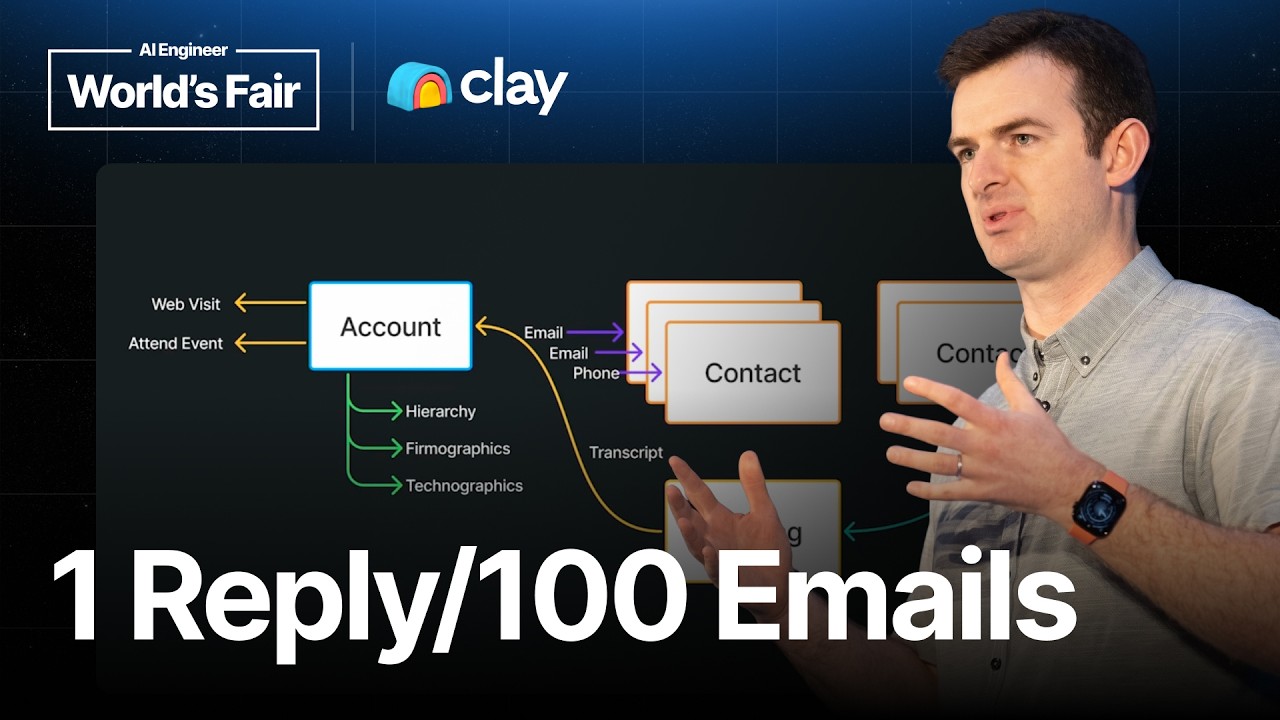
The foundation of AI-driven go-to-market (GTM) systems hinges on building unified data and orchestration architectures that consolidate fragmented information into a single, continuously updated context layer. Companies like LangChain and Ramp have demonstrated that integrating CRM, product usage, paid ads, and communication data into a cohesive 'ABM brain' enables scalable workflows and significantly improves outcomes, such as LangChain’s 250% increase in lead-to-qualified-opportunity conversion. This unified context not only powers AI agents with reliable, real-time data but also transforms traditional CRM-centric approaches into dynamic, predictive systems that support multi-channel orchestration and reduce reliance on manual oversight.
Orchestration logic emerges as the critical connective tissue that harmonizes diverse GTM tools and data sources into integrated, agentic workflows capable of autonomous decision-making and execution. Platforms like Clay, which commands a 65% adoption rate and a $5 billion valuation, exemplify how low-code workflow builders, aggregated data marketplaces, and agentic AI systems are reshaping the GTM tech stack by enabling seamless coordination across sequencing, enrichment, and CRM tools. This orchestration layer, owned by specialized GTM engineers, prevents costly errors such as incorrect customer outreach and ensures that AI-driven automation operates reliably at scale, addressing the complexity of asynchronous syncing and conflicting data views.
The evolution toward AI-native GTM architectures is marked by the emergence of dedicated GTM engineering roles that own the full data and workflow lifecycle, iterating on agent pipelines using outcome metrics to optimize performance continuously. Case studies from companies like Vercel, Notion, and Canva reveal that small, focused teams can dismantle fragmented stacks—composed of Salesforce, Gong, Outreach, and others—and rebuild unified decisioning platforms where AI agents and human reps collaborate on a shared source of truth. This shift enables flatter organizational structures with fewer managers, as AI-driven oversight replaces traditional pipeline reviews, and substantial AI investments—averaging $30 to $40 per employee per month—reflect a commitment to integrated, scalable AI infrastructure rather than isolated tools.
Addressing the inherent complexity of GTM data—characterized by constantly changing account information and fragmented signals—requires sophisticated data orchestration strategies such as 'waterfalling' to layer multiple data vendors and build a 'perfect virtual copy' of the market. This approach, championed by experts like Everett Berry of Clay, tackles challenges like domain reputation management in email outreach and multi-channel coordination by deploying agentic workflows that maintain state over weeks or months and separate AI-updated CRM fields from those managed by humans or deterministic systems. The result is a resilient, orchestrated system that shares context across agents and tools, enabling continuous learning and next-best-action recommendations, which remain cutting-edge but essential for sustained GTM success.
Teams Reshaped by AI Integration
AI-driven workflows have replaced traditional sales roles and handoffs with smaller, highly skilled teams focused on customer engagement, as human-agent collaboration redefines productivity and quota expectations.
The integration of AI into go-to-market teams has fundamentally transformed traditional sales workflows and team structures by embedding technical expertise directly into customer environments. The rise of the go-to-market engineer role over the past two years exemplifies this shift, enabling teams to deploy AI-driven tooling that personalizes outbound prospecting and automates repetitive tasks, as seen at companies like Vercel where AI agents replaced large SDR teams and generated 96% of marketing content. This evolution fosters a more consultative, relationship-based sales model that requires deep customer understanding and continuous adaptation.
By early 2026, AI-native companies began redesigning their go-to-market execution away from traditional role-based ownership toward system-based outcomes, replacing siloed handoffs and approvals with continuous, integrated workflows that reduce delays and interpretation loss. This shift addresses the new primary constraint of coherence rather than capacity, as disconnected parts previously hindered alignment. The hybrid hub-and-spoke model, where a central AI/automation team builds core platforms and functional GTM teams customize workflows, empowers non-engineers to automate complex tasks, dramatically boosting productivity across departments, as demonstrated by Ramp and Eleven Labs’ 50% productivity gains.
The transformation driven by AI is not about replacing people but about rethinking outdated organizational assumptions and roles. Companies like Serval have eliminated traditional functions such as SDRs and solutions engineers by equipping sales reps with AI tools that provide instant technical answers and content creation during calls, while still maintaining smaller but essential human roles like RevOps. This hybrid human-agent collaboration model enhances team dynamics by automating manual, non-selling tasks—Mutiny’s sales reps, for example, now spend nearly 100% of their time engaging customers thanks to AI handling 80% of administrative work—thereby enabling smaller, highly skilled teams to operate with quotas up to 20 times higher than industry norms.
After a year of AI adoption, go-to-market organizations have become flatter and more data-driven, with fewer managers per rep as AI systems absorb oversight functions and pipeline reviews shift from rep self-reporting to CRM data analytics. AI agents now autonomously handle key operational tasks such as signal identification, account research, outreach drafting, and CRM logging, with human reps reviewing outputs before buyer engagement, exemplifying hybrid collaboration. This democratization of data and workflow automation empowers GTM teams to independently build custom dashboards, deploy automations, and personalize customer interactions without IT bottlenecks, ensuring continuous iteration and hyper-personalization remain central to maintaining competitive advantage.



System-Driven Orchestration Takes Over
AI-native orchestration platforms now autonomously coordinate multi-agent, multi-channel sales execution, outpacing CRM-centric models and positioning AI agents as true colleagues within GTM teams.
By early 2026, go-to-market execution was undergoing a fundamental transformation from traditional role-based coordination to AI-native, system-driven orchestration that emphasizes continuous, adaptive flows over staged handoffs. This evolution, highlighted in GTM 40 analyses, revealed that failures in GTM efforts increasingly stemmed from incoherent, disconnected system parts rather than capacity constraints, with AI enabling faster, more precise execution by minimizing delays and interpretation losses inherent in human handoffs.
The maturation of multi-agent, multi-channel GTM orchestration platforms marked a decisive shift away from CRM-centric models toward composable, intelligence-as-a-service architectures. Companies like Clay and n8n, valued at $5 billion and $2.5 billion respectively, exemplify this trend, while advanced agentic AI systems such as Anthropic’s Claude Cowork and OpenAI’s Codex have democratized AI agent access beyond developers. These agents autonomously execute complex, semi-deterministic workflows—deciding next sales steps or managing triggered campaigns—outperforming traditional low-code tools and signaling a new era where AI agents act as autonomous colleagues within GTM ecosystems.
Innovators like Vanta and Exa have demonstrated the power of agentic workspaces and integrated multi-channel orchestration by connecting workflows into state machine models and deploying AI clones such as Jeffbot, which drafts personalized messages on demand. Vanta’s approach, leveraging platforms like Dust.tt, empowers sales reps to build and experiment with AI agents organically, surfacing tacit knowledge and enabling real-time, personalized engagement through enriched data signals stored as Salesforce objects. Similarly, Exa runs a dozen AI agents within Slack, maintaining live, programmatically accessible market models that enable agents to act autonomously and contextually, underscoring the critical principle that 'agent first requires API first' for effective orchestration.
The latest advances from OpenAI, HubSpot, Scala, and Cloudflare illustrate a converging vision of intelligence-as-a-service platforms that transform static customer data into dynamic, predictive assets. HubSpot’s ChatGPT research connector and OpenAI’s company knowledge modules enable enterprise clients to apply doctorate-level analytics directly to private data with strict privacy controls, while Scala pioneers autonomous operations platforms where AI agents collaborate with humans in hybrid workforces, automating mundane tasks to elevate operations from cost centers to value creators. Cloudflare’s AI agentic workspace further empowers GTM teams to autonomously spin up compute environments for diverse use cases like QBR deck creation and renewal preparation, supported by curated skill repositories and real-time insight pushing to prevent bottlenecks, collectively enabling rapid, personalized multi-channel orchestration at scale.


Cold Email Dies, AI Rises
With cold email reply rates collapsing, GTM teams are turning to AI agents for autonomous outreach, inbox management, and even AI-to-AI negotiations—while wrestling with the complex realities of domain reputation and human-agent alignment.
By early 2026, cold email outreach effectiveness had sharply declined, with reply rates plunging to as low as 0.5%, meaning only one in 200 emails elicited a response. This dramatic drop has forced GTM teams to rethink traditional outreach, moving toward sophisticated multi-channel strategies and embracing AI not just for snippet generation—as 75% of senders do—but increasingly for full email composition and autonomous inbox management. The vision of AI-to-AI communication, where agents self-optimize outreach and filter responses before involving humans, signals a transformative shift in how GTM execution will evolve.
Managing domain reputation and deliverability remains a complex, high-stakes challenge in AI-driven GTM, as companies must continuously warm mailboxes, maintain domain health, and navigate the opaque policies of providers like Google and Microsoft. To mitigate risks, firms often deploy multiple domains for outreach, creating intricate routing and response coordination problems that require sophisticated orchestration. Everett Berry of Clay emphasizes that mishandling these execution details—such as sending emails on behalf of reps without proper safeguards—can irreparably damage domain reputation, underscoring the critical need for technical rigor in GTM engineering.
The human-agent interface stands out as the most persistent and thorny challenge in AI-driven GTM, with sales reps often unaware of or misaligned with AI agent actions. This disconnect complicates workflows, especially since humans must still engage directly with prospects, while AI handles routine outreach and data orchestration. Solutions involve building long-running, account-specific AI agents that maintain state over weeks or months, integrating diverse data sources like CRM and email, and triggering actions intelligently. Yet, continuous learning and next-best-action recommendations remain cutting-edge problems, highlighting the ongoing evolution required to harmonize human and machine collaboration.
As cold email commoditizes and reply rates dwindle, GTM strategies are shifting toward brand building and value creation to sustain long-term engagement. This strategic pivot demands that outreach architects replace low-tier practitioners, focusing on multi-touch, persona-driven campaigns that integrate brand assets and leverage AI to prioritize seller efficiency. Everett Berry notes that sellers currently spend only 30% of their time selling, with the rest consumed by administrative tasks; flipping this ratio through focused workflows and UX innovation is essential. Ultimately, the expanding role of AI agents in orchestrating complex, multi-channel GTM efforts offers a powerful foundation for growth—provided teams address the nuanced execution and data integration challenges that underpin success.