AI agents take the wheel: modular architectures and context engineering redefine enterprise software in 2026
The gist
AI agents, powered by modular architectures and context engineering, are taking over enterprise software in 2026—rewriting the rules of automation, accuracy, and operational roles.
What to know
- By late 2025, modular multi-agent systems with specialist models and orchestrators (think Databricks, Stripe) became the backbone of reliable, scalable enterprise AI.
- Context engineering—dynamic pipelines that cut hallucinations by up to 80%—emerged as the must-have capability, with Elastic and Salesforce leading adoption by mid-2026.
- AI agents now run coordinated ‘assembly lines’ for software development and business ops, slashing costs by up to 25% and creating new roles like 'agent managers' to keep human oversight at the helm.
Modular Agents Take Control
Enterprise AI shifted from monolithic models to modular, orchestrated agent systems, where architectural guardrails and design patterns—not just bigger models—now define reliability and scale.
By late 2025, best practices in AI agent architecture emphasized modular, composable designs centered around a primary orchestrator that delegates tasks to specialized smaller models or deterministic tools, as seen in financial advisory prototypes where multi-agent hierarchies caused critical context loss after just three handoffs. Companies like Databricks demonstrated that pairing a 7-billion-parameter specialist model with a 34B planner outperforms larger monolithic models while reducing token consumption, shifting engineering focus from complex inter-agent communication to robust API design and error handling. This modular approach leverages external verified tools to offload execution, improving reliability and efficiency beyond what large models alone can achieve.
Architectural guardrails and system-level controls have emerged as indispensable for reliable AI agents, moving beyond prompt-based instructions to enforce constraints and safety at the orchestration layer. For example, OpenClaw’s failure highlighted the insufficiency of prompt instructions alone, leading to designs where hard guardrails prevent unauthorized actions such as sending emails without confirmation, enforced through Docker isolation and permissioned tool access. This separation of roles—where a Manager plans and delegates without direct environment manipulation, and Executors carry out tasks—preserves modularity, session integrity, and robust error handling, as demonstrated by Claude and n8n integrations.
The transition from AI demos to enterprise-grade agentic systems hinges on rigorous architectural design patterns rather than solely on model improvements. Antonio Gulli’s 2025 work introduced 21 fundamental agentic design patterns, with five key ones—Reflection, Routing, Communication, Guardrails, and Memory—providing immediate impact by enabling agents to plan, self-critique, route tasks cost-effectively, and maintain long-term context. By early 2026, Stanford researchers and industry leaders reinforced that orchestration layers integrating retrieval-augmented generation, context engineering, verification, and guardrails are the real leverage points for scalable, reliable AI workflows, underscoring that “LLMs are just the substrate.”
Robust production deployment of AI agents demands systematic engineering approaches that treat agents as complex systems rather than black-box models. Stripe’s Minions exemplify this with isolated environments, hybrid orchestration combining deterministic guardrails and agentic flexibility, curated context feeds, and fast feedback loops that shift engineers’ roles from coding to code review. Similarly, Cursor’s coding agent architecture distinguishes the agentic model as the 'brain' from the coding agent system as the 'body,' managing iterative execution and context until successful build and tests, highlighting the critical role of extensive systems engineering to ensure scalability and reliability in real-world workflows.




Context Engineering Becomes Core
Dynamic context pipelines and rigorous orchestration—not just raw data—have become the backbone of trustworthy AI, with context curation and compression now determining agent accuracy and performance.
Context engineering and data orchestration have emerged as foundational pillars for reliable AI agent performance, transforming traditional data pipelines into dynamic, probabilistic context pipelines that precisely control information flow and quality. Nick Schraff highlights this evolution by describing context pipelines as the 'new data pipelines,' emphasizing the need for rigorous scheduling, quality testing, and evaluation to enhance AI accuracy and reliability. This nuanced orchestration, distinct from classical data workflows, underpins the AI platform itself, making data strategy inseparable from AI strategy in enterprise environments.
By late 2025 and early 2026, leading companies like Elastic and Salesforce positioned context engineering as the critical differentiator between successful AI agents and those prone to hallucinations or failure. Elastic’s Ken Exner and Antonio Gulli underscored how integrating context with observability, standardized protocols like MCP, and agentic design patterns enables AI agents to reason more effectively and reduce errors. Salesforce’s federated 'Data 360' layer exemplifies how harmonized, orchestrated data across applications empowers agents to deliver meaningful enterprise insights, reinforcing that without robust context, even the most advanced models falter.
The art of context engineering involves a delicate balance: curating relevant, actionable information within token limits to prevent 'context rot'—a degradation in model performance caused by excessive or irrelevant data. Analysts note that optimal context windows typically range between 100K to 200K tokens, far less than the theoretical maximums of modern LLMs, necessitating sophisticated ranking, compression, and masking techniques. Small language models like embeddings and rerankers play a vital role in prioritizing and condensing context, while enterprises such as Dropbox and Cloudflare innovate by enabling LLMs to autonomously invoke specialized tools or 'super tools' to access indexed content efficiently.
Intent engineering complements context by embedding explicit, enforceable objectives and constraints into AI agent design, moving beyond mere prompt writing to system-level specification. As emphasized in early 2026 analyses, many AI agent failures stem not from model limitations but from vague or incomplete intent, leading to unintended or risky behaviors. Effective intent engineering ensures that constraints and risk considerations are codified within the system architecture, enabling agents to operate safely and predictably. A practical litmus test is whether a human could replicate the agent’s decisions under pressure using the same intent specification, highlighting the centrality of clear, actionable intent for scalable autonomy.
By mid-2026, context engineering had solidified as a strategic enterprise capability essential for AI ROI and adoption, with companies like Workday and Virgin Media O2 demonstrating how embedding context layers transforms AI from pilot projects into production-grade tools. This shift requires multi-player, dynamic context architectures that integrate diverse data sources, enforce trust and governance, and support reusability across business domains. Gartner’s research confirms that semantic coherence in AI-ready data can boost accuracy by up to 80% and reduce costs by 60%, making context not just a technical concern but a critical business asset that CFOs and data leaders must prioritize.
The transition from prompt engineering to context engineering marks a paradigm shift in AI development, where success hinges on architecting the precise 'Context Package' fed to models rather than crafting better prompts alone. This systems engineering challenge involves orchestrating multi-source data retrieval, memory management, and state tracking to transform LLMs from probabilistic text generators into reliable reasoning engines. As Addy Osmani and Simon Willison articulate, rigorous testing defines the operational context, enabling iterative refinement and reducing hallucinations, while agentic workflows leverage orchestration layers and standardized tool definitions like MCPs to sustain autonomous, context-aware agent operation.





AI Assembly Lines Redefine Dev
Software development now runs on coordinated fleets of specialized agents, transforming engineers into high-level orchestrators while persistent state management and gamified workflows enable scalable, autonomous code factories.
Multi-agent orchestration in AI-driven software development has evolved into a sophisticated ecosystem where specialized agents handle distinct phases of the development lifecycle—from planning and coding to testing, review, and deployment—operating much like a coordinated assembly line under human supervision. Early adopters such as Microsoft’s Azure AI Foundry and open-source projects like Claude Squad demonstrate practical implementations of these workflows, leveraging protocols like the Model-Context Protocol (MCP) for seamless agent communication and state sharing. This paradigm shifts engineers’ roles from micromanaging individual tasks to high-level orchestration, enabling agents to autonomously coordinate, request human feedback only at critical junctures, and collectively transform software development into a scalable, autonomous factory-like process.
By late 2025 and early 2026, thought leaders like Steve Yegge emphasized that mastering multi-agent orchestration is now the core skill in AI-driven coding, likening it to managing a NASCAR pit crew where agents reserve files, communicate via MCP, and coordinate as a tightly-knit village. Tools such as Yegge’s VibeCoder dashboard represent a leap beyond traditional AI coding assistants, enabling engineers to manage fleets of agents rather than write lines of code themselves. However, this orchestration demands rigorous operational strategies to handle agent unpredictability—Yegge’s '2,000-hour rule' underscores the necessity of extensive practice to build trust and avoid costly errors like accidental data deletion. Complex challenges like code merging remain bottlenecks, with some teams dedicating a single engineer per repository to maintain workflow integrity, illustrating that human oversight remains indispensable even as autonomy scales.
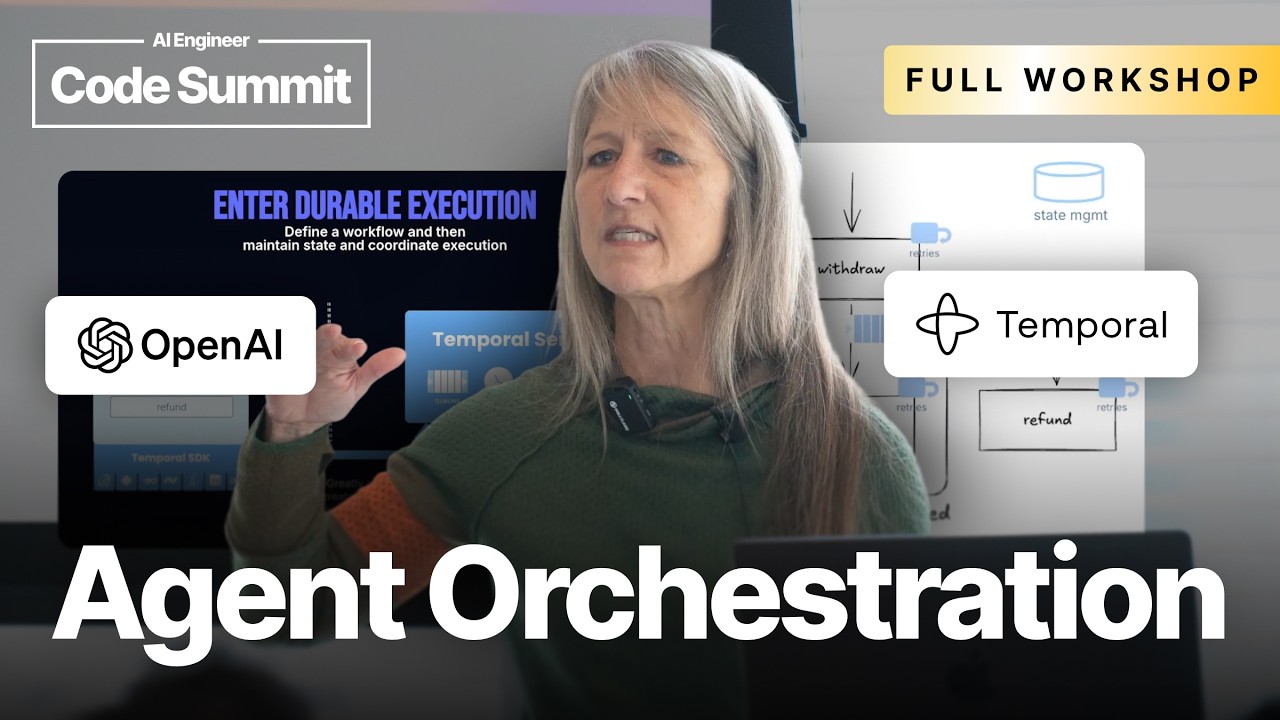
Innovations in state management and workflow coordination have been pivotal in scaling multi-agent systems to handle complex, long-duration tasks reliably. Projects like Steve Yaggi’s Gas Town employ persistent external ledgers to maintain work state beyond ephemeral agent memory, enabling workflows to survive crashes and scale to dozens of agents with structured identities, mailboxes, and handoffs that reduce chaos. Gamified orchestration frameworks such as Gastown introduce specialized agent roles—mayor, polecats, deacons—that mirror human organizational structures, facilitating both ephemeral task execution and persistent context retention. Meanwhile, durable execution frameworks like Temporal, integrated with OpenAI’s Agents SDK, provide resilience against network instability and rate limits, supporting nested micro-orchestrations and continuous operation over hours or months, thus underpinning the feasibility of scalable, autonomous AI workflows in production environments.
The human role in multi-agent orchestration is rapidly evolving from direct task execution to high-level supervision, strategic planning, and workflow design, as agents take on more open-ended, asynchronous, and ambitious workloads. Experts like Peter Steinberger and Louis Knight-Webb highlight that effective orchestration involves managing multiple parallel agent streams to maintain flow states and reduce cognitive overload, while also defining clear workflows, roles, and operational guardrails to ensure quality and safety. Human-in-the-loop remains essential for steering, clarifying intent, and final quality assurance, especially given the risks of AI unpredictability and the need for strict CI/CD gates to prevent catastrophic errors. This shift demands new mental models—from users issuing prompts to orchestrators designing agent teams embedded within native work environments—enabling scalable, reliable autonomous workflows that transform software development into a collaborative human-AI endeavor.






Governance Through Causal Visibility
Causal observability, modular governance layers, and layered human oversight are now essential to prevent runaway costs and errors, ensuring AI agents remain safe, compliant, and trustworthy in production.
Operational governance of autonomous AI agents hinges on deep, causal observability that transcends traditional monitoring by revealing not just what happened but why decisions occurred, enabling detection of subtle failures such as infinite loops or cost overruns. This approach, championed in late 2025, emphasizes three pillars—causal chain tracing, decision provenance, and failure surface mapping—that collectively provide product leaders with granular visibility into every function call, including LLM invocations and tool usage, thereby supporting risk management and trust maintenance in production environments.
By early 2026, industry leaders like Databricks and OpenAI integrated modular architectures and durable execution frameworks such as Temporal to enhance operational governance, enabling specialized domain agents to collaborate while decoupling prompts from tool implementations for safer, rapid iteration. This modularity, combined with orchestration layers that assign tasks, enforce permissions, and implement spend caps, reflects a maturing governance model where a central 'manager' orchestrates multiple agents, ensuring compliance and human override capabilities essential for safe production deployment.
Human-in-the-loop designs remain a cornerstone of AI agent safety and trust, with research showing over 92% of deployed agents deliver outputs to humans for review rather than fully autonomous handoffs. Techniques such as confidence thresholds, preview-confirm workflows, and explicit intervention points, as well as layered supervision involving AI observers and human supervisors, are critical to catch inconsistencies and prevent catastrophic failures. Companies like Mistral AI and Vanta exemplify this approach by embedding human approvals in high-stakes workflows and compliance tasks, reinforcing the necessity of continuous human oversight amid rapid AI iteration.
Security and safety in AI agent operations demand strict architectural boundaries and sandboxing to prevent unauthorized access and mitigate risks like prompt injection or rogue behaviors. The OpenClaw case study illustrates how isolating API keys, enforcing tool approval, and separating managerial decision-making from execution preserves system integrity. Moreover, operational governance must incorporate rigorous testing, version control of prompts, and layered reliability architectures combining deterministic guardrails with confidence quantification to manage the stochastic nature of AI, as underscored by Alibaba’s findings on alignment risks and the growing consensus that trust emerges progressively through controlled delegation and continuous verification.



The Hidden Costs of Autonomy
Despite automation gains, AI agent deployments face unpredictable costs, debugging complexity, and a persistent need for human-in-the-loop oversight, driving a shift to hybrid architectures blending deterministic logic with LLM flexibility.
By early 2026, engineering teams deploying agentic AI agents grappled with the twin challenges of escalating operational costs and inherent non-determinism. Although a single GPT-4 call costs mere fractions of a penny, chaining multiple calls—often six or more—combined with retries and debugging runs, rapidly inflated expenses to several cents per task, with mid-sized deployments facing monthly LLM costs between $1,000 and $5,000. This economic pressure is compounded by reliability plateaus; as one analysis highlighted, deterministic systems like decision trees often outperform AI agents in both cost and predictability, with a 15-branch decision tree costing nothing and achieving 99% success versus an agent’s $0.30 per attempt at 78% success. Debugging these agents is uniquely challenging due to their stochastic behavior and lack of clear breakpoints, necessitating new transparency tools such as DeepSeek R1’s explicit reasoning traces, which, while improving visibility, introduce safety vulnerabilities. These intertwined challenges underscore the need for hybrid architectures that blend deterministic logic with LLM flexibility, as demonstrated by agents composed of roughly 40% state machine and 60% LLM components, which outperform fully autonomous agents across production metrics.
Practical deployment insights emphasize that human-in-the-loop (HITL) designs remain indispensable for safe and effective AI agent operation, with studies showing that 92.5% of deployed agents deliver outputs to humans rather than other software. Techniques such as confidence thresholds, intervention points, and audit trails ensure collaboration rather than unchecked autonomy, reflecting a broader consensus that agents won’t replace all workflows or operate without oversight, especially in enterprise contexts. This human oversight extends into engineering workflows where roles are evolving from manual coding to high-level supervision, judgment, and orchestration of AI teams. For example, at Amazon, engineers build specialized agent teams with clear hand-offs—such as TPMs triaging tickets and reviewers addressing comments—freeing up engineering capacity equivalent to more than one full-time engineer. This shift requires deliberate scoping, explicit task descriptions, and iterative manual execution before full automation, highlighting that successful agent deployment is as much about managing human-machine collaboration as it is about AI capabilities.
Robust observability and structured diagnostic workflows have emerged as critical engineering pillars for managing the complexity and unpredictability of AI agents in production. Organizations like Capital One and teams working on large-scale AI training clusters have implemented unified telemetry systems combining GPU, host, network, and training metrics into persistent time-series databases, enabling AI agents to autonomously execute multi-layered diagnostic runbooks from symptom detection to root cause analysis. This approach replaces tribal knowledge with repeatable, skill-based pipelines that continuously evolve through incident feedback, improving diagnosis speed and accuracy without requiring code changes. However, human verification remains essential for high-impact decisions, underscoring the evolving engineering role from direct intervention to meta-level oversight. These practices not only reduce operational overhead but also facilitate scalable and reliable AI deployment in complex enterprise environments.
The integration of AI agents into software engineering workflows is fundamentally reshaping engineering roles and operational practices. By 2026, companies like Stripe and Vanta demonstrated that custom AI harnesses and agentic workflows could automate complex, repetitive tasks such as security compliance questionnaires and code generation, but these gains come with increased maintenance burdens and the necessity for human-in-the-loop quality control. Engineering leadership now prioritizes operationalizing AI agents within the software delivery lifecycle, focusing on clear metrics, end-to-end visibility, and disciplined iteration rather than chasing the latest model capabilities. This evolution includes managing the 'blast radius' of autonomous AI edits, embedding verifier loops to mitigate hallucinations, and adopting multi-agent specialist modes to balance conflicting priorities like security and shipping velocity. Ultimately, the role of engineers is shifting from hands-on coding to orchestrating AI teams, exercising judgment, and ensuring alignment with business goals, as AI accelerates throughput but also amplifies cognitive overhead and the need for robust governance.





Agents Reshape Enterprise Layers
AI agents are supplanting legacy systems with dynamic, user-centric layers that autonomously interpret intent, drive productivity, and create new management roles, fundamentally transforming how enterprises operate and deliver value.
By(https://www.youtube.com/watch?v=BkJyVjq457w), AI agents are set to fundamentally transform enterprise software and workflows by replacing traditional legacy systems of record with a dynamic, user-proximate agent layer that autonomously interprets and executes unsigned intent. Sarah Wang highlights this pivotal shift, predicting that the emerging agent layer, which intimately understands user preferences and context, will not only accelerate task fulfillment—such as near-instant IT service management—but also enable new AI-driven companies like Resolve and Traversal to disrupt established platforms like Data Dog. This transition marks a profound redefinition of enterprise operations, where AI agents become the primary interface and value driver, effectively collapsing the gap between human intent and execution.
The rise of personal AI stacks and agentic workflows is revolutionizing individual productivity and developer practices by enabling users to orchestrate fleets of specialized AI agents that autonomously manage complex, multi-step tasks. Thought leaders like Parth Patil emphasize the shift from AI as a mere productivity tool to a meta-tool that facilitates high-bandwidth human-AI collaboration through techniques such as role-based prompting and meta-prompting. Real-world examples, including Kieran’s compound engineering system and Nat Elias’s revenue-generating personal agent, demonstrate how deeply personalized AI assistants are evolving into autonomous digital workers that not only streamline daily workflows but also run entire businesses with minimal human oversight.
As AI agents mature into operational employees, enterprises face new challenges and opportunities in governance, management, and economic impact. The emergence of roles like 'agent manager' reflects the necessity to orchestrate, monitor, and control multiple AI workers with policies on permissions, spend caps, and audit logs to ensure safe and scalable deployment. Pricing models are evolving from per-seat licenses to outcome-based metrics, such as tickets resolved or invoices processed, underscoring the shift toward AI agents as autonomous contributors. Companies like OpKey report substantial operational efficiencies—up to 40% time savings and 25% cost reductions—illustrating the transformative productivity revolution agentic AI is driving across enterprise software delivery and operations.
Looking ahead, the future of AI agents lies in building deeply personalized, self-improving, and context-aware digital collaborators that continuously compound knowledge and adapt to user workflows, effectively becoming trusted partners rather than mere tools. Garry Tan advocates for leaders to develop personal AI stacks that act as intellectual property, learning and improving over time to provide competitive advantage. Innovations like Claude’s modular knowledge graphs and Andrej Karpathy’s autoresearch platform exemplify how autonomous agents can accelerate experimentation and decision-making by handling repetitive intelligence work while humans focus on judgment. However, scaling these systems demands sophisticated orchestration layers and governance frameworks to manage complexity, ensure security, and maximize ROI, signaling a new era where AI agents reshape not only software engineering but the very fabric of work and enterprise operations.