AI agents take the wheel—but marketers keep their hands on the brand
The gist
AI agents now run the marketing machine, but it’s human creativity and judgment keeping brands authentic, trusted, and emotionally resonant.
What to know
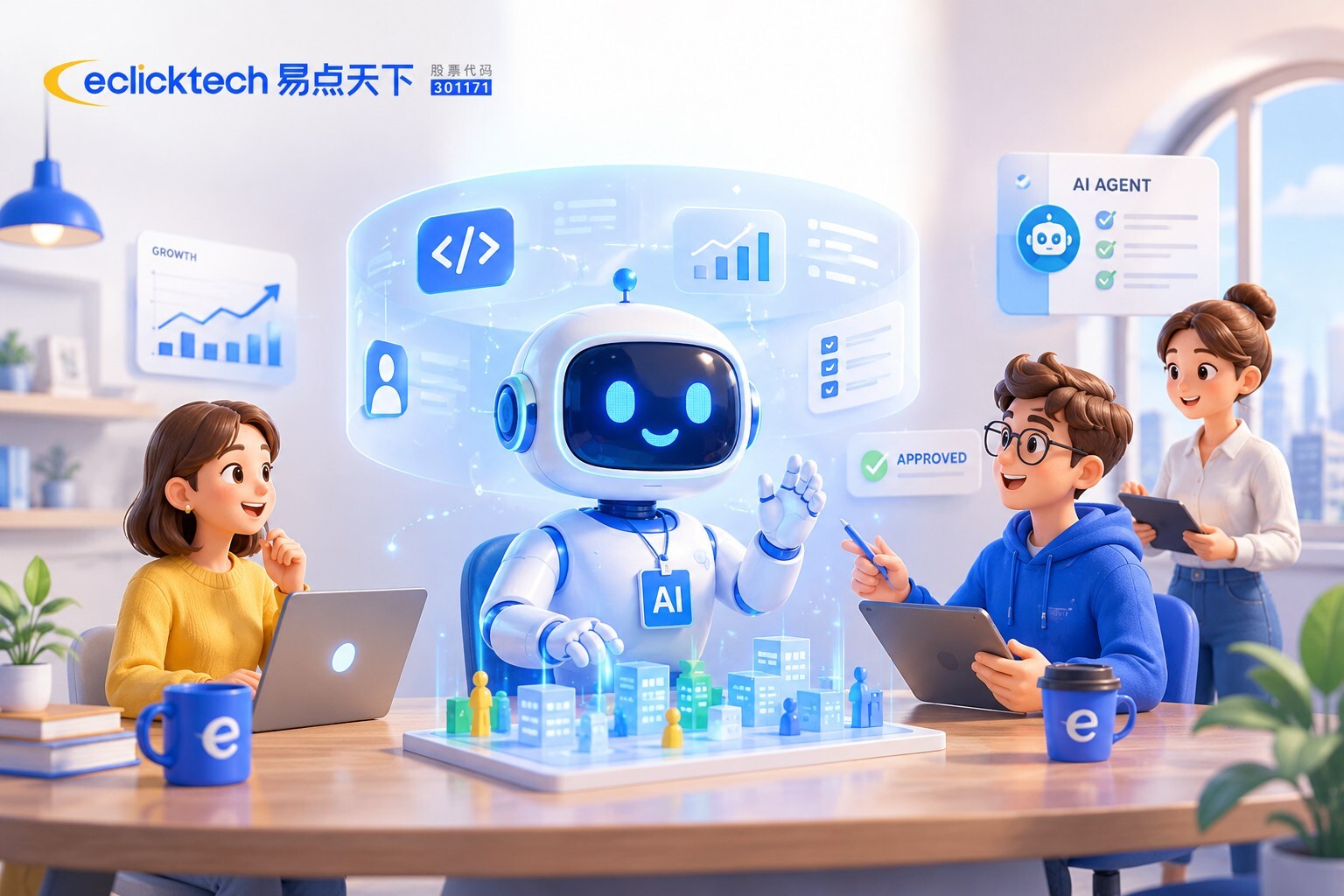
- By early 2026, autonomous AI agents like eclicktech’s Hubert and Dexter automated routine marketing tasks and made real-time decisions, freeing humans for strategy and creativity.
- AI-driven market research became continuous and autonomous—think real-time consumer dialogues and always-on habit tracking—while companies like Heineken and YouGov lead the way.
- Despite AI's rise, brand trust and authenticity are more vital than ever, with marketers balancing digital automation, robust governance, and in-person experiences to stay ahead of deepfake risks and formulaic campaigns.
AI Agents, Human Edge
AI agents now operate as tireless collaborators—challenging assumptions, surfacing blind spots, and automating execution—while marketers retain the final say on brand direction and creative quality.
By early 2026, AI had become deeply embedded in marketing workflows, automating routine and laborious tasks such as environmental scanning, data analysis, and content enrichment, thereby elevating the quality of marketers’ work by freeing them to focus on strategic judgment and creative decision-making. As noted in analyses from January and April 2026, AI acts as a swarm of personal assistants and a thinking partner that challenges assumptions, surfaces blind spots, and pressure-tests ideas, enabling marketers to consistently deliver sharper, higher-leverage outcomes while preserving essential human oversight.
The emergence of agentic AI systems marked a transformative shift from episodic, prompt-driven insights to continuous, autonomous marketing operations that gather, interpret, and act on data in real time. Companies like eclicktech integrated AI agents such as Hubert and Dexter to own KPIs and make decisions within global workflows, while Aprimo’s 'Interconnected Content Operations' unified AI with digital asset management and marketing spend controls to streamline governance and accelerate execution at scale. This evolution fosters a collaborative model where AI handles execution and rapid decision-making, but humans maintain strategic oversight to ensure trust, transparency, and creative quality.
Marketers are rapidly adapting to AI-driven operational changes, including optimizing website structures and content strategies for generative AI engines, and embracing AI-powered dashboards that generate daily actionable marketing ideas and automate follow-ups. Attentive’s next-generation agentic AI innovations, such as Brand Voice 2.0 and Predictive Analytics, have demonstrated tangible performance gains—like 37% subscriber growth ahead of Black Friday Cyber Monday 2026—highlighting how AI integration enhances personalized customer interactions and campaign orchestration across channels while still requiring iterative refinement and human judgment.
Despite AI’s growing autonomy in marketing—from ad creative generation to media trading with platforms like streamr.ai and Vibe.co—industry consensus emphasizes that humans must remain in leadership roles, guiding AI rather than merely overseeing it. As JPMorgan Chase’s programmatic lead asserts, 'Humans shouldn’t just be in the loop; they should be in the lead,' underscoring that fully autonomous AI-driven marketing is not yet viable and that the chief AI officer role is transitional, destined to phase out once AI is fully embedded across business functions.






Creativity Meets Machine Logic
AI supercharges creative strategy by breaking habitual thinking and scaling personalization, but only human intuition can inject the emotional resonance and unpredictability that keep brands memorable.
By early 2026, AI emerged as a powerful catalyst for elevating marketers' creativity and strategic thinking by identifying entrenched idea patterns and prompting professionals to break free from creative blocks, as noted in April insights where AI helps 'pressure test' ideas and accelerates critical self-reflection without fatigue. Yet, this augmentation does not replace human intuition; rather, it enhances it by enabling marketers to sift through vast data and generate novel concepts more efficiently, exemplified by companies like Myntra and Spotify leveraging AI for deeply contextual personalization that accounts for microcultures and moods beyond human scale.
Despite AI's impressive capabilities in automating routine creative tasks and generating content at scale—such as Indian ad production's drastic cost and time reductions—there remains an irreplaceable need for human judgment to infuse emotional resonance, cultural nuance, and original communication into brand storytelling. Analysts warn that AI’s probabilistic nature risks producing formulaic, emotionally hollow campaigns, underscoring that marketing thrives on unpredictability, social tension, and human irrationality, elements algorithms still struggle to grasp, as highlighted in May analyses and echoed by marketers cautioning against confusing data collection with true customer understanding.
Industry thought leaders, including Gary Vaynerchuk, emphasize that in an AI-augmented marketing landscape, brand trust and authenticity will become paramount as consumers increasingly rely on AI agents for routine purchases but will override automated decisions only when genuinely moved by compelling, human-crafted brand narratives. This dynamic elevates the marketer’s role in cultivating nuanced, original communication and critical judgment to build emotional loyalty and combat the rise of deepfakes and counterfeit content, suggesting a paradoxical resurgence of analog, in-person experiences driven by a human desire for authentic connection beyond digital convenience.
While AI acts as an 'outside brain' synthesizing vast consumer data to enhance innovation—exemplified by Heineken’s use of AI personas for continuous consumer dialogue and ideation pipelines—human creativity remains the indispensable filter that selects, refines, and contextualizes AI-generated outputs to align with brand identity and cultural specificity. This collaborative synergy allows marketers to scale multilingual campaigns and content marketing efforts with measurable ROI, as seen in podcast promotion and multi-language replication, but ultimately, the human element of taste, critical thinking, and original storytelling remains the cornerstone of marketing efficacy in the AI era.


Brand Trust in the AI Age
As AI-driven commerce erases product differences, brands are doubling down on authenticity and community events to foster trust and combat deepfakes, with in-person engagement making a powerful comeback.
In the AI era, brand investment has surged in importance as product feature differentiation erodes, making customer experience, trust, and advocacy central pillars of marketing strategies. Gary Vaynerchuk highlights that with AI-driven agentic commerce, brand trust becomes paramount since consumers rely on AI agents for purchases, and authentic brand verification is critical amid rising deepfakes and counterfeits. Complementing digital channels, in-person community events are experiencing a revival, fostering peer-to-peer engagement and trust that digital alone cannot replicate, creating a balanced ecosystem of analog and AI-driven brand interactions.
Digital channels have expanded their dominance as AI accelerates buyer self-research and readiness to purchase, compelling marketers to leverage large language models, user-generated content, and influencer narratives to shape brand perception pre-sale. This shift is underscored by 52% of B2B tech marketers prioritizing AI search over traditional SEO for content distribution, emphasizing the need for credible, authoritative content favored by AI systems and trusted buyers, as noted by 10Fold CEO Susan Thomas. However, a significant content readiness gap persists, with 41% of marketers admitting less than half their content is optimized for AI-driven discovery.
AI is revolutionizing media planning and paid traffic strategies by enabling outcome-based measurement and highly automated, scalable outreach. Platforms now allow brands to plan and buy ads targeting specific business results—ranging from app downloads to product purchases—moving beyond discredited last-click attribution models to more holistic, AI-driven customer journey insights. Tools aggregating data from hundreds of brands provide scalable outcome planning, allowing marketers to quickly optimize spend and halt ineffective campaigns, accelerating business outcomes with near real-time feedback loops, as demonstrated by GroupM’s blend of AI insights with human judgment.
Personalization at scale is evolving from broad demographic targeting to deeply contextual, culturally nuanced experiences, especially in diverse markets like India where brands such as Myntra and Netflix tailor offers by behavior, mood, and microculture. Yet, many brands mistake data collection for true understanding, resulting in intrusive, spam-like communications that undermine relationships. Simultaneously, AI-driven marketing creativity faces a crisis as optimization for algorithmic patterns leads to homogenized campaigns, risking long-term brand distinctiveness. To counterbalance this, marketers are diversifying channels and leveraging AI-powered omnichannel platforms like Attentive, which drive personalized, timely messaging across SMS, email, and push notifications, achieving significant subscriber growth and improved campaign performance.



Market Research, Always On
Continuous AI-powered research tools are transforming consumer insights from episodic surveys to real-time, emotionally attuned dialogues, letting brands spot trends and test ideas at unprecedented speed and scale.
By early 2026, AI agents had begun to revolutionize market research workflows by enabling continuous, autonomous data gathering and insights generation. These agents automate laborious tasks such as environmental scanning and signal detection, transforming traditional episodic research into a real-time, always-on process that can detect trends like declining brand sentiment and autonomously generate and test new ad concepts. This shift is exemplified by YouGov's launch of an AI index tracking consumer AI habits and perceptions, and tools like Pure Spectrum's CLAUDE connector and Outset's AI agent that embed AI directly into research workflows, enhancing both efficiency and autonomy without requiring users to switch platforms.
AI's integration into market research is not only technological but also profoundly humanizing, acting as a trusted listener that provides continuous, real-time insights with unparalleled scale, consistency, and sensitivity. As noted in analyses from 2026, AI 'never judges, it never interrupts and always listens,' enabling researchers to capture authentic consumer emotions rather than just their words, thereby uncovering truths previously out of reach. This evolution supports a 'quadrangle of speed, cost effectiveness, quality and scale,' while still preserving the essential role of human researchers who interpret AI-generated findings and provide strategic context.
The emergence of AI personas or digital twins, such as those developed by MMR in collaboration with Heineken, introduces a novel, interactive dimension to consumer insights by enabling continuous, intuitive dialogues with consumer data. This agentic ideation pipeline integrates diverse data sources—segmentation, trends, and insights—facilitating creativity and innovation at a scale and speed beyond human cognition. As Heineken's Innovation Insights Manager Sophie Reid describes, it is 'like having a continuous dialogue with our consumers available on demand,' illustrating how AI cognition is enhancing product development and marketing ideation.
Looking ahead, industry leaders like Rhiannon Price foresee a radical transformation of market research into continuous intelligence systems that replace discrete projects with an unceasing stream of real-time insights. This evolution will demand that agencies and practitioners adapt their roles to integrate seamlessly with these AI-driven models, balancing the initial surge of AI adoption with a renewed focus on deeper, richer insights. Price candidly acknowledges the profound nature of this shift, stating that the future of consumer insights is 'going to be unrecognizable' compared to the past two decades.




Leadership: The Human Factor
Visionary marketing leaders are redefining their roles—balancing AI’s speed and automation with robust governance and cultural change to ensure brand trust and human connection remain at the core.
By early 2026, leadership mindset has emerged as the linchpin in transitioning AI initiatives from mere experimentation to full-scale execution within marketing organizations. Vikash Sharma highlights how visionary leadership drives AI-led transformation, but CMOs like Amina Pasha and Lauren Sherman emphasize the philosophical and practical challenges of balancing automation with preserving human connection and brand authenticity. This evolving leadership role demands not only embracing AI’s efficiencies but also redefining the marketer’s identity as the 'heartbeat' of the company, ensuring AI serves to enhance rather than erode trust with consumers.
Organizational adaptation to AI in marketing increasingly hinges on robust governance frameworks and cross-functional collaboration to maintain control and trust at scale. Aprimo’s 2026 launch of 'Interconnected Content Operations' exemplifies this shift by unifying AI, digital asset management, and marketing spend controls, thereby breaking down silos and automating workflows to reduce manual handoffs. Meanwhile, marketing leaders like James Chandler underscore the necessity of foundational standards and human oversight, as trust in AI-generated creative and media buying dramatically declines without it, highlighting governance as a critical cultural and operational imperative.
The rise of AI is fundamentally reshaping the role of marketing teams and agencies, exposing the mechanical nature of much traditional agency work and forcing a cultural reckoning. As noted in May 2026 analyses, agencies now compete not only with rivals but with the speed and efficiency of AI itself, challenging them to preserve creativity and strategic insight amid compressed workflows. This transformation demands new skills and psychological adaptation, with marketing professionals evolving into orchestrators of AI-augmented processes who must balance algorithmic efficiency with human intuition and emotional nuance to sustain brand resonance and trust.
Trust remains the cornerstone of AI-driven marketing’s organizational and cultural adaptation, especially as consumer behavior shifts toward AI agent-mediated purchasing. Thought leaders like Gary Vaynerchuk warn that brand authenticity and verifiable communication will become paramount in influencing both humans and their synthetic agents, amid rising risks from deepfakes and counterfeits. This environment is catalyzing a cultural counter-movement favoring analog and in-person experiences, compelling marketing teams to adapt cross-functionally and develop critical judgment and original communication skills to break through automated buying patterns and maintain meaningful audience connections.