AI copyright debate heats up after supreme court snub
The gist
The Supreme Court just slammed the door on copyright for AI-only creations, igniting a global legal brawl over who really owns digital content.
What to know
- Purely AI-generated works are out in the cold for copyright after the U.S. Supreme Court's 2026 Thaler v. Perlmutter snub—human creativity is now non-negotiable for legal ownership.
- Anthropic’s $1.5 billion book settlement and OpenAI’s headline-grabbing lawsuits spotlight fierce courtroom battles over training data, as judges weigh market dilution and fair use in the AI era.
- Japan’s tough consent laws for AI voice cloning outpace U.S. and EU efforts, while creators and lawyers worldwide scramble to prove human authorship and demand clear, enforceable protections.
Human Touch Still Reigns
Courts draw a hard line: only works shaped by meaningful human creativity—not raw AI output—qualify for copyright, leaving creators to prove their personal imprint in every claim.
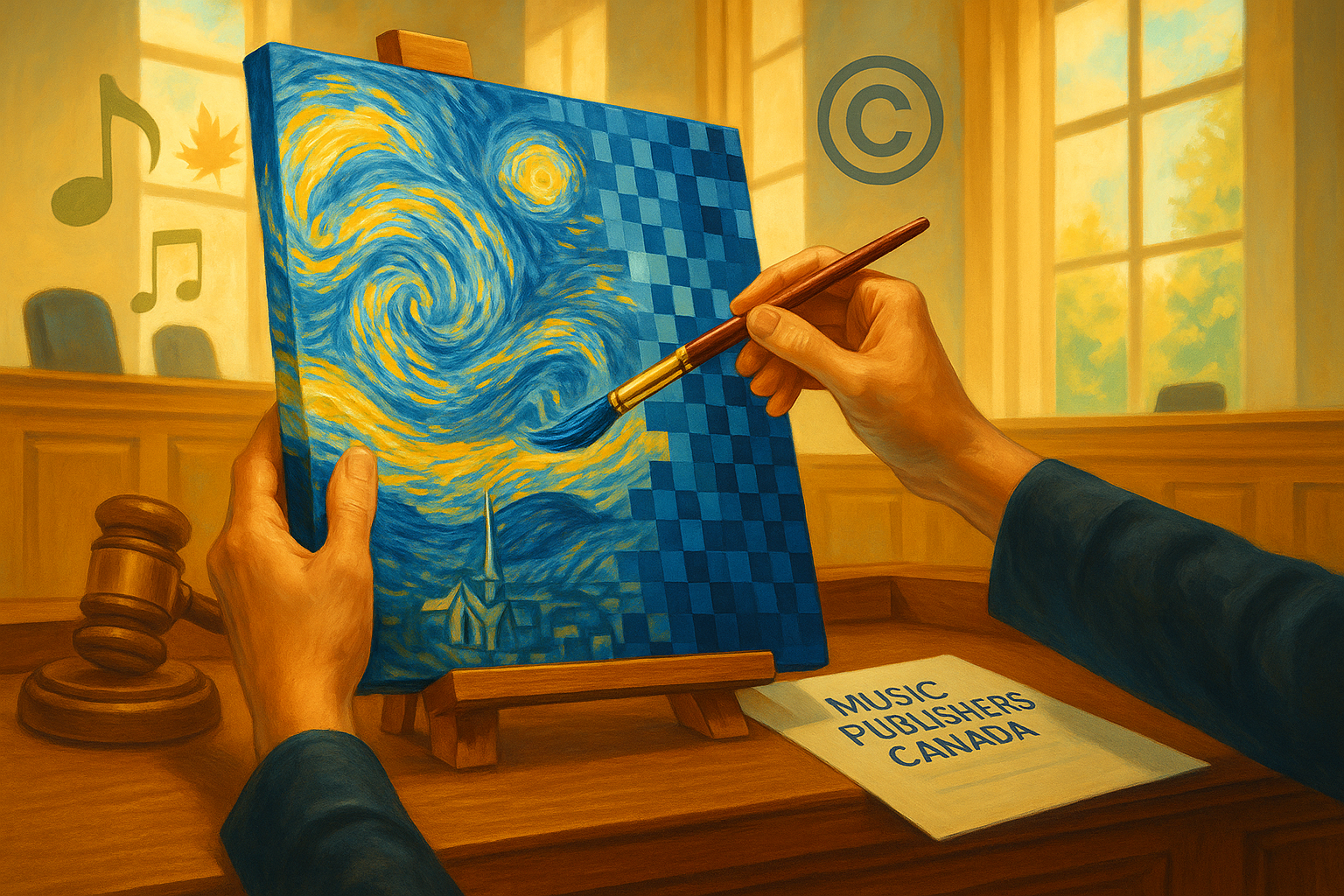
Current legal consensus holds that AI-generated content in its raw form is not eligible for copyright protection unless a human exerts significant creative input, as emphasized by experts who note that without meaningful modification, AI outputs lack demonstrable authorship. This principle was reinforced when the U.S. Supreme Court declined to hear Thaler v. Perlmutter in 2026, affirming that purely AI-generated works without human involvement cannot be copyrighted, thereby underscoring the necessity of human creativity to establish ownership.
Complex human intervention—such as combining outputs from multiple AI tools, manipulating images, scripting, and voice acting—can meet the threshold for copyright eligibility, effectively transforming AI-generated raw material into protectable works. For instance, creators who integrate hundreds of AI-generated images and overlay human-written scripts have crossed the benchmark of human authorship, illustrating how layered human creativity remains central to legal ownership in this evolving landscape.
The legal system grapples with the nuanced challenge of AI-generated content that mimics distinctive creative styles without directly copying original works, raising questions about the spirit versus the letter of copyright law. While courts generally find that generating content 'in the style of' an author like Stephen King does not constitute infringement, critics argue this practice undermines the substantial time and effort invested by original creators, highlighting a gap in current protections that policymakers are urged to address through balanced frameworks.
Ongoing litigation, such as Anthropic’s $1.5 billion settlement over unauthorized use of over 7 million books and the pending case against OpenAI for training on copyrighted journalism, spotlights the contentious boundary between fair use and infringement in AI training data. Courts are increasingly holding AI providers accountable not only for training data but also for generated outputs, including trademark violations like Getty’s watermark case, signaling a judicial trend toward stricter scrutiny and potential licensing requirements that could reshape AI content creation and ownership norms.

Style Imitation Sparks Legal Fears
AI’s ability to churn out endless works in the style of famous creators tests the limits of fair use, fueling fears of market dilution and blurring the boundaries between homage and appropriation.
AI's capacity to replicate the distinctive styles of human creators without directly copying their works challenges traditional copyright frameworks, as it blurs the line between inspiration and appropriation. As noted in the 2026 analysis "Challenges of Defining Copyright in the Age of AI," while AI does not literally copy, it can instantaneously generate millions of stylistically similar images or texts, effectively appropriating the years of effort an author invests in developing a unique voice. This raises profound fair use concerns, especially as AI-generated content feeds on itself, making the original creative source increasingly untraceable and complicating attribution.
The legal system grapples with the tension between protecting the spirit of copyright and accommodating AI's growing role, as stylistic imitation by AI may not violate the letter of the law but arguably undermines the market value of original works. Judges have proposed market dilution as a viable legal theory, emphasizing that flooding the creative marketplace with AI-generated imitations diminishes the worth of human-authored content. Yet, others caution against overly restrictive measures, likening AI training to teaching children to write, which naturally fosters competition and innovation.
High-profile lawsuits, such as those against Grammarly for enabling AI critiques in the style of Stephen King, highlight the murky legal terrain surrounding stylistic imitation. While certain laws protect an individual's 'personality,' it remains uncertain whether these protections extend to AI-generated content used for critique or derivative purposes, leaving authors vulnerable. This legal ambiguity compels creators to devise new strategies to make their work more identifiable and traceable, anticipating that AI will continue to assimilate and transform their styles without clear attribution.
The imminent introduction of AI-generated content watermarking, as reported in 2026, adds another layer to the market impact debate by enabling clients, buyers, and competitors to detect AI involvement, potentially exposing creators to reputational risks and unauthorized exploitation. Legal actors are already scanning published works to identify AI-generated material, often leveraging it without compensating original creators, which exacerbates concerns over ownership and market dilution. This technological shift underscores the urgent need for clear legal frameworks to balance innovation with fair recognition and protection of human authorship.
Global Race for Consent Laws
Japan’s strict AI voice-cloning rules and the EU’s mandatory AI labeling outpace U.S. efforts, setting new global standards for transparency and artist protections as platforms and lawmakers scramble to catch up.
Japan has pioneered a robust legal framework addressing AI voice cloning by mandating explicit consent for commercial use, distinguishing itself by holding AI developers liable if their models are primarily designed to replicate specific individuals' voices. This approach, grounded in existing laws like the right of publicity and the Unfair Competition Prevention Act, extends protections even posthumously, allowing families to seek compensation for unauthorized use, a stance not yet mirrored in U.S. or EU regulations.
U.S. lawmakers such as California Assemblymember Laura Friedman are pushing for comprehensive federal safeguards requiring creators’ consent before their intellectual property or likeness is exploited by AI, emphasizing fair compensation for copyrighted works used in AI training. Friedman highlights the necessity of coordinated legislative and executive action to balance innovation with protecting artists’ livelihoods, noting that while the administration supports using publicly available materials for AI training, it has yet to endorse clear compensation frameworks.
Transparency in AI-generated content is becoming a regulatory priority internationally, with the European Union enacting laws mandating explicit labeling of AI-created text and images under threat of significant fines, while several U.S. states including Utah and California have adopted or are considering similar 'transparency' laws. Industry players like Amazon have begun requiring authors to disclose AI-generated material in self-published works, reflecting a growing trend of contractual and platform-level policies aimed at preserving artistic authenticity and combating misinformation, especially in politically sensitive contexts.
Japan’s guidelines uniquely differentiate between human impressionists and AI-generated voice cloning, permitting the former’s creative mimicry while categorically prohibiting the latter’s commercial use without consent. This nuanced stance underscores a regulatory effort to protect human creativity and identity in the face of AI’s expanding capabilities, setting a precedent for future policy discussions worldwide.

Ethics and Liability in the AI Age
From artists forced to prove their humanity to lawyers facing sanctions for unsupervised AI use, the rise of AI-generated content is reshaping professional ethics and exposing gaps in consent and accountability.
The surge of AI-generated art and content has thrust human creators into unprecedented ethical dilemmas around authorship and authenticity, compelling illustrators in China to demonstrate their human origin through live drawing and legal scrutiny, as AI systems trained on their work increasingly displace them. This challenge is compounded by educational systems that emphasize standardized, replicable artistic output—mirroring AI training pipelines—and blurring the lines between human creativity and machine learning, thereby complicating professional liability and authorship norms in creative fields.
In the legal profession, courts have established stringent ethical standards mandating that all attorneys listed on filings bear a nondelegable duty to verify AI-generated content, with failures leading to severe sanctions such as fines, loss of pro hac vice status, and case dismissals with prejudice, as seen in the Meril and Keith Dillard v. CBS Studios case. This underscores a practical imperative for lawyers to rigorously supervise AI-assisted work to maintain credibility and avoid professional consequences, reflecting a broader industry insistence on accountability despite AI’s growing role.
The commercial misuse of AI-generated likenesses, exemplified by unauthorized appearances in high-profile media like Super Bowl commercials, spotlights significant ethical concerns over consent and transparency, with affected individuals often discovering discrepancies only post-release and facing disputes over compensation. This scenario reveals widespread industry gaps in safeguarding rights and enforcing clear agreements, fueling calls for more robust disclosure and consent protocols in AI content deployment.
Industry and public attitudes toward AI-generated content reveal a paradoxical ethical landscape: while over half of adults believe AI-created work should be disclosed, many admit to publishing such content without transparency, rationalizing authorship through 'authorship by direction' where human prompting and approval suffice. This evolving norm, coupled with platform mandates like Amazon KDP’s strict disclosure requirements and best practices advocating AI as a drafting tool rather than a finished product, highlights a growing push for transparency, meaningful human input, and detailed documentation to navigate ownership, liability, and trust in AI-assisted creativity.
As AI becomes embedded in creative workflows, agencies and advertisers face complex contractual and ethical challenges demanding new standards that emphasize transparency, data privacy, and clear liability frameworks. Experts like Ishan Chatterjee and Darren Woolley stress the necessity of contracts banning unauthorized third-party AI training on proprietary IP, ensuring client ownership of prompt libraries and fine-tuned models, and establishing stringent data security and indemnification clauses. These layered agreements are crucial to address the inadequacies of traditional contracts in managing AI-generated content’s ownership, confidentiality, and risk management.
The rise of AI-generated content threatens traditional creative ownership and client relations, as original creators risk losing control and reputation, facing potential client disputes and refund demands. High-profile industry reactions, such as Jerry Falade’s $2 million book deal collapsing amid AI authorship rumors and Hachette’s cancellation of Mia Ballard’s novel, underscore the critical importance of authorship transparency and trust. However, reliance on imperfect AI-detection tools with notable false-positive rates complicates enforcement, revealing an urgent need for clearer disclosure standards and accountability mechanisms to uphold integrity in publishing and creative professions.