AI cuts medicaid churn, but human oversight remains key
The gist
AI is slashing Medicaid churn and staffing costs, but regulators are keeping humans firmly in charge of eligibility decisions.
What to know
- Insurers like Kern Family Health Care and Independence Blue Cross now use AI to handle up to 90% of customer service and Medicaid renewal tasks, improving first-contact resolution and saving millions.
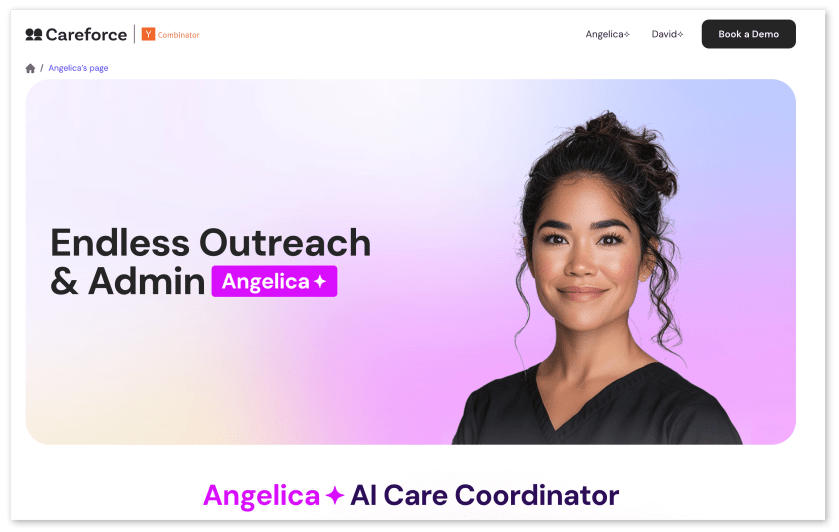
- AI voice agent Angelica at Kern automated 800,000+ renewal calls since late 2025, offering 24/7 multilingual support and preventing coverage loss due to missed paperwork.
- California strictly limits AI in Medicaid to outreach and renewals—recruitment and eligibility calls stay human—to prevent bias and protect vulnerable enrollees.
AI Eases Burnout, Boosts Results
Insurers are embedding AI into call centers not just for speed and accuracy, but to combat workforce burnout and empower human agents with real-time support.
By mid-2026, health insurers like Stellarus and Independence Blue Cross were embedding AI tools directly into customer service workflows, enabling representatives to access the right information at the right moment. Stellarus’s AI-powered Customer Service Representative Chat improved service consistency and sped up resolutions, while Independence Blue Cross’s pilot with over 40 representatives achieved a 90% success rate and boosted first-contact resolution rates, demonstrating tangible benefits in member experience and operational efficiency.
Beyond enhancing efficiency and accuracy, AI integration in call centers has become a strategic response to employee burnout. SCAN Health Plan’s partnership with Cresta introduced real-time transcription, automated note-taking, and guided workflows that not only streamline calls but also alleviate workforce stress. This approach acknowledges the human element in customer service, balancing technological support with the realities of employee well-being during a significant workforce transformation.
Large-scale deployments, such as Humana’s rollout of Google Cloud’s Agent Assist to 20,000 member advocates, illustrate the maturation of AI in health plan customer service. Operating seamlessly in the background, these AI tools provide real-time conversation summaries, predict member needs, and surface relevant information, empowering representatives to deliver personalized and efficient support at scale. This integration reflects a sophisticated blend of AI augmentation that enhances human agents rather than replacing them.
Angelica: The AI Retention Engine
Kern Family Health Care’s AI voice agent Angelica slashed staffing costs, maintained high Medicaid renewal rates, and made outreach accessible for non-English speakers amid stricter federal rules.
Since late 2025, Kern Family Health Care has leveraged the AI voice agent Angelica, developed by Careforce, to automate Medicaid renewal outreach, dramatically boosting enrollment retention while slashing staffing costs. Handling over 800,000 calls to 387,000 members, Angelica replaced the workload of 40 full-time employees, saving the plan an estimated $2.4 million. This deployment comes as new federal Medicaid rules, effective in 2027, require twice-yearly renewals and mandatory work documentation, adding complexity that Angelica efficiently manages to ensure compliance and maintain high renewal rates.
Angelica’s multilingual capabilities and flexible scheduling have transformed member engagement by making outreach feel personal and accessible, particularly for non-English speakers like Vanessa Barahona, who praised the system for its human-like interaction and assistance in rescheduling appointments. By providing 24/7 support in Spanish and other languages, Angelica addresses a critical cause of Medicaid disenrollment—procedural lapses such as missed deadlines and incomplete paperwork—which accounted for 66% of coverage losses during the pandemic coverage unwinding.
Beyond cost savings and improved member retention, Kern Family Health Care’s AI integration has allowed existing staff to shift focus toward more complex tasks without layoffs, illustrating how automation can enhance operational efficiency while preserving workforce stability. However, this technological advance operates under the watchful eye of California regulators, who emphasize strict adherence to patient privacy, data security, and consumer protection laws, underscoring the ongoing need for compliance as AI tools become integral to Medicaid administration.
Personalized, Multilingual Outreach Wins
AI-driven outreach like Angelica delivers 24/7, language-tailored support, breaking down renewal barriers and freeing staff for complex tasks as Medicaid rules tighten.
By leveraging the conversational AI program Angelica, Kern Family Health Care has transformed Medicaid operations through remarkable efficiency gains, handling over 800,000 calls to 387,000 members since late 2025 and saving an estimated $2.4 million in staffing costs. This AI-driven approach not only manages high call volumes and complex Medicaid renewal processes without expanding human resources but also automates routine outreach and appointment scheduling, allowing staff to focus on verifying and processing applications rather than being bogged down by repetitive tasks.
Angelica’s continuous availability and multilingual capabilities significantly enhance member engagement by providing personalized assistance such as scheduling and rescheduling appointments in members’ preferred languages. Members like Vanessa Barahona have praised the system for making interactions feel natural and accessible, with one noting, 'The fact that Angelica spoke Spanish when we were on the phone made it better.' This linguistic inclusivity reduces barriers to Medicaid renewal and helps prevent coverage interruptions, a critical benefit as new federal rules mandate twice-yearly renewals starting in 2027.
Human Oversight Checks AI Ambitions
California regulators strictly limit AI’s Medicaid role to outreach and renewals, prioritizing patient safety, privacy, and equity as insurers deploy automation at scale.
The integration of AI voice agents in Medicaid renewal processes, as seen with Kern Family Health Care's $370,000 investment in Careforce's technology handling over 800,000 calls, has undeniably enhanced efficiency and accessibility. However, this advancement raises critical ethical and regulatory concerns, particularly around data privacy, algorithmic bias, and the potential for insurers to cherry-pick patients, as highlighted by Stanford economist Mark Duggan and state officials like Anthony Cava. California’s regulatory framework deliberately restricts AI use to outreach and renewal assistance—prohibiting AI-driven recruitment—to safeguard vulnerable populations and ensure that eligibility determinations remain with county officials, underscoring the delicate balance between innovation and ethical boundaries.
While AI tools streamline routine Medicaid processes, the necessity of human-centered support remains paramount. Kern Family Health Care’s strategy of redirecting full-time staff to complex verification tasks and stationing workers onsite to answer enrollment questions exemplifies the critical balance between automation and human oversight. This approach not only mitigates risks of procedural disenrollments but also addresses concerns from unions and public stakeholders about job displacement and workplace surveillance, emphasizing that AI should augment rather than replace human roles in public health insurance.
Regulatory bodies in California are actively monitoring AI deployments within Medicaid to enforce compliance with consumer protection, privacy, and data security laws. The Attorney General’s Office and the Department of Health Care Services, represented by spokesperson Anthony Cava, stress that health plans remain accountable for ensuring AI tools operate within legal frameworks. This vigilant oversight aims to prevent improper denials, coverage cherry-picking, and algorithmic biases, reflecting a broader challenge of balancing AI-driven innovation with robust safeguards to protect patient safety and equitable access.