AI data center race heats up amid power grid crunch
The gist
Modular AI data centers are sprinting ahead on build speed and scale, but looming power grid bottlenecks threaten to pull the plug on this hyperscale gold rush.
What to know
- KAYTUS delivered a 400-rack AI cluster in just 72 days—slashing deployment time by 60% with its integrated modular framework.
- Alibaba Cloud’s CUBE 5.0 pushes modularization to 90%, compressing builds to 100 days and boosting compute density by up to 10x.
- Despite $602 billion in planned 2026 capital spend, power grid constraints could delay or cancel up to half of new hyperscale AI data center capacity.
Prefab Revolution Redefines Speed
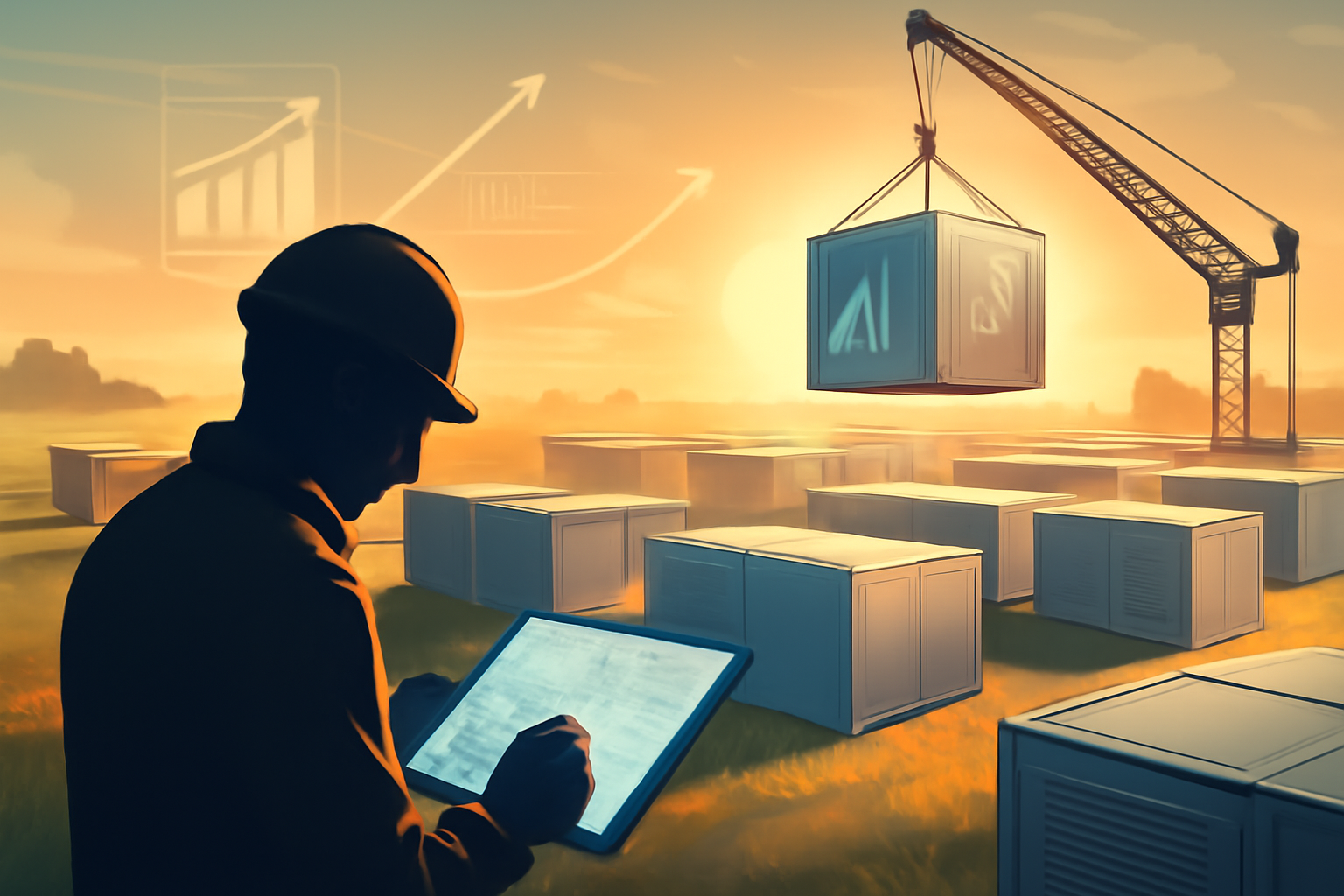
Factory-built modules and design simplification are slashing data center build times and costs, with prefabrication now extending to cooling and electrical systems for rapid, high-density AI deployments.
Modular data center construction has undergone a significant transformation from traditional cast-in-place concrete to highly industrialized prefabrication methods, drastically reducing on-site build times by eliminating concrete curing delays. While precast concrete panels, extensively used in regions like Northern Virginia, have shortened schedules compared to cast-in-place methods, they still entail long delivery times of 18 to 20 months for multistory facilities. This evolution has paved the way for more rapid deployment strategies that leverage factory-controlled manufacturing environments to ensure quality and speed.
The industry is increasingly embracing design simplification to accelerate construction and enhance efficiency, moving away from complex multistory data centers toward repeatable single-story halls and narrower, purpose-built structures. This trend is exemplified by the adoption of standardized structural bays, reduced architectural complexity, and the use of steel framing, which can be fabricated off-site and bolted together quickly. Such approaches not only streamline assembly but also allow for more flexible layouts that accommodate the demanding mechanical and electrical requirements of AI workloads.
Prefabrication now extends beyond structural shells to encompass nearly all electrical and mechanical components, including integrated liquid and air cooling units delivered as single packaged systems. Companies like Supermicro exemplify this shift by offering pre-assembled, validated rack-scale infrastructure designed for rapid deployment and optimized for high-density AI workloads, with manufacturing scales reaching up to 3,000 advanced racks monthly worldwide. This comprehensive modular approach reduces on-site integration complexity and accelerates buildouts, as reflected in deployment timeline reductions of up to 30% and cost savings of 15%.
The fastest modular shell solutions leverage pre-engineered metal buildings (PEMBs) composed of pre-cut, punched, and labeled components that crews can rapidly assemble on-site, akin to snapping together 'Lego' blocks. Tilt-up concrete panels cast directly on site offer a cost-effective alternative for large single-story buildings by avoiding transportation logistics, though they remain more vulnerable to weather-related delays. Innovations such as Alibaba Cloud’s CUBE 5.0 architecture and KAYTUS’s modular designs further push the envelope by integrating higher voltage power distribution and advanced cooling pathways, underscoring a broader industry shift toward rapid, cost-effective, and high-density AI infrastructure buildouts.


AI Clusters Built at Record Pace
KAYTUS and Alibaba Cloud are leapfrogging legacy construction by industrializing every stage of data center delivery, enabling massive, high-density clusters to come online in weeks instead of months.
KAYTUS has revolutionized AI data center deployment by delivering a 400-rack high-density air-cooled compute cluster in just 72 days, slashing the typical 180-day industry timeline by 60%. This feat was achieved through an integrated end-to-end framework that ran custom R&D, engineering validation, volume production, logistics, and on-site deployment in parallel rather than sequentially, enabling rapid yet precise management of complex airflow and thermal challenges critical to high-density clusters.
Alibaba Cloud’s CUBE 5.0 architecture similarly disrupts traditional data center build cycles by compressing modular AI data center construction to an unprecedented 100 days—down from the usual 6 to 18 months. This acceleration is powered by boosting modularization rates of core systems from 30% to 90%, which not only cuts construction costs by over 10% but also amplifies computing power density by 5 to 10 times, enabling rapid scalability to meet surging AI commercialization demands.
The rapid deployment strategies of both KAYTUS and Alibaba Cloud are direct responses to the explosive growth in AI workloads, with Alibaba Cloud’s AI-related product revenue surpassing 30% of its external commercialization revenue, driving plans to more than triple its global modular data center capacity. This industry-wide pivot towards modular, high-density, and cost-efficient infrastructure underscores a new era where speed and efficiency are paramount to sustaining AI innovation and market leadership.

Power Grid: The New Bottleneck
Soaring AI demand is colliding with grid delays, equipment shortages, and local opposition, making reliable power—not capital—the critical obstacle to future hyperscale data center growth.
Power delivery remains the paramount bottleneck in U.S. AI data center expansion, with critical equipment like large transformers and switchgear facing lead times exceeding two years, as Goldman Sachs Research and Wood Mackenzie highlight. This constraint is exacerbated by regional grid disparities—Northern Virginia's transmission delays, Texas's new curtailment rules, and Phoenix's power shortages—compounded by varied utility tariffs and interconnection protocols from Dominion to AEP Ohio, making modular infrastructure scaling a complex, region-specific challenge.
Despite hyperscalers planning an unprecedented $602 billion in 2026 capital spending, with 75% earmarked for AI, Bloomberg estimates that 30–50% of the planned 16 GW capacity will be delayed or canceled due to power shortages, equipment scarcity, and community opposition. This mismatch between capital investment and power availability is underscored by Oracle’s $7 billion Wisconsin project and New York’s moratorium on new data centers, signaling that grid capacity limitations are not just technical but also socio-political hurdles.
The surge in AI workloads, driving rack densities from 9 kW to 11 kW and server rack loads for inferencing from 3 kW to 150 kW, intensifies cooling and operational complexities, necessitating advanced thermal management solutions like liquid and immersion cooling. However, these technologies introduce mechanical and capital challenges, requiring rigorous pre-installation commissioning and integrated software-hardware design using digital twins, as industry leaders emphasize the critical need for synchronized multi-vendor orchestration to avoid costly bottlenecks.
The traditional siloed construction model is increasingly untenable for high-value AI hardware deployments, where shipment values can exceed $10 million per rack, demanding perfect logistical synchronization to prevent backlogs. Coupled with the rise of sovereign AI factories requiring secure, multi-tenant infrastructure with strict regulatory separation, and a market dominated by fewer than ten global firms capable of hyperscale builds, these operational complexities underscore a two-speed market dynamic and the urgent need for future-proofing amid uncertain AI demand trajectories.