AI drones and robot dogs redefine energy inspections
The gist
AI-powered drones and robot dogs are taking over energy inspections, slashing risks and turbocharging efficiency across oil fields, power grids, and even Air Force hangars.
What to know
- By mid-2026, giants like Chevron, ExxonMobil, and Hydro-Québec are relying on AI-driven drones and robotic crawlers with LiDAR and thermal imaging for real-time, remote infrastructure checks.
- ANYbotics’ robot dogs perform up to 40 autonomous inspections daily—detecting micro leaks and overheating while starting to replace human security guards for big cost savings.
- With the commercial drone market set to double to $95B by 2030 and Canada’s energy sector eyeing $500B in investments, strategic acquisitions and new regulations are supercharging the autonomous inspection boom.
AI Inspections Go Hands-Free
Edge-computing drones and robotic crawlers now spot pipeline threats in real-time and even intervene remotely, slashing hazard exposure and revolutionizing emergency response.
By mid-2026, the oil and gas sector had firmly established itself as a pioneer in adopting AI-driven drones and robotics for infrastructure monitoring, motivated primarily by the imperative to enhance worker safety and meet stringent regulatory standards. This transition from manual inspections to automated, AI-powered platforms has not only minimized human exposure to hazardous environments but also significantly boosted operational efficiency through persistent, proactive monitoring enabled by advanced sensing technologies such as LiDAR and thermal imaging.
Pipeline operators have revolutionized their inspection protocols by replacing traditional crews in trucks and helicopters with autonomous drones and robotic crawlers equipped with sophisticated sensor arrays—including LiDAR, thermographic, and hyperspectral cameras—that can detect methane leaks, soil erosion, and encroachments in a single pass. The regulatory embrace of beyond-visual-line-of-sight (BVLOS) operations, combined with innovations like automated docking stations or 'nests,' has enabled continuous, remote-controlled surveillance that drastically reduces the need for on-site personnel and accelerates anomaly detection from weeks to mere hours.
The integration of onboard edge computing allows drones to perform real-time anomaly detection and issue immediate satellite alerts, a leap forward from traditional post-mission data analysis. Coupled with the incorporation of inspection data into digital twin and predictive maintenance platforms, operators can now simulate response scenarios virtually, enhancing decision-making and reducing the risk of compounding incidents. This convergence of AI, robotics, and data analytics is pushing the frontier beyond mere monitoring toward remote intervention, with emerging robotic systems capable of manipulating valves or applying temporary patches during pipeline incidents.
The strategic importance of drone technology in energy infrastructure monitoring is underscored by early adoption from industry giants such as Chevron, ExxonMobil, Halliburton, and Occidental Petroleum, alongside innovative service providers like ZenaTech, Inc. The July 2026 acquisition of Velocity Geomatics by ZenaTech exemplifies the growing integration of drone-based regulatory and environmental surveys within oil and gas operations. This momentum is further fueled by rising oil prices and a forecasted investment exceeding US$500 billion in Canada's energy sector over the next decade, driving demand for advanced, drone-enabled inspection and surveying services.
Utilities Race Toward Autonomy
Canadian and European utilities are leveraging advanced drones to inspect assets ten times faster, even keeping wind turbines spinning during checks and eliminating rope-access risks.
By mid-2026, Canadian utilities such as Hydro-Québec and Hydro One have pioneered the integration of AI-powered drones equipped with high-resolution cameras, thermal imaging, and LiDAR sensors to revolutionize infrastructure inspections. These technologies enable inspections up to ten times faster than traditional methods while significantly enhancing worker safety and operational efficiency, especially across remote and challenging terrains. Regulatory advancements by Transport Canada, including new Beyond Visual Line of Sight (BVLOS) rules, have been pivotal in facilitating broader drone deployment along extensive transmission lines and pipelines, marking a transformative shift in utility asset management.
In the renewable energy sector, Perceptual Robotics secured over £4 million in funding from investors like Loggerhead Ventures and Innovate UK to accelerate the global expansion of its AI-driven wind turbine inspection drones, particularly enhancing offshore capabilities. Their platforms, Dhalion DOT and EVE, now support turbine maintenance across 18 countries by processing more than one million images, helping operators extend turbine lifespans. CEO Kostas Karachalios emphasized that this investment is a vote of confidence that will enable faster customer response and scale impact within the renewable energy industry.
A landmark demonstration off the coast of Denmark showcased an autonomous drone inspecting offshore wind turbines while blades continued spinning, eliminating the need to halt electricity generation. This breakthrough not only reduces operational costs and prevents significant financial losses from downtime but also enhances safety by removing hazardous rope-access tasks and cuts vessel emissions by up to 50% due to reduced transport times. Such innovations are critical for coastal nations relying heavily on offshore wind to meet soaring energy demands amid limited land availability and stringent climate policies, accelerating progress toward global net-zero targets.
Drone Market Ignites M&A Surge
Skyrocketing valuations and aggressive acquisitions are consolidating the drone inspection sector as oil giants and tech firms scale up for a $95B+ market.
The commercial drone market is undergoing a remarkable expansion, with valuations expected to more than double from $41 billion in 2025 to over $95 billion by 2030, and some forecasts projecting a surge beyond $160 billion by 2034. This explosive growth is mirrored in strategic industry moves such as ZenaTech's acquisition of Velocity Geomatics in July 2026, a consolidation aimed at scaling drone-enabled inspection services across Alberta's oil and gas infrastructure. These developments underscore a broader trend of modernization and scaling within infrastructure inspection, driven by both technological innovation and market consolidation.
Major energy giants including Chevron, ExxonMobil, Halliburton, Occidental Petroleum, and ZenaTech are aggressively adopting AI-powered drone technologies, signaling robust commercial investment and a shift toward automated infrastructure inspection. This corporate embrace is fueled by a favorable economic backdrop, where surging oil prices and a projected $500 billion investment in Canadian energy over the next decade are catalyzing demand for advanced surveying and inspection solutions. Together, these factors are accelerating the integration of drone technology into mainstream energy operations, positioning it as a critical tool for efficiency and safety.

Robot Dogs Outpace Humans
Four-legged AI robots now dominate hazardous inspections, autonomously running dozens of daily missions and delivering superhuman leak and fault detection across tough terrain.
By mid-2026, humanoid robots have made significant inroads in industrial settings, particularly in apparel manufacturing and electronics plants, where their human-like form allows seamless integration into existing workflows without costly infrastructure changes. Companies like Jack Technology and Siemens have demonstrated that humanoids can boost efficiency by over 30% and handle complex tasks such as autonomous crate loading with over 90% success rates, leveraging advanced AI and digital twin technologies to synchronize with production systems and human operators.
Four-legged robot dogs, exemplified by ANYbotics’ ANYmal, have emerged as the superior platform for industrial inspection due to their unmatched mobility and stability across challenging terrains such as stairs, slippery floors, and outdoor environments. Equipped with a sophisticated suite of sensors—including infrared cameras, acoustic detectors, and gas concentration monitors—and powered by onboard AI, these robots perform superhuman inspections that detect micro gas leaks and overheating, enabling predictive maintenance that human senses cannot match.
Over the past five years, robot dogs have been deployed at scale in critical infrastructure inspection, autonomously conducting up to 40 missions daily and significantly reducing costly downtime for clients. Their robust onboard computing and battery systems support 1-2 hour missions with autonomous charging, emphasizing a hands-free, data-centric operation model where the robot serves purely as a conduit for actionable insights rather than a focal point itself.
The rise of AI-powered robot dogs in industrial security is beginning to disrupt the human security workforce, offering cost savings of up to $130,000 annually per 24/7 shift and replacing some guard roles in environments like data centers and sports stadiums. However, this shift is expected to relegate human guards to more complex, high-stakes tasks rather than eliminate them entirely, a critical nuance given that the security sector employs 1.3 million workers—many of whom are older or people of color—who face vulnerability due to the industry's high turnover and low wages.


Military Maintenance Goes Robotic
The U.S. Air Force is deploying drone–robot dog teams that cut inspection times from days to hours, setting the stage for fleets of humanoid robots to overhaul aircraft servicing.
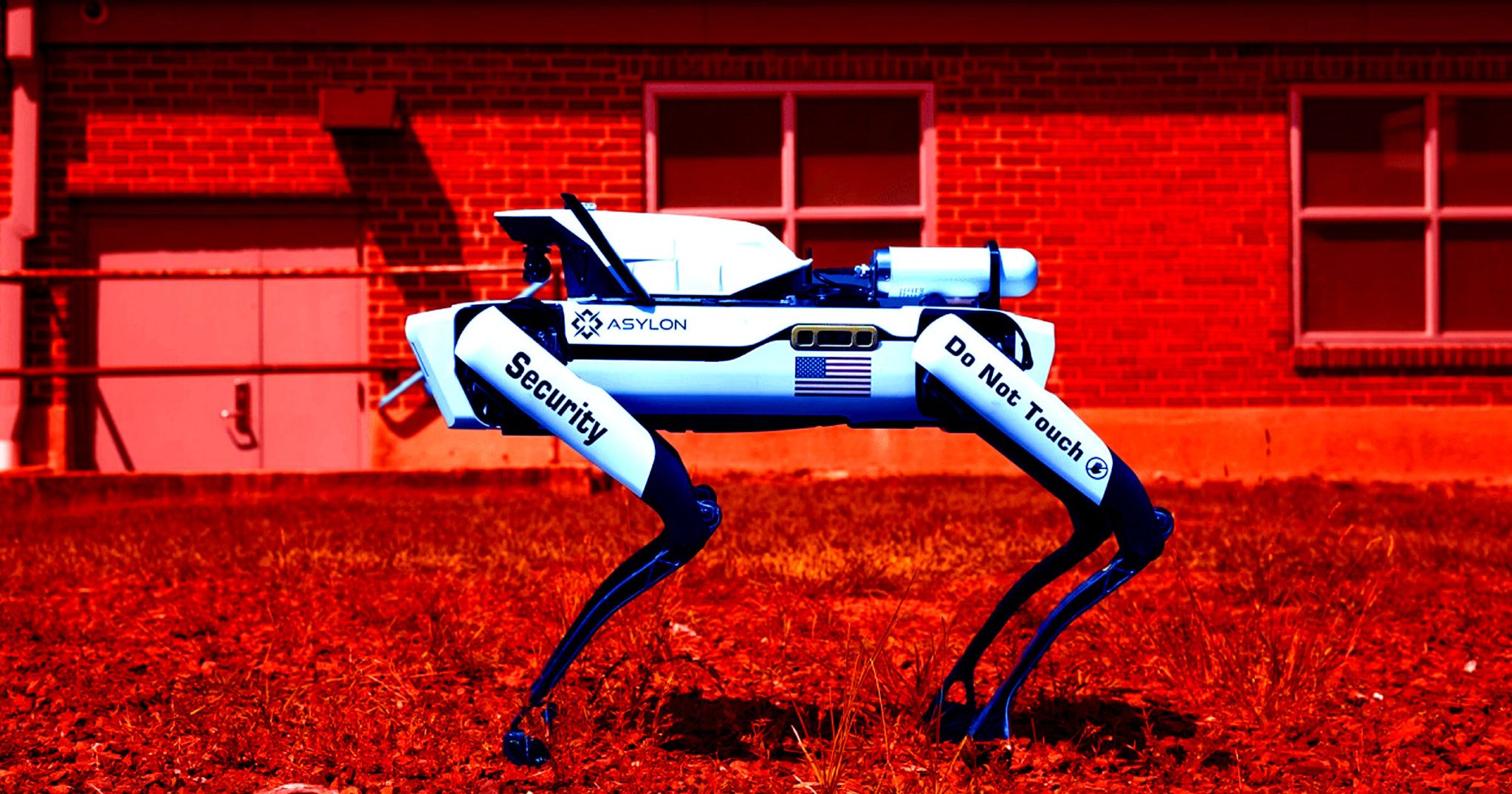
By mid-2026, the U.S. Air Force has embraced an innovative AI-driven approach to aircraft maintenance, deploying paired drone and robot dog systems developed by Asylon to tackle critical inspection backlogs. This initiative directly responds to a Government Accountability Office report revealing maintenance delays soaring from 31% in 2019 to 73% in 2024, largely due to workforce shortages and soaring demand. Asylon’s Guardian drone and DroneDog Q-UGV collaborate to scan aircraft surfaces and merge data, aiming to reduce inspection times from days to mere hours while enhancing safety by eliminating the need for scaffolding and manual data collection.
The Multi-modal Autonomous Robotics for Inspection of Aircraft (MARIA) system, awarded a Phase III contract by the Warner Robins Air Logistics Complex, exemplifies cutting-edge AI integration by combining Asylon’s Guardian sUAS drone and DroneDog quadrupedal robot. This system autonomously performs digital mapping using cameras and lidar, executing pre-programmed inspection routes with AI-driven anomaly detection to identify defects consistently and efficiently. Anthony McCarty highlights that this synergy not only accelerates inspections but also mitigates manual labor risks, marking a significant leap in operational efficiency.
Looking ahead, Asylon envisions expanding the MARIA system beyond Lockheed C-5 and C-130 aircraft to encompass all aircraft types at Warner Robins and eventually throughout the Air Force Logistics Complex. This trajectory includes ambitious plans for enhanced AI anomaly detection and the integration of humanoid robots capable of performing maintenance tasks, suggesting a future where autonomous robotic fleets provide comprehensive aircraft servicing. McCarty envisions a 'humanoid fleet management' scenario where inspection drones and robot dogs work in concert with maintenance robots, heralding a new era of military aviation maintenance.
Real-Time Repairs Prevent Outages
AI-powered drones like Skydio’s X10 identify critical faults invisible to humans, enabling utilities to shift from scheduled checks to dynamic, data-driven maintenance that averts costly failures.
By early 2026, the deployment of AI-driven autonomous drones like Skydio's X10 has dramatically enhanced infrastructure safety and operational continuity, as exemplified by Southern California Edison's prevention of a potential 30-day outage through the early detection of loosening pivot bolts invisible from the ground. This continuous, near real-time monitoring capability shrinks the visibility gap from months to days, providing utilities and insurers with unprecedented insight into asset conditions and enabling proactive interventions before failures occur.
This technological evolution marks a decisive shift from traditional time-based maintenance schedules to condition-based strategies, where inspection frequency and maintenance actions are dynamically tailored to actual equipment health. Skydio's drones not only accelerate inspection speeds by a factor of three compared to manual crews but also capture critical details missed by conventional methods, fundamentally transforming infrastructure management into a responsive, data-driven process that optimizes resource allocation and minimizes downtime.