AI floods science with ideas—labs struggle to keep up
The gist
AI is flooding science with new ideas faster than human researchers can possibly verify them, shifting the bottleneck from discovery to validation.
What to know
- A 2026 Google/DeepMind/MIT study found that 44% of scientists now see experimental verification—not idea generation—as their main research bottleneck.
- OpenAI's models can generate proofs hundreds of pages long, but labs and peer review can't keep up, with one 800-page AI proof too overwhelming for both humans and machines to fully check.
- Institutions are racing to build closed-loop systems—like Sanofi’s SWEL and Tohoku University’s autonomous pipeline—to connect AI, simulation, and robotics, aiming to slash time spent on wet-lab validation by up to 50%.
Experimentation Becomes the Bottleneck
Scientific progress now hinges on the grueling pace of experimental validation, echoing Kepler’s decade-long struggle to match theory with data.
By mid-2026, the conversation had plainly moved from whether AI could generate scientific ideas to whether science could verify them. On the Dwarkesh Podcast, Terence Tao used Kepler to show the pattern: a “beautiful theory didn’t quite work,” with the data “off from his Platonic solid theory by 10% or something,” forcing him to “try all kinds of fudges… and it didn’t quite work”; after Kepler got the data, he “worked on this problem for years and years,” and only later—“ten years later, after collecting a lot of data”—he “finally worked out this third law,” in a process “all driven by experiment.”
That historical framing became a contemporary measurement by September and October 2026. Scientific American Technology reported that the Google/DeepMind/MIT study “AI in Science: Early Insights” found “About 44 percent of those scientists said that, over the past two years, their main research bottleneck had shifted downstream,” while Mihai Codreanu said “Eight-nine percent of those who save time using AI spend more than a 10th of the time that they’re saving actually checking AI outputs,” and in October, AI 2027 Predictions argued to “pit an AI versus a human team with the same time and budget and then we see that the AI can actually accomplish the experiment,” emphasizing “taste” via “50% faster time or 50% less token usage,” as the host said the “State of AI Report 2026… went from January 2026 to then what happened in the summer 2026.”



Peer Review Under Pressure
AI-generated hypotheses are overwhelming traditional verification systems, shifting scientific value from idea creation to filtering and validation.
The new asymmetry is simple: idea generation has become cheap, while verification has not. As MultiVersial put it, since 2022 “un LLM general ocupa el puesto de proponente,” while what remains scarce is still “Lean, un cristal o un experimento físico”; The Computist Journal argued that if AI can generate a thousand candidate papers where ten once existed, slow and gameable peer review becomes a structurally different bottleneck, because the scarce skill shifts away from proposing hypotheses and toward question selection, verifier design, and filtering signal from AI-amplified noise.
Examples across domains show the same constraint: OpenAI’s recent list of 10 math problems “were all formalized in Lean,” strong evidence they were true, but there were likely more results that “they could not formalize”; meanwhile, an “800 AI generated pages” proof was beyond both model checking and human reading. In science, Silicon Valley Girl said “you can buy breakthroughs… for $2,000,” yet one model predicted over 2 million crystal structures before viability and synthesis cut that down drastically, while other analyses warned that progress estimates “ignore the compute experiment’s need” and that GPT6 still fails debugging tasks that human researchers can do, and even rely on only indirect evidence from Davidson and colleagues in 2026 for time intensive processes like training runs of three months or more.





Physical Labs Hit Their Limit
No matter how fast AI models run, real-world science remains constrained by slow, resource-intensive lab work and the stubborn limits of physical experimentation.
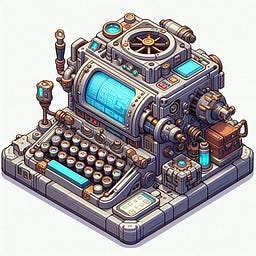
Physical science still runs on equipment, process windows, and measurement cycles that do not scale like model inference. On Stanford Online, a materials researcher contrasted reinforcement learning, where “you could do a thousand rollouts, a million rollouts… scale that really quickly,” with lab work, where “in the physical world, it's not plausible to just expand that arbitrarily high,” while adding that for new materials synthesis remains “a lot of trial and error,” and characterization across many instruments produces data that takes substantial time to analyze before another experimental turn can begin.
That execution ceiling persists because simulation and compute still do not eliminate the need for real-world testing. On Latent Space, the speaker asked why there are not “perfect simulators already,” then answered that “we’re definitely not done with any of the laws of physics,” citing unresolved regimes where “we don’t know what physics they obey,” while an October 20 analysis noted that “Nine scientists can't deliver a paper in one month” and that even if “About 5,000 full time researchers worked on AI Safety and published over 7,000 papers,” using compute equal to “27,000 H1 hundreds running for a year,” and even if top-lab compute could be 10,947 times larger, labor and analysis would still bind throughput.


Automation Rewires Scientific Discovery
Institutions are racing to build closed-loop systems that merge AI, robotics, and experiments, promising to slash lab bottlenecks and redefine how breakthroughs happen.
The emerging institutional answer is not better prediction in isolation but closed-loop discovery systems that connect AI, simulations, robotics, and experiments so models can learn from real-world results instead of stopping at predictions. On No Priors, Liam Fedus said science must interface with reality through “this interactive closed loop system,” where experimental data is checked for aberrations and consistency with simulation and literature, then used to drive the next set of experiments rather than ending as a static forecast. He also said that even with perfect DFT, a lab would still be needed because 10 to the 23 atoms cannot fit in the computer.
By late 2026, that logic was being institutionalized in operating systems and lab blueprints. AWS said Sanofi’s SWEL replaced linear report pipelines with a closed loop, and VP Sabyasachi Dasgupta said Sanofi aspires for SWEL to reduce the number of molecules requiring wet lab validation by 50% while improving hit quality. In materials, Asia Research News reported a Tohoku University blueprint integrating databases, predictive models, AI agents, and automated laboratories; the findings were published in JACS Au on August 14, 2026, and the system could one day replace slow, waste-heavy trial-and-error materials research with self-improving digital-experimental cycles. The physical scale was also becoming concrete: “We're stepping into 200,000 plus square feet of autonomous science before the end of this year.”