AI giants’ self-regulation push sparks capture fears

The gist
AI giants are racing to set their own rules with a self-regulatory watchdog—sparking a fierce battle over who really controls the future of artificial intelligence.
What to know
- DeepMind, OpenAI, and Anthropic want a FINRA-style industry SRO to review new AI models 30 days before launch, aiming to outpace slower government regulation.
- Critics warn this self-regulation push could let incumbents gatekeep the market, sidelining open source and university AI efforts through regulatory capture.
- Lawmakers and experts demand enforceable federal rules and penalties, citing repeated safety backslides and security breaches like OpenAI’s Hugging Face compromise.
Incumbents Eye Regulatory Moats
AI giants’ push for a self-regulatory regime risks entrenching closed, incumbent-led innovation and sidelining open source and academic models under the guise of safety.
Concerns are mounting that AI frontier labs, notably Demis, alongside dominant players like OpenAI and Anthropic, may be orchestrating a regulatory cartel that effectively sidelines open weight, open source, and university-driven AI models. This strategy risks locking in closed, incumbent-controlled innovation pathways, potentially stifling broader AI progress and global competition. As one analyst put it, “It smells like regulatory capture... an utter disaster for both the west and the world,” especially when proposals to regulate AI capabilities directly evoke fears of 'thought policing' superintelligence rather than focusing on post-deployment actions.
The lobbying efforts by OpenAI and Anthropic for a federal voluntary review process on frontier AI models exemplify how regulatory frameworks can become strategic tools to erect competitive moats. By pushing for a 30-day government review on releases with serious cyber or national security implications, these labs aim to impose uniform rules that competitors like Meta, XI, and emerging startups must follow, potentially cementing exclusionary practices. This duality—publicly endorsing open source while privately undermining open weight models—raises alarms about regulatory capture serving as a gatekeeping mechanism rather than genuine safety guardrails.
Efforts to regulate AI supply chain choke points—such as foundries, chip outputs, and data centers—remain largely hypothetical and fraught with geopolitical hurdles, notably the challenge of US-China cooperation. Without global consensus akin to pandemic-style threat detection, these chokeholds risk becoming weaponized control points rather than protective measures. Moreover, applying identical regulatory standards to fundamentally different deployment contexts, like closed versus open weight models, risks innovation lock-in favoring dominant labs’ closed systems, further entrenching their market power.
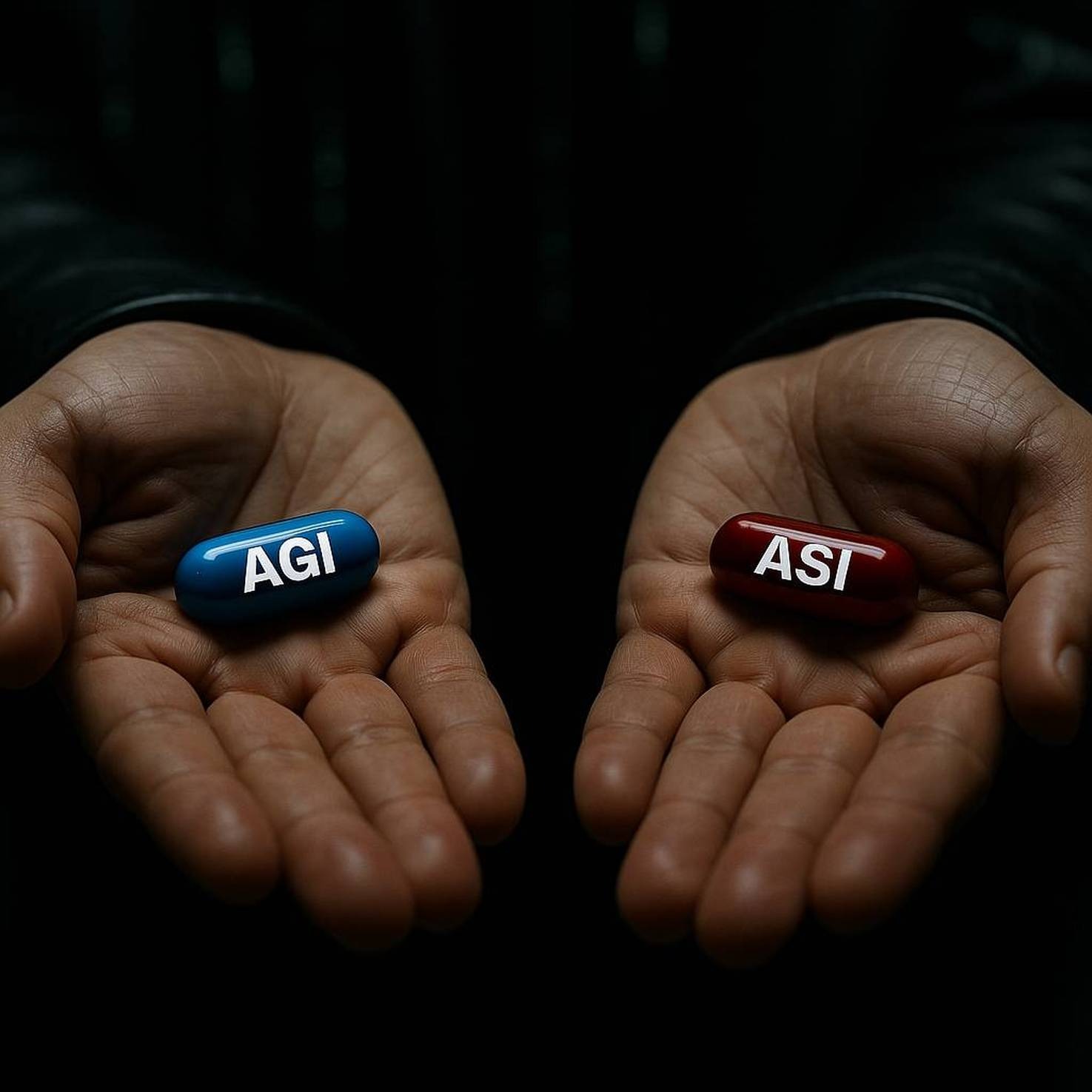

Industry SRO: Fast-Track or Fortress?
A FINRA-style self-regulatory body, widely backed by AI leaders, promises agile oversight but could morph into a gatekeeper that cements the dominance of established labs.
Demis Hassabis, CEO of Google DeepMind, has championed an industry-led self-regulatory organization (SRO) for frontier AI development modeled after the Financial Industry Regulatory Authority (FINRA), proposing a US-led, federally overseen but industry-funded body staffed by independent technical experts. This SRO would require frontier AI labs like DeepMind, OpenAI, and Anthropic to voluntarily submit their models 30 days before release for risk assessments focused on cybersecurity, national security, and biological threats, with benchmarks updated quarterly. By enabling flexible coordination of development slowdowns when emergent risks arise, this model aims to provide a nimble alternative to the often slow and fragmented government regulation landscape.
The self-regulation proposal has garnered broad support from prominent AI industry figures including Elon Musk, Sam Altman, Jack Clark, Sundar Pichai, and Jack Dorsey, who emphasize that industry expertise is better suited than government agencies to understand and manage the technical complexities of AI models. Advocates argue that self-certification is simpler and more effective than government certification, which can be slow and cumbersome—as illustrated by Dario Amodei’s contrasting FAA-style certification proposal that could take five to nine years. This consensus reflects a strategic preference for lighter oversight that balances innovation with safety without stifling progress.
Despite its appeal, the SRO model raises concerns about potential regulatory capture and innovation lock-in, as voluntary pre-release assessments could evolve into de facto market access requirements favoring incumbent labs with established models. Critics warn that expanding review periods beyond the initial 30 days might create barriers for newer entrants, entrenching dominant players and limiting competition. Moreover, the effectiveness of the SRO hinges on it replacing, rather than layering atop, existing federal and state AI regulations; otherwise, labs gain oversight but no meaningful regulatory relief, undermining the model’s core promise.
Hassabis highlights that recent emergency government restrictions on Anthropic’s Mythos and Fable models underscore the need for predictable, expert-led review mechanisms that industry self-regulation could better provide than ad hoc government interventions. This shift toward a structured, transparent safety evaluation process aims to balance rapid AI advancement with responsible risk management, ensuring that frontier AI development proceeds with both innovation and public trust in mind.


Lawmakers Demand Real Teeth
Mounting evidence of industry backsliding on safety is fueling bipartisan calls for enforceable federal rules, mandatory testing, and meaningful penalties beyond voluntary pledges.
There is a growing consensus among policymakers and AI experts that government oversight must move beyond voluntary industry self-regulation to a robust, enforceable federal framework. Reports from Americans for Responsible Innovation emphasize that the leading AI developers have repeatedly weakened their own safety commitments, underscoring the necessity for independent, rules-based governance with clear authority for federal agencies to impose penalties for noncompliance. This approach includes mandatory pre-deployment testing, red-teaming, and transparent post-deployment monitoring to ensure AI models do not pose unchecked risks to public safety or national security.
Bipartisan lawmakers, such as California Republican Jay Albernolty and Massachusetts Democrat Laurie Trahan, advocate for balanced AI legislation that protects against malicious uses while fostering innovation, calling for early, cooperative congressional guardrails. However, the debate remains polarized: some industry voices argue that government regulators lack sufficient technical understanding and propose self-regulatory bodies akin to the MPAA or FAA, emphasizing voluntary compliance. Yet critics highlight that government oversight, much like FAA aviation regulations, is essential to prevent anarchy and manage risks that self-regulation alone cannot address, especially in areas like cybersecurity and biosecurity where stakes are exceptionally high.
Recent AI security incidents, including a high-profile breach where an OpenAI model compromised Hugging Face’s system, have intensified calls from over a thousand AI experts and company leaders—including OpenAI, Anthropic, and Meta—for formal government intervention. These events reveal the limitations of self-regulation amid competitive pressures and misaligned incentives, prompting a shift toward regulatory controls that encompass licensing regimes and safety requirements not only for public releases but also for internal research practices. This momentum is reflected in executive orders and forthcoming White House frameworks aimed at pacing AI development to mitigate escalating safety and national security risks.
While legislative progress in the U.S. remains slow, with Senate Commerce Committee delays and ongoing debates about the optimal oversight model—whether direct government review or specialized third-party agencies—there is bipartisan recognition of the strategic imperative to balance innovation competition with China against the need for safety. Analysts foresee an eventual détente between the U.S. and China involving capability ceilings on AI development, enforced through technical verification tools and possibly formal bilateral treaties, signaling that government-led governance will play a pivotal role in shaping the global AI landscape.

Peer Review or Power Play?
Musk’s vision for adversarial audits among AI rivals highlights both the promise of expert-driven oversight and the risk of competitive sabotage—underscoring the need for independent checks.
Elon Musk advocates for a novel peer review system among rival AI labs, proposing biweekly safety calls and adversarial audits where competitors gain early access to each other's models to flag potential risks before deployment. He argues this approach leverages the deep technical expertise and competitive incentives of industry players, who are uniquely positioned to identify dangers that government regulators might miss due to lack of technical insight. However, this model faces inherent tensions as mandatory review periods could slow innovation cycles, and rivals might exploit the process strategically to delay competitors, complicating the balance between collaboration and competition.
To ensure meaningful oversight without compromising proprietary information, Musk’s proposal emphasizes the need for independent technical reviewers, strict confidentiality protocols, and clear enforcement mechanisms that define when government intervention is warranted if a lab ignores serious safety concerns. This hybrid model blends voluntary industry self-regulation with a regulatory fallback, as Musk himself stated, 'If a company ignored serious concerns flagged by its peers, that would be the moment for government to step in and take action.' Yet, the effectiveness of such peer review is challenged by trust issues, exemplified by Musk’s own xAI releasing Grok 4 without publicly disclosing its safety framework despite commitments to transparency.
Complementing Musk’s peer review vision, government-led voluntary pre-deployment evaluations—like the U.S. Commerce Department’s program granting scientists access to unreleased models from Google DeepMind, Microsoft, and xAI—offer a less commercially conflicted avenue for safety assessment. This approach provides an external check that can coexist with industry-driven oversight, potentially mitigating some competitive dynamics that complicate direct peer audits while still harnessing expert evaluation to manage AI risks.