AI hiring shifts put human judgment first
The gist
In 2026, AI may automate tasks at warp speed, but human judgment, leadership, and adaptability are what keep companies truly competitive.
What to know
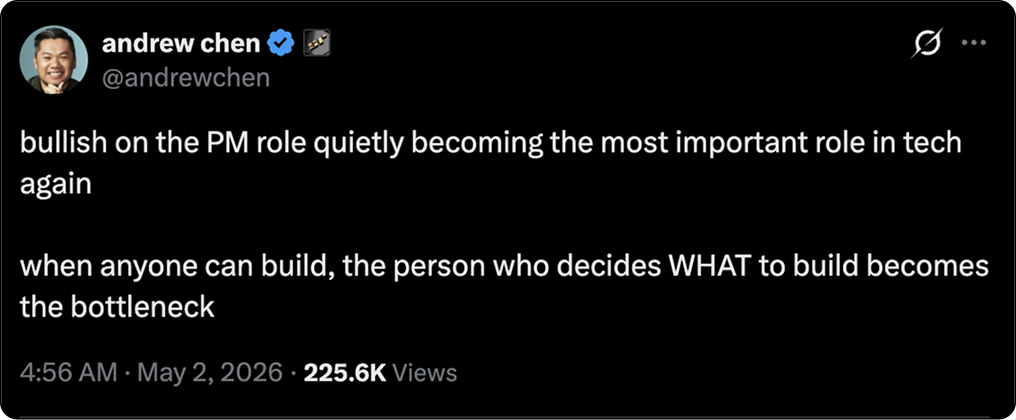
- OpenAI, Google DeepMind, and others are doubling down on hiring product managers and leaders who can navigate ambiguity and make strategic calls that AI can't.
- Windmill's AI-powered skills platform ditches annual reviews for real-time, hyper-personalized coaching—making dynamic feedback and development the new norm.
- CISA, Unilever, and industry giants are investing in transparent AI adoption and targeted reskilling, future-proofing teams by turning employees into AI-empowered value creators instead of casualties of automation.
Leadership Beyond Algorithms
As AI automates routine work, companies like OpenAI and DeepMind are betting on human leaders for nuanced judgment, cultural stewardship, and strategic ownership that machines can’t match.
Despite AI’s growing ability to automate routine tasks such as communication drafting and organizational coordination, human judgment remains irreplaceable in areas requiring nuanced decision-making, ownership, and strategic prioritization. As highlighted in analyses from May 2026, true responsibility—putting one’s name on outcomes and deciding what truly matters—cannot be delegated to AI tools, which lack the capacity to capture the subtle gaps between stated and actual problems or to hold complex, competing factors in mind simultaneously. This is underscored by companies like OpenAI and Google DeepMind, which continue to ramp up hiring of product managers, reaffirming that leadership and human agency are essential to navigate ambiguity and drive meaningful impact beyond what AI can replicate.
The evolving role of leadership in the AI era demands a shift from traditional management focused on supervision toward cultivating clarity, shaping culture, and guiding teams through uncertainty—tasks AI cannot perform. As noted in May 2026 analyses, the classic career trajectory moving away from hands-on work toward pure management is breaking down, replaced by 'player-coach' models where leaders exercise discernment, trust, and integration. Sriram Iyer, ex-SVP of Product at Salesforce, exemplifies this mindset, emphasizing that success hinges less on AI tooling and more on human qualities like trust, prioritization, and personal ownership, which prevent pitfalls such as scope creep and ensure strategic focus.
Human leadership is critical not only for decision-making but also for articulating and owning a company’s core purpose and culture, which AI cannot authentically replicate. Ben Horowitz stresses that founders’ core job is to clearly communicate why their company exists and continuously evolve strategy based on learning about markets, customers, and technology. This narrative ownership aligns teams and stakeholders, creating a shared vision that guides action beyond algorithmic outputs. Moreover, successful AI adoption hinges on leaders fostering a culture that prioritizes learning and addresses human challenges like burnout and anxiety, as Rafe and Brian note, making culture and leadership the primary levers in navigating AI-driven workforce transformations.
As AI automates coding-heavy roles and reshapes workforce management through hyper-personalized coaching and skills assessment platforms like Windmill, human judgment remains the ultimate control mechanism ensuring strategic alignment and meaningful impact. Despite AI’s prowess in context engineering and performance management, leaders must design roles, measure outcomes, and manage career paths with discernment that AI cannot replicate. This necessitates revamped hiring practices prioritizing judgment and strategic capabilities over throughput metrics, signaling a fundamental shift where mindset and leadership trump technical skillsets in defining success within the AI-driven workplace.





AI-Powered Coaching Revolution
Windmill’s real-time, hyper-personalized AI coaching turns employee development into a continuous, data-driven process that amplifies human potential and redefines workforce agility.
Windmill’s AI-powered skills assessment platform is redefining talent management by creating a comprehensive 'context graph for people' that synthesizes organizational charts, productivity data, and performance reviews into a unified system. This approach captures the tacit knowledge traditionally locked in managers’ and employees’ heads, enabling nuanced, real-time understanding of individual strengths, work preferences, and developmental needs. As Brian Distelburger explains, this missing system allows companies to move beyond static skill checklists to dynamic, personalized insights that support smarter role alignment and workforce redeployment amid rapid AI-driven changes.
By integrating hyper-personalized AI coaching that operates 24/7, Windmill transforms employee development from a periodic managerial task into a continuous, context-aware partnership. This coaching adapts to individual preferences and work rhythms—whether employees prefer feedback in the morning or afternoon—turning broad aspirational goals into actionable, immediate steps. As Max Shaw highlights, this AI augmentation does not replace human managers but rather amplifies their ability to support employees, making personalized coaching an expected and essential part of the modern workplace experience.
Windmill’s platform addresses a critical challenge in the AI-era workforce: ensuring employees are placed in roles that maximize their unique talents and potential. By simulating role matches and predicting outcomes, companies can optimize human capital deployment rather than merely automating jobs away. Brian Distelburger emphasizes that future business success hinges not on automation alone but on putting the right talent in the right opportunities, a process Windmill’s AI-driven insights and continuous assessments make both scalable and strategic.
Replacing outdated annual performance reviews with continuous AI-driven assessments, Windmill’s platform fosters a more engaging and effective talent development cycle. Employees benefit from ongoing, personalized feedback loops that enhance their growth and align with evolving company goals, while managers gain actionable insights to better understand new team members’ strengths and needs. This shift not only improves individual performance but also equips organizations to navigate the civilizational-level workforce transformation driven by AI, as noted by Brian Distelburger.

Reskilling: The New Talent Edge
Industry giants are shifting from layoffs to targeted reskilling, prioritizing emotional intelligence and adaptability as the most valuable assets in a workforce transformed by AI.
By early 2026, workforce reskilling has become a strategic imperative as organizations like CISA and Unilever double down on upskilling incumbent employees to navigate AI-driven transformations. CISA’s approach combines transparent AI adoption with aggressive recruitment through federal scholarships, while Unilever leverages AI-powered tools to identify and retrain existing staff for emerging roles, preserving institutional knowledge and customer relationships rather than resorting to costly layoffs. This proactive investment in human capital reflects a broader industry recognition that managing role evolution is less about displacement and more about enabling employees to harness AI as a productivity multiplier.
Training initiatives across sectors emphasize continuous, hands-on learning to build trust and proficiency with AI tools, starting from simple applications like chatbots to more complex workflows. For example, mortgage industry teams have adopted weekly mandatory sessions and executive seminars to cascade AI knowledge, fostering frontline adoption and executive sponsorship. Similarly, collaborations between companies like Denso and universities create tailored semester-long AI curricula that equip diverse functions—from engineering to HR—with relevant skills, underscoring that upskilling must be role-specific and ongoing to overcome resistance and maximize AI’s potential.
The evolution of hiring strategies reflects a paradigm shift from valuing raw coding throughput to prioritizing judgment, strategic thinking, and emotional intelligence. Leading tech firms such as Google, Canva, and Meta have revamped their coding interviews to focus on code review, debugging, and integrating AI-generated snippets, while assessing communication and problem-solving skills in AI-assisted rounds. This trend aligns with industry-wide recognition that AI replaces routine coding first, elevating roles that require consultative client engagement and nuanced decision-making—qualities that cannot be automated—thereby reshaping talent acquisition criteria beyond traditional technical metrics.
To future-proof careers amid AI-driven layoffs, employees must transition from executing measurable outputs to delivering clear business value by linking their work to decisions, risks, and revenue impact. This involves evolving from being mere information conduits to strategic operators who redesign workflows and interpret AI insights to recommend actionable next steps. Practical reskilling steps include automating low-value tasks, converting reports into decision-support tools, and quantifying the business impact of improvements, positioning workers as indispensable architects of organizational transformation rather than replaceable cogs.