AI-native teams and MCP standard reshape software development

The gist
AI-native teams and the universal Model Context Protocol (MCP) are upending software development by making code a team sport and unleashing autonomous AI agents across the enterprise.
What to know
- By late 2025, startups like Roo Code let every team member—from designers to community managers—ship code, slashing iteration cycles and shifting to 'sell before you build' mindsets.
- The MCP standard, adopted by giants like Figma, Uber, and GitHub by early 2026, enables secure, scalable AI agent orchestration with over 97 million monthly SDK downloads.
- Multi-agent platforms like Anthropic’s 16-agent C compiler and Amazon’s AI fleets cut team workloads by up to 30% and let non-engineers build apps, driving 40-60% productivity gains.
Coding for Everyone
AI-native teams are erasing traditional role boundaries as non-engineers ship code, forcing companies to rethink product management, review protocols, and core values.
By late 2025, AI-native startups such as Roo Code pioneered a radical redefinition of team roles where coding became the lingua franca of collaboration, with every team member—from designers to community managers—actively contributing to the codebase. This democratization of development fostered more frequent and cost-effective pull requests, accelerating iteration cycles and prompting foundational shifts in product management philosophies, including new review protocols to manage contributor sprawl and a reevaluation of core values like 'sell before you build.'
Early AI-powered IDEs like Cursor emerged as comprehensive hubs not only for coding but also for automating product management tasks such as PRD generation, Jira ticket creation, and status reporting without requiring manual coding. Leveraging Model Context Protocols (MCPs), these tools seamlessly integrated content across platforms like Confluence and Notion, while experimenting with source-controlled markdown files hinted at a foundational shift away from traditional SaaS tools toward more developer-centric documentation workflows. This enabled rapid prototyping environments—dubbed 'super MVPs'—that compressed product validation timelines from weeks to minutes.
The rise of AI-native teams also empowered non-engineers to directly engage in software fixes and product iteration, as exemplified by JAM’s 'Please Fix' tool which allowed users to address issues and publish changes autonomously via GitHub pull requests. With over 250,000 users debugging nearly 800,000 issues monthly, JAM demonstrated early market validation for AI-driven democratization of engineering tasks, all while maintaining enterprise-grade governance through integration with existing version control systems. This shift effectively extended engineering capabilities across organizations, blurring traditional role boundaries and accelerating product development velocity.
By early 2026, AI-native product management workflows matured to include asynchronous AI agents like 'Brian' that autonomously orchestrated task progress, code merges, and team notifications, enabling optimistic, prototype-first development cycles that favored rapid iteration over exhaustive upfront specifications. These agents transformed voice-dictated feature requests into lightweight PRDs and autonomously managed UI design updates, integrating tools like Pencil as single sources of truth. Leading companies such as Figma, Slack, and Shopify rapidly scaled these AI-native transformations, though many teams still grappled with the 'messy middle'—a challenging phase marked by stalled collaboration system adoption despite initial productivity gains.





MCP: The Universal Connector
The Model Context Protocol (MCP) is quietly standardizing how AI agents securely access and orchestrate enterprise tools, unlocking scalable, model-agnostic automation across industries.
Since late 2025, the Model Context Protocol (MCP) has emerged as a foundational standard enabling seamless AI integration across diverse enterprise tools and workflows. Dennis Yang of Chime illustrates MCP’s practical impact by connecting Cursor with platforms like Confluence and Jira to automate product management tasks such as PRD creation and ticket generation, showcasing how MCP bridges gaps between product and engineering teams while ensuring secure, scalable interoperability.
By early 2026, MCP was recognized as an open, universal protocol that standardizes how AI agents discover and utilize APIs, akin to the standardized fire hydrant fitting that revolutionized urban infrastructure. Pioneered by Anthropic and donated to the Linux Foundation’s Agentic AI Foundation, MCP facilitates flexible, model-agnostic AI integration by loosening rigid API constraints, enabling AI hosts to connect with external servers exposing curated resources, tools, and prompts—thus accelerating enterprise AI deployment without bespoke integration projects.
MCP’s design provides AI agents with reliable context about their permissions, accessible data, and typical workflows, transforming experimental demos into dependable tools. This protocol supports scalable AI orchestration through front-end assistants deeply understanding business context and back-end 'bureaucratic' agents handling data reconciliation and documentation. Its security model enforces bounded, logged interactions with curated data views and limited actions, ensuring faster, more reliable AI-assisted workflows without granting full autonomy.
The widespread adoption of MCP by industry leaders like Figma, Uber, GitHub, and Siteimprove underscores its role as the de facto standard for AI agent orchestration. Figma’s integration, powering features like 'Code to Canvas,' leverages MCP to enable bidirectional design-to-code workflows, fueling over 70% quarterly growth in active users and earning GitHub’s praise as a 'game changer.' Uber’s MCP Gateway centralizes authorization and telemetry, supporting 92% developer adoption of AI agents and 31% AI-authored code, while Siteimprove’s MCP Server embeds real-time accessibility audits across 40+ partner tools, exemplifying MCP’s scalability, security, and interoperability in complex enterprise environments.
By mid-2026, MCP’s open specification and SDKs, open-sourced by Anthropic and governed by a neutral foundation, have catalyzed a vibrant ecosystem with over 97 million monthly SDK downloads and thousands of active servers. This ecosystem includes open-source MCP servers for GitHub, Slack, and Postgres, as well as enterprise-grade security features like allow-lists, OAuth, and audit logging, enabling seamless, secure AI integration that reduces fragmentation and lets startups and enterprises focus on innovation rather than plumbing. However, ongoing challenges around security, governance, and ethical transparency remain focal points for the community.


AI Agents Run the Assembly Line
Multi-agent systems now handle entire software lifecycles autonomously, with engineers shifting from hands-on coding to orchestrating fleets of specialized AI agents.
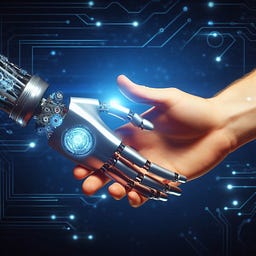
By late 2025, the emergence of sophisticated multi-agent orchestration systems began transforming software development into an autonomous assembly line, where specialized agents—ranging from planning and coding to testing and deployment—coordinate seamlessly with minimal human micromanagement. Platforms like Microsoft’s Azure AI Foundry and early experiments demonstrated AI agents autonomously creating and reviewing pull requests, communicating via protocols such as MCP, and requesting human feedback only at critical junctures. This shift redefines engineers’ roles from direct coders to high-level orchestrators managing fleets of AI agents, akin to NASCAR pit crews, dramatically enhancing productivity and enabling parallel optimization of software tasks.
The rapid evolution of multi-agent orchestration throughout 2026 has been marked by groundbreaking autonomous workflows, exemplified by Anthropic’s Nicholas Carlini orchestrating 16 agents to build a fully functional 100,000-line C compiler with minimal human intervention, and Amazon’s frontier agents autonomously handling coding, DevOps, and security tasks integrated directly into existing team tools like Slack and Jira. These agents continuously learn team preferences through feedback loops, balancing autonomy with oversight, and operate asynchronously—often running while humans sleep—thereby embedding themselves deeply into enterprise workflows and significantly reducing cognitive load.
Multi-agent orchestration frameworks have matured into dynamic, factory-like workflows where lead orchestrator agents manage specialized sub-agents through iterative feedback loops and quality checks, enabling end-to-end production-quality app development in as little as five to six hours. Tools such as OpenClaw and Cisco’s CAPE system coordinate dozens of agents across cloud providers, automating over 40% of routine tasks and reducing team workload by 30%, while fostering open-source collaboration among major enterprises. This orchestration layer is increasingly recognized as the critical value capture point in AI-driven software engineering, drastically lowering costs and accelerating prototype deployment without traditional engineering bottlenecks.
The ongoing shift toward AI-native development workflows is delivering unprecedented productivity gains, with reports of over 100x acceleration compared to traditional coding, driven by instantaneous multi-agent coordination and comprehensive role-based councils of agents that autonomously delegate, cross-evaluate, and assemble complex software solutions. By mid-2026, teams adopting these approaches have realized 2 to 10 times faster delivery, substantial tech debt reduction, and a transition to human-on-the-loop governance, effectively moving humans 'up the org chart' to strategic oversight roles. This evolution heralds a future where collaborative AI swarms independently generate, validate, and optimize multiple solution paths, fundamentally reshaping software engineering economics and workflows.


Engineers Become AI Orchestrators
As AI agents automate routine tasks, engineers and product teams are moving up the value chain—facing cultural resistance, operational complexities, and a messy transition to strategic oversight.
The rise of AI-driven workflows is fundamentally transforming the roles of engineers and product teams from hands-on coding and manual task execution to strategic oversight and orchestration of AI agents. Companies like JAM and Nexar illustrate this shift by empowering non-engineers to directly contribute to product development, with over 70% of Nexar’s non-developers building and deploying apps, effectively democratizing software creation. This evolution requires engineers to pivot from writing code line-by-line to managing fleets of AI agents, focusing on defining clear outcomes, reviewing AI-generated work, and orchestrating multi-agent workflows that autonomously handle complex tasks such as code generation, testing, and deployment.
This role transformation challenges traditional organizational cultures and workflows, demanding significant adaptation to new collaborative models where humans and AI agents co-create asynchronously. Resistance is notable among senior engineers whose identities are tied to legacy coding practices, as Steve Yegge highlights the 12–15 year experience bracket as the most reluctant demographic. Moreover, the shift to AI-native workflows introduces operational complexities such as agent coordination, trust-building over extensive use (the '2,000-hour rule'), and managing cognitive overload due to the temporal mismatch between human decision-making and machine speed. Successful organizations embed AI agents within familiar tools like Slack and JIRA to facilitate seamless integration and reduce friction.
Organizational adaptation extends beyond culture to operational and skillset evolution, with engineers and product managers moving 'up the org chart' to focus on high-level decision-making, architectural design, and strategic planning. AI agents now handle routine maintenance, boilerplate coding, and technical debt reduction, enabling humans to concentrate on creative problem-solving and product ideation. Companies such as Redis and Anthropic report productivity gains of 40-60% by adopting semi-autonomous AI workflows where humans set success criteria and AI agents self-verify and iterate. However, this transition is non-linear and marked by a 'messy middle,' where over 80% of product teams struggle to move beyond initial AI adoption without meaningful business impact, underscoring the need for leadership investment in training and workflow redesign.
The evolving AI-native workflow redefines the essence of software engineering, shifting from craftsmanship in code to orchestrating AI capabilities and managing outcomes. Thought leaders like DHH and Peter Steinberger emphasize that engineers must design pipelines that enable agents to perform optimally, accepting imperfect outputs as long as goals are met. This new paradigm elevates skills in reviewing AI-generated code, providing continuous feedback, and setting clear success criteria rather than focusing on manual coding. As AI agents become trusted collaborators, engineers develop a managerial instinct to balance high agency with accountability, guiding AI workflows while fostering innovation and maintaining architectural coherence amid rapid technological change.
Orchestration Layers Go Mainstream
Open standards like MCP and enterprise platforms such as Figma, Flowgear, and UiPath are transforming integration, governance, and collaboration into the new competitive battleground.
By early 2026, Figma’s strategic adoption of the open-source Model Context Protocol (MCP) transformed it from a siloed design tool into a pivotal node within the AI agent orchestration ecosystem, enabling seamless two-way integration between design and code workflows. This approach fueled rapid expansion beyond traditional designers, with over 70% quarter-over-quarter growth in weekly active users and nearly 60% of Figma Make files created by non-designers in 2025, underscoring its role as a collaborative surface for AI-driven workflows. GitHub’s endorsement of Figma’s MCP integration as a 'game changer' further validates the critical importance of tightly coordinated design and engineering workflows in enterprise AI adoption.
Flowgear’s August 2026 launch of its Integration and AI Maturity Assessment directly addresses the widespread challenge that nearly 90% of companies use AI but fewer than one-third scale beyond pilots due to integration and governance bottlenecks. By producing a prioritized roadmap that aligns business strategy with technical execution across cloud, hybrid, and legacy systems, Flowgear emphasizes that reliable AI outcomes hinge on accurate, consistent, and properly governed data. Their platform’s SOC 2 Type II compliance and innovative MCP-based integration capabilities enable enterprises to maintain durable, secure, and governed AI workflows, reinforcing Flowgear’s role as a foundational orchestration layer amid growing enterprise AI complexity.
UiPath’s August 2026 unveiling of Maestro Flow marks a significant milestone in enterprise AI orchestration by providing a developer-first platform that governs AI coding agents like GitHub Copilot and Claude Code with durability, auditability, and compliance. Running on a Temporal-based durable execution engine—backed by a $300 million funding round and trusted by OpenAI and ADP—Maestro Flow enables seamless transition from prototype to production without re-platforming, integrating agents, robots, APIs, documents, and humans within familiar environments such as VS Code and UiPath Studio. This orchestration layer directly tackles Gartner’s 2025 warning that over 40% of agentic AI projects risk cancellation due to governance gaps, offering enterprises a unified, policy-controlled workflow foundation that reduces fragmentation and maintenance costs while supporting flexible scaling through options like Maestro Lite.
The AI coding startup MachineFlow, recently seeded by LG Electronics and Bluepoint Partners, exemplifies the market’s pivot toward multi-agent orchestration platforms that emphasize developer oversight and reusable logic patterns. By enabling developers to design core project structures via a 'Logic Graph' and delegate tasks to multiple AI coding agents, MachineFlow aims to lead enterprise AI development environments that extend beyond software into manufacturing and physical domains. This strategic focus aligns with industry-wide recognition—highlighted by investors like Bluepoint Partners—that governance and scalable orchestration platforms are critical to managing the proliferation of AI agents in real-world workflows.

AI-Native Culture’s Growing Pains
The rapid democratization of software creation is exposing organizational friction, trust barriers, and the urgent need for new leadership, training, and workflow paradigms.
The rapid democratization of software creation is exposing organizational friction, trust barriers, and the urgent need for new leadership, training, and workflow paradigms.