AI power crunch meets grid bottlenecks
The gist
America’s AI boom is hitting a wall as power grid bottlenecks, policy whiplash, and regulatory gridlock threaten to derail the nation’s tech edge—and risk ceding ground to China.
What to know
- U.S. data centers’ electricity demand is set to hit 600 TWh by 2030—12% of national use—but regulatory paralysis and permitting delays are stalling critical grid upgrades.
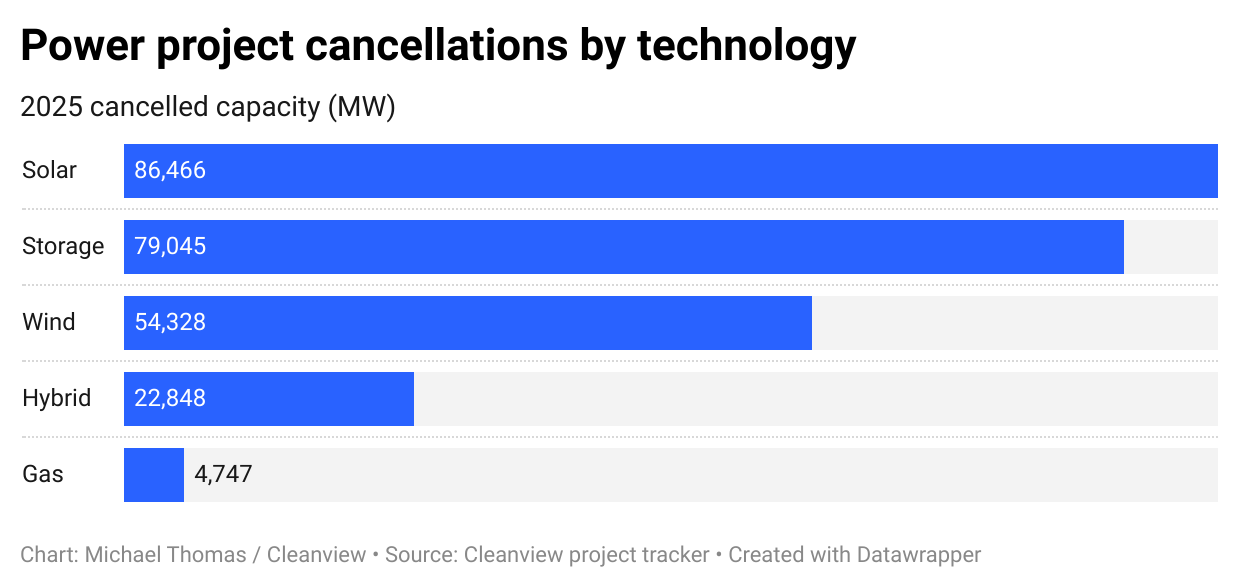
- Trump-era policies accelerated AI data center construction while torpedoing 1,891 power projects—93% clean energy—crippling the renewable buildout needed to meet surging demand.
- China has tripled grid capacity since 2010 and now produces 40% more electricity than the U.S. and EU combined, putting U.S. AI dominance at risk as American infrastructure lags.
Permitting Gridlock Stalls AI
U.S. energy projects face paralyzing delays as overlapping jurisdictions and local opposition create a regulatory maze, leaving hyperscalers to scramble for power while China builds at record speed.
By late 2025, the U.S. energy infrastructure is grappling with profound regulatory paralysis and permitting bottlenecks that severely hinder its ability to meet the surging electricity demand from AI data centers. This systemic gridlock, exemplified by the unrepaired Francis Scott Key Bridge collapse a year after the incident, stems from overlapping federal, state, and local jurisdictions where every stakeholder wields veto power, creating a process that 'literally cannot build' despite technical feasibility. The drawn-out timeline for critical projects, such as the Thacker Pass lithium mine taking over 12 years from application to operation, starkly contrasts with faster international counterparts like China, which completes similar projects in as little as 18 months, underscoring the U.S. struggle to keep pace with AI-driven infrastructure needs.
The rapid expansion of AI data centers is placing unprecedented strain on the U.S. grid, with electricity demand from these centers growing at 15–20% annually—far outpacing the grid’s 2% capacity growth—and now accounting for over 4% of national electricity use. Projections by McKinsey highlight a looming energy crisis where AI-driven data center consumption could exceed 600 TWh by 2030, nearly 12% of all U.S. power demand. However, a critical mismatch exists as new data centers can be built within 12–24 months, while essential power generation projects, including nuclear and solar, face multi-year lead times, forcing hyperscalers like Microsoft and Google to invest in dedicated generation capacity such as the Three Mile Island nuclear restart and small modular reactors, though these efforts will not alleviate immediate shortages.
Despite federal initiatives to ease permitting and prioritize large-load interconnections—such as the Department of Energy urging FERC to reform interconnection procedures—state and local resistance remains a formidable barrier, fueled by NIMBYism and political opposition to data center expansions. This local pushback has led to significant project delays and cancellations, with up to $100 billion in data center investments stalled and clean energy projects disproportionately affected, including 86 GW of utility-scale solar and 79 GW of battery storage cancellations in 2025 alone. Regions like Virginia, Ohio, and Indiana, key data center hubs, exemplify how restrictive policies and high interconnection costs exacerbate the bottleneck, threatening grid reliability and driving up electricity prices in areas dense with AI infrastructure.
The cumulative effect of regulatory inertia, supply chain constraints, and political opposition is a growing electricity shortage that jeopardizes the U.S.’s competitiveness in the AI race, especially as China aggressively expands its grid capacity—now triple that of the U.S.—and rapidly deploys renewables and coal power. Industry voices emphasize that the U.S. is caught off guard by the rapid surge in AI-driven demand, with retiring fossil fuel plants, weather-related grid damages, and slow transmission buildouts (now taking 5 to 7 years) compounding the challenge. In response, data centers are increasingly adopting behind-the-meter power solutions and flexible load management strategies, such as Texas’s SB6 'kill switch' regulation, to navigate the complex interplay of reliability, political acceptability, and soaring energy needs.




Policy Whiplash Hits Renewables
Federal and state policy contradictions fast-tracked AI data centers but derailed nearly 2,000 clean energy projects, gutting wind and solar expansion just as AI-driven demand soars.
The Trump administration’s federal policy shifts created a paradoxical landscape for U.S. clean energy infrastructure: while executive orders aimed to ease nuclear permitting and free federal land for data centers to accelerate AI-related energy demands, simultaneous regulatory hurdles and permitting freezes severely hindered renewable energy projects. This contradictory approach fast-tracked power-hungry AI data centers as a national security priority but imposed tariffs, phased out clean energy tax credits, and enforced construction halts on wind farms, contributing to the cancellation of 1,891 power projects totaling 266 GW in 2025—93% of which were clean energy, including 86 GW of solar and 54 GW of wind. The administration’s dismantling of offshore wind development through funding cancellations and regulatory freezes further jeopardized over $47 billion in investments and nearly 30 GW of wind capacity, threatening more than 120,000 jobs and slowing the expansion of critical clean energy infrastructure during a period of rising electricity demand driven by AI growth.
Beyond federal actions, state and local regulatory challenges compounded the difficulties in expanding clean energy infrastructure, with persistent NIMBYism and political opposition delaying or canceling projects worth up to $100 billion. The Pentagon’s national security review process for land-based wind farms was effectively frozen starting August 2025, stalling more than 250 wind projects nationwide and jeopardizing major investments such as $1.6 billion in Minnesota wind projects and thousands of associated jobs. These permitting bottlenecks, combined with new federal requirements for data centers to have backup power and disconnect from the grid during scarcity, reflect a complex regulatory environment that slows clean energy deployment despite growing demand.
The Trump administration’s One Big Beautiful Bill Act (OBBBA), signed in July 2025, rolled back key clean energy tax credits established by the Inflation Reduction Act, imposing strict eligibility deadlines that accelerated project development but ultimately led to widespread cancellations of wind and solar projects. While congressional Republicans preserved some tax credits, the overall reduction in incentives, coupled with the administration’s permitting campaign against wind and solar projects, shifted the primary barrier to clean energy growth from financing to regulatory constraints. Research from MIT’s Center for Energy and Environmental Policy Research underscores that easing permitting and interconnection hurdles is now more critical than restoring tax credits to sustain renewable energy expansion, especially as wind projects suffered the most significant setbacks compared to solar and battery storage.
The administration’s mixed energy strategy—slowing renewables through regulatory and permitting barriers while failing to meaningfully expedite natural gas infrastructure—risks constraining overall capacity growth, exacerbating electricity affordability issues amid surging demand from AI data centers. Despite wind and solar remaining cheaper than natural gas, recent doubling of gas prices and turbine costs has not translated into accelerated clean energy deployment due to these policy-induced delays. This bottleneck threatens to provoke political backlash as the U.S. struggles to balance energy security, affordability, and climate goals in an increasingly complex energy landscape.

Transmission: The New Bottleneck
Massive investments in high-voltage lines and battery storage can’t keep pace with AI’s explosive energy needs, exposing the grid’s outdated structure as the key constraint on economic growth.
By late 2025, the U.S. energy sector saw a renewed push for large-scale transmission infrastructure, exemplified by the Southwest Power Pool’s approved $8.6 billion 765kV backbone project and similar high-voltage plans across SPP, MISO, PJM, and ERCOT. Despite setbacks like the Greenbelt Express DOE loan cancellation, these efforts mark a multi-decade transition from a fragmented utility landscape to a more interconnected grid, with regions like California ISO and New England advancing thousands of miles of new lines annually. However, this expansion is hampered by complex permitting processes and a lack of coordinated interregional planning, challenges that the bipartisan Manchin Barrasso Energy Permitting Reform Act (EPRA) seeks to address by streamlining federal roles and cost allocation for interregional projects.
The explosive growth in AI-driven electricity demand, particularly in ERCOT where forecasts jumped from 24 GW in 2022 to 166 GW by 2025, has exposed critical transmission bottlenecks that limit the grid’s ability to scale energy supply. Texas’s relatively faster permitting and technology-agnostic policies have attracted massive data center investments, yet rising prices and infrastructure constraints persist. Grid modernization efforts there include deploying over 9 GW of battery storage to mitigate volatility, but the fundamental challenge remains: the grid’s capacity to deliver power reliably and affordably is the main rate limiter for both AI expansion and broader economic growth.
Grid modernization debates reveal a tension between prioritizing large-scale transmission and clean firm power projects versus emphasizing distributed energy resources and demand-side management. The Clean Economy Project, reflecting Bill Gates’s 'big power plant and transmission first' philosophy, focuses on utility-scale renewables and transmission expansion as the fastest path to decarbonization, while acknowledging the role of behind-the-meter solutions. This top-down approach contrasts with growing industry recognition that integrating diverse, intermittent generation sources, two-way flows, and battery storage requires a fundamentally different grid architecture than the century-old coal-centric system.
Despite the critical need for grid expansion, transmission infrastructure faces formidable barriers including decade-long permitting delays, high capital costs, societal resistance such as NIMBYism, and supply chain bottlenecks like transformer shortages causing year-long waits. Legislative efforts like the SPEED Act aim to accelerate permitting, yet local opposition continues to stall projects, with up to $100 billion in data center investments delayed or canceled. As Jigar Shah bluntly puts it, 'We are not short generation in this country... We are short wires.' Without significant reforms and innovative solutions—such as grid-enhancing technologies, flexible 'non-firm' connection agreements, and hybrid off-grid data center power—scaling the grid to meet AI and economic demands remains an uphill battle.



Big Tech Bets on Mega Projects
AI giants are bypassing traditional utilities by directly funding large-scale energy infrastructure, while financial ingenuity keeps clean energy capital flowing despite tariffs and policy uncertainty.
The Clean Economy Project, inspired by Bill Gates’ philosophy, advocates for a top-down approach to energy investment that prioritizes large-scale, utility-grade infrastructure such as hydro, nuclear, and geothermal power, alongside expanded transmission networks. This strategy deliberately sidelines consumer-side innovations like demand reduction and virtual power plants, viewing them as insufficiently scalable compared to the transformative potential of major clean firm projects. As one interviewee noted, the 'spirit of Bill Gates' favors 'serious big scale stuff' over 'sprinkles' like behind-the-meter solutions, reflecting a market adaptation that bets on centralized, capital-intensive assets to drive rapid decarbonization.
By early 2026, the surge in AI-related investments—exceeding $100 billion—has catalyzed innovative financing models where hyperscalers directly fund energy infrastructure expansions, such as Williams Companies’ electric generation projects, to support data center electrification without passing costs to retail consumers. This direct contracting mechanism exemplifies a broader market adaptation where tech giants shoulder infrastructure costs, aligning energy investments with AI growth while mitigating inflationary pressures for end-users.
Despite geopolitical headwinds like tariffs and Foreign Entity of Concern (FEOC) rules, clean energy capital demonstrated remarkable resilience in 2025, with total capex rising 6% to approximately $120 billion and over 58 GWh of battery storage installed. Investors and developers have innovated by front-loading investments to meet safe harbor deadlines under the One Big Beautiful Bill Act and by adopting complex financing structures—including hybrid tax equity and transferable tax credits—enabling mega projects that integrate wind, solar, nuclear, and emerging technologies. This financial ingenuity has sustained capital flow amid policy uncertainty, with market participants describing the environment as a 'duck on the water'—calm on the surface but actively paddling beneath.
The evolving valuation and revenue models for renewable storage assets underscore a significant market shift, as declining battery costs and diversified income streams—from day-ahead arbitrage to capacity services—have transformed storage from a previously unattractive investment into a financially viable cornerstone of clean energy portfolios. Adding storage to existing renewable sites now entails low incremental capital expenditure, enhancing overall project economics and investor confidence. This trend dovetails with grid modernization efforts that recognize the inadequacy of century-old coal-centric infrastructure and embrace advanced technologies like battery storage and small modular nuclear reactors, positioning funds to capitalize on a diversified and resilient energy future.


AI Arms Race Goes Global
China’s rapid grid buildout and Saudi Arabia’s cross-border investments are redrawing the map of AI infrastructure, threatening U.S. dominance as energy becomes the new battleground.
By late 2025, the U.S. faced mounting pressure from AI leaders like OpenAI to dramatically scale energy capacity—calling electrons 'the new oil' and urging a 100GW annual buildout to maintain AI dominance over China. Meanwhile, China aggressively integrated AI models such as DeepSeek and Qwen into military applications, leveraging Nvidia chips to enhance its strategic edge. Saudi Arabia’s investments in AI data centers, collaborating with both U.S. and Chinese tech giants, further complicated the geopolitical landscape, positioning the kingdom as a crucial nexus in the contest for AI infrastructure and energy influence.
By early 2026, the contrast between U.S. and Chinese energy strategies became stark: the U.S., despite hosting over 40% of global data centers, struggled with power infrastructure bottlenecks leading to price spikes and constrained AI growth. In contrast, China’s power demand surged more than 20 times faster, supported by expansive investments across coal, renewables, nuclear, and battery storage, creating significant spare capacity. This diversified energy buildout not only underpinned China’s second-place data center share of about 25% but also threatened to erode U.S. leadership in AI development and hosting.
By mid-2026, China had decisively outpaced the U.S. in electricity generation, producing 10,000 terawatt hours—40% more than the U.S. and EU combined—and aggressively expanding solar capacity by nearly 50% annually. This energy surge was a strategic lever in the AI race, especially as the U.S. grappled with legacy fears around nuclear and solar adoption, compounded by geopolitical concerns over China’s dominance of the solar panel supply chain. Experts warned that the rapid timeline toward AI superintelligence, potentially by 2027, demanded urgent energy infrastructure expansion, transcending traditional regulatory hesitations.
Despite U.S. energy independence through fossil fuels like fracking and natural gas exports, the nation faced a growing electricity shortage threatening its AI leadership, as administrative restraints and rising prices limited renewable energy expansion. Meanwhile, China tripled its grid capacity since 2010, now operating at roughly three times the U.S. scale, a fact underscored by figures like Elon Musk who voiced concern over America’s lagging power infrastructure. Geopolitical maneuvers, including Russia’s funding of European green parties to suppress fracking, further complicated Western energy strategies, highlighting how energy dominance remains a critical and contested pillar in the global AI and economic competition.




China’s Energy Blitz Surges Ahead
China’s relentless expansion in electricity generation and renewables leaves the U.S. struggling with outdated infrastructure and regulatory inertia, raising alarms as AI superintelligence nears.
China’s relentless expansion in electricity generation and renewables leaves the U.S. struggling with outdated infrastructure and regulatory inertia, raising alarms as AI superintelligence nears.