AI-powered orchestration redefines payments and fraud defense
The gist
AI-powered orchestration is transforming payments from a clunky back-office function into an intelligent, real-time engine for revenue, risk, and customer experience.
What to know
- By early 2026, Mastercard and Visa led the charge with AI-driven orchestration platforms—Mastercard’s Agent Suite and Visa Direct—uniting payment rails across 195+ countries.
- Payment processors like i2c and merchants using Spreedly’s provider-agnostic vault are slashing fraud and friction, with 85% of CFOs prioritizing automation to boost speed and security.
- 84% of advanced firms now monitor KPIs in real-time, turning payments orchestration into a strategic lever for revenue growth and fraud defense—leaving legacy, manual routing in the dust.
Networks Become Platforms
Mastercard and Visa are transforming from traditional processors into AI-powered orchestration platforms, unifying global payment rails and enabling seamless, identity-based transactions across 195+ countries.
By early 2026, Mastercard and Visa spearheaded the emergence of AI-driven payment orchestration platforms, signaling a strategic evolution from traditional payment processing to intelligent, multi-rail commerce orchestration. Mastercard’s launch of the Agent Suite epitomizes this shift, positioning the company not merely as a payment processor but as a platform enabling autonomous transaction flows and AI-powered decisioning at scale. Simultaneously, Visa Direct expanded beyond card networks to a sophisticated network-of-networks model, supporting over 195 countries and 90 domestic schemes, effectively unifying cards, accounts, wallets, and cross-border rails under a centralized orchestration layer.
Visa’s innovative approach, exemplified by Visa+, decouples money movement from traditional card credentials by leveraging identity as the core routing layer, enabling endpoint abstraction across diverse payment rails. This architectural pivot transforms cards, accounts, wallets, and domestic and cross-border schemes into interchangeable execution layers governed by a single control plane, facilitating seamless, adaptive commerce orchestration. This decoupling not only enhances operational scale—reaching approximately 12 billion endpoints—but also underscores the industry’s move toward flexible, AI-driven orchestration platforms that unify fragmented payment infrastructures.

Modernizing Without Disruption
AI-driven orchestration layers are revitalizing legacy payment systems, allowing banks to enhance speed, intelligence, and personalization while preserving the trust and compliance of established infrastructure.
By mid-2026, industry leaders like Mladen Vladic of FIS and Garrett Baird of Paymentus emphasized that legacy payment systems are not obsolete relics but foundational pillars of trust, resiliency, and regulatory compliance in banking. Rather than pursuing wholesale replacement, the strategic evolution lies in orchestrating these entrenched infrastructures with AI-driven layers that enhance customer engagement and operational intelligence. Vladic highlighted orchestration as a "more durable strategy," while Baird described AI as "connective tissue" capable of navigating fragmented legacy databases to unlock trapped intelligence, enabling incumbents to modernize without sacrificing scale or compliance advantages.
Despite the promise of AI, integrating it with legacy systems remains complex due to data silos and disconnected databases that limit model effectiveness. As Vladic noted, "AI is only as good as the data available," and many large enterprises struggle with fragmented data landscapes. This fragmentation challenges fraud detection and personalization efforts, underscoring the need for a nuanced approach that preserves stable legacy components while evolving others to support real-time payments and AI capabilities. Cody Banks of Velera advocates for a "measured approach that preserves operational continuity while improving functionality around the edges," reflecting a broader industry consensus on balancing stability with innovation.
The modernization imperative is further driven by escalating customer expectations for faster, smarter, and personalized payment experiences that remain seamlessly connected. Garrett Baird observed that customers now demand "more speed, more intelligence, more personalization," pushing incumbents to rethink legacy assumptions without dismantling the "rails themselves," which continue to provide structural advantages over newer entrants. This balancing act requires financial institutions to modernize customer engagement layers and build strategic partnerships with agile FinTech firms, as Banks explained, since "financial institutions need to move fast, and they can’t afford to lose trust," making collaboration essential to extend capabilities while maintaining compliance.

AI Balances Speed and Security
Payment processors are deploying adaptive AI to cut fraud losses, reduce friction, and drive real-time decisioning, but poor data quality remains a major obstacle to effective automation and customer experience.
By mid-2026, payment processors like i2c have recognized that uptime alone no longer suffices; institutions now demand AI-driven automation that not only accelerates payment speed but also sharpens fraud management and real-time decision-making. Matthew Pearce of i2c highlights the delicate balance required: excessive friction risks losing customers to competitors, while lax controls invite costly fraud, making adaptive AI models that continuously learn from evolving transaction patterns essential to reduce false positives without compromising approval rates.
Automation has emerged as a critical lever to slash payment friction, with 85% of CFOs affirming that minimizing manual payment approvals enhances both speed and security, particularly among firms plagued by recurring delays. Embedding AI- and machine learning-based real-time fraud scoring directly into authorization workflows enables continuous risk assessment, a capability 78% of these firms identify as pivotal to improving customer experience and safeguarding revenue, which otherwise can erode by nearly 2% annually due to friction-related losses.
Issuers are transforming from back-end processors into real-time intelligence orchestrators, leveraging AI to cut fraud losses by over $5 million for 42% of respondents and to enhance approvals while reducing false declines that currently affect 15% of legitimate eCommerce transactions—costing an estimated $430 billion globally each year. However, nearly half of organizations still grapple with poor-quality data that limits AI’s effectiveness, underscoring the need for improved data integration alongside dynamic fraud detection that uses contextual signals like device recognition and spending behavior to authorize payments without adding friction.
The strategic shift toward pre-payment fraud prevention, championed by companies like Plaid, prioritizes real-time verification of identity, account ownership, and behavioral data to improve authorization quality and reduce costly post-settlement recoveries. This approach is vital as 57% of firms still detect fraud only after settlement, limiting recovery options. Meanwhile, integrating payment orchestration within secure value streams, as advocated by experts on fraud guardrails, reduces vulnerabilities from multiple vendor endpoints and fragmented controls, thereby enhancing both security and operational efficiency while preserving customer trust.
From Routing Chaos to Control
Provider-agnostic vaults and unified intelligence layers are ending fragmented, manual payment routing, empowering merchants to harmonize data, reduce errors, and turn routing into a strategic revenue lever.
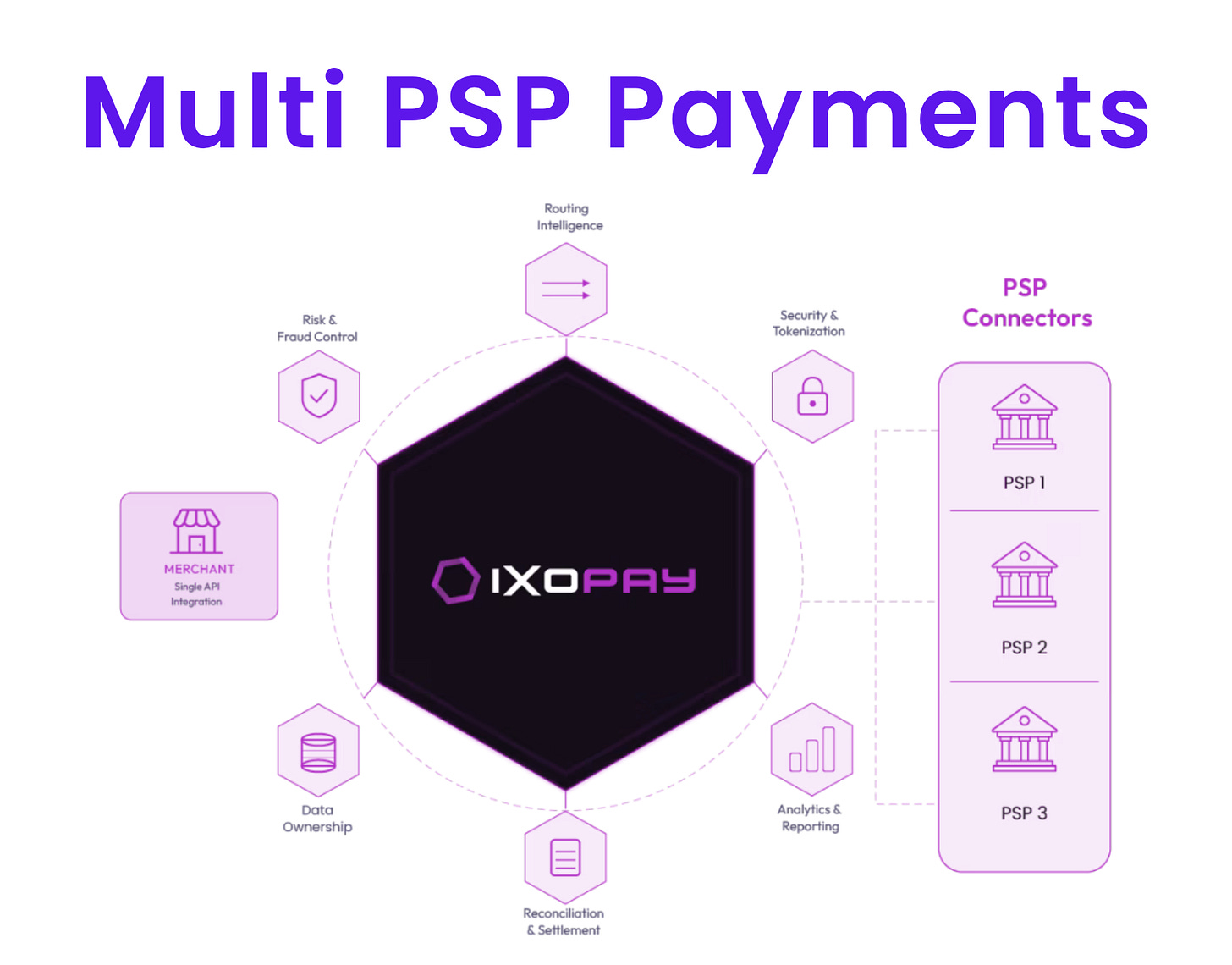
By mid-2026, multi-provider payment architectures revealed a paradox: while adding gateways increased processing flexibility, they also introduced severe operational and data fragmentation challenges. Over half of firms still relied on manual routing and intervention during outages, limiting resilience and real-time responsiveness. This outdated static approach treated payment routing as a technical afterthought, but as transactions became faster and more embedded, companies like IXOPAY—handling $171 billion in volume in 2025—demonstrated that intelligent orchestration transforms routing into a strategic revenue driver, directly impacting approval rates and checkout friction.
The emergence of unified payment intelligence layers and provider-agnostic token vaults marked a critical evolution in overcoming data fragmentation. Spreedly’s July 2026 launch of a standalone vault supporting PCI DSS Level 1 tokenization across 100+ processors empowered merchants to securely control credentials without provider lock-in, reflecting CEO Justin Benson’s vision of the vault as the new “control point in modern payments.” This innovation, coupled with real-time KPI monitoring and dynamic routing—adopted by 84% and 62% of top orchestrators respectively—enabled merchants to harmonize disparate data streams, reduce operational friction, and improve transaction approval rates.
Addressing the fragmented telemetry from multiple PSPs required deploying provider-agnostic payment intelligence layers that unify transaction metadata into consistent schemas, as recommended in best practices from July 2026. Without such harmonization, merchants struggled to identify systemic errors hidden by proprietary APIs, inconsistent decline codes, and complex settlement reports, resulting in margin erosion and elevated costs. Machine learning-powered diagnostics, including anomaly detection and pre-chargeback interception, further enhanced operational oversight by proactively resolving processing errors and reducing checkout abandonment.
Innovations in token management and transaction design are preparing payment stacks for future commerce models. Separating token storage from processing layers via centralized universal vaults not only facilitates gateway migration and reduces PCI compliance scope by up to 90%, but also supports programmable token structures that capture identity, intent, and consent metadata. This forward-looking architecture secures machine-initiated checkouts and scales agent-driven commerce, ensuring merchants can maintain control and compliance amid growing stored-credential transaction volumes, which rose from 34% to 40% on Spreedly’s platform between 2022 and 2026.


Payments Enter the Boardroom
Orchestration has become a C-suite concern as CFOs and treasury teams take charge of payment failures, driving automation to reduce the 'growth tax' and transform payments into a strategic advantage.
By mid-2026, payments orchestration had decisively shifted from a mere technical utility to a strategic revenue and risk management function embedded in the boardroom agenda. Companies like FIS, which processes over 73 billion transactions annually post-TSYS acquisition, exemplify this evolution by leveraging vast issuer data pools to enable real-time decisioning that optimizes authorization, reduces fraud, and enhances customer experience. This transformation is underscored by the fact that 84% of firms with advanced orchestration capabilities implement real-time KPI monitoring, while 62% employ dynamic routing by issuer or BIN, highlighting how payments now directly influence revenue outcomes and operational resilience during outages.
Despite the clear benefits of automation, many organizations remain hampered by manual payment routing and intervention, which constrains their ability to respond swiftly to failures and optimize revenue streams. More than half still rely on manual routing, with only 39% automating reroutes and 68% depending on manual fixes during outages, thereby limiting resilience and growth. This gap is critical as authorization failures and fraud-related declines silently erode revenue long before appearing on financial statements, with issuers falsely declining roughly 15% of legitimate e-commerce transactions—translating to an estimated $430 billion in lost sales annually.
The rising strategic importance of payments orchestration is also reshaping financial leadership’s approach, with CFOs and treasury teams now owning payment failure costs and actively participating in selecting processors and orchestration platforms. This finance-led focus aims to mitigate the 'growth tax'—the exponential cost increases tied to scaling payment volumes through manual reconciliation, longer days sales outstanding (DSO), and transaction fees. Innovations like Paystand’s flat subscription pricing model exemplify how aligning payment costs with growth can turn payments into a compounding advantage rather than a scaling burden, enabling finance teams to shift from manual tasks to strategic collections and cash flow optimization.
Comprehensive, mature orchestration systems that unify authorization, cost, risk, fraud, and compliance workflows are essential to fully realize payments as a strategic function. Partial modernization risks increasing operational friction and customer complaints, as evidenced by 52% of companies with incomplete capabilities reporting at least 5% of complaints tied to payment issues. Leading banks such as JPMorgan and Citi are capitalizing on this by integrating payments with liquidity and compliance workflows, generating billions in revenue and deepening client relationships. This orchestration-centric approach replaces simple system integration with coordinated business outcomes, positioning payments as a central pillar of corporate operating architecture.
Agentic AI Powers Next-Gen Payments
Fully integrated, AI-driven ecosystems and programmable tokens are enabling scalable, machine-initiated commerce, unifying fragmented data and setting the stage for autonomous, secure transactions.
By mid-2026, the future of payment orchestration is clearly moving towards fully integrated, AI-driven ecosystems that unify fragmented multi-PSP data to enable scalable, dynamic routing and sustainable growth. IXOPAY exemplifies this shift, orchestrating $171 billion in transactions in 2025 and analyzing over 850 million payment events with advanced machine learning, highlighting the necessity of evolving beyond basic routing to centralized payments intelligence. This evolution is further supported by the adoption of programmable token structures that embed identity, intent, and consent metadata, enhancing security and enabling seamless machine-initiated transactions within these sophisticated platforms.
Preparing payment stacks for the rise of agent-driven commerce is becoming critical as AI-powered, machine-initiated checkouts scale rapidly. By equipping systems to verify and record these autonomous transactions, merchants and financial institutions can secure transaction volume and maintain competitive advantage. This approach addresses the multi-PSP paradox—where increased payment flexibility leads to fragmented data and reduced visibility—by leveraging agentic AI and programmable tokens to harmonize disparate data streams, dynamically optimize routing, and reduce margin erosion.