AI reshapes junior hiring, leadership pipelines
The gist
AI is radically reshaping the talent playbook—forcing leaders to double down on empathy, smashing traditional career ladders, and making human judgment the new competitive edge.
What to know
- Companies like Williams and Accenture are scrambling to fill a looming leadership gap as AI automates junior roles, investing heavily in mentorship and upskilling.
- Hybrid, 'full stack' jobs are the new normal, with LinkedIn and ElevenLabs training employees to master coding, design, and product management—all supercharged by AI tools.
- Despite AI's power to automate up to 60% of work, organizations must urgently rebuild trust, continuously reskill, and find new ways to fairly attribute value between humans and machines.
Leaders Face Emotional Reckoning
AI is forcing leaders to center empathy, resilience, and cultural transformation—making emotional intelligence, not technical know-how, the ultimate leadership skill in volatile times.
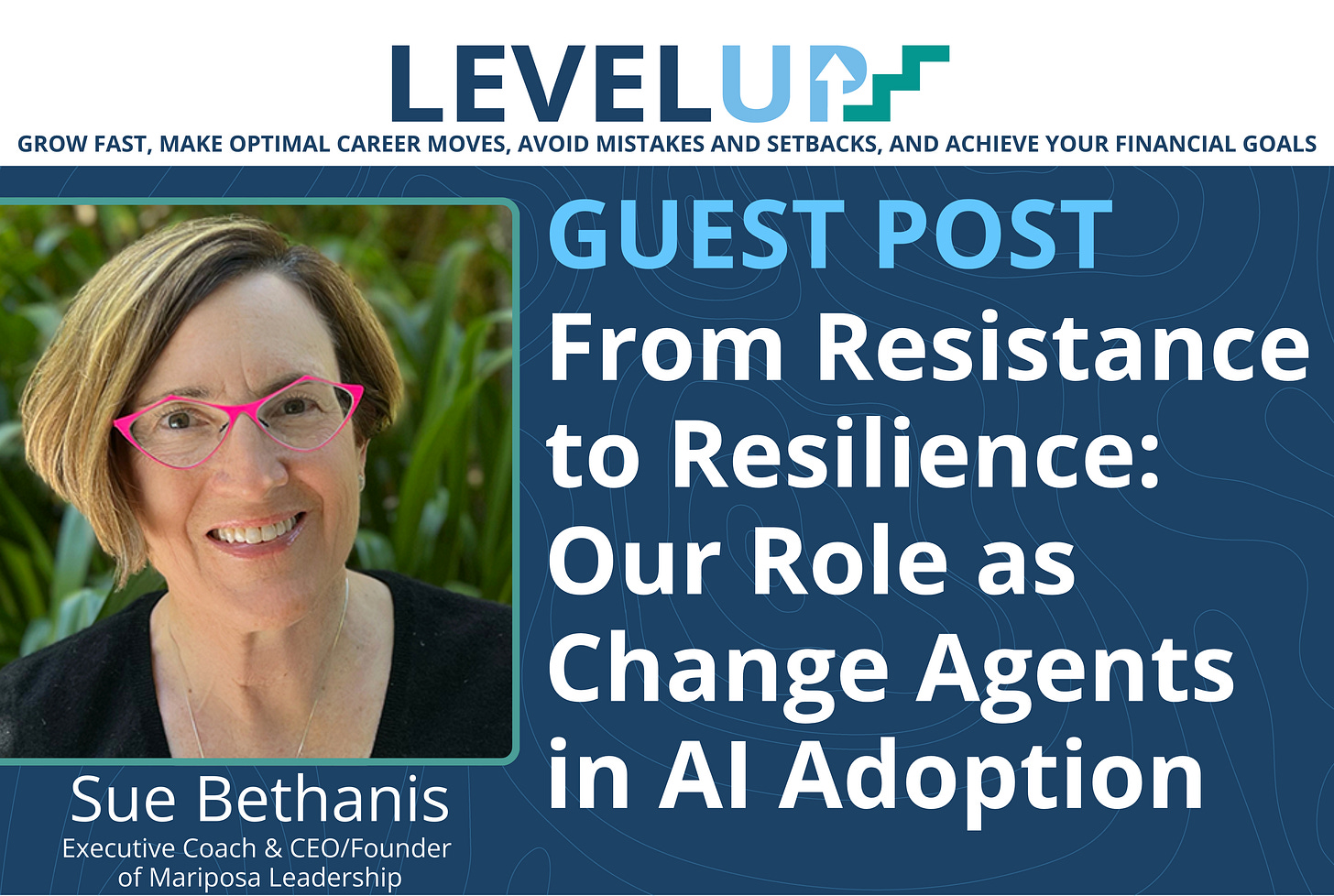
AI adoption is forcing leaders to fundamentally reimagine their roles as change agents, shifting from a stance of resistance to one of resilience and proactive engagement. As articulated in August 2025 analyses, leaders are urged to 'wake up every day and embody being a change agent,' reframing AI not merely as a technical upgrade but as a profound human disruption. This mindset shift requires leaders to anticipate and embrace change, guiding their organizations through the emotional turbulence—fear, anxiety, and uncertainty—that inevitably accompanies technological transformation.
Empathy, resilience, and cultural alignment have emerged as non-negotiable leadership traits in the AI era, as highlighted by voices like Sue Bethanis and Brené Brown. Leaders are increasingly called to foster a 'higher frequency of empathy and inspiration' in their daily interactions, recognizing that successful AI integration is as much about supporting people through disruption as it is about deploying new tools. This human-centered approach is echoed in both private sector and federal initiatives, where leaders are tasked with balancing urgency and risk-taking with trust-building and emotional granularity to keep teams engaged and aligned amid rapid change.
Organizational culture is undergoing a significant rewiring, with adaptability and openness to AI-driven change now prioritized over rigid process adherence. From startups replacing resistant C-suite executives to federal agencies shifting success metrics from process completion to mission outcomes, leaders are expected to champion experimentation and learning. Initiatives like Superhuman’s bottom-up 'AI Guild' and cross-functional 'AI builder weeks' demonstrate how creating safe spaces for exploration, rather than mandating adoption, accelerates both innovation and buy-in across teams.
The rise of hybrid leadership roles—such as Madna’s Chief Human Technology Officer—reflects the growing inseparability of human experience and digital infrastructure in modern organizations. As Microsoft’s Work Lab predicts 'frontier firms' where managers lead teams of both humans and agentic AIs, leaders must bridge the gap between technical prowess and human insight. Empathy and vision remain critical to ensuring that, even as AI becomes more embedded, workplaces remain places where people want to work and thrive alongside technology.




Junior Talent Pipeline Disrupted
Automation is erasing traditional entry-level jobs, pushing companies to reinvent early-career development with AI-augmented roles and intensive mentorship to avert a future leadership vacuum.
AI-driven automation is fundamentally reshaping early-career pathways, threatening to 'hollow out' talent pipelines by reducing the number of junior employees who traditionally advance into leadership roles. As Evangelos Simoudis warns, this could create a leadership vacuum within five to ten years, prompting companies like Williams to implement intensive onboarding and direct mentorship from senior executives to ensure foundational knowledge and the 'company way' are still passed down, even as on-the-job learning through routine tasks diminishes.
Forward-thinking organizations are reimagining entry-level roles by leveraging AI as an augmentation tool rather than a replacement, accelerating junior talent development and expanding their scope of work. Accenture, for example, deploys AI 'copilots' to help new hires tackle complex assignments, while McKinsey reframes junior roles as 'verifiers' and 'orchestrators' of AI outputs, ensuring that early-career employees gain critical experience in oversight and strategic thinking rather than being relegated to obsolete tasks.
The rapid automation of routine work has led to a paradox: while AI enables junior employees to ramp up faster and contribute more quickly, it also risks eroding the foundational experiences that underpin long-term career growth. Companies like Egnyte and Block address this by pairing AI-accelerated onboarding with robust mentorship and full-lifecycle project exposure, ensuring that juniors not only learn faster but also acquire the tacit knowledge and critical thinking skills needed for future senior roles.
To sustain robust talent pipelines in the AI era, organizations are doubling down on continuous upskilling, structured mentorship, and partnerships with educational institutions. Initiatives like OpenAI's collaboration with California State University and Microsoft's $4 billion investment in AI training exemplify the push to prepare graduates for AI-augmented work, while Pearson's DEEP Learning Framework and Korn Ferry's AI-powered Talent Suite highlight the growing importance of aligning technology deployment with human skill development to close the 'learning gap' and unlock AI's full economic potential.




Rise of the Hybrid Builder
AI is collapsing job silos, demanding product professionals who can code, design, and ship independently—rewarding those who blend technical depth with cross-functional agility.
The boundaries between product management, engineering, and design are dissolving at a breakneck pace, as AI empowers individuals to operate across traditional silos and take products from idea to launch. Companies like LinkedIn have scrapped their classic Associate Product Manager program in favor of the 'Full Stack Builder' model, training new hires in coding, design, and PM skills holistically, while ElevenLabs has eliminated PMs altogether, expecting engineers to own the entire product lifecycle. This shift is fueled by AI tools that allow PMs and designers to prototype, ship code, and even push bug fixes without engineering involvement, as seen at Flowspace and Meta, where non-technical PMs like Zevi Arnovitz use AI workflows to independently build and launch products.
AI is not only accelerating product cycles but also redefining what it means to be a builder, with rapid prototyping and hands-on execution now table stakes for product leaders and ICs alike. At Medbridge, AI-enabled Product Engineers ship major updates weekly instead of quarterly, while at Luxury Presence, teams moved from weeks-long prototyping to testing eight ideas in a two-week sprint. This new era prizes hybrid skill sets—PMs who can code, engineers who understand UX, and designers who ship features—supported by AI copilots and agents that automate routine tasks, as evidenced by the rise of 'product engineers' at Vercel and the integration of AI agents like Linktree's 'Devin' into engineering workflows.
While AI-driven convergence enables leaner, more talent-dense teams, it also raises the bar for technical fluency and judgment, making the 'Builder Requirement' a non-negotiable career ceiling for product professionals. Companies report that top performers are the fastest to adopt AI tools, amplifying performance differentials rather than leveling the playing field. However, this fluidity does not eliminate the need for deep expertise—distinct accountability remains, with PMs owning intent, designers the human contract, and engineers the technical reality. As Joe from the PM-Eng-UX trifecta analysis notes, 'AI makes it possible for PMs to do more technical work. But it does not replace engineering. Same for design.'
The evolution toward hybrid and full stack roles is not without its challenges—successful adoption hinges on intentional change management, cultural shifts, and the right incentives. LinkedIn’s rollout of the Full Stack Builder model, for example, emphasizes not just technology and AI agents, but also the need for updated performance reviews, exclusive tool access, and celebration of wins to drive adoption. Legacy systems, technical debt, and the limits of AI in handling complex or ambiguous tasks require ongoing human oversight and investment, ensuring that while AI can automate up to 60% of work, the remaining 40%—context, synthesis, and stakeholder alignment—remains a uniquely human domain.






Human Judgment Becomes Scarce Skill
As AI automates the routine, the true workplace edge shifts to uniquely human traits—judgment, agency, and creativity—making soft skills and cultural fit more quantifiable and essential than ever.
As AI accelerates efficiency and automates routine tasks, the uniquely human qualities of judgment, creativity, taste, and agency are emerging as the true differentiators in the modern workplace. Leaders like Brené Brown and Hubert Palan (ProductBoard) emphasize that while AI can generate ideas, analyze data, and even simulate stakeholder conversations, it cannot replicate the nuanced decision-making, emotional granularity, or deep contextual understanding required to align products with real user needs and strategic goals. This shift is evident across organizations—from Meta PM Zevi Arnovitz leveraging AI to ship products without writing code, to founders treating AI as a strategic thought partner—demonstrating that the 'human premium' now lies in discerning what matters, building trust, and having the conviction to act amid uncertainty.
Despite AI's promise to reclaim time and increase output, organizations are discovering that the real value of human work is not in doing more, but in choosing where to invest attention and energy. Survey data from late 2025 shows that while over 60% of product teams gain back more than two hours daily thanks to AI, nearly half still lack time for strategic planning, and many PMs remain exhausted by execution rather than empowered by strategy. As Atlassian's Axel Sooriah and others note, reclaiming agency—stepping off the execution 'hamster wheel' to focus on higher-order thinking, cross-functional collaboration, and meaningful customer impact—is essential for growth and confidence in an AI-augmented environment.
AI is transforming not just workflows but also workplace culture, making human judgment and soft skills more quantifiable and essential than ever. As Albino's work on AI-powered culture assessment reveals, organizations must now rigorously evaluate cultural fit and foster environments where agency, accountability, and leadership shape daily behaviors and decisions. This cultural evolution, supported by leaders who model intentionality and create space for growth, ensures that uniquely human strengths—such as relationship-building, ethical reasoning, and the courage to challenge assumptions—remain at the heart of successful, AI-augmented teams.
Ultimately, the enduring value of people in an AI-driven world is defined by their ability to synthesize context, anticipate second-order effects, and exercise judgment in ambiguous situations—capabilities that no algorithm can fully replicate. Whether it's PMs and designers collaborating in real time to refine AI-generated drafts, or founders using AI as a sounding board for vision and strategy, the winning teams are those who treat AI as an amplifier of human insight, not a replacement. As one analysis puts it, 'The AI got us 60% there. Human collaboration got us the other 40%. And that 40% is everything.'




Trust and Skills Under Pressure
The rush to deploy AI agents is heightening trust deficits and skill obsolescence, forcing companies to rebuild credibility and invest in continuous upskilling to sustain competitive advantage.
By early 2026, the rush to integrate AI agents into professional services teams—evidenced by 87% of organizations planning to manage AI alongside humans—has amplified the tension between productivity gains and workforce sustainability. Yet, this technological leap is shadowed by a crisis of confidence: only 12% of leaders fully trust the data underpinning AI-driven decisions, underscoring persistent concerns about transparency and the integrity of automated outputs. As companies turn down work due to talent shortages and skill gaps, the challenge is not just about deploying AI for efficiency, but also about sustaining long-term workforce trust and resilience.
Despite the headline-grabbing layoffs—such as the 50,000 U.S. tech jobs lost in 2025—automation is poised to drive a net gain of 78 million jobs globally by 2030, particularly in AI, cybersecurity, and hybrid roles that blend human and machine expertise. However, this optimistic forecast from Draup’s 2025 Economics of Skills report comes with a caveat: the half-life of tech skills has dropped below two years, and 40% of current skills may be obsolete by 2027, forcing organizations to adopt continuous upskilling and more flexible hiring strategies to keep pace with relentless change.
The evolving global talent landscape is further complicated by narrowing wage gaps for specialized tech roles and the rise of emerging markets in advanced fields like AI and data engineering. While cybersecurity talent shortages persist, organizations must now navigate a more complex, competitive environment, balancing the drive for productivity with the imperative of equitable talent management and regional workforce development.
AI’s promise of a $6.6 trillion boost to the U.S. economy by 2034, as projected by Pearson, hinges on closing the workforce learning gap through sustained investment in upskilling and reskilling. With 59% of the global workforce needing reskilling by 2030, Pearson’s DEEP Learning Framework stresses that technology deployment must go hand-in-hand with human development—echoing CEO Omar Abbosh’s assertion that 'every positive scenario for this AI-enabled future is built on human development.' Short-term efficiency gains, therefore, must be balanced with deliberate, long-term investment in employee learning to ensure enduring workforce health.
As AI becomes a core part of the workforce, nearly 90% of firms now recognize the need for new management systems that fairly attribute work and value between humans and AI. This exposes the inadequacy of traditional models and signals a broader organizational challenge: balancing the operational efficiencies of automation with the imperative to sustain workforce morale, engagement, and long-term health.