AI robots take over the kitchen: restaurant tech hits new milestones amid labor crunch
The gist
AI robots are cooking up a revolution in restaurants, slashing wait times and costs while serving up millions of meals as the service robotics market goes into hyperdrive.
What to know
- Qu’s edge-based AI platform is cutting restaurant wait times by 25% and drive-thru speeds by 29%, boosting profits without heavy cloud costs.
- Chef Robotics surpassed 100 million AI-powered servings and Miso’s Flippy robot cooked its 5 millionth basket, both expanding automation into arenas like airline catering and NBA stadiums.
- The global service robotics market is projected to rocket from $31B to $131B by 2034, with players like Nightfood Holdings pushing AI-powered automation into healthcare and biotech.
Edge AI Transforms Kitchens
Embedding AI directly into restaurant operations slashes wait times, cuts cloud costs, and drives sustainability with real-time analytics and drastic food waste reduction.
By early 2026, Qu revolutionized restaurant AI deployment with its Intelligent Commerce Platform (ICP), which embeds AI directly within operations rather than relying solely on cloud computing. This edge-based approach not only preserves restaurant margins by avoiding costly cloud dependencies but also delivers tangible performance gains, including 25% shorter wait times, 29% faster drive-thru speeds, and 2.5-3% reductions in food and labor costs, effectively boosting both top-line and bottom-line results.
Around the same time, Metafoodx emerged as a leader in AI-enabled kitchen intelligence, showcasing an award-winning platform that leverages 3D AI food tracking and analytics to capture real-time data on weight, image recognition, and temperature. This sophisticated system not only optimizes production and forecasting but also automates temperature logging and dramatically reduces food waste by up to 90%, underscoring a strong commitment to sustainability and operational efficiency through innovations like AI Weekly Report and Catering Mode.


Robotics Race Heats Up
Chef Robotics and Miso’s Flippy are scaling at breakneck speed, fueled by massive datasets and funding, as they expand automation from kitchens to stadiums and airlines.
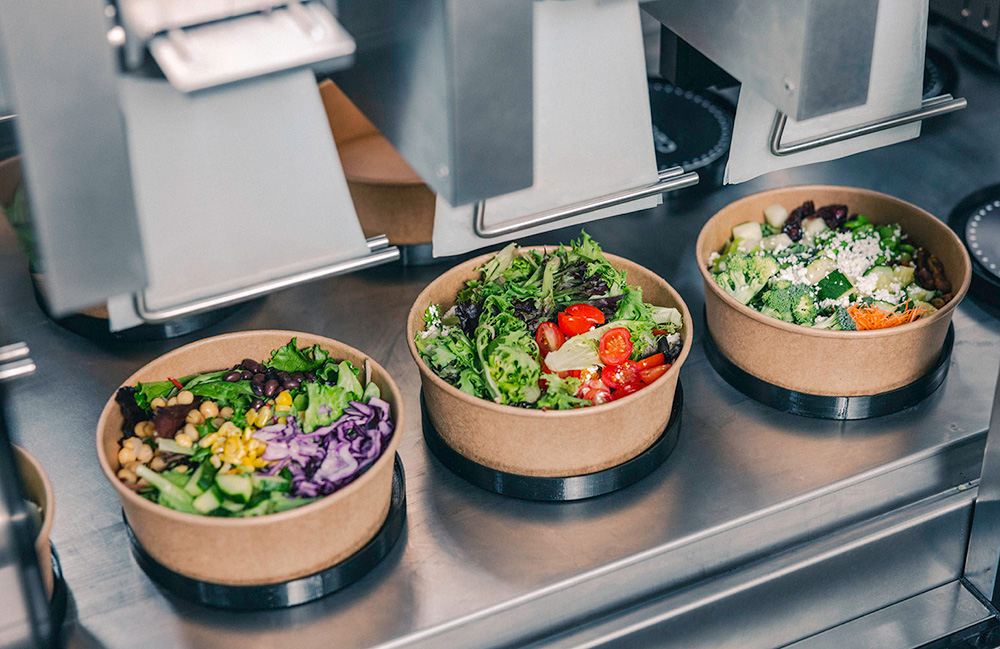
By early 2026, Chef Robotics had firmly established itself as the industry leader by surpassing 100 million AI-powered servings—a tenfold lead over competitors—underscoring its rapid scaling in foodservice robotics. This explosive growth, doubling from 50 million servings in under a year, was propelled by a $43 million Series A funding round in March 2025 that enabled strategic expansion into new markets such as airline catering and ghost kitchens. Leveraging the world’s largest real-world food manipulation dataset derived from these servings, Chef Robotics continuously refines its AI models, prioritizing data-driven improvements over simulation-heavy approaches.
Meanwhile, Miso Robotics’ Flippy robot marked a significant milestone by cooking its 5 millionth basket in 2026, signaling the broader adoption of AI-driven robotics beyond traditional fast food outlets. Flippy’s expansion into NBA stadiums that year further highlights how AI-powered automation is penetrating diverse, high-volume foodservice environments, blending operational efficiency with the dynamic demands of sports and entertainment venues.


Automation Goes Modular
Appetronix’s acquisition spree and modular tech enable rapid retrofitting of existing kitchens, setting the stage for AI-powered food prep in theme parks, airports, and beyond.
By early 2026, Appetronix strategically expanded its automation footprint through the acquisition of Cibotica, integrating advanced ingredient dispensing and portioning technologies into its autonomous restaurant kitchens. This move not only enhanced Appetronix’s modular automation capabilities across diverse cuisines but also responded to growing market demand for retrofitting existing kitchens with automation solutions rather than solely focusing on new builds. Looking ahead, Appetronix aims to broaden AI robotics applications beyond traditional restaurant settings into dynamic venues such as theme parks and airports, while simultaneously developing cutting-edge innovations like laser food cutting and exploring further acquisitions to accelerate technological integration and industry transformation.

AI Robots Defend Profits
Restaurant robots like Flippy and Zippy are restoring margins under pressure from labor shortages and tariffs, proving indispensable in high-volume, high-stress environments.
By early 2026, AI-driven robotics platforms have become indispensable in navigating the tight profit margins and operational complexities of the restaurant industry. Companies like Miso Robotics are at the forefront, deploying specialized kitchen robots such as Flippy and Zippy to counteract labor shortages and rising tariffs that increasingly erode profitability. As Miso Robotics CEO Rich Hull explains, these robots not only slash costs but also drive significant leaps in operational efficiency, enabling restaurants to reclaim and expand their traditionally slim single-digit profit margins through enhanced automation and streamlined workflows.
Flippy’s deployment in high-pressure environments like NBA stadiums exemplifies how AI robotics are addressing acute labor challenges and cost pressures in dynamic, large-scale foodservice operations. By efficiently managing surges during stadium rushes, Flippy highlights the expanding role of AI beyond traditional restaurant settings into complex venues where labor shortages are most pronounced. This strategic use of robotics underscores a broader industry shift toward integrating AI solutions to maintain service quality and operational resilience amid escalating labor costs and tariff-driven expenses.
Robotics Market Booms Globally
Service robotics are moving from pilot projects to essential infrastructure, with companies like Nightfood Holdings driving cross-industry adoption and multi-sector partnerships.
By early 2026, the global service robotics market is on a meteoric rise, projected to surge from $31 billion to over $131 billion by 2034, fueled by acute labor shortages, mounting cost pressures, and the urgent need to streamline operational inefficiencies. This rapid expansion reflects a pivotal shift from experimental prototypes to robust, real-world deployments that consistently demonstrate reliable ROI and enhanced operational efficiency, largely enabled by the widespread adoption of Robotics-as-a-Service models.
Nightfood Holdings, through its TechForce Robotics division, exemplifies strategic industry expansion by forging critical partnerships and building scalable infrastructure that transcends traditional restaurant applications. Their concerted efforts to integrate AI-driven robotics into hospitality, healthcare, and biotech sectors underscore a deliberate cross-industry approach, leveraging collaborations among technology, manufacturing, and service partners to meet complex global market demands and accelerate the adoption of automation on a worldwide scale.