AI sales surge: automation unleashes productivity, but humans hold the trust line
The gist
AI is turbocharging sales teams with powerful automation and hyper-personalization, but humans are still the gatekeepers of trust and real connection.
What to know
- By early 2026, AI tools like Gong, Sybill, Firefliesai, and GReminders boosted advisor productivity 15%+ by automating tedious sales tasks and follow-ups.
- Companies like Forter and Databricks used AI-powered data enrichment and territory planning to achieve 15x quota coverage with lean RevOps teams and smarter targeting.
- Sales leaders warn: AI handles the grunt work, but human oversight remains critical—fully automated outreach risks robotic messages and lost customer trust.
AI Transforms Sales Workflows
AI-powered tools evolved from automating post-call grunt work to delivering strategic sales insights, but required new solutions to prevent memory decay and ensure messaging accuracy.
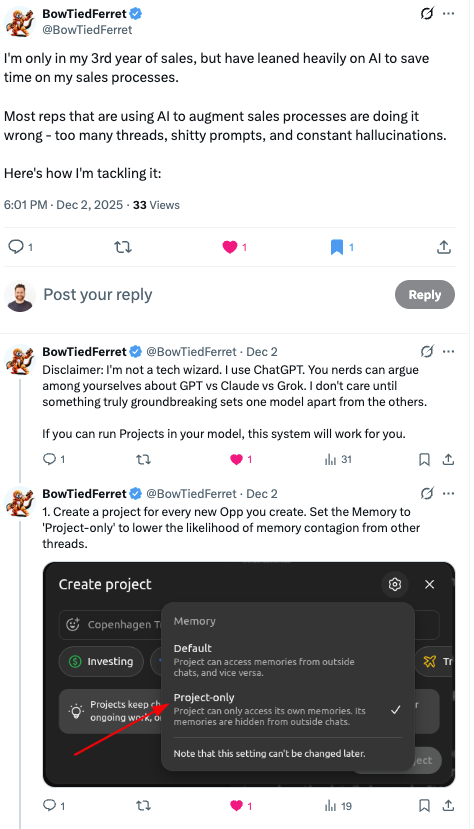
Early AI automation in sales workflows primarily targeted the tedious and time-consuming tasks of post-call note-taking and data entry, significantly streamlining routine operations. Tools like Gong integrated with Zapier enabled the '5-Click Sales Workflow,' which automated the generation of call summaries, transcripts, and follow-up drafts directly synced into CRMs, drastically reducing manual effort. However, as these AI systems built extensive account-specific threads, challenges such as memory and thread decay emerged, leading to jumbled or inaccurate responses; this prompted the adoption of concise, structured account snapshots to maintain clarity and precision in context management.
By early 2026, AI-driven context management evolved to combine CRM data with external research and persona insights, enhancing deal decision support and personalizing outreach campaigns. For example, AI agents ingested call transcripts alongside account research and Gong history to act as strategic thinking partners, guiding account strategy and outbound messaging. Simultaneously, platforms like Sybill automated filling custom CRM fields based on sales calls following methodologies like SPICED, while workflows ensured human sellers remained focused on core selling moments, delegating the 'grunt work' such as meeting prep and follow-ups to AI.
Innovative systems such as Jonathan Kvarfordt’s NotebookLM exemplified advanced context management by employing multi-layered instruction architectures to transform raw call transcripts into strategic intelligence, ensuring consistent brand voice and detailed analysis with exact transcript citations. This approach underscored the growing sophistication of early AI tools in not just automating note-taking but also elevating the quality and strategic value of sales insights, enabling teams to maintain messaging consistency and deeper customer understanding.
Leading AI meeting assistants like Firefliesai and GReminders further revolutionized early sales automation by tightly integrating with CRMs to automate note-taking, action item extraction, and data entry, thereby enhancing CRM data completeness and reducing manual cleanup. Firefliesai’s features converted meeting action items into CRM tasks and updated key deal fields such as budget and close dates, while GReminders introduced AI-powered field extraction from documents and meeting transcripts with a human-in-the-loop approval process to ensure data integrity. This dual capture of written and verbal client information boosted advisor productivity by over 15%, allowing sales professionals to shift focus from administrative drudgery to live client engagement.

Smarter Targeting, Leaner Teams
AI-driven data mapping and territory design let companies like Forter and People.ai untangle complex sales interactions and uncover hidden accounts, fundamentally changing how large deals are managed.
By early 2026, companies like People.ai revolutionized sales data integration by deploying AI models trained on billions of transactions to map complex, multi-channel communications—emails, Slack, meetings—directly to accounts and opportunities. This approach transcended traditional CRM systems that depended on manual data entry, enabling enterprises to untangle the intricate web of interactions typical in large-scale deals, such as those between Microsoft and Verizon, where dozens of stakeholders across departments engage simultaneously.
Forter exemplified the next evolution in AI-driven sales strategy by combining AI-powered data enrichment with advanced territory design tools to overhaul their sales workflows. Leveraging Clay’s integration with Salesforce, they filled critical data gaps and identified thousands of net-new accounts, while simultaneously using large language models like ChatGPT and Claude as strategic partners to rigorously refine and codify their ideal customer profiles—an exercise that revealed previously overlooked data perspectives and produced a tiered ICP framework never formalized before.
The integration of conversational AI and natural language processing dramatically accelerated Forter’s territory planning, as LLMs synthesized complex criteria into structured prompts within seconds—a task that traditionally consumed extensive human effort. This AI-generated logic was then fed into Carve, an AI-powered territory design platform capable of processing enriched data and multiple scenario testing simultaneously, effectively replacing days of manual configuration with streamlined, optimized territory scenarios.


Automation Elevates Human Sellers
AI agents embedded in CRMs and messaging apps now handle research, follow-ups, and coaching, freeing sellers to focus on high-value relationships and decision-making.
By early 2026, AI agents integrated within CRM and communication platforms like HubSpot and Slack began automating complex sales workflows, including coaching, outreach drafting, meeting summaries, and customer re-engagement sequences. Elaine Zelby’s use of Sybill connected to HubSpot exemplifies this trend, where AI automatically populates custom sales call fields and triggers personalized multi-channel campaigns, while Jonathan Kvarfordt’s NotebookLM system transforms raw call transcripts into strategic intelligence, enhancing coaching and decision-making with forensic analysis and brand voice alignment.
This wave of automation strategically offloads repetitive and mundane tasks—such as research, follow-ups, and data entry—without sacrificing the critical human touch in selling moments. Vercel’s COO Jean Dwit Grosser highlighted how AI freed nine team members from inbound follow-ups to focus on complex outbound prospecting, boosting customer-facing time from 30% to an estimated 70%. Similarly, Deal One’s AI agent in Slack not only generates coaching notes and action items but also automates CRM updates and competitive tracking, reinforcing collaboration and efficiency within existing communication channels.
Real-time AI-driven summaries and automated data entry tools like Momentum and GReminders have revolutionized sales team collaboration by delivering immediate context and reducing manual workload. Momentum’s integration with Slack and Salesforce pushes call summaries and contact additions instantly, enabling managers to proactively support reps and accelerate deal cycles. Meanwhile, GReminders’ AI-powered field extraction automates data capture from client documents and conversations into CRMs such as Redtail and Salesforce, incorporating human-in-the-loop approval to ensure data integrity and build trust, ultimately allowing advisors to shift focus from administrative tasks to client engagement.
While AI agents excel at automating outreach drafts and CRM updates, sales leaders emphasize that authentic human judgment remains indispensable for crafting meaningful, problem-focused communications and making in-the-moment decisions. Jonas’s approach of using AI to draft Gmail and LinkedIn messages but retaining human review underscores this balance, as does the insight that AI’s true value lies not in speed alone but in enabling better decisions and execution during live interactions. Companies like Mutiny, refounded in late 2025 to accelerate AI-driven sales automation, aim to reclaim the 80% of salespeople’s time spent on non-selling activities, thereby amplifying the human element where it matters most.






Micro-Campaigns & Signal Intelligence
AI-native micro-campaigns and real-time buying signals enable sales teams to launch hyper-personalized outreach at the exact moment intent peaks, uncovering new revenue streams.
By early 2026, AI-native micro-campaigns revolutionized sales targeting by autonomously scanning diverse signal sources—ranging from job postings and LinkedIn engagement to CRM data—to detect clustered buying signals and instantly generate hyper-personalized outreach campaigns. These AI agents dynamically build micro-lists of 50-100 ICP-scored contacts, enrich them with contextual data, and craft tailored messaging that can be auto-sent or human-approved, marking a pivotal shift from manual campaign assembly to real-time, multi-channel engagement. For example, detecting multiple Data Engineer roles mentioning a competitor like Fivetran alongside buyer interactions enabled AI to trigger migration-focused campaigns without human intervention.
AI-driven sales workflows have further evolved to incorporate personalized video avatars and multi-threaded outreach enhanced by data enrichment platforms like Apollo, enabling sales teams to rapidly deploy scalable, hyper-targeted campaigns. As one practitioner noted, a basic generic workflow can be built in 15-20 minutes, with AI agents learning from comprehensive commercial data to automate campaign execution across existing tools, seamlessly integrating contact discovery, persona targeting, and dynamic messaging that reflects real-time sales events such as deal wins.
Signal intelligence startups such as Saber, Alfa, and Syft Data have transformed sales targeting by providing real-time, customizable buying signals that empower sales teams to engage in-market accounts precisely when intent peaks. These platforms simplify prospecting by allowing natural language queries and track nuanced triggers like new hires or leadership changes, converting warm prospects into pipeline opportunities with contextual understanding. As Brian Jennerich from ClearBlade attests, this approach uncovers previously unknown revenue streams, with AI-driven nurture channels reemerging as vital tools for dynamic, personalized engagement.
Leading companies like Snappy and Syncro exemplify the tangible impact of integrating AI-driven buying signals into sales workflows, with Snappy doubling its qualified opportunity book rate from 30% to 60% by shifting to real-time signal-driven prospecting via ZoomInfo. This enabled reps to engage the right stakeholders at optimal moments through personalized, multi-channel outreach, extending the methodology across post-sale teams to surface expansion opportunities. Similarly, Syncro launched 35 outbound campaigns within months, generating over $400,000 in pipeline and aiming for a fully autonomous go-to-market engine powered by 100+ always-on campaigns triggered by fresh, real-time data.


Enterprise-Scale Impact With Minimal Staff
Forter and Databricks proved that with robust data and strategic AI use, tiny RevOps teams can achieve massive productivity gains and quota coverage once thought impossible.
By early 2026, Forter demonstrated that enterprise-scale AI-driven sales operations could be achieved with remarkably lean teams, as their two-person RevOps unit enriched and scored over 65,000 accounts, codified the company’s first ICP, and built a global territory model delivering 15x quota coverage in just six weeks. Their success underscores the critical importance of foundational data quality and clearly defined processes, with the team emphasizing that “AI amplifies what you have,” making clean data and a structured ICP framework prerequisites for meaningful AI impact in sales workflows.
Forter’s innovative use of large language models such as ChatGPT, Claude, and Gemini as strategic thinking partners highlights a sophisticated evolution beyond mere automation; these tools help pressure test assumptions, identify reasoning gaps, and translate complex business logic into actionable prompts, a capability that Forter’s RevOps leaders regard as essential for navigating AI-driven sales transformations.
Databricks’ deployment of its proprietary AI platform, Genie, marks a strategic leap in enterprise sales productivity by embedding AI deeply into decision-making and operational workflows. Genie’s ability to synthesize proprietary data into context-specific insights—from churn predictions to pipeline weaknesses and tailored program recommendations—has earned executive mandates for its use among top-tier clients, transforming traditional analytics into instant, governed, and secure AI-driven intelligence.
The strategic impact of AI at Databricks is vividly illustrated by the company’s commitment to boosting sales productivity through massive investments aimed at shifting reps’ focus from administrative tasks to high-value customer engagement. As the CRO explained, their AI-driven tools provide reps with personalized recommendations and predictive insights, enabling them to prioritize the right customers and products, thereby increasing selling time and intelligence while eliminating manual data entry burdens.
Trust: The Human-AI Balancing Act
The most successful sales orgs automate low-trust admin tasks but keep humans in final customer touchpoints, as unchecked AI-generated outreach risks eroding credibility and trust.
By mid-2026, sales leaders recognized that the most effective AI adoption starts with automating low-trust, time-consuming administrative tasks to free up human energy for relationship-building. As one how-to guide advised, "If you want the fastest safest wins with AI, start with what steals time from you, but doesn’t require trust," highlighting the importance of preserving human oversight in critical moments. This approach allows AI to assist in refining proposals by simulating a skeptical buyer’s perspective, helping sales teams identify unclear points and objections, thereby enhancing personalized communication without sacrificing trust.
Tools like Notion AI exemplify how AI can streamline sales workflows by transcribing and summarizing customer calls, automatically generating action items that enable quick follow-up while maintaining a human touch. The recommended 'AI Notes → Insights → Follow-up' workflow ensures that AI handles the administrative layer, but humans conduct the final review and craft personalized responses, preserving the authenticity of customer interactions. This balance is crucial, as Jonas’s case study revealed that fully automated cold outreach without human editing led to robotic messages and damaged trust, underscoring the necessity of human review in the final communication step.