AI search pushes marketers toward visibility audits
The gist
AI-powered search is killing traditional click-based attribution, forcing marketers to pivot to visibility audits as zero-click answers and invisible conversions redefine the funnel.
What to know
- By mid-2026, zero-click searches hit nearly 69%, slashing search visits to news sites from 2.3B to 1.7B and breaking the old click-to-convert playbook.
- AI answer layers now spotlight brands without sending trackable traffic, with only 6% of hotels making it into AI results and most purchases never hitting analytics dashboards.
- AI-referred traffic converts up to 54% better and drives 53% more revenue per visit, prompting marketers to ditch last-click reports for audits tracking real prompts and brand appearances inside AI.
Clicks Collapse, Metrics Shift
Zero-click searches and AI answers are erasing the link between discovery and site visits, forcing marketers to abandon traditional growth signals as referral traffic becomes unreliable.
By mid-2026, the old assumption that discovery would show up as a click was visibly breaking down. Growth Memo captured the instability even in AI-era referrals: “LLM referral traffic in B2B grew +65.1% since January - but dropped -42.6% since July,” after a longer slowdown in which “the monthly growth rate of LLM traffic dropped from 25.1% in 2024 to 10.4% in November 2025,” while the memo warned that with organic traffic falling because of AI Overviews, referral-style growth was becoming less meaningful as a measurement signal.
The deeper problem was that search was increasingly ending before any visit occurred: zero-click means “the answer shows up on screen, the person reads it, and they never visit anyone’s website,” and a European Parliament study cited in late July showed visits from search to news sites falling from 2.3 billion to 1.7 billion in a year as zero-click share rose from 56% to nearly 69%. That same mid-2026 shift showed up in Pew Research Center tracking of 900 U.S. adults, where AI summaries cut traditional-result clicks to 8%, and in Marketing Against the Grain’s note that “Kip” said “7 plus% is is coming from answer engines directly.”




Brand Visibility Goes Binary
AI answer layers either spotlight your brand or erase it entirely, making legacy click tracking obsolete and turning visibility audits into a survival tool as only a fraction of brands make the cut.
AI search is concentrating commercial visibility inside answer layers that often never generate a measurable visit. Product School said the old path of consumers who “click through 10 links” has given way to “someone asks AI, AI picks one brand… and buys,” while “this traffic does not show up on your dashboards.” It also said “AI search traffic grew 5x year overyear five times,” showing how fast this invisible layer is expanding. The same talk noted that “Gemini versus Chad GPT” can draw on “200,000 versus 1.6 million” citations, so different systems can construct different brand realities.
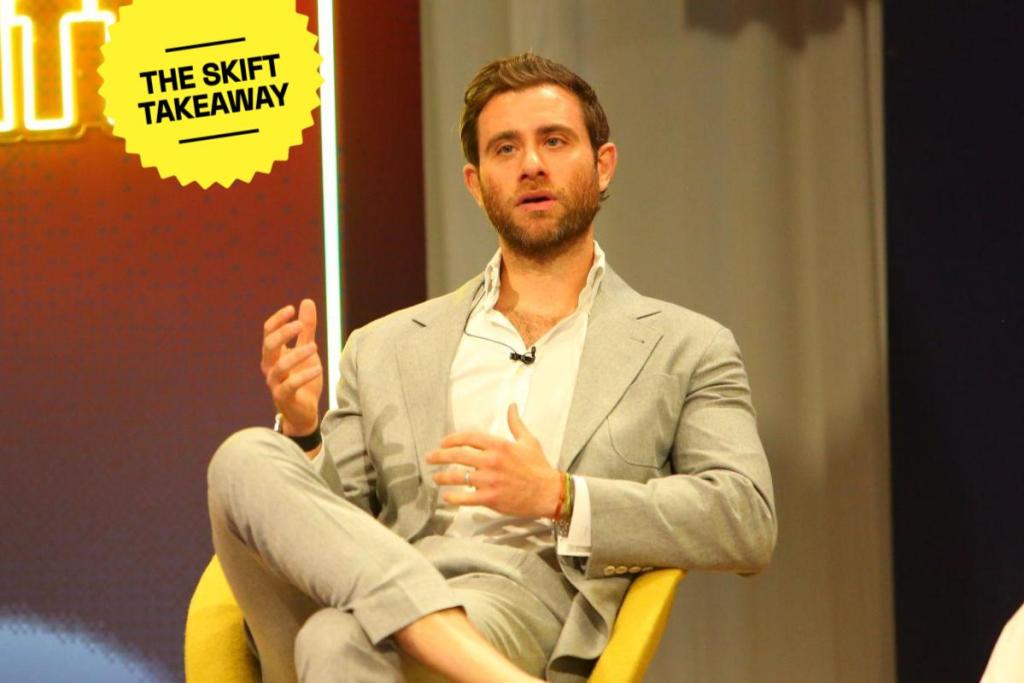
That makes legacy attribution undercount influence and turns visibility auditing into a commercial necessity, especially because AI inclusion is uneven and often binary. Nick Slavin said, “With AI search, it is completely binary; you either appear or you don’t appear in a consideration setting,” adding that only 6% of hotels surface in AI results. Skift reported a London luxury hotel’s Condé Nast Traveler placement produced 271 citations in six months and lifted its AI visibility score from 15% to 27%, while new research from Aven Hospitality and h2c found only 11% of hotel organizations have deployed true AI agents capable of completing bookings, orchestrating loyalty programs, and dynamically pricing inventory in real time.

AI Traffic Drives High-Intent Buyers
AI-referred visitors convert and spend at rates far surpassing traditional channels, with the biggest gains seen among brands that appear in AI-generated recommendations.
The commercial case for AI visibility is not theoretical: it is showing up in conversion behavior. A case study in The AI Maker described the moment “claude.ai” first appeared in analytics and, soon after, “I went from Stage 1 to Stage 4-5 in six weeks,” while WARC cited Similarweb data showing AI-referred users converting at “up to about 11%,” a rate that compares favorably with paid search, email, and social—evidence that AI recommendations are sending users who arrive ready to act, not just browse.
At larger scale, the pattern looks even harder to dismiss. Media, Ads + Commerce reported that Amazon sessions using Rufus converted far above the 21% baseline—35% with 1-3 queries, 47% with 4-10, and 58% with 11+—while Shopify said AI-driven store traffic grew 8x year over year in Q1 2026 and orders from AI-powered searches grew almost 13x; Adobe Analytics, covering more than one trillion retail visits, found AI visitors were “converting 54% better than non-AI visitors,” “generating 53% higher revenue per visit,” and “spending 53% more time on sites,” as traffic from generative AI sources to U.S. retail sites increased 138% year over year and grew more than fourteenfold since Adobe began tracking it in October 2024.




Prompt-Based Audits Redefine Impact
Marketers are mapping real user prompts and triangulating multiple data sources to capture the true commercial lift from AI discovery—revealing sales that traditional analytics miss.
Marketers are replacing last-click reports with visibility audits built around the prompts people actually use in AI tools. The Marketing Architects says brands should track how they appear for “real user prompts across the marketing funnel,” including citations, and even build prompt clusters such as “IT bands and budget… shin splints with budget, shin splints without,” because observed query patterns can differ from keyword data; one example found “30%” of prompts centered on injury themes. That shift is already operational: in Run the Numbers with CJ Gustafson, a CMO described building AI visibility audits to assess how a brand shows up in model outputs. The recommended response is to measure uplift and sales impact by checking where top products appear in AI/Geo/AEO discovery and what lift they generate.
To connect that visibility to business impact, marketers are triangulating analytics, search data, and third-party tracking instead of trusting one source. GA4 added an AI-specific reporting path so teams can measure AI-driven visits without custom filters, but Smarter Marketer notes AI platforms keep users on-platform, with click-through “around 1 to 2%,” meaning “what you see in GA is a very small snippet,” so teams pair GA4 with Search Console, branded-search lift, and prompt tracking; they also watch conversion outcomes, especially with Adobe reporting AI-referred traffic converts 42% more often than non-AI traffic. Brian Bigelow of Avenor says one customer “found his brand through ChatGPT and bought a $1,400 sofa in one evening, but the store logged the sale as direct traffic,” underscoring how AI influence can be missed without better tagging and triangulation.