AI supercharges b2b sales: reps reclaim time as bots build pipelines
The gist
AI is turbocharging B2B sales, freeing reps from grunt work and letting them spend up to 70% of their time actually selling.
What to know
- By mid-2026, tools from Firefliesai to Mutiny have slashed admin tasks, turning 21% selling time into 70% for top reps.
- AI-powered platforms like Syncro and Snappy now spin up targeted campaigns in minutes—Syncro alone delivered $400K in pipeline from just 35 campaigns.
- Enterprise heavyweights like Forter and Databricks have shrunk territory planning from months to seconds, letting tiny teams outperform what once took hundreds of analysts.
AI’s Human Touch Revolution
Early AI sales tools went beyond admin automation, blending contextual intelligence and human-in-the-loop safeguards to boost efficiency without sacrificing trust or authenticity.
Early adopters of AI in B2B sales operations primarily targeted the automation of routine, time-consuming administrative tasks such as call transcription, note-taking, CRM updates, and follow-up drafting. By late 2025, workflows like the 5-Click Sales Workflow combined tools such as Gong, Zapier, and CRM platforms to automatically record calls, generate summaries and transcripts, draft personalized follow-ups, and sync data seamlessly, significantly reducing the administrative burden on sales reps and allowing them to focus more on selling. Companies like Firefliesai demonstrated that such automation could save sales teams 10 to 15 minutes per call, while Mutiny, refounded in November 2025 under CEO Jaleh Rezaei, aimed to shift the industry norm where sales reps spend only 21% of their time selling by automating the remaining 80% of non-selling activities.
Beyond simple task automation, early AI implementations integrated contextual data from multiple sources—including call transcripts, CRM notes, account research, and persona context—to assist sales reps in strategic deal decision-making without supplanting human judgment. For example, workflows leveraging GPT acted as 'thinking partners' to pressure-test strategies and guide messaging, while tools like Jonathan Kvarfordt’s NotebookLM applied layered instruction architectures to extract strategic intelligence from calls. This nuanced use of AI enhanced the quality of follow-ups and proposals by identifying unclear points and potential objections, thereby improving engagement and reducing the risk of robotic or ineffective outreach.
Successful early AI-driven sales automation balanced efficiency gains with maintaining human trust and authenticity, emphasizing a human-in-the-loop approach especially for outbound communications. Case studies such as Jonas’s system showed that while AI could automate company research, CRM record creation, and outreach drafting, human review remained critical to avoid robotic messaging failures. This incremental adoption strategy—starting with low-stakes, time-consuming tasks that do not require trust—allowed sales teams to save time without compromising the personal touch essential in sales relationships.
By mid-2026, AI automation expanded into specialized domains such as financial advising, where tools like GReminders’ AI-powered Forms leveraged OCR and NLP to extract client data from documents and meeting transcripts directly into CRMs, ensuring compliance with HIPAA and FINRA regulations. This automation freed advisors to focus more on client interactions and strategy rather than manual data entry, exemplifying how early AI adoption in sales-related workflows not only improved efficiency but also enhanced data accuracy and regulatory adherence across industries.


Unified Data, Sharper Deals
Integrating AI with rich communication data and structured account snapshots solved memory decay and fueled smarter, more accurate sales strategies for enterprise teams.
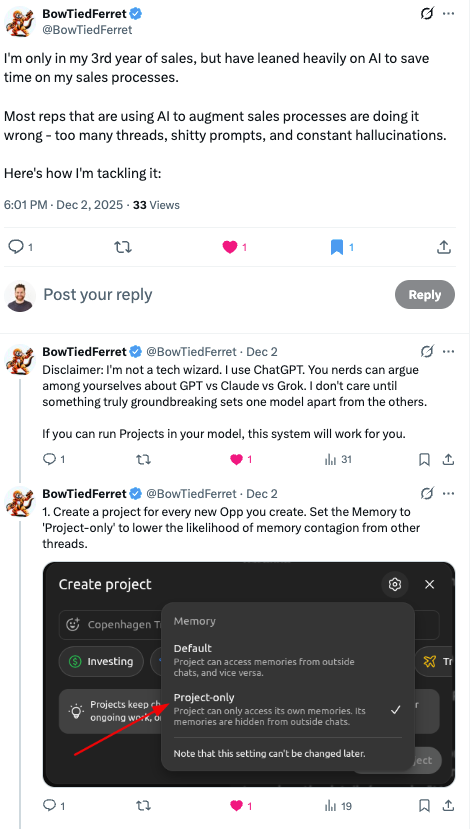
By late 2025, integrating AI with enriched data sources such as call transcripts, CRM notes, and persona context enabled the creation of unified account threads where AI acts as a strategic thinking partner to support smarter deal decisions. However, a key challenge was managing memory and thread decay over time, which could cause AI outputs to become jumbled or inaccurate; this was mitigated by generating concise, structured account snapshots to maintain data accuracy and relevance for ongoing sales strategy refinement.
By early 2026, People.ai exemplified the evolution of context and data integration by leveraging AI to analyze diverse communication channels—including emails, Slack, and meetings—and map these complex interactions into CRM systems. This approach, part of People.ai’s repositioning in the 'agent era,' uses AI models trained on billions of transactions to untangle intricate sales data, particularly in large enterprise accounts like Microsoft’s dealings with Verizon, thereby enhancing data accuracy and actionable insights.
Forter’s 2026 case study highlights how AI-driven data enrichment and large language models (LLMs) like ChatGPT, Claude, and Gemini can transform territory planning and ICP definition. By first identifying data gaps in Salesforce and enriching missing fields with Clay’s AI-powered data providers, Forter not only cleaned existing data but also expanded their addressable market by adding thousands of net-new accounts. Their innovative use of conversational AI—often via voice input—to rapidly synthesize complex territory criteria into structured prompts accelerated what traditionally took weeks into seconds.
Forter further integrated their enriched data and AI-generated territory logic into Carve, an AI-powered territory design tool, enabling the team to run multiple territory scenarios quickly and optimize sales coverage. This natural language prompt-driven process, tightly coupled with CRM data, replaced days of manual work with an agile, data-informed approach, illustrating the growing synergy between AI, enriched data, and CRM systems in enabling more strategic and informed B2B sales decisions.



Precision Prospecting at Scale
AI-powered platforms and real-time buying signals turned prospecting into a data-driven, hyper-personalized engine—unlocking new revenue streams and making targeted outreach routine.
By mid-2026, AI-driven prospecting had evolved from manual, time-consuming tasks into highly automated, data-rich workflows that scale rapidly and personalize outreach at unprecedented levels. Companies like Syncro and Snappy leveraged platforms such as ZoomInfo to build and score Total Addressable Markets (TAM) in near real-time, using natural language descriptions and AI agents to identify decision-makers and overlay buying signals like website visits and hiring activity. This enabled rapid campaign launches—Syncro deployed 35 campaigns in a few months, generating $400,000 in pipeline—and transformed outreach from generic to highly targeted, multi-channel sequences that engage prospects precisely when they show intent.
Signal intelligence startups such as Saber, Alfa, and Syft AI have revolutionized account prioritization by delivering real-time buying signals and enabling natural language interaction to define target accounts and build custom signals. This approach uncovers previously unknown revenue opportunities by detecting companies actively struggling with relevant problems, expanding TAM beyond traditional boundaries. Syft AI’s ability to move beyond generic signals to actionable insights—like recognizing a go-to-market team overhaul—illustrates how AI is turning raw data into precise triggers for timely, relevant outreach that fuels pipeline growth.
Leading B2B organizations such as Sharp Business Systems, Pratt Industries, and Seismic have operationalized AI-driven prospecting into daily sales routines, aligning inside sales, field teams, and marketing around unified, data-driven playbooks. Sharp’s transformation from face-to-face sales to AI-assisted workflows enabled expansion of thousands of accounts, while Pratt used AI-verified contact data and buying signals to convert cold leads into multi-million-dollar wins. Seismic reported a 54% productivity boost and 11.5 hours saved weekly by layering AI on ZoomInfo data, making best outbound practices repeatable across veteran and newer reps alike, underscoring AI’s role in scaling both efficiency and effectiveness.
The shift from inbound-only to AI-driven outbound prospecting is enabling companies like Sago Health to proactively target larger, more complex accounts without increasing headcount, by automating administrative tasks and integrating conversation intelligence for coaching and accountability. This data-led outbound approach not only improves conversion rates but also extends AI’s impact beyond new business development into account management, where competitive research and smarter deal execution are becoming standard. Sago Health’s reflection that earlier AI investment could have accelerated scaling highlights the growing imperative for B2B sales teams to embed AI deeply and early in their workflows.




More Selling, Real Relationships
Automation freed sales reps to prioritize genuine customer conversations, while AI-augmented collaboration tools ensured coaching and authenticity stayed central to every deal.
By early 2026, companies like Vercel demonstrated that AI-driven automation of routine sales tasks—such as initial research and follow-ups—significantly increased the time salespeople could dedicate to meaningful human interactions, boosting direct customer engagement from 30% to 70%. Jean Dwit Grosser, Vercel’s COO, emphasized that this shift allowed sales teams to focus on complex outbound prospecting and thoughtful decision-making, reinforcing trust and genuine relationships rather than replacing human contact with automation.
Integrations of AI tools within collaboration platforms, exemplified by Momentum’s real-time Slack integration, have enhanced human-AI collaboration by delivering instant call summaries and CRM updates that empower sales managers to coach reps effectively without supplanting personal communication. This approach preserves the human element by augmenting workflows with actionable insights, enabling sales teams to respond swiftly and thoughtfully while maintaining authentic customer engagement.
Throughout 2026, thought leaders and case studies consistently underscored that AI’s primary value lies in enhancing decision quality and personalized communication rather than merely accelerating tasks. Experts caution against over-reliance on automation for outbound messaging, highlighting that genuine sales excellence depends on human research, judgment, and crafting meaningful conversations. AI tools support this by generating drafts, simulating buyer skepticism, and summarizing calls, but final human review and customization remain essential to maintain authenticity and trust.
Leading companies like Mutiny and Sharp Business Systems illustrate the evolving model of human-AI collaboration where AI agents automate tedious tasks—such as CRM updates, coaching suggestions, and prospecting—while keeping sales reps actively involved to ensure personalized, high-quality customer interactions. Jaleh Rezaei of Mutiny stresses the importance of enabling reps to easily edit AI-generated content to maximize engagement, while Sharp’s integration of AI-driven account summaries and real-time signals fosters alignment across sales and marketing teams, operationalizing AI to accelerate meaningful human conversations without compromising trust.





Enterprise AI: The Backend Edge
Massive productivity leaps came from deep AI infrastructure—letting tiny teams outmaneuver armies of analysts and embedding strategic intelligence directly into sales workflows.
By early 2026, Forter's enterprise-level AI integration dramatically redefined RevOps productivity, enabling a mere two-person team to accomplish territory modeling and account assignment at a scale and speed previously requiring 600 analysts over months. This leap was powered by combining proprietary data with AI-driven intent signals, such as the Common Room platform's BIT score that fuses ICP fit and intent to prioritize accounts instantly, illustrating how AI is not just automating tasks but embedding explainable, strategic decision-making into sales workflows.
The competitive edge in enterprise sales increasingly hinges on robust backend AI infrastructure rather than frontend tools alone. As highlighted in late March 2026, companies like Pigment have invested in complex custom-built systems that automate account research, data enrichment, and signal routing within CRMs, enabling reps to focus purely on selling. This backend sophistication creates a moat, as such infrastructure demands significant expertise and resources, turning AI-driven workflow automation into a sustainable competitive advantage.
Databricks exemplifies the transformative power of proprietary AI platforms at scale, with its Genie system delivering governed, secure analytics and predictive recommendations directly to sales reps. Mandated by leadership among major clients, Genie personalizes reps’ focus areas, automates routine tasks like Salesforce updates, and boosts selling time—an approach the CRO describes as still in the 'top of the second inning,' signaling vast untapped potential for AI to reshape enterprise sales productivity.
Seismic and Sago Health’s large-scale AI deployments underscore the tangible productivity and pipeline quality gains achievable through integrated AI platforms like ZoomInfo. Seismic reported a 54% productivity boost and 11.5 hours saved weekly by combining CRM data with external buying signals, enabling newer reps to match veteran-level outbound effectiveness. Meanwhile, Sago Health’s shift from inbound reputation-driven to data-led outbound sales, powered by cleaned CRM data, verified contacts, conversation intelligence, and AI-assisted prospecting, significantly improved conversion rates without increasing headcount—highlighting the critical role of early, strategic AI investments in scaling enterprise sales operations.

GenAI’s Untapped Sales Power
Proprietary AI platforms like Databricks’ Genie are just beginning to transform enterprise sales, delivering secure analytics, predictive recommendations, and personalized focus at scale.
Proprietary AI platforms like Databricks’ Genie are just beginning to transform enterprise sales, delivering secure analytics, predictive recommendations, and personalized focus at scale.