AI titans double down on ecosystem wars as google’s gemini redraws the battle lines
The gist
The AI arms race has morphed into a high-stakes battle for ecosystem dominance, as tech titans like Google, Microsoft, and Apple forge powerful alliances and vertically integrate their AI offerings to lock in users and redraw industry battle lines.
What to know
- Google’s Gemini Enterprise leads the charge with 8 million paid subscribers and a landmark $1B partnership embedding Gemini into Apple’s Siri, but adoption hiccups reveal just how early and bumpy this ecosystem transition is.
- With the debut of Gemini 3 and proprietary hardware, Google has set new benchmarks in enterprise automation and multi-hop reasoning, raising the barriers for rivals and consolidating innovation among a handful of giants.
- The real fight is now over end-to-end platform control and strategic alliances, as no-code AI agents and deep integrations force businesses to rethink upskilling, governance, and how work gets done.
Ecosystem Ambitions, Real-World Friction
Google’s push for total AI ecosystem control is running into early-stage integration failures and divided user sentiment, exposing the complexity of delivering seamless enterprise AI.
By early 2026, the AI industry’s focus had decisively shifted from hardware prowess to the orchestration of end-to-end ecosystems, as seen at CES 2026 and in the rollout of platforms like Google Gemini Enterprise. While robust operational control and scalable infrastructure are now recognized as key differentiators—Jeff Li of Subotiz notes that 'differentiators for AI products lie in robust operations, software experience, and monetization models'—the transition has not been seamless. Despite Gemini Enterprise boasting 8 million paid enterprise subscribers and over 100 million sign-ups, user feedback remains split, with complaints about agent builder failures and integration hiccups highlighting the persistent challenges of delivering a truly cohesive, vertically integrated AI experience.
Google’s strategic pivot toward a vertically integrated AI ecosystem is exemplified by Gemini Enterprise, which bundles chatbot functionality, enterprise search, and agent-building tools into a unified platform in an effort to 'juice the margins' and exert greater control over the value chain. This move mirrors a broader industry trend, as giants like Microsoft and Salesforce also grapple with the complexities of early enterprise adoption, positioning their own integrated offerings as the next frontier. As one case study notes, 'everyone's kind of struggling with this like it's very early days still for enterprise adoption of this technology,' underscoring both the promise and the growing pains of the ecosystem approach.


Vertical Integration Sets the Pace
Gemini 3’s fusion of proprietary hardware and advanced modeling is pushing AI automation from cloud to edge, raising the competitive bar and embedding intelligence into everyday tools.
The unveiling of Google’s Gemini 3 in late 2025 marked a watershed moment in AI model capabilities, with domain experts like historian Mark Humphries describing its outputs as so advanced they were 'hair-raising.' This leap wasn’t just theoretical—Gemini 3’s integration into specialized workflows, such as historical document analysis, enabled unprecedented automation, from accurate handwriting recognition to large-scale metadata generation for tens of thousands of archival records. The model’s performance signaled a new threshold for AI’s role in transforming knowledge work, moving beyond incremental improvements to deliver capabilities that fundamentally reshape research and data processing.
The Gemini 3 era also underscored the power of vertical integration, as Google’s proprietary TPU hardware and unified software stack allowed the company to fully exploit AI scaling laws—an advantage few can match. As a Theory Ventures VC observed, only giants like Google possess the infrastructure to 'squeeze as much out of the processing units' as scaling laws permit, effectively raising the barrier to entry for competitors and concentrating innovation within a handful of vertically integrated ecosystems. This dynamic is further reinforced by innovations like 'context engineering,' where models autonomously assemble relevant information before generating outputs, pushing performance beyond what raw compute alone can achieve.
While the dominance of large-scale compute remains clear, the landscape is evolving as breakthroughs in hardware and model architecture emerge. Companies like Kneron are driving the shift to specialized chips—MPUs and NPUs—that power intelligent devices across homes, vehicles, and workplaces, as previewed at CES 2026. This hardware innovation, coupled with system-level design advances showcased by RiseLink, is enabling AI to move seamlessly from silicon to shipping products, exemplified by edge-deployed devices like the ChooChoo education toy. Such developments illustrate how vertical integration now extends from cloud to edge, embedding AI deeply into everyday environments and accelerating the transformation of knowledge work and automation.
Recent advances in large language models have also redefined the boundaries of automated reasoning and information retrieval. By early 2026, models like Gemini 3 Pro achieved moderate success in multi-hop latent reasoning tasks—solving complex, multi-step queries without explicit Chain-of-Thought prompting—outperforming older models such as GPT-4 by wide margins. These improvements are not only architectural but also algorithmic, with techniques like filler tokens nearly doubling accuracy on challenging tasks. Meanwhile, Google’s integration of Gemini into its search ecosystem, balancing semantic interpretation and probabilistic ranking within a fixed 'grounding budget,' reflects a sophisticated layering of AI capabilities that enables more context-aware, personalized, and efficient knowledge discovery.



Platform Wars Redefine Advantage
As AI model performance converges, tech giants are locking in users through vertically integrated platforms and massive infrastructure bets, making ecosystem control the new source of market power.
The competitive landscape in AI has evolved from a focus on raw model quality to a high-stakes contest over vertically integrated ecosystems, where tech giants leverage control from hardware to applications to secure distribution advantages and deepen customer lock-in. Google’s vertical AI stack, exemplified by the deep embedding of Gemini across its product suite, illustrates how integration from custom silicon through inference to end-user applications creates formidable moats and consolidates market power. This strategy is mirrored by rivals: OpenAI is transforming ChatGPT into a superapp to own user workflows, Anthropic is targeting enterprise safety and reliability at the API layer, and Meta is open sourcing its models to push competition higher up the stack, signaling a new era where ecosystem control and integration trump standalone model breakthroughs.
As model performance rapidly converges, the decisive battleground has shifted to platform strategy—how models are distributed, integrated, and extended by developers and enterprises—echoing the earlier evolution of the search engine wars. The AI value chain is now fragmented into multiple parallel ecosystems, each with distinct infrastructure choices, economic models, and customer bases, as seen in Google’s independence from Nvidia, OpenAI’s reliance on massive compute, and Anthropic’s multi-cloud hedging. Billions in sunk capital and years of specialized research have locked tech giants into divergent bets on what intelligence means and where value accrues, making the platform wars less about sheer scale and more about the interplay of specialization, distribution power, and ecosystem stickiness.
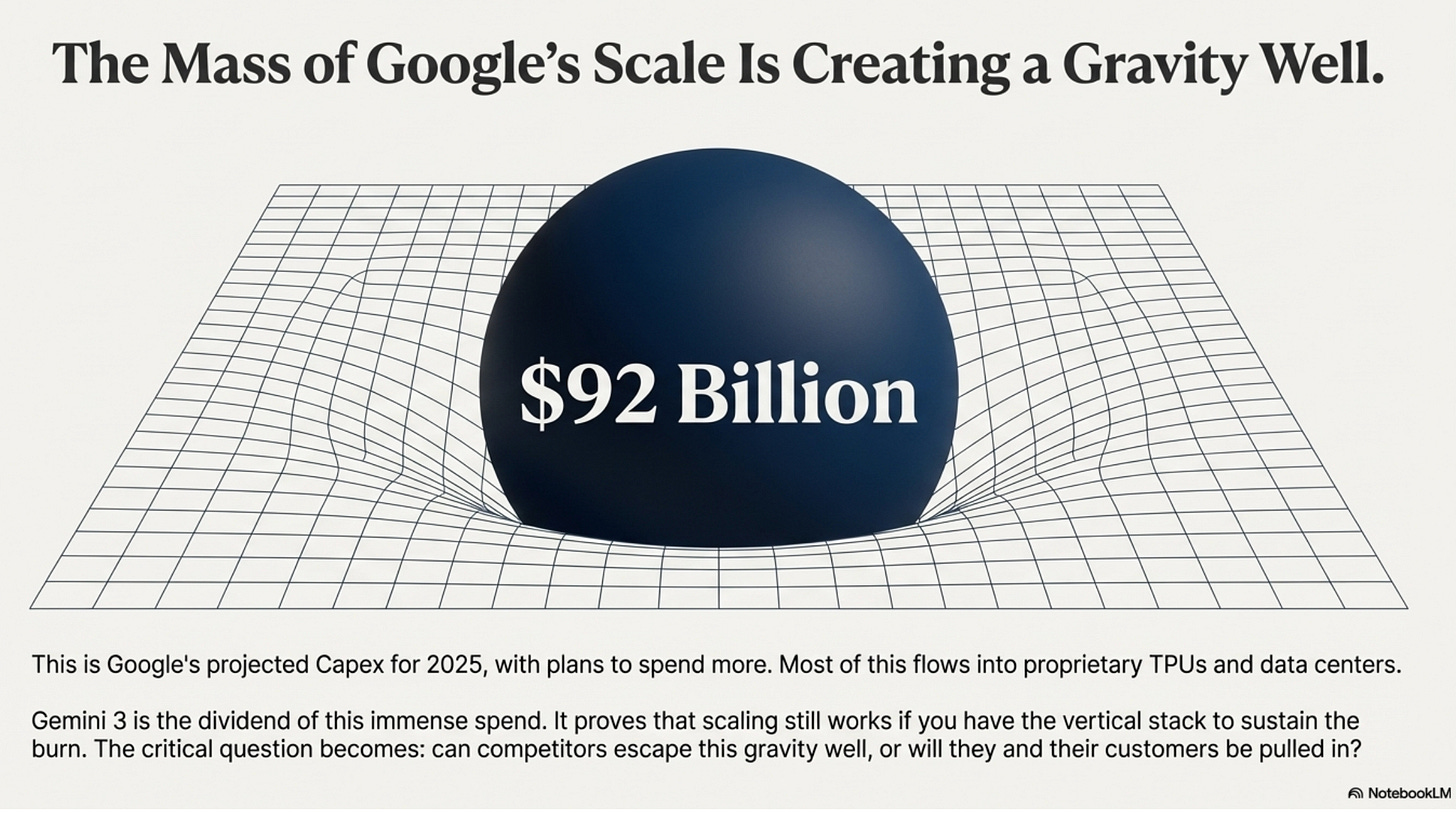
Google’s massive capital investments—$93 billion in 2025 alone—have created a 'gravity well' around its AI ecosystem, making it increasingly difficult for competitors to match its scale, infrastructure, and integration. However, the so-called 'God Model' fallacy is being challenged by the realization that intelligence is multifaceted; as recent Epoch AI research suggests, competitors can escape Google’s pull not by matching its mass, but by specializing in alternative dimensions of intelligence and user value. This dynamic is reflected in the rise of multiple AI ecosystems, each pursuing unique strategies, with Google’s deep infrastructure enabling Gemini 3 to outperform rivals in clarity and reasoning, while OpenAI, Anthropic, and Meta carve out differentiated positions in the broader platform wars.
By early 2026, the platform wars have intensified, with high-profile clashes at venues like Davos underscoring the fragmented yet interconnected nature of the AI ecosystem race. Companies such as Meta, Salesforce, and Tata are now prominent players alongside Google, Microsoft, and OpenAI, reflecting a broadening field where vertical integration and ecosystem bundling are proving decisive. In AI-native search, for example, Google’s Gemini overtook Perplexity in market share by leveraging integration into existing tools and driving 25% more referral traffic, while standalone AI engines and early leaders like ChatGPT are seeing their momentum stall—signaling a shift from a 'gold rush' to a phase of natural selection where only the most integrated and utility-focused platforms survive.





Alliances Reshape the AI Map
Cross-company deals—like Google’s billion-dollar pact with Apple—are accelerating AI’s reach, embedding models deep into both enterprise and consumer platforms, and forcing rivals to rethink distribution.
Google’s launch of Gemini Enterprise in late 2025 marked a pivotal move in strategic ecosystem expansion, as the company embedded its AI deeply into enterprise workflows through robust cross-company integrations. By positioning Gemini Enterprise as a direct competitor to OpenAI and Microsoft, Google underscored the growing importance of ecosystem plays and cross-company deals in the enterprise AI market, aiming to transform workplace automation and data management at scale.
The Apple-Google partnership, formalized in early 2026 with a $1 billion multi-year deal, exemplifies how alliances between tech giants are accelerating AI ecosystem expansion and embedding advanced models across consumer platforms. By integrating Google’s Gemini AI into Siri, Apple not only supercharges its voice assistant with next-generation capabilities but also leverages Google’s frontier models while maintaining user privacy through its Private Cloud Compute infrastructure—demonstrating how ecosystem plays can balance innovation, privacy, and competitive advantage.
These cross-company partnerships are not just about headline-grabbing deals—they are fundamentally reshaping how AI is distributed and adopted at scale. Early adoption of Gemini Enterprise by companies like Figma, Klarna, and Macquarie Bank, alongside Apple’s move to make Gemini native to iOS, highlights how developer adoption and ecosystem integration are driving AI’s reach deeper into both enterprise and consumer technology, leaving rivals like OpenAI scrambling to keep pace.
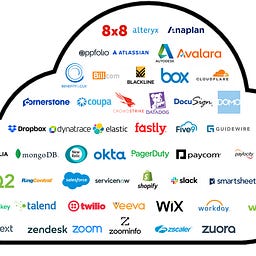
Central to these ecosystem expansions is the seamless integration of AI across platforms and workflows, as seen with Gemini Enterprise’s ability to unify data and applications from Google Workspace, Microsoft 365, Salesforce, and SAP. By providing a no-code workbench for custom AI agents and shifting organizations from siloed projects to centralized, organization-wide adoption, Google is fostering a broad ecosystem of specialized AI agents—demonstrating how strategic partnerships and platform unification are key to scaling AI’s impact across industries.






Workforce Faces AI Culture Shock
The rapid spread of no-code AI agents is transforming job roles and productivity, but enterprises must overcome skill gaps and cultural resistance to realize the promise of organization-wide automation.
As enterprises like those adopting Google’s Gemini Enterprise move from isolated AI experiments to organization-wide deployments, they’re confronted with a new breed of operational and governance hurdles. The proliferation of specialized AI agents—now easily built by non-technical staff via no-code workbenches—demands a dramatic scaling up of MLOps and robust governance tooling to prevent chaos. Ensuring these agents access only authorized company data is now a central challenge, forcing organizations to rethink data governance frameworks and invest in new oversight mechanisms as AI becomes embedded in everyday workflows.
The democratization of AI, exemplified by Gemini Enterprise’s secure chat interface, is fundamentally reshaping knowledge work by empowering employees across departments to automate tasks and extract insights without technical expertise. This shift is already yielding tangible productivity gains—Vista Equity Partners, for instance, reports 30-50% improvements and significant cost savings across its portfolio through its 'agentic factory.' Rather than replacing enterprise software, agentic AI is transforming job categories and automating service roles, signaling a profound evolution in how knowledge work is structured and delivered.
However, the promise of vertically integrated AI ecosystems brings with it a steep learning curve for the workforce, as organizations must rapidly upskill employees to achieve high levels of AI fluency. Case in point: one company’s intensive AI fluency program boosted proficiency from 10% to 97% in a year, but experts caution that fluency alone isn’t enough—adaptability to new tools is paramount, as today’s cutting-edge platforms may be obsolete tomorrow. Overcoming internal resistance, which echoes early internet-era skepticism, now requires strong leadership to drive cultural change and instill both confidence and agility in navigating AI’s evolving landscape.
By early 2026, the integration of agentic AI across enterprises is not only automating business tasks but also exposing new operational and workforce challenges. Vista’s experience underscores that as companies race to leverage AI-driven automation, the need for organizational AI fluency and the redefinition of workforce roles become critical factors in realizing the full benefits of these technologies.