AI transforms compliance: human oversight remains non-negotiable
The gist
AI is revolutionizing compliance, but human oversight remains the unhackable circuit breaker against risk and regulatory blowback.
What to know
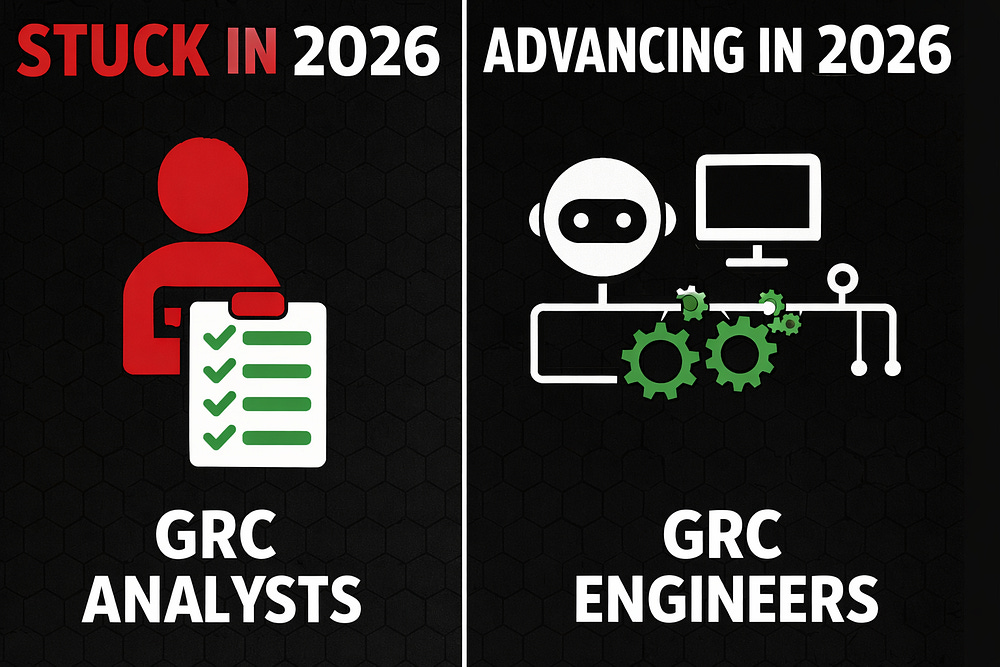
- By late 2025, GRC roles shift from manual checklists to engineering-driven, automation-heavy positions embedding compliance directly into systems.
- RegTech platforms like Cardamon and HoundDog.ai are redefining the landscape with continuous identity posture management and real-time, AI-driven compliance monitoring.
- Despite the AI boom, licensed professionals still anchor accountability—AI augments, but never replaces the human sign-off required for fiduciary-grade compliance.
GRC’s Shift to Engineering
Compliance roles are transforming into engineering-driven positions, embedding automated controls directly into systems and making traditional manual methods obsolete.
By late 2025, the Governance, Risk, and Compliance (GRC) landscape was undergoing a profound transformation, shifting from traditional compliance roles to engineering-driven positions that emphasize automation, continuous assurance, and scalable governance. Organizations increasingly sought professionals who could 'think like engineers,' automating evidence collection, integrating controls with cloud logs, and developing policy-as-code workflows to embed compliance directly into systems. This evolution marked a departure from the descriptive, manual compliance work typical of GRC Analysts toward GRC Engineers who design controls that make non-compliance difficult or impossible by default, fundamentally changing how risk and compliance are managed.
Emerging regulatory frameworks such as the EU AI Act and NIST AI Risk Management Framework have introduced new complexities in AI system classification and governance, particularly around identity management. The rise of shadow AI and the explosion of machine identities have made identity governance more intricate than ever, demanding sophisticated continuous assurance mechanisms. By 2026, compliance assurance had evolved beyond periodic reports and manual evidence; auditors now expect system-generated, tamper-resistant proof with continuous logs and configuration state validation, rendering traditional GRC analyst methods increasingly obsolete and fragile.
The transition to GRC Engineers has enabled organizations to scale compliance exponentially through automation, contrasting sharply with the linear scalability of traditional analyst roles. As noted in late 2025, GRC Engineers embed governance into infrastructure using tools like policy-as-code, control validation pipelines, and continuous compliance checks, effectively baking guardrails into systems. This shift repositions GRC Engineers as strategic contributors focused on control reliability—ensuring controls function under all conditions, such as '3am system failures'—rather than merely producing compliance evidence, thereby moving the compliance conversation from 'Are we compliant?' to 'Will controls reliably work?'
By mid-2026, the GRC operating model had matured into a connected, technology-enabled framework that leverages AI-enabled workflows and automation to enhance audit management, risk management, and compliance processes. Companies like Forvis Mazars US highlighted practical applications of GRC platforms that improve evidence quality, issue management, and executive reporting through managed or co-managed services. This evolution demands new skillsets focused on managing AI governance and identity challenges with continuous assurance and automation, integrating audit, risk, compliance, issue management, dashboards, governance, and change enablement into a cohesive, engineering-driven approach.

Human Oversight: Ethical Backbone
AI-driven compliance demands explicit human sign-off and judgment, with governance frameworks mandating that licensed professionals—not algorithms—retain ultimate accountability.
Human-in-the-loop approaches remain the cornerstone of ethical and accountable AI-driven compliance, ensuring that AI suggestions require explicit human approval before execution. As emphasized in late 2025 analyses, this design prevents opaque 'black box' automation and reduces audit log overload by focusing logs on human decisions authorizing AI actions, thereby reinforcing that ultimate responsibility rests with experienced professionals who apply ethical and moral judgment.
By early 2026, industry experts and research from Emerj and Forvis Mazars US further underscored that AI tools in GRC should augment rather than replace human expertise, with regulated outputs demanding explicit sign-off from licensed professionals to maintain fiduciary-grade accuracy and accountability. This collaborative model enables AI to streamline labor-intensive tasks like audit planning and regulatory filings while safeguarding against inaccuracies that could jeopardize compliance.
Effective governance of AI in compliance also hinges on clear organizational policies mandating human review and accountability, as well as robust change management to ensure adoption and understanding among GRC professionals. Regulatory frameworks such as the DOJ’s guidelines explicitly assume human oversight and sign-off, making ignorance of AI-driven processes a liability, while poor communication risks resistance from professionals unaware of AI’s value beyond automating manual tasks.
Maintaining ethical responsibility and auditability in AI-enabled compliance demands purpose-built safeguards tailored to the high standards of regulated industries, as general-purpose AI models exhibit unacceptably high error rates—Stanford researchers found hallucination rates between 58 and 88 percent on legal questions. This stark reality underscores why off-the-shelf AI cannot be blindly trusted for high-stakes regulatory work without rigorous human oversight and specialized controls.


RegTech Reinvents Compliance
AI-powered RegTech platforms now deliver flexible, scalable, and auditable workflows, making continuous identity posture management and data residency compliance industry standards.
By mid-2026, the RegTech landscape is undergoing a fundamental transformation as legacy, rigid solutions give way to integrated, AI-powered platforms that emphasize flexibility, scalability, and seamless interoperability. Leaders in governance, risk, and compliance (GRC) stress that AI integration is no longer a competitive edge but a baseline expectation, with high-quality regulatory data, auditability, and workflows aligned to day-to-day compliance operations becoming non-negotiable standards. Platforms like Cardamon exemplify this shift by offering foundational scaffolding that supports custom AI-native workflows rather than enforcing prescriptive methodologies, addressing the growing demand for adaptable compliance technology stacks.
The intensifying regulatory environment, shaped by frameworks such as NIS2, DORA, and SEC cybersecurity disclosure rules, is driving the adoption of continuous identity posture management (ISPM) as a core operational imperative rather than a mere compliance checkbox. These mandates require real-time, auditable controls—like MFA enforcement and privileged account inventories—that legacy manual governance cannot satisfy. As identity posture drift and AI agents operating beyond traditional controls become breach preconditions, organizations investing in ISPM infrastructure gain a strategic security advantage, transforming compliance from reactive to proactive risk management.
Modern AML platforms are evolving into globally scalable, engineering-centric compliance engines that combine extensive intelligence with rigorous data residency compliance. Leveraging proprietary knowledge graphs with tens of millions of entities and risks, and distributed architectures spanning London to Singapore, these platforms ensure personal data remains within legal jurisdictions while supporting enterprise transaction volumes far beyond legacy throughput ceilings. Their API-first design and immutable audit logs enable seamless integration and transparent, auditable AI-driven decision-making, reflecting a shift from compliance as a checkbox to compliance as a core engineering discipline.
The emergence of 'code as compliance' platforms like HoundDog.ai marks a pivotal evolution in privacy and compliance technology, embedding continuous, AI-powered monitoring directly into the software development lifecycle. Moving beyond reactive, post-production observation, these solutions provide real-time, code-level visibility into personal data flows and unauthorized AI or third-party integrations, addressing the chaotic proliferation of shadow IT and rapid AI adoption. This 'shift-left' approach enables scalable, proactive data privacy management that evolves alongside development, fundamentally redefining how organizations document and enforce compliance.
Investment priorities in RegTech reveal a divergence between vendors pushing advanced AI capabilities—such as autonomous agents and generative AI—and financial institutions focusing on foundational modernization like cloud migration, API-native integrations, and privacy-enhancing technologies. As Scott Nice highlights, institutions remain cautious about fully autonomous AI within regulated frameworks, preferring AI as a support tool that maintains human oversight. This prudent approach underscores the necessity of robust, AI-ready compliance technology stacks as prerequisites to unlocking the transformative potential of AI-driven RegTech solutions.
Next-generation GRC platforms are transitioning from fragmented, manual processes to connected, AI-enabled operating models that unify audit management, risk management, and compliance into a cohesive ecosystem. By integrating AI workflows that enhance audit planning, control documentation, and executive reporting while preserving human oversight, these platforms not only improve operational efficiency but also serve as strategic commercial levers. Market pressures—including regulatory demands, tool fragmentation, manual evidence collection, and capacity constraints—are accelerating adoption, positioning connected GRC solutions as essential for faster, more reliable compliance and risk decision-making.

Financial Firms Demand Control
While RegTech vendors race toward AI automation, financial institutions prioritize governance, explainability, and unified data models to manage rising regulatory complexity and risk.
By mid-2026, a clear divergence has emerged between RegTech vendors and financial institutions regarding AI adoption in compliance. While 91.67% of vendors prioritize investments in AI-driven automation, including generative AI and agentic automation, only 44.33% of financial institutions share this enthusiasm, focusing instead on foundational technologies such as modern data architecture, privacy-enhancing technologies, and cloud migration to ensure safe and governed AI deployment. As Scott Nice observes, institutions emphasize governance, explainability, and accountability over autonomous AI efficiency gains, reflecting a cautious, pragmatic approach that prioritizes building robust infrastructure before embracing advanced AI capabilities.
The escalating complexity of regulatory environments and fragmented legacy systems are compelling firms to transition from siloed, manual compliance processes to integrated, data-driven ecosystems. Nir Carciente of ACA Group highlights that the challenge is no longer data collection but creating a unified, actionable intelligence view across compliance functions, warning that without consistent data models and connected workflows, firms risk exacerbating complexity rather than enhancing oversight. This shift is further driven by regulators themselves increasingly leveraging AI and advanced analytics to detect misconduct, raising the bar for firms to maintain holistic risk views and preempt regulatory scrutiny.
Market dynamics underscore a rapid expansion of the RegTech sector, projected to grow from USD 29.20 billion in 2026 to USD 93.48 billion by 2032 at a 21.33% CAGR, fueled by rising regulatory demands for stronger governance, faster suspicious activity detection, and transparent automated decisioning. This growth reflects a broader shift from fragmented manual controls to integrated compliance platforms that unify identity data, transaction behaviors, regulatory rules, and reporting workflows. Moreover, the increasing complexity of cross-border regulations and the proliferation of digital assets, fintech, and other sectors necessitate configurable, centralized compliance solutions capable of continuous, data-driven supervision.
Despite growing regulatory pressures and increased compliance budgets—76% of firms have boosted spending, with 67% deploying or piloting AI—many organizations struggle with fragmented systems and siloed data that hinder scaling surveillance and effective AI operationalization. Info-Tech Research Group emphasizes that rising regulatory volume and complexity demand a coordinated, repeatable regulatory IT response engine to translate requirements into actionable controls and prioritized initiatives. However, as Ahmad Jowhar notes, AI tools alone cannot overcome barriers such as fragmented interpretation and weak prioritization without strong governance and human oversight, underscoring the need for structured, scalable compliance strategies that balance automation with accountability.
Emerging risk areas like digital assets and novel trading models expose significant preparedness gaps, with around 40% of compliance professionals feeling least prepared for crypto-related risks and 34% lacking policies on prediction markets. This evolving landscape is driving compliance to transform from a reactive risk management function into a strategic enabler of growth, innovation, and governance. As StarCompliance CEO Jennifer Sun articulates, future compliance programs will emphasize unified surveillance, conduct oversight, AI governance, and workflow management within connected compliance ecosystems, reflecting a holistic approach that integrates risk mitigation with business enablement.



Regulatory Change Goes Proactive
Manual regulatory change management is giving way to AI-augmented frameworks that automate impact analysis and audit trails, empowering compliance teams as strategic business partners.
By mid-2026, the limitations of manual regulatory change management—still reliant on spreadsheets and siloed tools—became glaringly evident as firms struggled to keep pace with the surging volume and complexity of regulations across 200+ jurisdictions. Vixio’s Roseanne Spagnuolo framed regulatory change management as critical infrastructure rather than a mere compliance line item, emphasizing the need to integrate regulatory intelligence with execution to transform compliance teams from reactive enforcers into proactive informers who guide business strategy.
The core challenge in regulatory change management lies not in accessing updates but in discerning their materiality, actionable impact, and ownership within firms—questions that manual processes fail to answer reliably at scale. Vixio’s five-stage framework, supported by AI-powered tools like Smart Inbox and Requirements Extraction, automates triage, impact assessment, and gap analysis, enabling firms like Bally’s to monitor regulatory changes in real time and maintain a robust audit trail that satisfies increasing regulatory expectations for continuous, evidence-backed oversight.
Efforts to make regulation machine-readable confront the inherent complexity and contextual nature of regulatory text, which is rarely self-executing and varies widely by jurisdiction and business model. Industry leaders like Scott Nice of Label and Areg Nzsdejan of Cardamon advocate for decomposing regulations into structured, versioned components linked to compliance actions, creating a connected compliance architecture that preserves indispensable human judgment rather than reducing rules to binary logic.
While AI accelerates labor-intensive compliance workflows, experts such as ACA Group’s Nir Carciente caution that human oversight remains essential in regulatory decision-making, especially as AI-enabled regulatory supervision raises the stakes for firms to unify fragmented compliance ecosystems. Platforms like Muinmos exemplify machine-readable regulation by translating legal code into executable computer code, merging regulation and execution, yet this technological advance complements rather than replaces the nuanced interpretation required to navigate complex regulatory landscapes.
Mortgage AI: Accountability First
Mortgage lenders face mounting risk as outdated compliance frameworks fail to address AI model opacity, driving a shift toward institution-centric accountability and adaptive governance.
By mid-2026, the mortgage industry's AI governance challenges have crystallized around the inadequacy of traditional, document-centric compliance frameworks in addressing the opaque decision-making layers embedded within AI models—such as model weights and confidence thresholds—that current examination manuals fail to capture. This gap has led to a fragmented landscape where lenders, making isolated vendor choices, inadvertently amplify model risk and regulatory exposure, thereby undermining fair lending efforts. Crucially, accountability frameworks that assign regulatory obligations to institutions rather than to AI models themselves are emerging as essential; as one analysis emphasized, “Models do not bear regulatory obligations. Institutions do.” This institutional focus ensures that every AI-driven action is traceable to a responsible party, control, or artifact, transforming compliance from a mere defensive necessity into a strategic enabler.
The prevailing 'deploy fast, govern later' mentality in mortgage AI adoption has proven perilous, often culminating in regulatory backlash and costly post-mortem enforcement actions. Instead, industry leaders are advocating for scalable, adaptable governance frameworks that evolve alongside AI deployments and regulatory expectations. As highlighted in July 2026 analyses, stakeholders—including regulators, investors, auditors, and consumers—demand not only accurate lending decisions but transparent explanations of how those decisions are made, elevating governance to a strategic capability rather than a checkbox exercise. Institutions that successfully integrate technological innovation with rigorous risk management, particularly within the constraints imposed by government-sponsored enterprises and secondary market standards, are positioning themselves as competitive frontrunners for the coming decade.