AI unleashes a new wave of 'vibe coders'—but human engineers are more essential than ever
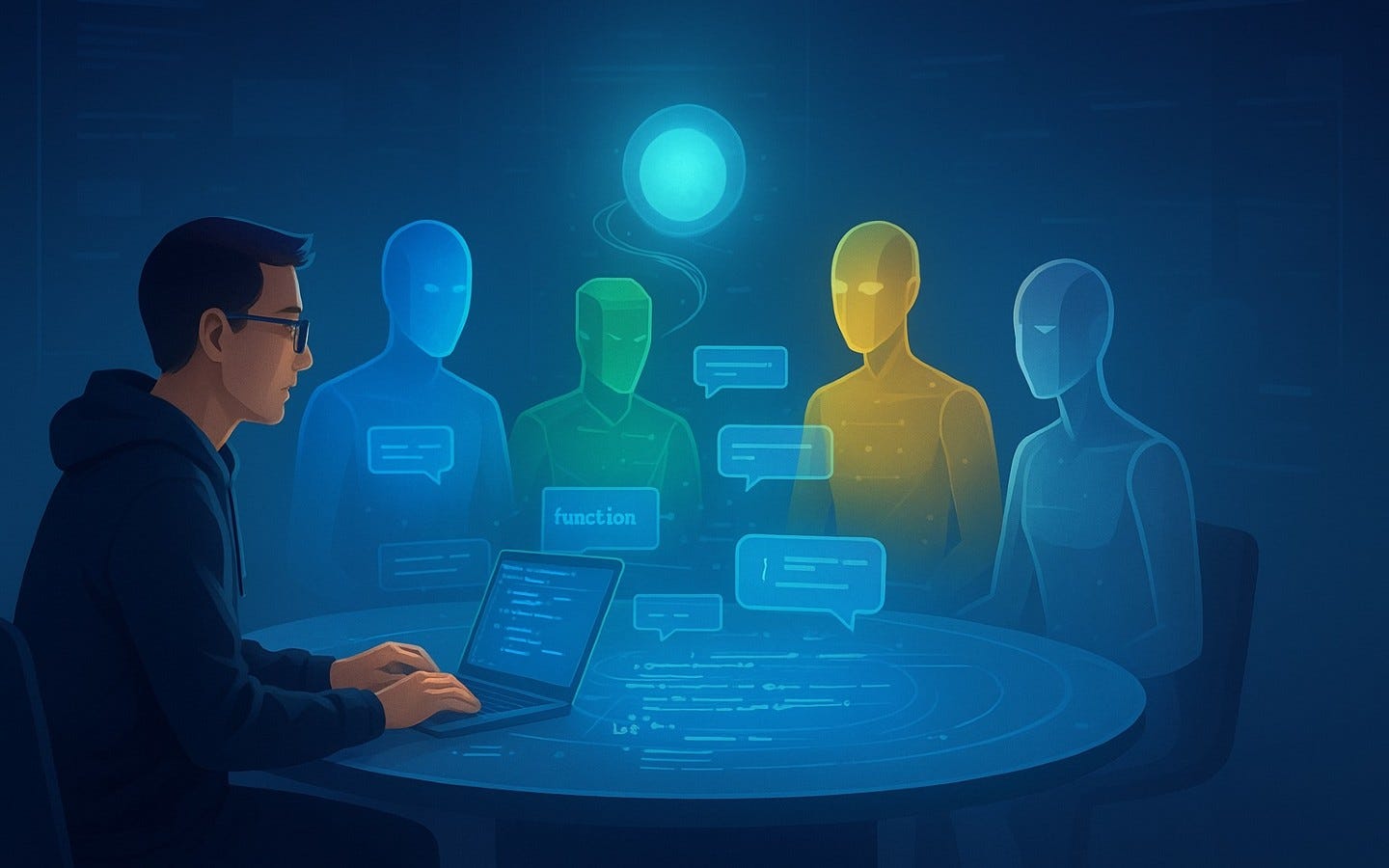
The gist
AI-powered 'vibe coding' is turning non-coders into app creators at breakneck speed, but the need for sharp, seasoned engineers—and their judgment—has never been more urgent.
What to know
- Platforms like Lovable and Sekai are fueling an app-creation explosion, with user signups jumping from 3,000 to 16,000 per day and 50,000 new apps built daily—over 60% by non-developers.
- AI-generated code lets teams prototype in a flash but is up to 41% buggier and far more prone to security slip-ups, forcing companies like Coinbase and AWS to double down on human oversight.
- Tech giants and consultancies are revamping talent pipelines—using AI to fast-track juniors, but doubling down on mentorship and governance to keep institutional knowledge and code quality intact.
AI’s New Creative Class
Natural language coding and remixable app platforms are redefining who builds software, turning product managers, designers, and even marketers into hands-on creators with AI as their collaborator.
AI-powered tools like 'vibe coding' are radically lowering the barriers to software creation, enabling non-coders—from entrepreneurs to marketers—to build prototypes and even launch businesses with little to no traditional coding knowledge. Platforms such as Lovable and Claude Code have made it possible for users to simply describe what they want in natural language, shifting the focus from manual code writing to expressing intent, and allowing people like Christo Snyman and Dr. Carl Juneau to create and scale SaaS products without a technical background. This democratization is evidenced by explosive growth in user signups—jumping from 3,000 to 16,000 per day on some platforms—and by the rise of new user personas, with 63% of vibe coders now identifying as non-developers.
The definition of a 'developer' is being fundamentally reshaped as AI tools empower a broader spectrum of users to participate in software creation, blurring traditional role boundaries. Product managers, designers, and even sales reps are now actively building apps, while prompt engineering and managing AI agents have emerged as essential new skills—what one founder calls 'the new technical class.' As users interact with AI-generated code and outputs, learning programming becomes less about syntax and more about directing, evaluating, and iterating on AI-driven systems, with platforms like Netlify offering AI-powered debugging tools and Sekai enabling remixable, TikTok-style app creation for the 99% who never saw themselves as builders.
While AI-driven development accelerates prototyping and unlocks creativity, it also introduces new challenges around quality assurance, security, and scalability—areas where skilled engineers remain indispensable. Early 'vibe coding' outputs often require refinement before reaching production standards, and as non-coders ship more software, organizations must rethink review processes and establish robust guidelines to ensure maintainability. As Edu, founder of a leading AI platform, notes, 'The magic is when creative freedom meets production-grade discipline,' highlighting the industry's evolution from weekend hacks to scalable, maintainable startups.
This democratization is also catalyzing new pathways for entrepreneurship and internal innovation, as AI tools slash development timelines from months to days and reduce costs to near zero marginal expense. The proliferation of platforms like Sekai, which processed 50,000 daily app creations within a month of launch, demonstrates how AI is accelerating software creation to unprecedented speeds—potentially rivaling the scale of established app stores in a fraction of the time. As companies like Dr. Muscle and Traderly.ai illustrate, founders without coding backgrounds can now lead development projects, shifting human focus to product direction and quality while AI handles the heavy lifting.





Engineers Become AI Orchestrators
With AI handling routine code, engineers now own the critical roles of judging, refining, and validating AI-generated solutions to ensure quality and accountability.
Engineering roles are undergoing a fundamental transformation as AI tools shift the focus from raw coding output to the orchestration and validation of AI-generated workflows. Rather than simply writing code, modern engineers are becoming orchestrators, editors, and multipliers—roles that require mastering pattern recognition, context engineering, and the ability to evaluate and refine AI outputs. As seen at companies like Lovable and AWS, this evolution means that human judgment, creativity, and foundational engineering skills are more critical than ever, ensuring that AI-augmented development produces robust, maintainable, and contextually relevant software.
The rise of 'vibe coding'—an intuitive, conversational approach to software development—has accelerated prototyping and made coding more accessible, but it also exposes the limits of AI-generated code and the enduring need for human oversight. Studies from METR and commentary by leaders like James Gosling and Simon Willison highlight that while AI can rapidly generate functional code, it often lacks the rigor, security, and completeness required for enterprise-grade applications. This has led to the emergence of structured, spec-driven protocols like SP(IDE)R and a renewed emphasis on foundational skills, as engineers must ensure that AI outputs meet high standards of quality and reliability.
As AI automates routine coding tasks, the bottleneck in software development has shifted from code production to human judgment, critical thinking, and decision-making. The traditional 'Coding Machine' archetype is being replaced by engineers who can evaluate multiple AI-generated solutions, select the best implementation, and maintain ownership and accountability for shipped code. This shift is exemplified by organizations like Egnyte and Lovable, where engineers are expected to take on broader responsibilities—ranging from product management to architecture—while mentoring junior talent and upholding engineering excellence in an era of unprecedented code generation speed.
Despite the rapid adoption of AI tools, foundational engineering skills, domain expertise, and mentorship remain irreplaceable in cultivating the next generation of talent. While AI accelerates onboarding and enables junior engineers to deliver value sooner, senior engineers play a crucial role in guiding, reviewing, and contextualizing AI outputs, ensuring that essential tacit knowledge and craftsmanship are not lost. As CTO Amrit Jassal of Egnyte emphasizes, 'Any change that's made, we don't want to hear that AI made the change; it has to be that developer made the change,' underscoring the enduring importance of human creativity, judgment, and responsibility in the evolving engineering landscape.






The Junior Engineer Revolution
AI is transforming junior roles from code grunt work into high-impact orchestration and oversight, fast-tracking early-career talent into leadership pipelines rather than eliminating them.
AI-driven automation is rapidly transforming the early-career landscape for software engineers, prompting organizations to rethink how they sustain leadership pipelines. As Evangelos Simoudis warns of a looming 'hollowing out' effect, companies like DBS Group are responding by redesigning talent development—cutting thousands of traditional roles while creating new AI-specialist positions and focusing on redeployment rather than elimination. To counteract the loss of foundational learning that came from routine tasks, firms such as Williams are implementing intensive onboarding programs where senior leaders directly impart business fundamentals to new hires, ensuring that critical institutional knowledge and the 'company way' are not lost in translation.
Rather than eliminating junior roles, leading organizations are leveraging AI to accelerate junior engineers’ development and preserve the corporate ladder’s crucial lower rungs. Accenture and McKinsey, for example, deploy AI copilots to automate routine work, shifting juniors’ responsibilities from rote creation to verification and orchestration of AI-generated outputs. This approach not only maintains early-career opportunities but also enables juniors to gain higher-level experience faster, as seen in McKinsey’s model where juniors oversee thousands of AI agents, ensuring that the next generation of leaders is forged through active engagement with both technology and business processes.
The rise of AI in software development is accelerating the upskilling of junior engineers, compressing the traditional ramp-up period and enabling them to deliver value much earlier in their careers. Companies like Egnyte and ServiceNow are capitalizing on this by integrating AI tools—such as Claude Code and Gemini CLI—into onboarding and daily workflows, allowing juniors to quickly navigate complex codebases and take on full-lifecycle responsibilities. As Amrit Jassal of Egnyte puts it, 'the junior engineer of today is the senior engineer of tomorrow,' underscoring the strategic imperative to invest in junior talent and use AI as a force multiplier rather than a replacement.
Despite the productivity gains from AI, human mentorship remains irreplaceable for junior engineers’ growth, especially in areas like communication, critical thinking, and organizational culture. Senior engineers are increasingly tasked with coaching and modeling, as highlighted by Marty Cagan’s assertion that 'about 80 percent of your week is coaching and developing,' and organizations are experimenting with preceptorship models that assign explicit responsibility for junior success to experienced staff. This human-in-the-loop approach is vital to prevent isolation in remote or AI-heavy environments and to ensure that diverse perspectives and nuanced judgment—qualities AI cannot replicate—continue to shape the next generation of software leaders.



Quality Risks in Fast-Forward
Rapid AI-powered prototyping is flooding codebases with buggy, unvetted software, forcing companies to double down on human review and stricter quality controls.
AI-augmented coding has ushered in a new era of rapid prototyping and democratized app creation, enabling even non-engineers to build functional prototypes in record time. However, as seen with tools like Lovable, the code produced in these fast iterations often requires significant refinement before it is production-ready. Studies have found that AI-generated code can introduce up to 41% more bugs, underscoring the critical need for robust human review and oversight to ensure that the efficiency gains of AI do not come at the expense of code quality and long-term maintainability.
The proliferation of 'vibe coding'—where developers rely on AI intuition rather than engaging deeply with the underlying code—has sparked debate over its impact on software quality and professional standards. While this approach can dramatically accelerate iteration cycles, as Karpathy and Google note, it also raises concerns about technical debt, trust, and the sustainability of AI-generated output, especially when non-developers are empowered to ship code without established QA processes. The tension between productivity and quality is further heightened by the fact that over 60% of enterprise code commits now include AI-generated content, which is 30% more prone to logic errors and often lacks the rigorous review traditionally provided by experienced engineers.
Organizations like Coinbase and AWS are navigating this landscape by embedding AI tools such as Cursor, Claude Code, and spec-driven development frameworks into their workflows, but they maintain a strong emphasis on human oversight and rigorous review. Coinbase, for instance, leverages AI to write nearly half its code but relies on disciplined engineering practices to ensure adherence to code conventions and manage security risks, while AWS’s Kiro team has demonstrated that spec-driven development can slash feature timelines from weeks to days without sacrificing quality. These examples illustrate that AI is best positioned as a powerful augmentation tool—'not a magic bullet'—with human judgment remaining the final safeguard against technical debt and quality lapses.
Despite the remarkable productivity gains promised by AI, the industry is grappling with persistent trust gaps and new forms of technical debt, often referred to as 'AI slop.' Developers report a spectrum of trust in AI-generated code, with 30% expressing little or no confidence in its outputs, and security benchmarks revealing that AI-generated code has a roughly 50/50 chance of containing vulnerabilities. This evolving risk landscape has prompted calls for intelligent governance systems—such as AI-powered code reviewers and structured frameworks like Codev’s SP(IDE)R protocol—to enforce rigorous, multi-step review processes and ensure that the speed of AI-driven development does not overwhelm organizations with unmanageable maintenance costs or security threats.



Leadership for the AI Era
As AI flattens hierarchies and automates routine work, organizations demand leaders who blend technical fluency, empathy, and governance to steer teams through the risks and rewards of automation.
As organizations integrate AI deeper into their workflows, leadership and management models are undergoing a seismic shift—flattening hierarchies and demanding a new breed of executive willing to champion holistic AI transformation. Startups, as seen in unicorns shedding resistant C-suite hires, are favoring leaders who embrace AI-driven change, while engineering teams, according to Portia CTO Emma Burrows, are becoming smaller and more specialized. This leaner structure is counterbalanced by a surge in demand for human oversight roles—compliance, security, and quality assurance—underscoring that even as AI automates routine coding, the human element remains indispensable for managing risk and ensuring quality.
Across industries, from public accounting at UHY to tech giants like Coinbase, organizations are threading a careful needle between AI-powered efficiency and the irreplaceable value of human judgment. In regulated sectors, leaders stress that 'you can't just AI that' when it comes to nuanced services like auditing, while at Coinbase, nearly half the codebase is AI-generated but subject to rigorous human review and security scrutiny. This duality is echoed in the rise of AI review agents—such as CodeRabbit—designed to augment, not replace, developers, and in the persistent need for intelligent governance to combat the 'AI slop' of unchecked automation.
The evolving landscape places a premium on leadership that blends technical fundamentals, empathy, and strategic oversight, as highlighted by voices from AWS, Accenture, and ServiceNow. Companies are investing in upskilling—Accenture retraining 750,000 'reinventors' in AI fundamentals, ServiceNow building a 'mind gym' for AI literacy—while coaching and people development are seen as key competitive advantages. As Marty Cagan puts it, '80 percent of your week is coaching and developing,' and organizations that intentionally cultivate critical thinkers and future leaders, rather than just optimizing for cost, are best positioned to thrive amid automation.
Security and trust in AI systems remain persistent challenges, with developers often misunderstanding AI's limitations and skimming outputs under productivity pressures—creating new vectors for risk. Traditional deterministic security controls are being upended by the probabilistic, sometimes unpredictable nature of AI, prompting a shift toward AI-based security agents and continuous tuning, as seen at Coinbase and in broader industry commentary. Ultimately, organizations are learning that effective AI integration is not a one-off deployment but an iterative, human-led process—requiring robust evaluation frameworks, clear metrics, and leadership that keeps both technical and human realities in focus.