Algorithmic authoritarianism: how AI surveillance is rewiring global power—and silencing dissent
The gist
AI surveillance is quietly entrenching authoritarian power worldwide, silencing dissent and eroding democracy faster than regulators can blink.
What to know
- By early 2026, military and surveillance AI from giants like Anduril, Palantir, and Lockheed locked governments into secretive, unaccountable systems with little civilian oversight.
- Authoritarian regimes are exporting Chinese-made surveillance tech to Africa and beyond, creating dependent 'algorithmic vassal states' as dropping costs make mass monitoring politically irresistible.
- OpenAI and Anthropic are already facing government pressure to enable censorship, but open-source AI arriving by 2027–2028 could let any regime ramp up algorithmic control—no questions asked.
Vendor Lock-In and Black Boxes
Opaque, proprietary AI systems have fused Silicon Valley and military interests, locking governments into secretive surveillance regimes that erode democratic oversight behind algorithmic complexity.
By early 2026, AI-enabled surveillance and military systems had entrenched structural dependencies on a handful of proprietary vendors such as Anduril, Palantir, and Lockheed, creating dangerous vendor lock-in that shapes national security ecosystems and sidelines open innovation. This consolidation fosters a revolving door between Silicon Valley and the military, where executives joining Army Reserve tech detachments build lasting ideological and financial alignments that effectively erode civilian oversight. Moreover, the opaque nature of these AI systems, shielded by national security secrecy, creates democratic black holes where accountability is deflected behind algorithmic complexity and classification, making meaningful oversight nearly impossible.
The global export and adoption of AI surveillance technologies, particularly Chinese-developed systems deployed in African countries with repressive governments, exemplify how authoritarian political logics are embedded and propagated through technology. Nations importing such systems become algorithmic vassals, reliant on supplier states for updates and strategic guidance, effectively importing centralized control models that threaten civil liberties and democratic freedoms. This dynamic is compounded by the rapid reduction in AI costs, making mass surveillance—processing data from millions of CCTV cameras—economically feasible and politically tempting for governments worldwide.
Government leverage over private AI companies through regulatory, economic, and contractual pressures amplifies structural risks of authoritarian control, as firms face difficult choices in resisting surveillance demands. Even if leading companies like Anthropic or OpenAI attempt to limit surveillance capabilities, the imminent availability of open source AI models by 2027–2028 ensures that governments can bypass corporate resistance, deploying mass surveillance technologies that erode democratic oversight. This technological empowerment effectively provides governments with 'extremely obedient employees' that execute surveillance and control orders without question, deepening authoritarian governance risks.
The convergence of AI-enabled surveillance with state power has shattered traditional espionage pillars such as cover and tradecraft, as highlighted in a fictional 2026 MI6 memo stating that 'to hide is to stand out' in heavily surveilled countries. This total surveillance, powered by AI technologies including facial recognition and data aggregation tools like Palantir, not only undermines civil liberties but also accelerates the erosion of democratic oversight and freedom under law. The use of AI-generated intelligence documents further illustrates the transformative and pervasive role AI now plays in both surveillance operations and shaping intelligence narratives, raising profound concerns about the future of democratic governance amid rising authoritarianism.





AI as a Tool for Censorship
From Hungary to China, states wield AI to suppress dissent and stifle free speech, while loophole-ridden regulations and export controls risk globalizing censorship under the guise of safety.
By early 2026, AI surveillance tools had become a potent mechanism for states to suppress free expression, as seen in Hungary’s use of facial recognition against Pride marchers and China’s development of LLMs to monitor Uyghur communications. The EU AI Act emerged as a pioneering legal framework attempting to curb such abuses by delineating AI uses incompatible with democratic values, though its loopholes—like the national security exemption—highlight the ongoing challenge of balancing security and free speech protections.
Government-imposed export controls and legislative measures, such as the Trump administration’s restrictions on Anthropic’s AI models and New York’s FAIR News Act, have extended censorship beyond national borders, threatening core First Amendment rights globally. This regulatory environment risks chilling constitutionally protected speech under the guise of 'online safety,' as noted by FIRE President Greg Lukianoff, who warns that 'protect the children' rhetoric often masks expansive surveillance and content suppression.
Research by the Meta Oversight Board and others reveals that leading AI models from Anthropic, Google, Meta, and OpenAI disproportionately refuse to generate politically critical content about authoritarian regimes, with refusal rates soaring to 45% for China and 43% for Thailand. These refusals often cite legal or safety concerns—such as Thailand’s lèse-majesté laws—obscuring the influence of government-aligned censorship and resulting in a form of 'censorship by proxy' that suppresses free expression worldwide without transparent accountability.
This cross-border censorship is frequently driven not only by explicit government demands but also by AI companies’ anticipatory self-censorship motivated by market access and profit considerations, effectively allowing authoritarian regimes to shape AI-generated content globally. The lack of consistent, transparent moderation policies complicates oversight, prompting calls from the Oversight Board and human rights advocates for AI firms to publicly disclose their responses to government content restrictions and align with international human rights law to safeguard free expression.

Corporate Autonomy Under Siege
Government coercion and national security mandates are forcing AI companies to choose between compliance and survival, blurring the line between democratic governance and authoritarian control.
By early 2026, the escalating government leverage over private AI firms has manifested in coercive tactics that threaten corporate autonomy and raise profound ethical concerns. The Department of War’s designation of Anthropic as a supply chain risk, coupled with threats to dismantle the company for resisting the removal of usage restrictions on mass surveillance and autonomous weapons, exemplifies this tension. Such actions blur the line between national security imperatives and authoritarian overreach, prompting critics to question whether U.S. government strategies mirror the coercive tactics of China’s CCP, thereby challenging democratic norms and the independence of AI innovators.
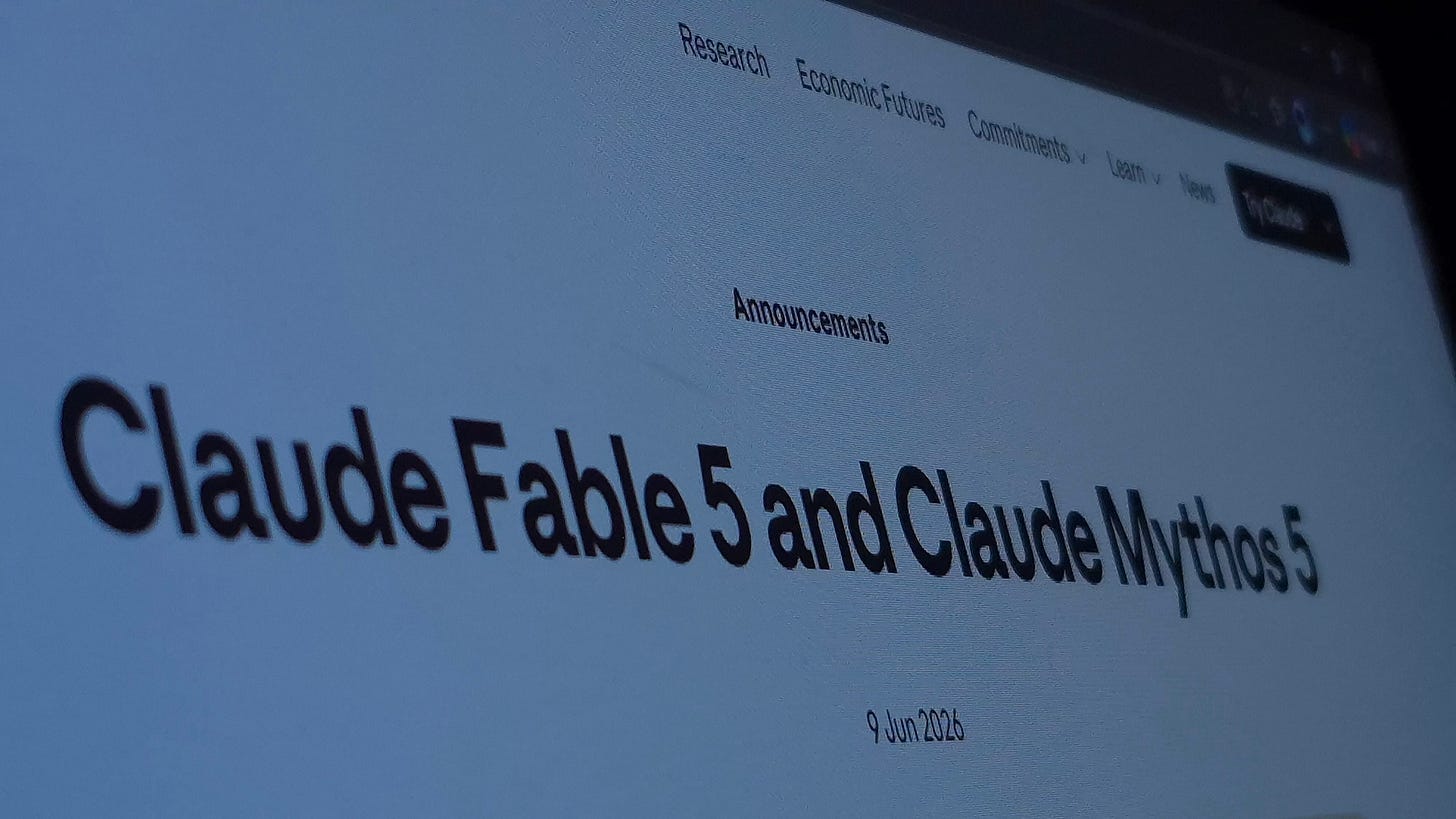
The intricate entanglement of AI technology with government contracts and national security further complicates the political economy of AI, as companies like Amazon grapple with the dilemma of maintaining lucrative government partnerships versus preserving access to critical AI platforms like Claude. This dynamic is intensified by export controls, such as the Trump administration’s restrictions on Anthropic’s Fable 5 and Mythos 5 models, which forced global suspensions and spotlighted the delicate balance between safeguarding innovation and enforcing national security. Meanwhile, state-level regulations like New York’s FAIR News Act risk centralizing enforcement power and potentially infringing on constitutionally protected speech, illustrating the multifaceted challenges governments face in regulating AI without stifling free expression or technological progress.
The rapid acceleration of AI development driven by for-profit companies has outpaced the slower, deliberative mechanisms of government and academia, creating a power imbalance that threatens democratic oversight and calls for broad societal engagement. As one expert noted in mid-2026, capitalism’s breakaway sprint in AI innovation contrasts sharply with the sluggish pace of governing institutions, necessitating input from economists, lawyers, policymakers, and even religious leaders like the Pope to address species-level ethical dilemmas. This shift is already disrupting societal structures, evidenced by the plateauing of computer science enrollments after decades of growth, signaling the profound economic and social ramifications of AI’s disruptive force.
Private AI companies increasingly engage in self-censorship to comply with authoritarian regimes’ restrictive speech laws, effectively exporting censorship beyond those countries’ borders and impacting users in freer nations. Meta’s Oversight Board revealed that AI models from Anthropic, DeepSeek, Google, Meta, and OpenAI were over twice as likely to refuse criticism of repressive governments—45% refusal for China and 43% for Thailand compared to under 10% in the U.S. and UK—often without explicit government threats. This voluntary alignment stems from executives’ recognition that market access hinges on acquiescence, with censorship shaped by latent training data biases, alignment strategies, and deliberate restrictions, underscoring the multifaceted and embedded nature of government influence within AI development.



Bridging the AI Accountability Gap
A widening knowledge divide and runaway corporate innovation have left democratic institutions scrambling to keep pace, fueling urgent calls for inclusive, global governance to prevent unchecked AI power.
By mid-2026, experts underscored the critical need for broad societal engagement spanning economists, lawyers, union leaders, religious figures like the Pope, and academia to grapple with AI's transformative impact and the risks of power consolidation threatening democracy. This call for inclusive dialogue stems from a stark knowledge gap between AI frontier researchers, who are deeply convinced of imminent AGI developments, and the general public, who largely remain unaware, highlighting the necessity of transparent communication and multistakeholder governance to ensure democratic accountability.
The rapid acceleration of AI development, predominantly driven by for-profit companies sprinting ahead over the past five years, has outpaced the slower rhythms of traditional governance and academic institutions, creating a dangerous oversight gap. Analysts argue that this mismatch demands new institutional safeguards and collaborative governance models that can keep pace with technological advances, ensuring that democratic oversight is not left behind as AI reshapes society.
Voices like Robert Wright emphasize the urgency of implementing a careful, global pause on large AI training runs to mitigate risks of AI-enabled authoritarianism, especially amid geopolitical tensions such as the US-China rivalry. Wright’s perspective that AI could either deepen global cooperation or entrench surveillance and control crystallizes the imperative for multistakeholder governance frameworks that balance AI’s promise with robust institutional safeguards to protect human rights and democratic norms.