Amazon’s €10b robot push for warehouse orchestration
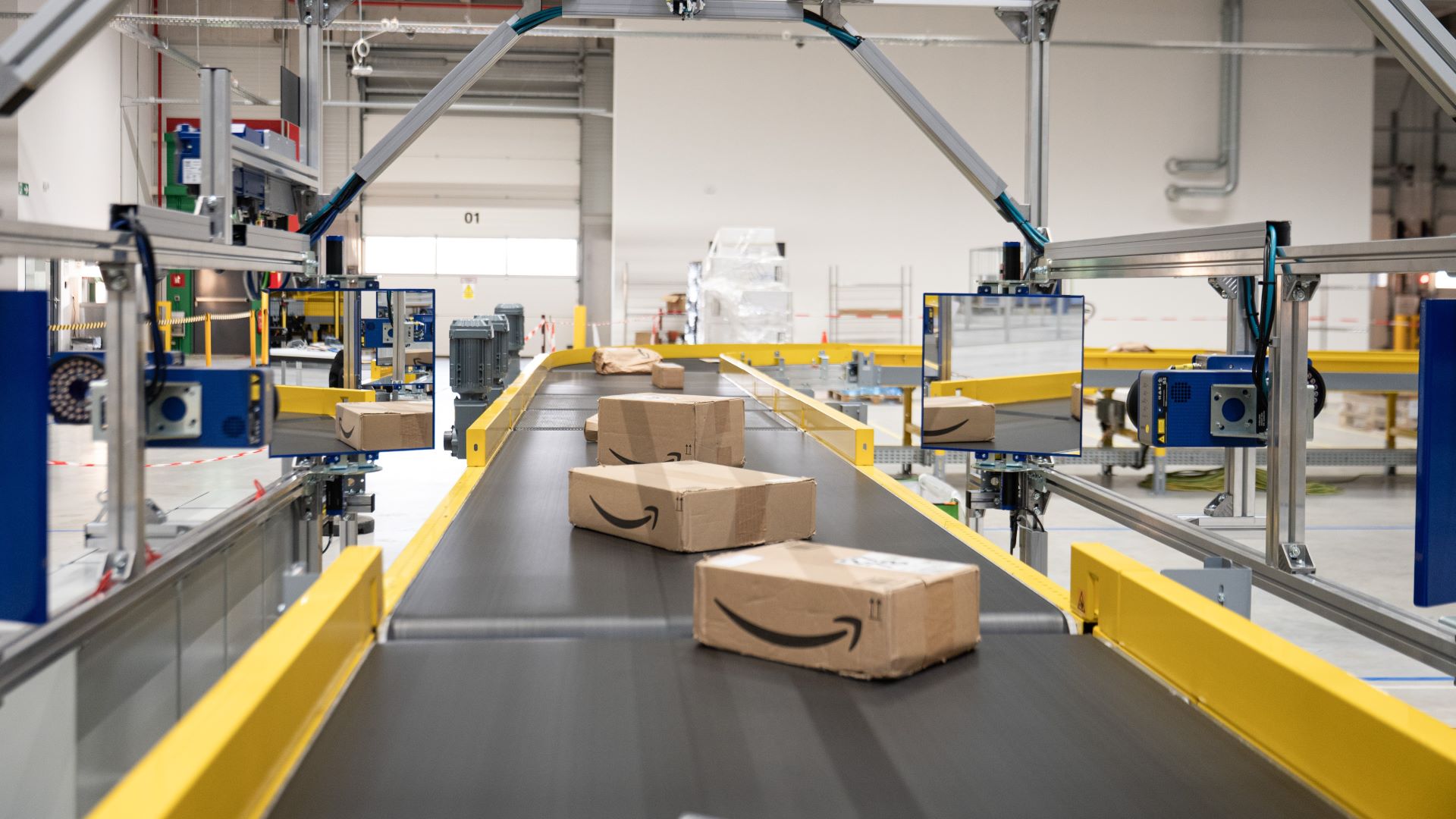
The gist
Amazon is pouring over €10 billion into robotics and AI to turbocharge its European warehouses, signaling the next era of human-machine teamwork in global logistics.
What to know
- By mid-2026, Amazon will modernize its European fulfillment centers with advanced robotics and upskilling, mirroring a $1B, 24/7 mega-facility in Long Island processing 300 tractor-trailers daily.
- Warehouse Execution Systems (WES) and AI-powered robots like Cardinal and Sparrow are now essential infrastructure, boosting efficiency up to 3x and increasing storage density by 40%.
- Next-gen fulfillment centers, like Amazon’s Kent, WA site, blend projectors, mobile robots, and automated packaging to supercharge productivity, ergonomics, and supply chain agility.
Amazon’s €10B Automation Bet
Amazon’s massive investment is not just about robots—it’s a dual strategy to scale operations and transform its workforce into tech-savvy specialists, signaling a new era of logistics leadership.
By mid-2026, Amazon committed over €10 billion to revolutionize its European fulfillment network, emphasizing the integration of advanced robotics to boost operational efficiency and reallocate human workers to more specialized roles. This strategic investment aligns with the company’s parallel $1 billion project to construct a sprawling 4.2 million-square-foot fulfillment center on Long Island, New York, designed to operate around the clock and process approximately 300 tractor-trailers daily. Together, these initiatives underscore Amazon’s aggressive expansion and modernization strategy, blending scale with cutting-edge automation to meet escalating logistics demands.
Central to Amazon’s modernization drive is a robust commitment to workforce development, notably through its Career Choice program, which aims to upskill employees amid the surge in automation. The deployment of over one million advanced robotics—including innovative robotic arms like Cardinal and Sparrow—transforms packaging and sorting processes, necessitating a workforce adept at collaborating with these technologies. This shift not only enhances productivity but also reflects Amazon’s recognition that human capital must evolve in tandem with automation to sustain operational excellence.

Software: The Real Game-Changer
Warehouse Execution Systems and AI-driven robots are now the nerve center of fulfillment, orchestrating hardware, people, and inventory for unprecedented speed, density, and adaptability.
By mid-2026, the integration of advanced robotics in warehousing has evolved beyond hardware deployment to a software-first strategy, where Warehouse Execution Systems (WES) serve as the critical orchestration layer. Jon Roberts of Inteq emphasizes that "the software layer is where automation ROI is won or lost," as WES unify robotics, equipment, and personnel into a cohesive control environment, enabling real-time visibility and agile decision-making. This approach prevents fragmented automation by embedding WES from the outset, ensuring scalability and flexibility as operational demands shift.
Autonomous Mobile Robots (AMRs) have transitioned from experimental pilots to essential infrastructure, with commercial models like Robotics-as-a-Service lowering capital barriers. Roberts cites a major fashion retailer that tripled returns put-away rates and doubled picking efficiency, processing 99% of returns within 24 hours after three years of AMR deployment. Complementing AMRs, AI-powered robots such as ZeeBot and Brightpick’s Autopicker enhance warehouse efficiency by enabling multi-robot collaboration, increasing storage density by 40%, and automating complex workflows even in challenging conditions like darkness.
The infusion of AI into traditional warehouse equipment transforms them into intelligent systems that optimize inventory flow and operator performance. Platforms like NOBLELIFT’s NobleOne integrate Gather AI’s vision technology to provide real-time insights and safety features, while Corvus Trident’s AI-enabled forklift-mounted scanners continuously track inventory movement, creating comprehensive operational records. Additionally, Jungheinrich’s EAC 212a AMR employs AI-driven 3D pallet detection to stabilize pallet handling, ensuring seamless integration with automated storage and retrieval systems.
Leading logistics players are accelerating robotics adoption with significant investments and innovative deployment methods. Amazon, for example, has surpassed one million advanced robots, including new robotic arms like Cardinal and Sparrow, and pledged $10 billion to modernize European fulfillment centers by 2026. Meanwhile, platforms such as SVT Robotics’ SOFTBOT drastically reduce integration time—up to 12 times faster than traditional coding—and support tech-agnostic automation across multiple sites, enabling rapid scaling of AI-powered robotics in complex warehouse environments.
Why WES Drives ROI
Early integration of Warehouse Execution Systems turns automation from a patchwork fix into a strategic advantage, enabling predictive maintenance and real-time agility that future-proofs fulfillment.
Jon Roberts of Inteq underscores that the software layer, particularly Warehouse Execution Systems (WES), is the linchpin where automation investments either yield returns or falter. By unifying robotics, equipment, and human labor into a single control environment, WES provides operations teams with real-time visibility and accelerates decision-making, effectively transforming warehouse management into a dynamic, responsive process. This integration is not merely operational but strategic, as it enables businesses to harness AI-driven predictive capabilities that anticipate maintenance needs and adapt automation strategies, positioning them at the forefront of next-generation logistics.
Roberts further advocates for a software-first automation strategy, emphasizing that embedding WES from the outset—rather than as a retrofit—prevents the fragmentation that often plagues warehouse systems. This proactive integration ensures that flexibility and adaptability are baked into the operational framework, allowing warehouses to evolve seamlessly with changing demands. By designing the software layer into the core of automation projects from day one, companies avoid costly integration headaches and maintain agility, a critical advantage in the fast-paced fulfillment landscape.
Solving Labor Gaps with Tech
Warehouses are countering labor shortages and high turnover by synchronizing automation, ERP, and workforce upskilling, creating resilient operations that thrive even with inexperienced teams.
Facing persistent labor shortages and market volatility, warehouses like West Liberty Foods are pioneering a blend of technology integration and process innovation to build operations that are not only streamlined but also agile and intelligent. By synchronizing automated production lines with logistics partners such as Lineage’s cold storage, they have created a seamless flow of raw materials and finished goods that reduces supply chain complexity while supporting strategic labor planning and employee upskilling.
The challenge of a less experienced workforce compounded by high turnover rates has pushed warehouse leaders to simplify workflows and boost employee engagement as critical levers for maintaining productivity and resilience. As Matt Wilson observes, 'You’re asking a less experienced workforce to do better work, faster, with less margin for error,' which underscores the urgency of designing processes that foster consistency and empower teams despite workforce fluctuations.
A key enabler of this operational harmony is the seamless communication between enterprise resource planning (ERP) and warehouse management systems, exemplified by West Liberty’s integration with Lineage’s systems. This synchronization not only coordinates ingredient movement and production schedules but also creates a circular product flow that enhances overall efficiency and provides a robust framework for dynamic workforce planning.
Humans and Robots: Seamless Synergy
Amazon’s Kent facility shows how human associates and smart machines work side by side—from projector-guided picking to automated packaging—boosting accuracy, ergonomics, and sustainability.
By early 2026, Amazon’s automated fulfillment center in Kent, Washington, exemplifies a sophisticated hybrid workflow where approximately 3,500 human associates collaborate seamlessly with robotics to process over one million items daily. This integration is highlighted by the use of projector lights that visually guide employees to specific items on inventory pods, showcasing an effective blend of human intuition and augmented reality to enhance picking accuracy and speed.
The facility’s operational efficiency is further amplified through the deployment of Hercules robots that transport inventory pods across four floors to semi-automated workstations such as ARSAWs and Universal Stations, eliminating the need for employees to walk to shelves. This innovation not only streamlines the stowing and picking processes but also improves ergonomics, underscoring Amazon’s commitment to worker well-being alongside productivity.
Amazon’s packaging process at this center marries automation with human expertise, employing CW1000 machines equipped with advanced sensors to tailor wrapping precisely to each item, thereby minimizing waste and enhancing sustainability. Meanwhile, human associates handle multi-item order packing in the Amazon Fulfillment Engine area, supported by intelligent systems that recommend optimal box sizes and automated tape dispensers, illustrating how automation supplements rather than supplants human roles in complex tasks.
Ultra-Fast Fulfillment, Global Impact
Amazon’s robotics blitz and digital integration are slashing delivery times, expanding ultra-fast services, and driving double-digit sales growth, all while redefining what’s possible in modern supply chains.
By mid-2026, next-generation warehousing has evolved into a highly flexible and intelligent ecosystem where integrated automation and AI-driven strategies enable near-real-time processing and shipping, effectively addressing labor shortages and market volatility. Industry leaders like Anthony Jordan and James A. Tompkins emphasize that operational 'optionality'—the capacity to swiftly pivot within volatile, uncertain, complex, and ambiguous (VUCA) environments—is now paramount for resilience and efficiency. This shift also elevates workforce capabilities, as employees at companies like West Liberty, highlighted by Brandon Achen, acquire advanced skills to operate and maintain sophisticated automated systems, blending human expertise with cutting-edge technology.
The seamless integration of ERP and warehouse management systems, exemplified by Lineage’s coordination of ingredient flows and automated cold storage handling described by Timothy Blazek, streamlines supply chains by reducing manual steps and optimizing labor planning. This circular product flow not only enhances operational efficiency but also supports the agility required in modern warehousing to meet fluctuating demands and complex order profiles.
Amazon’s aggressive deployment of over 1 million advanced robotics, including innovative robotic arms like Cardinal and Sparrow, has propelled delivery speed and fulfillment efficiency to new heights, with over 40% of items delivered same day or overnight globally in early 2024. Their $10 billion investment to modernize European fulfillment centers underscores a strategic commitment to sustaining productivity and cost efficiency amid rising transportation costs, while expanding ultra-fast services such as Amazon Now to 80 U.S. cities and multiple countries has directly enhanced customer experience and fueled a 20% net sales surge to $200.6 billion.