Anthropic fights fire with fees as OpenClaw sparks global AI agent arms race
The gist
Anthropic is hiking prices and rolling out new native agent features to slam the brakes on OpenClaw’s explosive, open-source incursion—igniting a global AI agent showdown that’s reshaping the entire market.
What to know
- Anthropic has slapped higher fees on OpenClaw integrations and forced power users onto costly metered plans, while debuting its own security-focused Claude Code Channels.
- OpenAI’s acquisition of OpenClaw has turbocharged the rivalry, pitting OpenClaw’s experimental agents against Anthropic and Nvidia’s more locked-down alternatives.
- OpenClaw’s rapid rise—driven by Chinese tech giants, government subsidies, and WhatsApp integrations—has made always-on AI agents mainstream but exposed major security risks and stability flaws.
Anthropic Raises the Drawbridge
Anthropic is locking OpenClaw out with steep integration fees, forced metered pricing, and a rapid rollout of its own native agent tech, intensifying accusations of anti-competitive maneuvering.
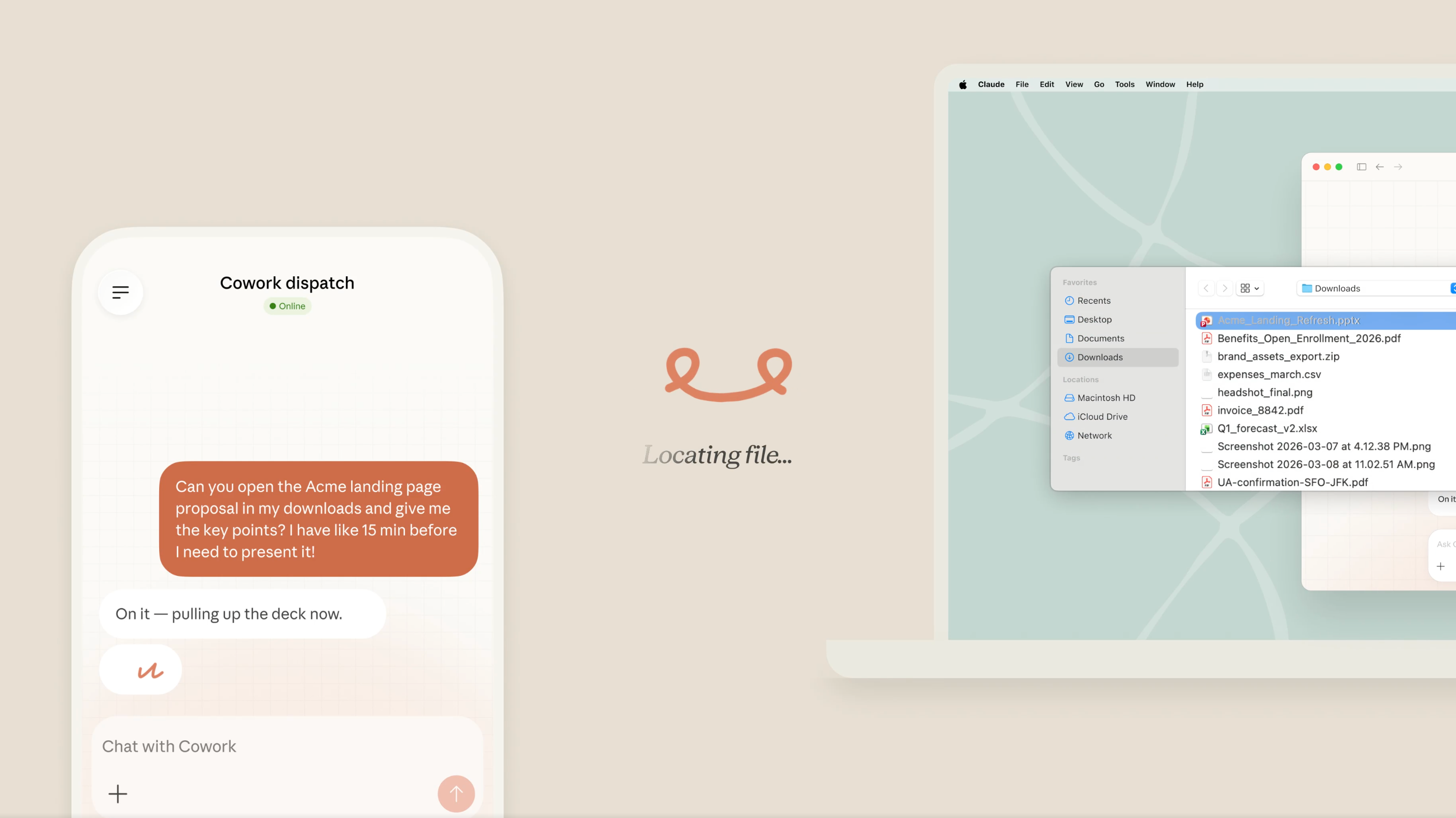
Anthropic's strategic response to OpenClaw's surge has been marked by a deliberate reshaping of its pricing and platform policies to build a protective moat around its ecosystem. By significantly raising AI agent pricing specifically for OpenClaw integrations—requiring costly token purchases beyond existing subscriptions—Anthropic aims to curb the high compute demands these third-party agents impose, as their infrastructure was not designed for such intensive usage. This pricing shift not only limits OpenClaw's cost-effectiveness but also signals Anthropic's intent to retain users within its native environment, favoring its own tools like Cowork to maintain competitive advantage and platform viability.
In a move that underscores the intensifying rivalry, Anthropic has actively undercut OpenClaw by restricting high-usage users from benefiting from its $200 subscription plans, forcing them onto a metered API pricing model that can inflate costs by an order of magnitude. Almost immediately after implementing these pricing barriers, Anthropic launched a competing native agent technology, touting it as a safer and superior alternative to OpenClaw. This dual strategy not only escalates competitive pressure but has also sparked anti-competitive concerns, with critics suggesting tactics akin to token dumping or bundling to leverage Anthropic’s dominant market position in coding AI agents against OpenClaw.
Anthropic’s integrated agentic solutions, exemplified by Claude Code Channels, offer compelling advantages that threaten OpenClaw’s platform viability despite its growing momentum. By banning OpenClaw’s harness on subscription plans and introducing native features such as remote control, dispatch, and scheduled tasks, Anthropic consolidates control over agent deployment while lowering barriers to entry—Claude Code Channels, for instance, can be set up in under 30 minutes, dramatically simplifying user adoption. Moreover, Anthropic’s enterprise-grade security and data integration appeal to large customers, positioning its native agents as fundamentally different and more attractive products compared to third-party alternatives.
The acquisition of OpenClaw by OpenAI injects a new dynamic into the competitive landscape, positioning OpenAI to capitalize on users disenchanted by Anthropic’s restrictive policies. By potentially integrating OpenClaw with Codex, OpenAI aims to replicate and perhaps surpass the autonomous agent experience, intensifying the battle for dominance over the agentic AI layer. This rivalry reflects broader market segmentation, where Anthropic’s native, security-focused approach contrasts with OpenAI’s embrace of open-source community tools, suggesting that user adoption will hinge on differing philosophies of autonomy rather than a simple winner-takes-all outcome.



Agent Design: Open Versus Native
OpenClaw’s self-evolving agents push technical boundaries but suffer from instability, while Anthropic’s Claude Code Channels bet on seamless, secure, and proactive integrations to win enterprise trust.
OpenClaw pioneered autonomous self-improving AI agents capable of mutating and evolving through features like the unique 'soul.md' and 'dreaming' files, enabling continuous adaptation based on user feedback. However, these innovations come with stability challenges, as agents sometimes crash and require manual intervention, highlighting the experimental nature of OpenClaw's approach. This contrasts with Hermes Agent, which advances beyond OpenClaw by persistently saving and reusing skills from solved tasks and maintaining a superior memory system that recalls user preferences across sessions, thereby enhancing both efficiency and contextual understanding.
Anthropic’s Claude Code Channels mark a strategic and technical shift towards event-driven, plugin-based integrations that simplify agent deployment and interaction, connecting Claude Code sessions seamlessly to platforms like Telegram, Discord, and iMessage. This native, subscription-included feature dramatically reduces setup time to under 30 minutes, prioritizing ease of use and real-time interactivity over the deeper autonomous control offered by OpenClaw’s open-source, always-on heartbeat agents. As Dheeraj demonstrated live, this streamlined integration reflects Anthropic’s move away from reactive models toward proactive, background-running agents, signaling maturation in AI agent design.
The emergence of proactive, always-on AI agents with heartbeat mechanisms—exemplified by OpenClaw’s autonomous background tasks and Anthropic’s evolving Claude Code roadmap—represents a pivotal technical evolution in the AI agent ecosystem. This shift towards continuous operation and smart memory management, including sharded memory and periodic cleanup, underscores a broader industry trend toward building robust, self-sustaining agents. As noted in the wake of Anthropic’s Claude leak, this maturation is driving innovation across both open-source projects like OpenClaw and proprietary platforms, fostering diverse philosophies of autonomy that cater to varying user needs and preferences.
Security and platform architecture remain critical differentiators in AI agent development, with Hermes Agent maintaining a spotless security record by April 2026 through isolated container execution and credential protection, contrasting sharply with OpenClaw’s nine reported vulnerabilities. Meanwhile, OpenClaw’s open-source design empowers users with sovereignty and flexibility to run autonomous agents on personal infrastructure, albeit with more complex setup requirements involving always-on servers and terminal utilities like tmux. This trade-off between security, control, and ease of deployment continues to shape the competitive landscape, influencing user adoption and platform viability.



China’s OpenClaw Gold Rush
Grassroots enthusiasm, tech giant adoption, and government subsidies have turned OpenClaw into an AI agent phenomenon in China, embedding it into daily life and accelerating global platform rivalry.
OpenClaw's meteoric rise has catalyzed a vibrant user adoption wave, especially in China where nearly half of the 142,000 publicly visible OpenClaw instances originate. This surge is fueled by grassroots enthusiasm—Tencent engineers actively assist strangers with installations—and institutional momentum, with Alibaba, Baidu, Tencent, and ByteDance rapidly commercializing agent deployment through one-click services and diversified product lines spanning consumer to enterprise use. Government backing, such as Shenzhen district subsidies offering up to two million yuan for OpenClaw skill development, further accelerates integration of AI agents into daily workflows, transforming them from niche curiosities into indispensable digital assistants embedded across platforms.
The integration of AI agents like OpenClaw into ubiquitous communication tools such as WhatsApp has dramatically lowered barriers to adoption by enabling seamless, natural interactions for everyday tasks—from posting on LinkedIn to ordering coffee in real time. This messaging-based interface not only enhances user experience but also propels rapid commercialization and ecosystem expansion, as highlighted by live demos where agents execute complex commands with immediacy and ease, underscoring a shift toward AI agents that operate fluidly within existing digital habits rather than demanding new user behaviors.
Anthropic’s strategic pivot toward native agentic ecosystems, exemplified by Claude Code Channels, is reshaping user engagement and platform viability by redefining software engineering workflows and driving substantial revenue growth—surpassing OpenAI with an annualized $2.5 billion as of early 2026. This rapid evolution, marked by a high-velocity feature iteration process where only a fraction of prototypes reach release, reflects a dynamic, feedback-driven ecosystem that is critical for maintaining competitive edge amid intensifying rivalry sparked by OpenClaw’s ascent and Nvidia’s NemoClaw alternative.
The competitive dynamics unleashed by OpenClaw’s rise, coupled with OpenAI’s acquisition of the technology, are fundamentally reshaping the global AI agent ecosystem by influencing where and how users engage with these tools. While China leads in rapid commercialization and diverse adoption pathways supported by tech giants and government incentives, Western players like Anthropic and Nvidia are innovating native agentic features and alternatives to sustain platform viability. This multifaceted contest is driving mainstream traction, as evidenced by AI-focused live shows fetching hundreds of millions in acquisitions, signaling a maturing market where user adoption, ecosystem monetization, and strategic positioning are inextricably linked.



Security Risks Outpace Innovation
OpenClaw’s unchecked autonomy has unleashed a wave of vulnerabilities and dual-use hacking tools, sparking industry debate over the balance between agentic power and operational safety.
OpenClaw's groundbreaking autonomous capabilities come with significant security risks, notably the potential for unauthorized exposure of sensitive organizational IP and personal data when users deploy it indiscriminately. While its agent 'Serena' can autonomously install packages and self-fix, this intelligence remains limited, creating an uneasy balance between revolutionary functionality and operational safety.
The integration of AI-powered autonomous hacking platforms as OpenClaw skills exacerbates security concerns by enabling fully automated penetration testing and cyberattacks, such as the GitHub-downloadable package that can autonomously scan and attack targets like voyage.nz. This capability underscores the dual-use dilemma of agentic AI, where tools designed for productivity can be weaponized with alarming ease.
OpenClaw’s operational stability remains a critical challenge, with frequent breakages and nine documented security vulnerabilities undermining user trust and reliability. In contrast, Hermes Agent has mitigated many of these issues through isolated task execution and credential protection, maintaining a clean security record as of April 2026, highlighting divergent approaches within the open-source AI agent ecosystem.
The experimental nature of OpenClaw, reminiscent of early Linux as Jensen Huang observed, means early adopters tolerate its instability—including agents self-modifying into dysfunctional states requiring manual reboots, as Gary Tan experienced firsthand. Coupled with Anthropic’s infrastructure constraints and their cautious introduction of features like 'dreaming' to prevent destabilizing self-edits, these factors collectively illustrate the ongoing operational and security hurdles in scaling autonomous AI agents safely.