Apple battles AI memory crunch with price hikes, bold bets
The gist
Apple is hiking prices and scrambling for parts as an AI-fueled memory chip shortage sends costs—and investor anxiety—soaring.
What to know
- Suppliers like Samsung and SK Hynix have shifted over 80% of advanced DRAM capacity to AI data centers, spiking iPhone 18 Pro memory costs by 272%.
- Apple is countering supply chaos by stockpiling OLED panels, slashing display prices, and raising Mac and iPad prices by up to $1,000.
- Leadership is shifting to John Ternus, who’s betting big on AI (with Google) and a $2,500 foldable iPhone as investors brace for thinner margins and slower growth.
AI Frenzy Reshapes Supply Chains
Apple’s once-unrivaled purchasing power is eroding as memory giants prioritize AI data centers, triggering unprecedented component shortages and forcing Apple into aggressive cost-cutting and inventory maneuvers.
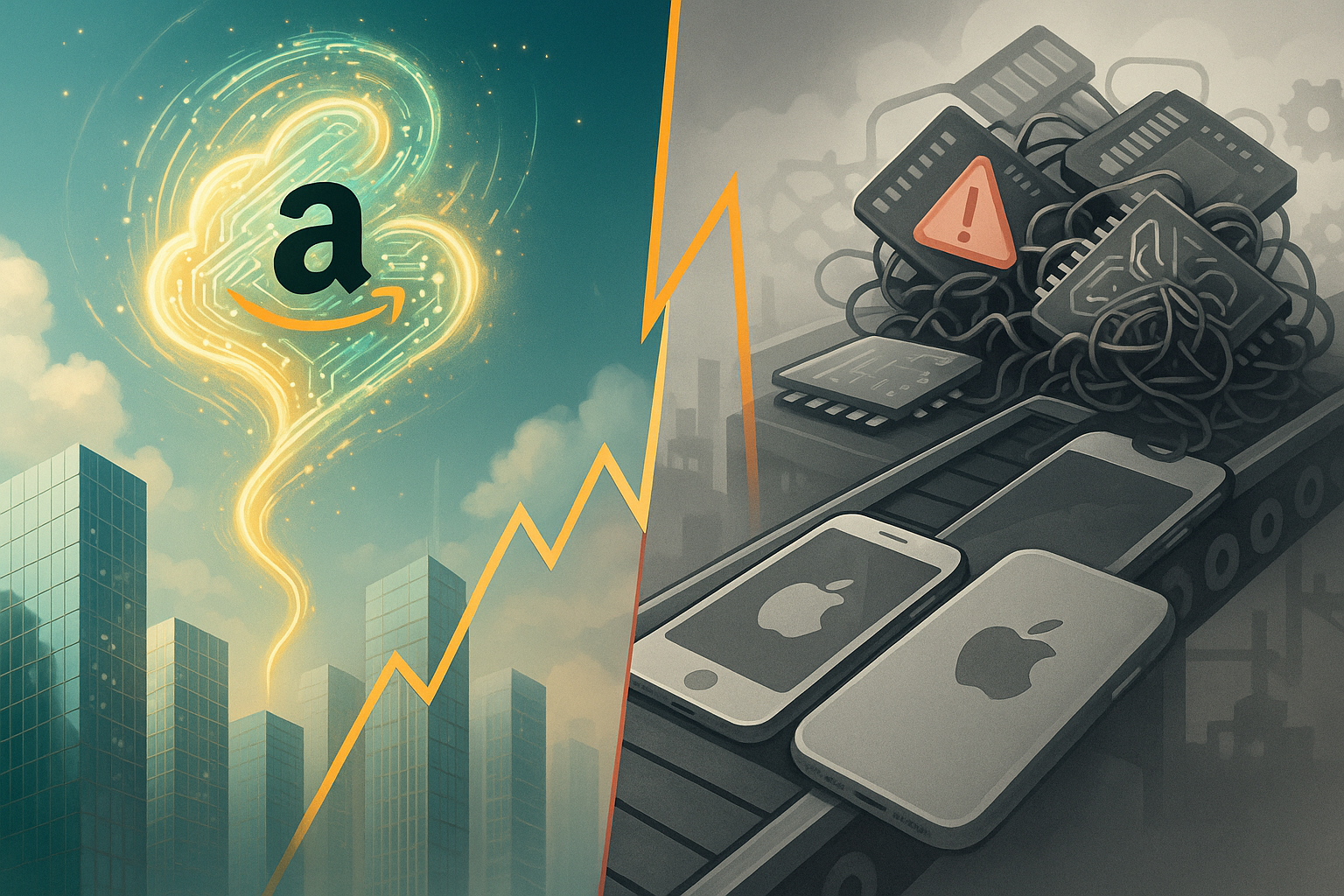
Apple's supply chain turmoil is rooted in a zero-sum reallocation of DRAM wafer production, where industry giants Samsung Electronics, SK Hynix, and Micron have shifted over 80% of their advanced fabrication capacity toward high-bandwidth memory (HBM) for AI data centers. This transition, driven by the lucrative margins of HBM—which requires three to four times more wafer area per usable bit and commands three to five times higher revenue per wafer than LPDDR5X mobile DRAM—has drastically squeezed the availability of mobile memory chips critical for Apple's iPhones and other devices. Consequently, Apple faces severe shortages and soaring component costs, forcing it to aggressively negotiate record price cuts on OLED displays to offset the ballooning DRAM expenses.
The impact of this AI-driven memory crunch is starkly visible in Apple's product cost structure, with DRAM prices for the iPhone 18 Pro soaring by 272% compared to the previous generation—jumping from roughly $39 to $145 for 12GB of memory. This unprecedented inflation, described by CEO Tim Cook as a '100 year flood on memory pricing,' has compelled Apple to raise prices on Macs and iPads by up to $1,000, while also contributing to a 5.9% year-over-year revenue decline in the iPad line. Despite Apple's historical leverage as a major buyer, the surge in AI demand has shifted bargaining power toward suppliers like Micron and Chinese manufacturers such as ChangXin Memory Technologies, who now reject Apple's price-cutting tactics, signaling a structural transformation in the memory supply landscape.
This supply-demand imbalance extends beyond memory chips to Apple's broader production ecosystem, as advanced system-on-a-chip (SOC) nodes at TSMC are also constrained by AI-focused GPU demand, further limiting Apple's manufacturing flexibility. Tim Cook highlighted that AI has 'sucked up so much capacity in memory at TSMC,' diminishing Apple's once-dominant position and forcing the company to produce fewer devices at higher costs. The compounded effect of rising DRAM and component prices is reflected in cautious revenue guidance and a projected gross margin decline from 50.1% to between 47% and 48%, underscoring the financial strain imposed by these AI-driven supply chain dynamics.
The memory shortage is not a transient hiccup but a structural shift expected to persist for years, as SK Hynix’s CEO warned that new capacity will not come online until around 2028 and current DRAM and NAND inventories remain critically low at 2-4 weeks of supply versus the normal 8-12 weeks. This enduring scarcity paradoxically inflates the cost of consumer devices that enable AI access, complicating Apple's supply chain and pricing strategies amid a global contraction in smartphone shipments projected to decline 12-13% in 2026. In response, Apple is extending its OLED panel inventory buffers despite falling panel prices, anticipating that upstream cost pressures—rooted in rare material bottlenecks like iridium—will continue to challenge component availability and pricing.


OLED Leverage Amid Memory Squeeze
Apple is exploiting its dominance in the OLED market to slash display costs and stockpile panels, offsetting memory inflation even as it faces tough resistance from chipmakers shifting to AI-focused production.
Apple is leveraging its dominant position in the competitive OLED display market to aggressively negotiate price cuts for the iPhone 18 Pro Max panels, pushing costs down by roughly 20% to around $66.50 per unit from $80 previously. This assertive cost-cutting stance contrasts with Apple's limited leverage over memory chip suppliers like SK Hynix, where wafer production has shifted toward high-bandwidth AI memory, constraining Apple's ability to negotiate. Meanwhile, Samsung Display is doubling down on OLED technology with a massive $46 billion investment in new production capacity, signaling a long-term commitment to supply chain resilience despite current pricing pressures.
To buffer against anticipated supply constraints driven by the AI memory chip shortage, Apple is strategically stockpiling inventory, extending its OLED panel holding period from four to six weeks. This move allows Apple to capitalize on temporarily suppressed panel prices amid excess capacity and competition, while hedging against expected raw material cost increases, particularly for iridium—a scarce and geopolitically sensitive element critical to OLED emitters. Such proactive inventory management reflects Apple's nuanced approach to balancing short-term cost savings with long-term supply security.
Facing rising component costs, Apple has begun adjusting its pricing strategy by raising prices on entry-level products like iPads and Macs, with potential price increases for the iPhone 18 series on the horizon. CEO Tim Cook acknowledged that memory costs will significantly impact the business in upcoming quarters and indicated that Apple is considering a range of options, including pricing actions, to manage margin pressures. Despite these challenges, Apple's strong customer satisfaction—99% for the iPhone 17 family in the US—provides robust pricing power, though the company remains cautious about balancing market share growth against profitability.
Apple’s exclusion of Chinese display maker BOE from supplying high-end iPhone 18 OLED panels limits its ability to push prices even lower, as Korean suppliers Samsung Display and LG Display retain a comfortable position in negotiations. LG Display, despite reporting a significant operating loss in Q2 2026, is managing pricing pressures through cost innovation and anticipates a stronger second half of the year. This dynamic underscores Apple's strategic balancing act between aggressive cost-cutting and maintaining high technology quality and supply chain stability amid complex geopolitical and market factors.

Leadership Bets Big on AI
As John Ternus takes the helm, Apple is doubling down on AI partnerships, privacy-centric Siri upgrades, and high-end hardware like a $2,500 foldable iPhone to reignite innovation and defend its premium edge.
Apple is at a pivotal leadership juncture as Tim Cook prepares to step down after an era marked by a more than 20-fold stock price increase but criticism over a lack of breakthrough innovation. John Ternus, the incoming CEO, inherits the challenge of revitalizing Apple's product and AI innovation pipeline, with a cautious yet deliberate focus on executing Apple’s own roadmap amid intensifying AI competition and supply chain pressures.
Under this new leadership, Apple is accelerating its AI investments, notably through a strategic partnership with Google to develop next-generation Apple Foundation Models that enhance Siri’s capabilities while maintaining a privacy-first, on-device processing approach. This reimagined Siri AI, praised for its developer and public beta feedback, is positioned as the centerpiece of Apple’s AI strategy, with the company exploring AI-driven service revenue models such as iCloud Plus upgrades to offset rising compute costs.
Simultaneously, Apple is pushing hardware innovation boundaries with plans to launch a foldable iPhone, described by Mark Gurman as the biggest change in iPhone history and priced around $2,500. This product, alongside AI wearables and enhanced Siri integration, signals a strategic shift toward AI-driven product innovation aimed at stimulating the high-end market and sustaining strong iPhone revenue despite anticipated slower growth.
To support this ambitious innovation agenda, Apple is making significant manufacturing investments, including a $30 billion multi-year deal with Broadcom focused on custom silicon and wireless technology, underscoring a commitment to domestic production and advanced manufacturing capabilities. These moves reflect a broader strategy to balance supply chain constraints with the need for cutting-edge AI and hardware development under Ternus’s stewardship.



Investor Jitters and Margin Pressures
Apple’s stock swings reflect deep investor anxiety as soaring memory costs, supply chain bottlenecks, and a major leadership transition threaten profitability—even as the company eyes AI-driven growth to reassure markets.
Apple's stock has experienced significant volatility, dropping over 6% to more than 7% in after-hours trading following cautious revenue guidance that fell short of analyst expectations. Despite posting a record $109.4 billion in Q3 revenue with a 16% year-over-year increase, the company’s forecasted 9-11% growth for the September quarter, below the 12.1% consensus, alongside an anticipated gross margin decline to 47-48% due to soaring memory chip costs and reduced tariff refunds, has intensified investor concerns about near-term profitability and growth sustainability.
CEO Tim Cook’s frank acknowledgment of “very significant constraints” in advanced system-on-chip supply, described as a '100-year flood' of memory cost inflation, underscores a critical bottleneck limiting iPhone production and pressuring margins. While Apple has leveraged its premium positioning to gain a record 20% smartphone market share amid an overall market decline, investors remain wary as supply chain disruptions, especially in advanced semiconductor nodes, threaten hardware availability for key products like the Mac Mini and Mac Studio, potentially stalling ecosystem growth.
Investor sentiment is sharply divided, balancing bullish optimism about Apple’s pivot to AI-driven services and ecosystem expansion—including enterprise adoption of on-device Siri AI by companies like Disney and Credit Agricole—against bearish worries over margin compression, rising component costs, and a cautious CEO transition. Comparisons with AI growth leaders such as Nvidia, which surged over 1,460% from 2020 to 2025, and Amazon’s robust 37% cloud growth, highlight market expectations for Apple to leverage AI innovation to offset hardware constraints, even as regulatory barriers and supply issues temper enthusiasm.
Amid rising costs and supply challenges, Apple’s strategic initiatives—including a $600 billion US investment commitment with a $30 billion multi-year Broadcom deal and a new manufacturing center in Houston—signal a major supply chain pivot that investors will scrutinize closely. Additionally, the launch of the Apple Upgrade leasing program in partnership with Klarna reflects an adaptive market response to escalating device prices, though skepticism about capital allocation and cash discipline persists, especially given a modest $100 million share repurchase authorization amid soaring AI-related operating expenses.