Battery blazes spur safety revolution: cities, scientists, and startups race to outpace lithium-ion fire risks
The gist
Lithium-ion battery fires are surging in global cities, forcing a high-stakes race among innovators, regulators, and first responders to outsmart the next wave of explosive risks.
What to know
- London, New York, and Seoul are seeing a spike in e-bike and scooter battery blazes, outpacing traditional firefighting tactics and raising alarms over toxic PFAS chemicals.
- New tech—like Full Circle Lithium’s PFAS-free FCL-X™GEL and QinetiQ’s Q-TRED early warning sensors—is hitting the market in 2026 to stop thermal runaway before it starts.
- Big moves from Waste Management and startups are reshaping battery disposal rules and scaling safer, fire-resistant battery materials to curb the crisis and influence new safety laws.
Inside the Lithium Inferno
Thermal runaway in densely packed batteries triggers fires exceeding 1,000°C, overwhelming firefighters and exposing cities to toxic chemical hazards.
By mid-2026, cities like London, New York City, and Seoul have reported a sharp rise in lithium-ion battery fires, largely driven by the surge in e-bikes and electric scooters. These incidents highlight the growing challenge for firefighting teams, as traditional methods often require vast amounts of water to cool battery cells and halt thermal runaway, while environmental concerns over PFAS chemicals—once common in suppression foams—complicate response strategies due to their persistence and health risks.
Thermal runaway, the core scientific challenge behind lithium-ion battery fires, is a self-sustaining chain reaction triggered when a damaged or overheated cell generates heat faster than it can dissipate. This feedback loop causes temperatures inside battery packs to soar above 1,000°C, leading to intense fires that can reignite hours after appearing extinguished and release toxic gases, making containment exceptionally difficult.
The compact architecture of lithium-ion batteries, especially in electric vehicles and grid storage systems where thousands of cells are densely packed, exacerbates the risk and severity of thermal runaway events. Although such fires remain rare relative to the billions of batteries in use globally, high-profile incidents involving EVs, energy storage, and consumer electronics have amplified public concern and underscored the urgent need for improved safety measures.
Sensors and Gels Redefine Safety
PFAS-free suppression gels and next-gen embedded sensors are transforming battery fire prevention, offering early warnings and robust protection for massive energy storage sites.
By early 2026, Full Circle Lithium made a significant leap in fire suppression technology with its PFAS-free FCL-X™GEL, designed specifically for large-scale lithium-ion battery energy storage systems. This next-generation gel boasts advanced adhesion, sustained cooling, and heat resistance, effectively mitigating risks of thermal runaway, explosions, and toxic emissions in high-energy battery environments. Positioned amid the rapid global expansion of renewable energy storage, FCL-X™GEL not only enhances fire safety and infrastructure protection but also bolsters public confidence in scalable battery storage deployment.
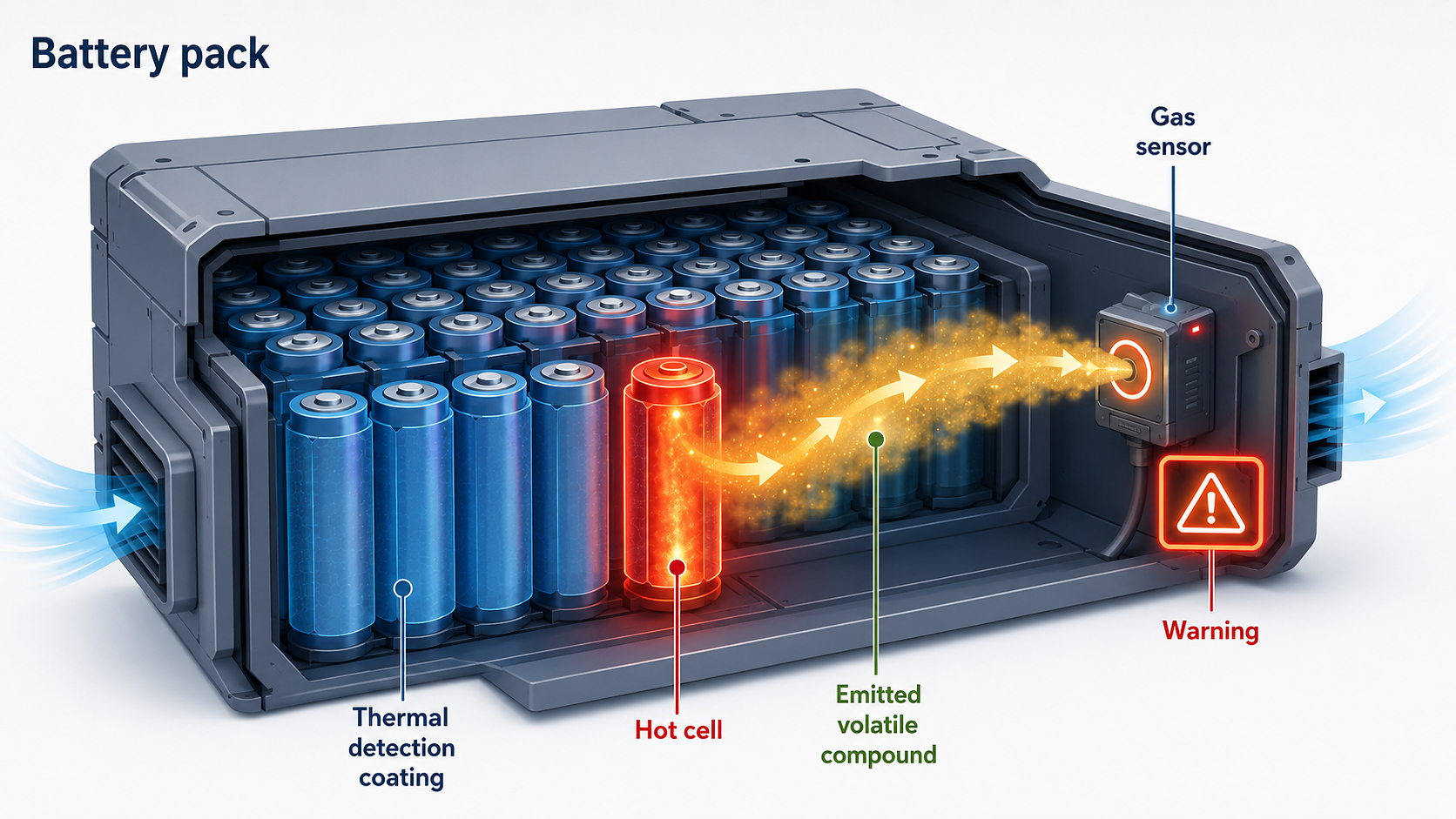
Complementing advances in suppression, QinetiQ’s Q-TRED technology, licensed by Soteria BIG in mid-2026, revolutionizes early thermal event detection by embedding specialized coatings on each battery cell that release volatile compounds at elevated temperatures. This innovative distributed sensing approach surpasses traditional point-monitoring methods by enabling gas sensors to detect abnormal thermal conditions well before fires or thermal runaway occur, thereby expanding coverage and improving early warning capabilities. Soteria BIG CEO Brian Morin underscores the critical importance of such early warning systems and industry collaboration to mitigate damaging battery failures across diverse sectors including electric vehicles, energy storage, micromobility, and aerospace.

Battery Chemistry Breakthroughs
Cutting-edge electrolytes and hydrogels now withstand extreme cold and resist ignition, paving the way for safer, longer-lasting batteries in harsh environments.
By mid-2026, significant strides in electrolyte chemistry have yielded safer, more resilient lithium battery components that perform under extreme conditions. A pioneering solid polymer electrolyte developed with fluorinated ether integrated into a PEGDME-based network not only enhances ionic conductivity and lithium-ion mobility but also suppresses dendrite growth, thereby reducing fire hazards and extending battery life even below -20°C. Complementing this, Prof. Sungjune Park's team introduced an ultra-stretchable hydrogel electrolyte incorporating liquid metal particles, which can elongate up to 900% and maintain 98% capacity after 45,000 cycles, showcasing remarkable mechanical robustness and stable electrochemical performance at subzero temperatures.
The innovations extend beyond performance to manufacturability and scalability, with the flame-retardant solid polymer electrolyte compatible with existing liquid battery production lines, signaling strong commercial potential. Meanwhile, the hydrogel's fabrication method—using liquid metal particles as polymerization initiators under ultrasonication—eliminates the need for external stimuli like heat or UV light, simplifying production and enhancing scalability. This approach, combined with soaking the hydrogel in lithium chloride solution to suppress hydrogen bonding and impart anti-freezing properties, enables reliable ionic conductivity and flexibility where traditional hydrogels fail, opening avenues for flexible, wearable energy storage devices in harsh environments.

Fireproofing the Battery Core
New nickel-doped cathodes and metal-free polymers are eliminating thermal runaway risks at the source, promising safer batteries and less reliance on volatile metal supply chains.
By mid-2026, SEL made a notable breakthrough in fire-resistant lithium-ion battery chemistry with its Ni-doped lithium cobalt oxide cathode (LCNO), which demonstrated remarkable intrinsic fire resistance by maintaining structural stability even under severe nail penetration tests without igniting or showing temperature rise. This innovation not only enhances safety by preventing thermal runaway but also boosts performance by improving discharge energy density per cathode weight and avoiding the detrimental H1-3 phase transition common in conventional LCO batteries, positioning SEL’s LCNO as a critical step toward safer consumer batteries and a future with fewer fire accidents.
Shortly after SEL’s announcement, LiNova Energy introduced its PolyPower metal-free polymer cathode battery cells specifically designed for data center backup applications, achieving intrinsic fire safety with zero risk of thermal runaway. This metal-free approach not only eliminates fire hazards but also mitigates broader business risks tied to metal cathodes, such as geopolitical tensions and tariffs, marking a strategic shift toward safer, more sustainable battery chemistries that reduce reliance on vulnerable metal supply chains while enhancing operational security in critical infrastructure.
Policy and Funding Fuel Change
Waste Management’s disposal ban and Full Circle Lithium’s $5 million boost are driving a shift in consumer behavior and regulatory standards to curb the battery fire epidemic.
By mid-2026, Waste Management (WM) took a decisive step to curb the alarming frequency of battery-related fires—estimated at 5,000 annually in recycling facilities nationwide—by updating its Recycle Right® guidelines to explicitly ban batteries from both recycling and trash bins. This policy shift not only aims to protect workers and communities from fire hazards but also actively directs consumers to resources like batterysafetynow.org for safe battery disposal, underscoring a proactive approach to fire risk mitigation at the consumer level.
In a complementary industry response, Full Circle Lithium secured $5 million in funding to scale its innovative FCL-X™ technology, a PFAS-free, water-based fire suppression solution designed specifically for lithium-ion battery fires. CEO Carlos Vicens highlighted that beyond expanding production and distribution, this capital infusion positions Full Circle Lithium to play a pivotal role in shaping emerging regulatory standards, reflecting a strategic effort to influence policy in tandem with commercial growth amid the escalating global battery fire crisis.