Beijing emerges as diplomatic and business powerhouse amid China-Europe peace push and U.S. dialogue drive
The gist
Beijing is cementing its status as the world’s new diplomatic and business powerhouse, driving China-Europe peacebuilding and U.S. dialogue while turbocharging multinational cooperation.
What to know
- High-level forums like the CCG VIP Luncheons and the June 2026 CCG-KAS event with German leaders are making Beijing the epicenter for China-Europe peace talks and strategic cooperation.
- China-U.S. economic dialogues remain robust, with heavyweights like Henry Paulson and frequent official meetings working to manage decoupling risks and keep communication channels open.
- Beijing's business clout is surging, with the 13th China Inbound-Outbound Forum drawing over 600 participants from 50+ countries and launching new platforms to propel Chinese firms' global expansion.
Beijing's Forum Diplomacy Surge
Elite gatherings like the CCG VIP Luncheons and CCG-KAS Dialogue are transforming Beijing into the nerve center for rebuilding global trust and advancing pragmatic peacebuilding between China and Europe.
By early 2026, the Center for China and Globalization (CCG) VIP Luncheons emerged as pivotal forums for high-level engagement between China and Europe, bringing together policymakers, diplomats, scholars, and business leaders to rebuild trust and strengthen multilateral cooperation amid ongoing geopolitical and economic disruptions. These gatherings underscored the critical importance of maintaining global governance frameworks such as the WTO, with participants advocating for pragmatic, collaborative solutions to navigate complex geopolitical risks.
The June 2026 CCG-KAS dialogue, featuring German CDU/CSU leaders Jens Spahn and Norbert Röttgen, highlighted the indispensable role of multilateral cooperation and strategic communication in managing geopolitical tensions surrounding Ukraine, Iran, and the evolving global order. This dialogue not only recognized China’s central role as a promoter of peace and stability—particularly in conflict mediation and reconstruction efforts across Europe and the Middle East—but also emphasized Sino-European partnership as a cornerstone for fostering global peacebuilding initiatives.
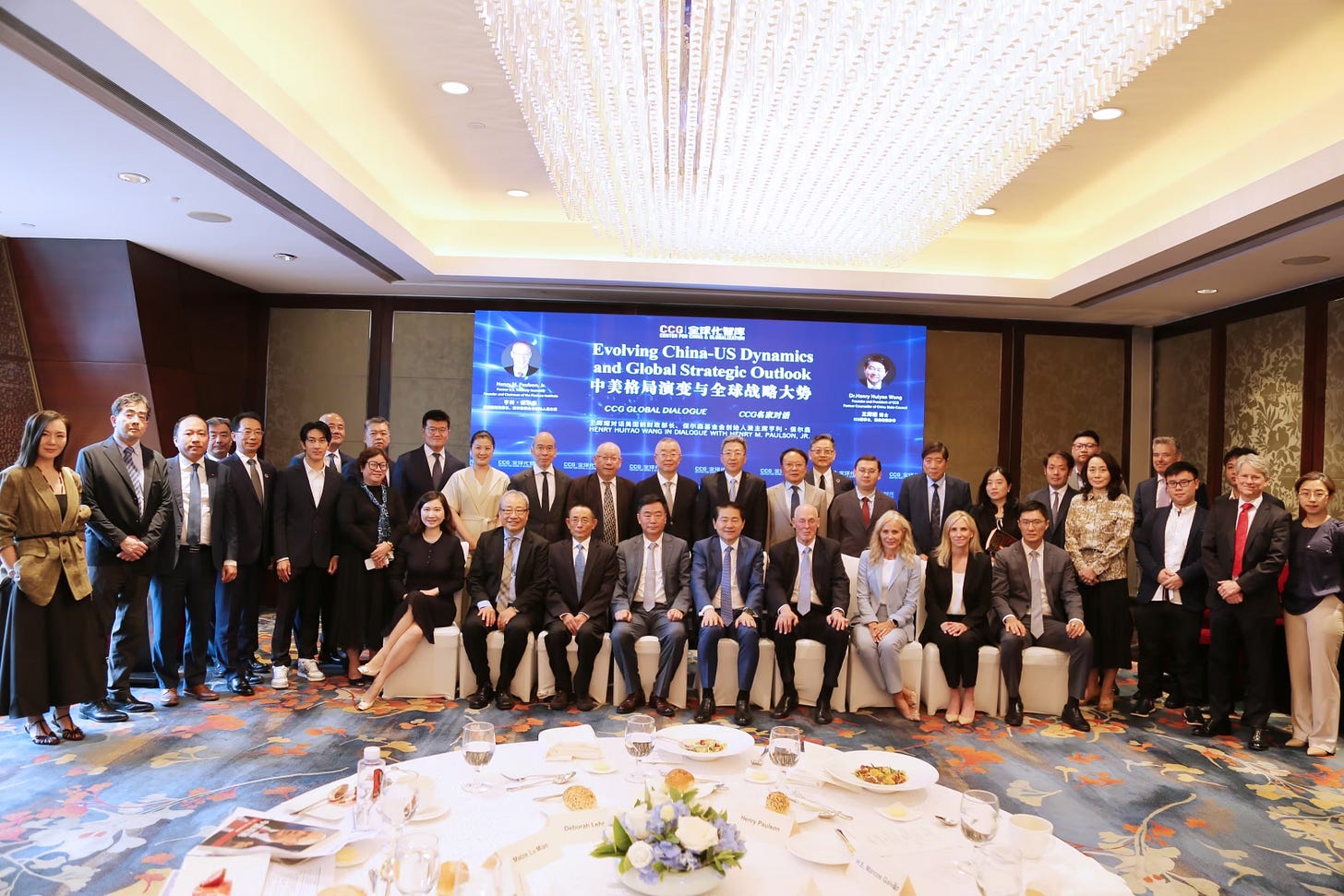
Functioning as a flagship international exchange platform, the CCG VIP Luncheon in June 2026 also served as a special edition of the CCG Global Dialogue, reinforcing its status as a premier venue that connects global political, business, and academic leaders. This platform facilitates pragmatic cooperation between China and the world, advancing multilateral engagement through sustained dialogue and partnership at the highest levels.
Multilateralism Under Pressure
European and Chinese leaders are doubling down on institutional cooperation and digital outreach to counter global headwinds, with new forums emphasizing inclusive expertise and direct engagement on conflict mediation.
By early 2026, China and Europe have intensified efforts to rebuild trust and reinforce multilateral cooperation amid a complex global governance landscape. The 22nd CCG VIP Luncheon in Beijing convened policymakers, diplomats, and business leaders who underscored the critical role of maintaining global institutions like the WTO to sustain the robust China-Europe trade relationship. Speakers advocated for pragmatic, collaborative approaches to navigate ongoing geopolitical and economic disruptions, emphasizing that such cooperation is essential to address shared challenges effectively.
The 12th China and Globalization Forum in May 2026 marked a pivotal moment for high-level dialogue on the future of China-Europe relations, with ambassadors from EU member states and scholars engaging in a panel titled 'Between Headwinds and Openings.' Moderated by Zichen Wang, Deputy Secretary General of CCG, the forum highlighted the necessity of inclusive and diverse expertise to shape strategic cooperation, reflecting broad institutional engagement and leveraging digital platforms like Chinese social media and YouTube to reach a global audience.
In June 2026, a German CDU/CSU delegation participating in the CCG-KAS Dialogue emphasized the indispensable role of dialogue and multilateralism in peacebuilding efforts concerning conflicts in Ukraine and the Middle East. Key figures such as Jens Spahn and Norbert Röttgen highlighted China's constructive role in promoting regional stability, while Henry Huiyao Wang called for direct China-Europe engagement in UN-based peace talks. This dialogue also spotlighted opportunities for Sino-European collaboration in conflict mediation and reconstruction, advocating for strategic communication and partnership to uphold multilateralism.
Alongside peace initiatives, the June 2026 dialogue underscored the strategic importance of deepening economic ties through joint ventures and technology sharing between German and Chinese firms. This approach aims to balance trade and foster closer China-Europe relations, reinforcing the broader framework of cooperation necessary to confront global geopolitical and economic challenges. Both Chinese and European speakers stressed that sustained collaboration across political and economic spheres is vital for addressing the multifaceted crises shaping the international order.
Guardrails for U.S.-China Rivalry
High-level dialogues led by figures like Henry Paulson are focused on preventing economic and military escalation, as both sides navigate regulatory minefields and the risks of an 'economic iron curtain.'
By mid-2026, Henry Paulson underscored the indispensable role of sustained high-level economic dialogue between China and the U.S. as a mechanism to carefully manage the risks of economic decoupling and uphold strategic stability. He emphasized that mutual recognition of each other’s great power status forms the bedrock for stable bilateral relations, enabling two-way investment and deeper communication while establishing guardrails to prevent military or economic conflict. Paulson’s reflections draw on his experience launching the Strategic Economic Dialogue as Treasury Secretary, advocating for clearer guidance to companies navigating investments across both markets to avoid the pitfalls of a dysfunctional 'economic iron curtain.'
The concept of 'constructive strategic stability' has gained traction among top leadership, with President Xi Jinping articulating this framework as a hopeful path to managing U.S.-China rivalry without escalation. This evolving consensus reflects a shared commitment to robust economic and security dialogues that maintain open communication channels, crucial for preventing missteps that could spiral into conflict. Paulson highlighted the necessity of having 'the right people talking to each other' to monitor domestic and global risks, reinforcing that strategic stability is not merely aspirational but a practical imperative amid intensifying geopolitical competition.
Despite geopolitical headwinds, American multinational corporations remain deeply embedded in the Chinese market, recognizing that disengagement carries significant risks to global leadership. Henry Huiyao Wang pointedly noted that global leaders who 'walk away from China do so at their own peril,' underscoring the importance of firsthand market understanding. In response to complex U.S. and Chinese regulatory landscapes, companies are recalibrating their strategies by building resilient supply chains to mitigate dependency on any single country and navigating the thorny dilemma of conflicting legal obligations, a challenge Paulson identified as central to corporate decision-making in this fraught environment.
Sustained engagement at the senior official level, exemplified by multiple meetings between Vice Premier He Lifeng, Minister Li Chenggang, and U.S. Treasury representatives, signals a continued commitment to dialogue despite broader geopolitical tensions. These frequent interactions—five or six meetings within a short span—demonstrate that both sides prioritize maintaining open channels to address trade and economic issues, reinforcing the foundational role of dialogue in preserving financial stability and fostering cooperation on shared global challenges such as AI governance and climate change.
Beijing's Business Ecosystem Reinvented
New digitized service platforms, youth alliances, and business environment reforms are positioning Beijing CBD as a global launchpad for outbound Chinese investment and multinational collaboration.
By mid-2026, Beijing has solidified its status as a global nexus for multinational cooperation through strategic platforms like the Overseas Comprehensive Service Platform and the Global Empowerment Center, which provide digitized, lifecycle support to outbound Chinese enterprises. The Beijing CBD's global appeal is underscored by its ranking as the sixth most attractive business district worldwide and its leadership in initiatives such as the Global Business District Youth Alliance, which fosters youth engagement and international cooperation in global business governance.
The 2026 Beijing CBD Forum Annual Conference exemplifies the city’s commitment to fostering global business expansion by convening diplomats, business leaders, and scholars to deliberate on cross-border investment, trade, and technological innovation. This forum highlights Beijing CBD’s dual role as a hub for multinational corporations and frontier research, with a particular focus on encouraging Chinese firms to expand overseas, notably into Southeast Asia and Belt and Road partner countries.
Aligned with China’s 15th Five-Year Plan, Beijing is actively enhancing its business environment through comprehensive reforms encapsulated in the 'Ten Major Actions for Optimizing the Business Environment.' These initiatives aim to improve government service efficiency, create a secure and dynamic business climate, and attract foreign investors and international talent, thereby advancing high-quality development and strengthening global trade connectivity.


Outbound Ambitions Go Global
The 13th China Inbound-Outbound Forum institutionalizes support for Chinese firms overseas, unveiling new resources and matchmaking platforms that supercharge cross-border partnerships and global market access.
The 13th China Inbound-Outbound Forum in Beijing emerges as a pivotal global business nexus by convening over 600 participants from embassies, commercial offices, and industry associations representing more than 50 countries across nine major global regions. This diverse assembly—including nations from Argentina to the United States and South Africa to South Korea—facilitates rich diplomatic and commercial engagement, fostering market access, cross-border investment, and supply-chain integration on an unprecedented scale.
Strategically designed to deepen international cooperation, the forum launches the Committee on Outbound Chinese Enterprises, a move that institutionalizes support for Chinese companies expanding overseas. Complementing this initiative, three authoritative lists spotlighting top Chinese outbound enterprises, service providers, and young business leaders are unveiled, providing critical resources that empower Chinese firms in navigating global markets and forging cross-border partnerships.
Structured around high-level dialogues and targeted matchmaking sessions, the forum’s agenda includes the Global Business Leaders Summit Dialogue, thematic sub-forums, and one-on-one VIP meetings that span sectors such as investment, legal compliance, healthcare, and overseas development. This comprehensive approach not only facilitates strategic partnerships but also enables direct engagement between entrepreneurs and diplomats, thereby accelerating practical business strategies and cross-border collaboration.