Billionaire donors ignite backlash in 2026 elections
The gist
Billionaire megadonors are flooding the 2026 elections with unprecedented cash, igniting a fierce backlash over elite control of democracy.
What to know
- Over $433 million has poured into the 2026 midterms so far, with nearly 80% backing Republican candidates and some billionaires giving up to $200 million each.
- Lobbyists and wealthy interests routinely outnumber civil society 23-to-1 in high-level meetings, cementing their influence through dark money, super PACs, and paid media.
- Voters are pushing back: Maine passed a 75% referendum to limit corporate spending, while California faces a high-stakes, $102 million billionaire-tax fight featuring Sergey Brin.
Legal Shifts Fuel Elite Surge
The collapse of old campaign finance laws turned billionaire donations from rare exceptions into explosive symbols of a system transformed by concentrated wealth.
October 2026’s spike in attention to elite capture landed because it was read against a long legal unwind of older campaign-finance restraints. “On March 27, 2002, the Bipartisan Campaign Reform Act (McCain–Feingold) took effect,” prohibiting “corporations and unions from using general treasury funds for express candidate advocacy” and restricting “national parties from raising or spending soft money”; before January 21, 2010, federal law likewise limited corporate treasury election spending and required political money to move through PAC structures, making today’s billionaire-centered interventions appear not routine but emblematic of a transformed system.
That transformed system became newly salient in October because high-profile donations were no longer abstract legal consequences but vivid symbols of concentrated influence. Grave Injustice argued that the post–Citizens United regime let the “ultra wealthy” throw their weight behind politicians and policies, and its example of Harlan Crow allegedly having “secretly bankrolled Thomas’s wife Ginni with a $500K donation” helped establish the interpretive frame through which later billionaire giving—including Reid Hoffman’s $500K contribution and the California billionaire-tax fight—drew sharper public and political scrutiny as signs of elite capture.
Money Converts to Political Muscle
A handful of billionaires now bankroll entire elections, translating vast fortunes directly into policy influence and relentless campaign dominance.
The scale of donor dominance is visible in how a tiny class can finance politics at levels ordinary citizens cannot approach. JoeWrote argues that “Private businesses exist to create profit” and that “When capitalists use their power, it is 100% for their own benefit,” while senators on All-In with Chamath, Jason, Sacks & Friedberg described a system where “billionaires can give 50 million, 100 million, 200 million” and one Senate contest reached $500 million, with “200 million on my side” and “300 million on the opposition side.” Ronald Lauder is likewise described as having “pumped tens of millions of dollars into Republican campaigns,” with records showing “more than $13 million in donations between 2020 and 2022 to Safe Together New York Inc., a Super
That money is not abstract: it buys persuasion, infrastructure, and repeated advantage, reinforcing a cycle in which wealth converts into political power. The same senators said “Collectively, $300 million were spent to destroy our reputations,” adding, “Think what $300 million could do for Pennsylvania,” while Americans for Tax Fairness found the 50 biggest-spending billionaire families funneled $344.3 million, about 79%, to Republican candidates and conservative groups; separate reporting found billionaires had already poured more than $433 million into the 2026 midterms, with nearly 80 cents of every dollar backing Republicans.




Access for Sale, Voices Lost
Lobbyists and the ultra-wealthy crowd out ordinary citizens in backroom meetings and donations, cementing control through dark money and opaque influence channels.
Political power is often bought first as access, then converted into agenda control. Fair Comment cites Spotlight on Corruption’s review of meetings, hospitality and secondments across six UK economic departments between January 2019 and September 2024, finding business and commercial stakeholders got meetings with decision-makers at a 23-to-1 ratio over civil society and consumer groups; the same work examined whether Treasury consultations from 2019 to 2024 were actually an effective route for participation, underscoring how formal public input can be crowded out by better-funded insiders and structural, media-driven forms of influence. That imbalance helps explain why polling finds 63% of people believe the very rich wield too much influence over UK politics, while ONS data show 69 per cent of people feel they have little or no say in what the government does.
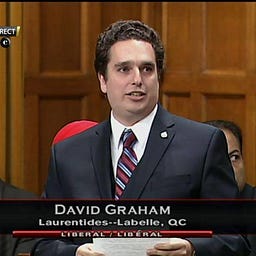
That access advantage reaches backward into candidate selection and forward into opaque spending: David Graham recounts nomination door-knocking where party membership cost $10, cash preferred, and some supporters handed over $100 bills to cover whole families for multi-year memberships while poorer voters could barely afford one year. Even where caps exist, the maximum Canadian donation in 2026 is $3,550, meaning a family of four can legally give about $28,000 over four years and recover up to $10,400 in tax refunds, while dark-money groups and super PACs let wealthy backers fund attack ads and preferred candidates without voters clearly seeing who paid. Oxfam research says billionaires are 4,000 times more likely to hold political office than ordinary citizens, and that since 2020 billionaire wealth has increased by 81%, reinforcing how concentrated wealth can translate into concentrated political voice.


Voter Revolt Hits California
Public anger at billionaire meddling has erupted into high-stakes ballot fights, forcing even powerful donors like Sergey Brin into the spotlight as symbols of elite overreach.
By mid-2026, resistance to big-money politics was no longer niche rhetoric but a visible voter mood that candidates had to answer. This Week in Tech described opposition to corporate political spending as “hugely popular among left and right,” pointed to Maine’s 2024 referendum that passed with 75% of the vote to limit corporate spending in politics, and said more candidates this cycle were refusing corporate contributions or super PAC money because voters were “pretty sickened” when elite spending became visible.
That backlash hardened into a live political fight in California, where Tyler Cowen on TBPN acknowledged “negative sentiment” toward billionaires while discussing the state’s billionaire-tax battle, and where the Los Angeles Times reported on August 14 that Sergey Brin had poured $102 million into Building a Better California to fund two ballot measures that could block the tax, including a latest $20 million donation. With labor, Democratic Party figures, and tax supporters denouncing those measures as a bid to “trick voters,” elite influence had plainly become an open controversy rather than a background condition.