Billionaires, big money, and barriers: U.S. soccer’s crossroads
The gist
As billionaire dollars flood U.S. Soccer and MLS, the sport’s future is caught between elite ambition, private equity profit, and the soaring costs that lock out the next generation.
What to know
- Billionaire Ken Griffin’s $8M philanthropy secured top coach Mauricio Pochettino through 2030 and built 100 mini-pitches, boosting both Team USA and grassroots access.
- Private equity deals in U.S. pro sports exploded to 71 transactions worth $18.45B by 2025, but MLS caps institutional ownership at 30% and faces tough economic realities.
- With youth soccer costing up to $15,000 a year and MLS player salaries lagging far behind Europe, the American game’s boom risks leaving future stars—and fans—on the sidelines.
Billionaires Shape Soccer’s Future
Ken Griffin’s philanthropy is reshaping U.S. soccer from the top down, blending record-breaking coaching hires with targeted investments that open the game to tens of thousands of underserved youth.
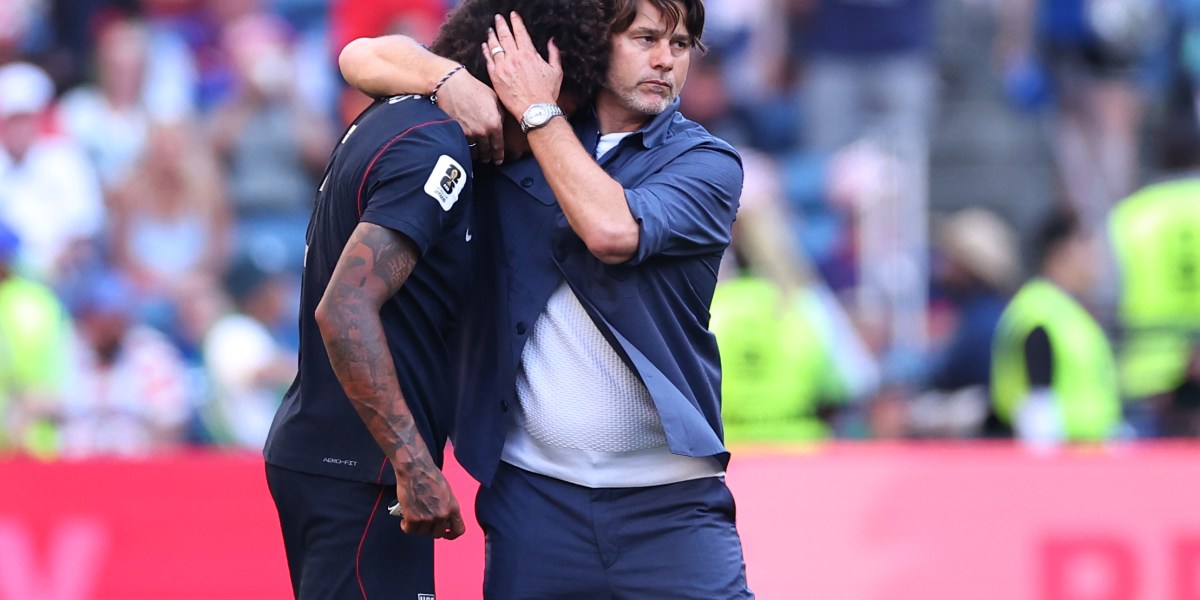
Billionaire Ken Griffin has emerged as a transformative figure in U.S. Soccer by leveraging his financial resources and personal commitment to elevate the sport’s competitive and grassroots landscape. His philanthropic leadership gift was instrumental in securing Mauricio Pochettino as the highest-paid coach in U.S. Soccer history, with a contract extending through 2030, a move that catalyzed Team USA’s best World Cup performance in 24 years. Beyond elite competition, Griffin’s targeted donations—such as $3 million for 50 mini-pitches in Chicago and $5 million for another 50 in Miami-Dade County—have expanded youth soccer access for over 100,000 children, illustrating his dual focus on immediate success and sustainable growth.
The strategic leadership of U.S. Soccer and MLS increasingly reflects the influence of billionaire investors and private equity veterans who bring business acumen to the sport’s governance. Larry Berg, appointed MLS commissioner and a former senior partner at Apollo Global Management, exemplifies this trend by applying private equity principles like urgency and alignment to manage a complex ownership structure of 30 stakeholders. However, as Bennett Rosenthal highlights, the unique constraints of sports ownership—such as private equity’s capped 30% ownership without governance rights—require a nuanced approach that balances capital infusion with collaborative consensus-building, underscoring the evolving sophistication of U.S. Soccer’s executive leadership.

Private Equity’s MLS Power Play
Institutional investors and private equity firms are redefining MLS ownership, injecting billions but facing structural limits that force a delicate balance between financial ambition and league control.
Since 2014, institutional investment in professional sports, including MLS, has surged dramatically, transforming teams from mere trophies into high-value financial assets with exponential growth potential. By 2025, private equity deals in sports ballooned to 71 transactions valued at $18.45 billion, fueled by the multi-billion dollar media rights and lucrative real estate developments tied to teams. This evolution has shifted the economics of sports ownership, where finance-savvy leadership is essential to navigate luxury taxes, salary caps, and to maximize profitability and expansion opportunities.
The entry of private equity and institutional investors into MLS ownership has been shaped by broader structural changes in league governance across major U.S. sports, with MLB opening the door in 2019, followed by the NBA and NHL in 2021, and the NFL in 2024. This shift from wealthy individual owners to institutional capital has reshaped governance and commercial strategies, although MLS presents unique challenges: investors like Bennett Rosenthal highlight that private equity firms are capped at 30% ownership with no governance rights, requiring a delicate balance between business acumen and league-specific ownership restrictions.
By early 2026, MLS leadership increasingly reflects private equity expertise, exemplified by commissioner Larry Berg, co-owner of LAFC, who emphasizes a hands-on, urgency-driven approach rooted in his finance background. Berg describes his role as a complex governance challenge, managing 30 diverse owners and aligning them toward common goals, underscoring the importance of unifying a multifaceted ownership group to drive league expansion and profitability amid evolving commercial landscapes.
The strong financial performance of major sports leagues, which have outpaced the S&P 500 since 2014, has incentivized further private equity involvement in MLS and similar leagues. This robust return profile, combined with the structural and governance adaptations, positions MLS as a compelling investment vehicle where institutional capital is not only reshaping ownership but also accelerating the league’s commercial ambitions and long-term growth trajectory.
World Cup Hype Meets Economic Limits
Soaring World Cup attendance and star power mask deep financial gaps, as MLS struggles to convert fleeting fan enthusiasm into sustainable growth amid lagging salaries and investor doubts.
While the 2026 World Cup ignited unprecedented enthusiasm for soccer in the U.S., exemplified by Seattle’s Lumen Field drawing a sellout crowd of(https://podcasts.apple.com/podcast/id1660983645)—more than double the Seattle Sounders’ average MLS attendance of 31,000—this surge highlights a stark economic reality. As Steve Pavuka points out, U.S. soccer’s financial structure lags significantly behind European leagues, with player salaries in the UK and Italy often five to six times higher, underscoring the challenge MLS faces in retaining top talent and sustaining fan interest beyond marquee events.
Despite the World Cup’s spotlight and the allure of stars like Lionel Messi, investor skepticism remains palpable regarding MLS’s long-term revenue growth and market stability. Fox announcer John Strong’s call to 'support your local team' after the U.S. men’s national team’s elimination reflects MLS’s strategic hope to convert transient World Cup excitement into consistent fan engagement, yet economic doubts persist about whether this momentum can be maintained without fundamental structural changes.


Youth Soccer’s Costly Divide
Skyrocketing youth soccer fees and entrenched pay-to-play models are locking out talented kids from less affluent families, stunting the U.S. talent pipeline despite grassroots expansion efforts.
The escalating costs of youth soccer in the U.S. have become a formidable barrier that sidelines many talented players from less-resourced families, undermining the nation’s ability to cultivate future stars. Legendary U.S. soccer figure Landon Donovan highlighted this disparity, recalling how his single mother earning $34,000 annually could never have afforded the $4,000 club fees now common, let alone the $15,000 annual expenses for travel leagues that include year-round coaching and extensive travel. This financial gatekeeping starkly contrasts with international models where young talents often earn money playing, rather than incurring prohibitive costs, leaving the U.S. youth development pipeline both exclusionary and ineffective.
While casual soccer remains affordable and accessible across the U.S., it fails to provide the competitive environment and structured training necessary to develop elite players, exposing a systemic flaw in the talent pipeline. Despite recurring calls every World Cup cycle to strengthen youth programs, meaningful reform remains elusive, with experts like Tom Farrey of the Aspen Institute critiquing the system as one primarily designed to generate revenue for adults rather than nurture young talent. This entrenched prioritization of profit over player development perpetuates a cycle where access is limited and the nation’s soccer potential remains stunted.
Structural and financial forces have compounded the accessibility crisis in U.S. youth soccer, with legislation like the Amateur Sports Act of 1978 restricting government funding for Olympic sports, thereby limiting public subsidies that could alleviate costs for families. Meanwhile, the influx of private equity investment—exemplified by EQT’s $1.25 billion acquisition of IMG Academy—has commercialized youth sports, driving prices upward and further pricing out lower-income participants. This convergence of policy and market dynamics entrenches high costs and systemic exclusion, challenging the nation’s ability to democratize soccer development.

MLS: Community Over Ratings
With packed stadiums and local fan loyalty, MLS thrives on community engagement and franchise value—even as it battles for attention against global soccer giants and navigates the challenges of paywalled broadcasts.
MLS occupies a distinctive niche in the crowded U.S. sports market, contending not only with entrenched American leagues like the NFL and NBA but also with elite international football competitions such as the Premier League and the Champions League, which boast superior sporting quality and global star power. Despite these formidable rivals, MLS leverages a community-centric business model that emphasizes local fan loyalty and in-stadium experiences, exemplified by Seattle supporters who attend matches not just for top-tier play but to connect with their city and share memorable moments with family. This approach has driven impressive attendance figures, with over 22,000 spectators per game and roughly 12 million attendees each season, underscoring the league's unique value proposition amid global competition.
While media partnerships like the Apple TV deal have introduced paywalls that some blame for sluggish audience growth, the limited competition for MLS broadcasting rights—evidenced by Apple paying approximately $250 million annually as virtually the sole bidder—reflects the league’s current market standing. This scenario highlights MLS’s economic model, which mirrors closed American leagues by prioritizing franchise value appreciation and local market engagement over maximizing national television ratings. The league’s structure, with fixed franchises, no relegation, and consistently filled stadiums, ensures that each expansion team enhances the overall ecosystem’s worth, demonstrating that MLS’s financial growth is not solely tethered to broadcast viewership.

Franchises: Status, Strategy, and Scarcity
Owning a sports team has become an exclusive financial and cultural prize, with tax breaks, asset appreciation, and fierce competition driving franchise values to new heights and attracting institutional capital.
By mid-2026, sports franchise ownership has crystallized into an elite financial and cultural phenomenon, offering wealthy individuals entry into a highly exclusive club that combines prestige with unique business opportunities. As David Silverman highlights, owners benefit from significant tax advantages by amortizing media rights and depreciating assets like player contracts and stadiums, which help offset rising franchise valuations. This exclusivity is further intensified by the scarcity of marquee teams, driving competitive bidding that often pushes prices beyond traditional discounted cash flow valuations, underscoring the symbolic and strategic value owners place on these assets.
The transformation of sports teams from mere trophies into trillion-dollar investment targets has attracted a surge of institutional capital and private equity interest. Between 2014 and 2025, private equity deals in professional sports skyrocketed from 13 deals worth $1.9 billion to 71 deals totaling $18.45 billion, reflecting the sector’s growing financial appeal. This influx has been facilitated by evolving league ownership rules—starting with MLB in 2019 and followed by the NBA, NHL, and NFL—allowing institutional investors to participate and thus expanding the financial incentives and tax benefits available to owners.
The economics underpinning sports franchise ownership have matured into a sophisticated business model driven by lucrative long-term media rights and valuable real estate holdings. Teams have evolved from passion projects subsidized by owners into strategic investments that deliver strong financial returns, with leagues like the NBA, NFL, NHL, and MLB outperforming the S&P 500 since 2014. This shift is exemplified by innovative ownership structures such as Apollo Global Management’s partnership with the Steinbrenner family, which combines debt and equity financing to provide generational liquidity without sacrificing control, blending business growth with legacy preservation.