Bitcoin Treasury model unravels as firms pivot to AI
The gist
Corporate Bitcoin treasuries are unraveling as public companies dump BTC to pay debts and chase AI-fueled growth instead.
What to know
- Satsuma, Bitdeer, and MARA Holdings have sold off massive Bitcoin holdings—MARA alone offloaded over 15,000 BTC—ditching the digital asset treasury playbook.
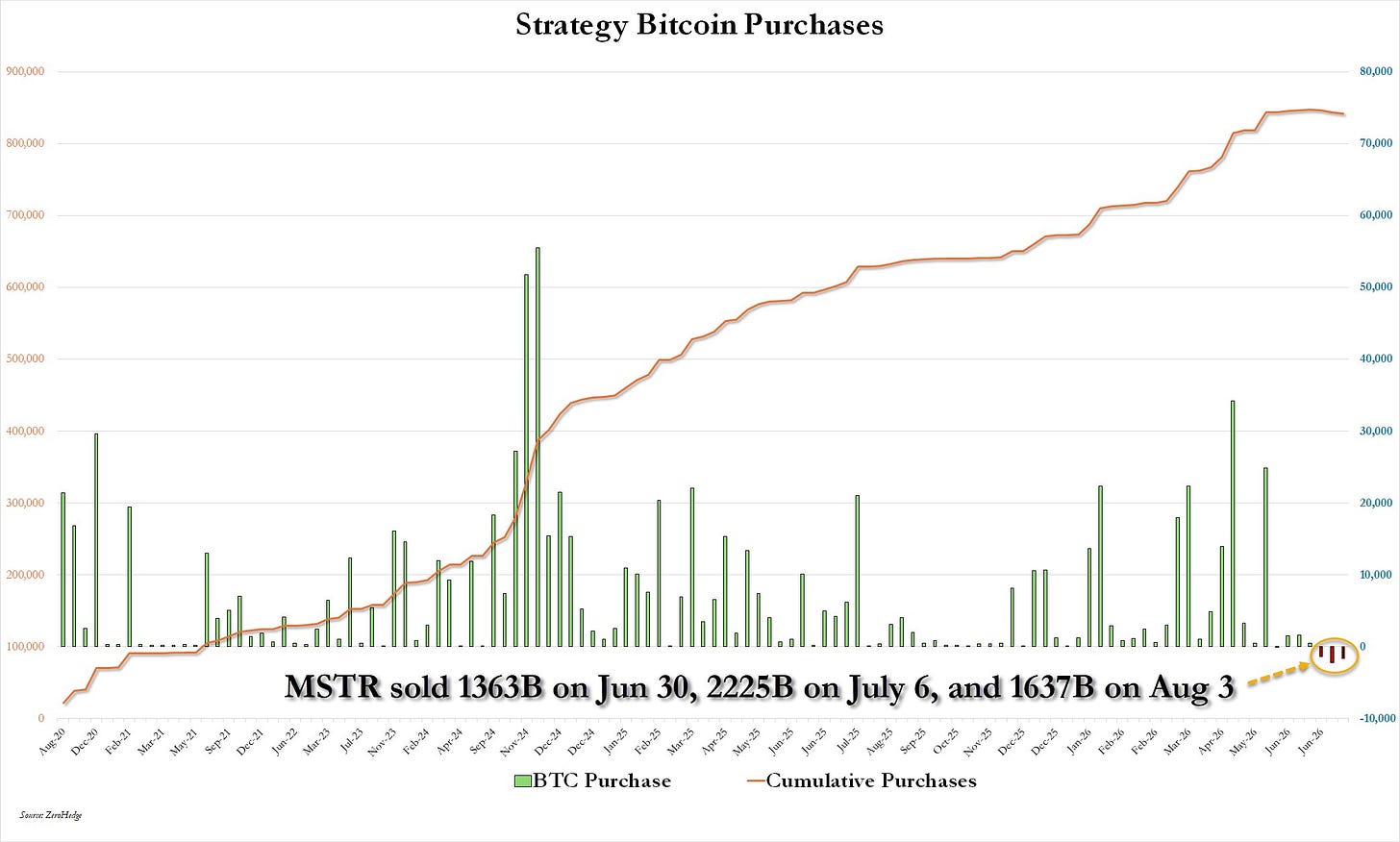
- Michael Saylor’s Strategy Inc. pivoted from HODL to a $1.25 billion Bitcoin Monetization Program, selling 3,600+ BTC to boost liquidity and fund dividends.
- Investors are rewarding firms with diversified AI revenue streams like Riot Platforms (+73% stock in 2026), while pure Bitcoin holders are getting hammered with up to 48% declines.
Treasury Models Get Overhauled
Major Bitcoin-holding companies are abandoning the HODL playbook, liquidating assets and restructuring strategies as market realities force a shift from ideological accumulation to flexible financial survival.
Amid the prolonged Bitcoin bear market, major publicly traded companies like Satsuma Technology, Bitdeer, and MARA Holdings have decisively shifted away from the once-celebrated Bitcoin treasury model, opting for full liquidation or strategic sell-offs to address pressing liquidity needs, debt obligations, and evolving business priorities. Satsuma notably liquidated all 668 BTC and delisted from the London Stock Exchange, while Bitdeer sold its entire Bitcoin treasury to fund AI data center expansion, and MARA expanded its treasury policy to permit Bitcoin sales, offloading over 15,000 BTC to reduce debt. This pivot underscores a broader trend where companies are recalibrating treasury management from aggressive accumulation to flexible asset liquidation in response to market realities and operational demands.
Michael Saylor’s iconic 'buy-and-hold' Bitcoin strategy has undergone a pragmatic transformation, now serving as a blueprint for monetization rather than mere accumulation. Strategy, the largest corporate Bitcoin holder, recently sold over 3,600 BTC and launched a $1.25 billion Bitcoin Monetization Program, with Saylor candidly stating, 'I never said the company wouldn’t sell its Bitcoin.' This evolution reflects a significant institutional recalibration, where liquidity generation and debt management have taken precedence over ideological holding, signaling a maturation of corporate Bitcoin treasury strategies.
The collapse or exit of numerous Bitcoin Treasury companies reveals the vulnerability of business models overly reliant on Bitcoin price appreciation without sophisticated financial engineering or diversified revenue streams. Firms like 21 Bitcoin Treasury and Bitmex Exchange have shuttered or restructured, while leadership changes—such as Jack Mallers stepping down from Twenty One Capital—highlight the existential challenges of sustaining value solely through BTC exposure. As one analyst noted, 'Bitcoin Treasury companies are not necessarily known for buying Bitcoin. They're known for having access to capital markets,' emphasizing that survival now hinges on robust financial strategies beyond mere Bitcoin holdings.
Despite widespread sell-offs, corporate Bitcoin holdings remain substantial, with listed companies collectively holding approximately 1.14 million BTC valued at $74.16 billion, representing 5.7% of Bitcoin’s circulating market cap. However, the market is witnessing a clear rotation as companies like Satsuma, Smarter Web, and KULR actively sell Bitcoin to repay debt or repurchase shares, often redirecting capital towards AI and other growth sectors. This strategic pivot reflects shifting investor psychology and operational survival criteria, where generating operating revenue and managing liabilities effectively have become paramount amid cooling enthusiasm for Bitcoin as a core treasury asset.


Liquidity Trumps HODLing
Firms like Strategy Inc. are monetizing Bitcoin reserves and engineering complex capital structures to meet debt and dividend obligations, signaling a new era where BTC is a working asset, not a sacred stash.
Amid heightened market volatility and looming debt maturities, public companies like Strategy Inc. and MARA Holdings are recalibrating their treasury strategies by partially liquidating Bitcoin holdings to shore up liquidity and stabilize balance sheets. This shift from aggressive accumulation to sophisticated liquidity management reflects a pragmatic response to convertible notes, preferred shares, and credit facilities that impose strict redemption timelines, compelling firms to monetize assets to meet operational and debt obligations without fully abandoning their long-term Bitcoin thesis.
Strategy Inc. exemplifies the evolution of treasury management by leveraging a blend of zero-coupon convertible notes, ATM equity issuance, and perpetual preferred shares with an 11.5% dividend to fund Bitcoin purchases while mitigating balance sheet risks. Despite its aggressive digital asset stance, the company’s steady cash flow from its AI-driven analytics software business underpins this financial engineering, enabling a 'virtuous cycle' of borrowing at low interest to invest in Bitcoin, while balancing shareholder dilution and dividend burdens as described by Michael Saylor.
In a marked departure from its prior 'never sell' policy, Strategy Inc. has actively sold thousands of Bitcoins—raising over $200 million—to fund preferred stock dividends and bolster cash reserves, which now exceed $3.75 billion. This deliberate pause in Bitcoin accumulation, coupled with an authorized Bitcoin Monetization Program allowing up to $1.25 billion in sales, signals a strategic pivot to treat Bitcoin as a working treasury asset rather than an untouchable monument, ensuring operational stability through more than 20 months of preferred dividend coverage and enhanced financial flexibility.
The broader lesson emerging from Strategy Inc.’s approach is the critical importance of maintaining liquid U.S. dollars and capital market access to survive prolonged downturns, as reliance on continuous capital raises and Bitcoin price appreciation proves unsustainable. By increasing cash reserves to $4 billion, repurchasing preferred stock at a discount, and pausing Bitcoin purchases amid a nearly 30% market decline, Strategy highlights a maturing treasury philosophy that prioritizes liquidity and operational survival over indefinite accumulation, a shift echoed across treasury-focused firms facing similar pressures.


AI Outshines Bitcoin Holdings
Investors are punishing companies clinging to pure Bitcoin treasuries while rewarding those pivoting to AI, as market sentiment shifts toward diversified, revenue-generating business models amid crypto volatility.
Investor psychology has decisively shifted away from companies that merely hold Bitcoin as a treasury asset toward those integrating Bitcoin mining with AI infrastructure, reflecting a preference for diversified operational models. By early 2026, firms like Riot Platforms, which combined Bitcoin mining with AI ventures, saw their stock surge 73% year-to-date, while pure Bitcoin treasury holders such as Twenty One Capital and Strategy experienced declines of 47.9% and 40% respectively, despite growing BTC reserves. This divergence underscores how market participants now reward multi-revenue stream companies over those reliant on issuing new shares or debt to accumulate Bitcoin.
The ongoing capital rotation from Bitcoin treasury holdings to AI-related business lines highlights evolving operational survival criteria amid prolonged Bitcoin price weakness. Many publicly traded miners have repurposed their existing power and data center infrastructure—originally built for proof-of-work mining—toward AI workloads, creating a second revenue stream that investors increasingly favor. However, the market often views these pivots skeptically, interpreting them as desperation moves rather than strategic opportunities, even as companies liquidate Bitcoin holdings to fund AI infrastructure development.
Market psychology around Bitcoin is currently dominated by volatility-induced bearish sentiment, driving strategic sell-offs by leveraged companies and undermining the previously assumed corporate price floor for Bitcoin. As firms become net sellers during downturns, the notion that corporate accumulation stabilizes Bitcoin prices no longer holds, contributing to significant stock price declines for treasury-heavy companies. Meanwhile, capital flows are increasingly event-driven, with institutional investors reallocating from Bitcoin to AI and memory stocks ahead of quarter-end reporting, chasing momentum rather than conviction.
This capital rotation reflects a broader cyclical investor psychology where money chases the hottest sectors, currently favoring AI over Bitcoin, but with expectations that Bitcoin will regain favor as AI momentum stabilizes or fades. The bear market has weeded out short-term traders from Bitcoin, leaving mainly long-term holders and contrarian buyers who sustain the asset through periods of capitulation and low selling pressure. As one analyst noted, 'people that are buying Micron up 1,000%... they're going to be buying Bitcoin again,' illustrating the fluid nature of capital flows driven by shifting operational survival criteria and market sentiment.
