Blanche’s DOJ nomination teeters as GOP support crumbles
The gist
Todd Blanche’s shot at Attorney General is crumbling as GOP support evaporates and accusations of politicizing the DOJ reach a fever pitch.
What to know
- Blanche’s confirmation depends on unanimous Republican support in the Senate Judiciary Committee, with key holdouts like Tom Tillis demanding direct answers on hot-button cases like Epstein.
- Over 1,000 former DOJ officials and nearly all his former SDNY colleagues now openly oppose Blanche, citing ethical breaches and partisan loyalty.
- Blanche’s tenure has seen a purge of 16,000 DOJ staffers and the installation of Trump loyalists, turning the DOJ into a political weapon and sparking bipartisan fears of Nixon-era politicization.
GOP Leverage and Ultimatums
Senate Republicans are using Blanch’s precarious nomination to extract concessions and send a warning shot to the Trump administration about acceptable DOJ leadership.
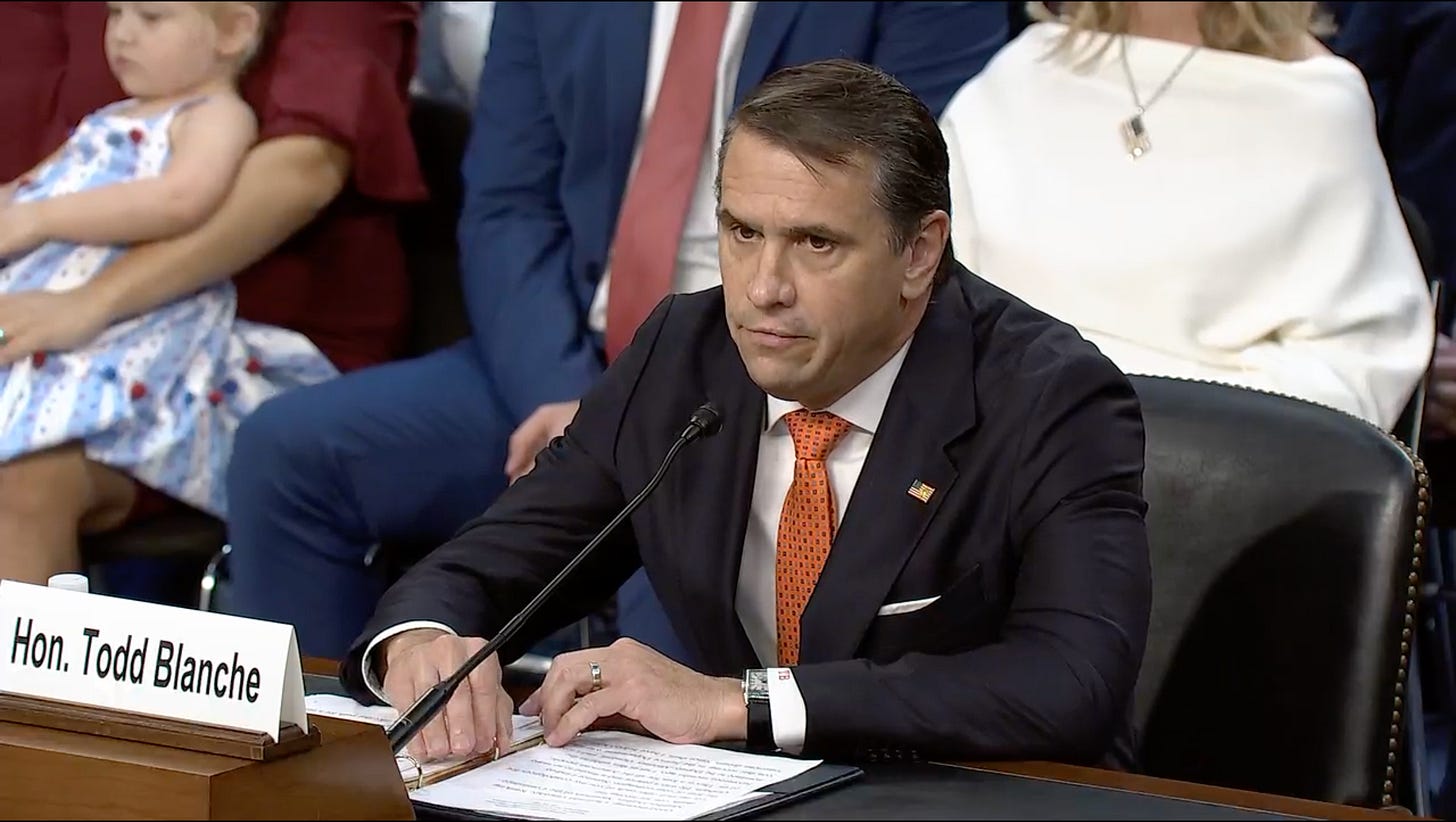
Todd Blanch's confirmation hinges precariously on securing unanimous Republican support within the Senate Judiciary Committee, a threshold underscored by Amy Powell of Lawyers for Good Government who emphasized that 'Blanch needs every Republican senator to vote for him to get his confirmation out of the judiciary committee.' This unanimity is crucial as the committee serves not only as a gatekeeper but also as a political signal to the Trump administration about the boundaries of acceptable nominees, with some senators advocating for a firm stance that could prompt the administration to reconsider Blanch in favor of a more credible DOJ representative.
Complicating Blanch's path, Senator Tom Tillis has issued a pointed ultimatum demanding that Blanch engage directly on sensitive issues, notably insisting he 'Meet with the Epstein,' signaling that conditional support from key Republicans is tethered to Blanch addressing contentious matters transparently. This demand exemplifies the broader political maneuvering within the committee, where individual senators leverage their votes to extract commitments or clarifications that could sway the overall GOP bloc's cohesion.
Even if the Senate Judiciary Committee ultimately blocks Blanch's confirmation, the administration retains the option to keep him as acting Attorney General, a strategic loophole that diminishes the Senate's leverage over DOJ leadership. This scenario, highlighted in recent analyses, suggests that the committee's influence may be more symbolic than practical, as the administration could sidestep confirmation hurdles by maintaining Blanch in an acting capacity, thereby complicating efforts to enforce accountability or signal disapproval through the confirmation process.

Committee Power Plays
Key GOP senators are turning Blanch’s confirmation into a transactional battleground, wielding their votes to demand transparency on scandals like Epstein before backing his nomination.
Todd Blanch's path to confirmation hinges precariously on securing unanimous Republican support within the Senate Judiciary Committee, a feat complicated by the wavering stances of key GOP senators. Amy Powell emphasized the gravity of this dynamic, stating, 'Blanch needs every Republican senator to vote for him to get his confirmation out of the judiciary committee.' This unanimity is far from guaranteed as influential figures like Senator Tom Tillis have introduced conditions that could sway their vote, signaling a more transactional and scrutinizing approach to Blanch's nomination.
Senator Tom Tillis’s ultimatum to Blanch—specifically demanding a meeting regarding the Epstein case—illustrates the heightened scrutiny and political leverage individual Republican senators now wield in the confirmation process. This move not only underscores Tillis's pivotal role but also reflects a broader shift within the GOP caucus towards demanding greater accountability and transparency from Blanch, complicating his efforts to consolidate the necessary Republican votes.
Legal Community Backlash
Blanch’s support among former DOJ colleagues has collapsed amid allegations of malpractice, partisan loyalty, and a climate of intimidation that silences dissent.
Todd Blanche’s once-solid backing from his former SDNY colleagues has dramatically unraveled; the 116 lawyers who endorsed him during his deputy AG nomination have largely retreated, with only two willing to publicly support him now. This stark reversal reflects deep concerns over his alleged malpractice, including claims of overbilling and document forgery from former clients, which Blanche denies, further tarnishing his professional reputation within the legal community.
More than 1,000 former DOJ officials, united under the Justice Connection, have vocally opposed Blanche’s confirmation, condemning his failure to uphold the constitutional oath that binds all DOJ personnel. This collective denunciation underscores a profound crisis of confidence, as alumni like Mimi Rocah and Perry Carbone express shock and disgust at Blanche’s transformation into a partisan figure defending controversial policies aligned with the Trump administration, thereby jeopardizing the DOJ’s institutional integrity.
The erosion of support is compounded by a chilling atmosphere within the DOJ community, where fear of retribution silences many former colleagues from speaking out, signaling the nomination’s intimidating effect. Moreover, Blanche’s tenure is marred by controversies such as the mishandling of Epstein files, the $1.8 billion DOJ slush fund he privately called “a mistake,” and the exodus of 16,000 DOJ employees—including a quarter of its attorneys—fueling widespread doubts about his leadership and ethical compass.
Blanche’s credibility crisis is further deepened by his conflation of his role as Attorney General with that of a personal lawyer for Trump, a misstep that recalls the infamous politicization of the DOJ under Nixon’s John Mitchell. His candid admission during Senate hearings—“I’m his lawyer”—before backtracking, crystallizes fears that he prioritizes loyalty to Trump over constitutional duty, echoing Mitchell’s downfall and reinforcing the erosion of trust among DOJ alumni and former SDNY colleagues.
DOJ Loyalty Purge Exposed
Blanch has transformed the DOJ into a Trump-aligned political weapon, purging thousands of career prosecutors and embedding loyalists while blurring the line between law enforcement and personal legal defense.
Todd Blanche’s tenure as Acting Attorney General has been marked by a profound erosion of DOJ independence, as he has effectively transformed the department into a political instrument serving Donald Trump’s personal interests rather than the nation’s law enforcement needs. His dual role as both Trump’s personal attorney—working an estimated 70 hours per week on Trump-related matters—and DOJ official raises serious conflicts of interest, with allegations that his DOJ appointment was part of a quid pro quo arrangement tied to millions in unpaid legal fees. This blurring of lines undermines public trust and the DOJ’s credibility, as Blanche openly acknowledged the DOJ is not independent under his leadership, a stark departure from historical norms.
Blanche’s credibility has been further compromised by evasive and contradictory statements regarding his billing and relationship with Trump, including a notable Freudian slip declaring, “I’m his lawyer,” before attempting to retract it, which exposed his lingering personal loyalty amid Senate scrutiny. His denial of authority to release the Jeffrey Epstein files—contradicted by U.S. District Judge Richard Berman’s ruling that the government should disclose them—alongside his willingness to entertain politically motivated investigations of former special counsel Jack Smith based on debunked claims, highlight a troubling pattern of obfuscation and politicization that threatens DOJ’s integrity.
Under Blanche’s leadership, the DOJ has undergone a sweeping purge of approximately 16,000 career prosecutors—about a quarter of the federal prosecutorial workforce—signaling a deliberate politicization of the department’s ranks to align with Trump’s agenda. This purge, coupled with the embedding of former Trump defense team members like Emil Bove and Stephen Weiss into key DOJ leadership roles, effectively recreates Trump’s private legal defense within the nation’s top law enforcement agency. Such actions not only weaponize the DOJ to shield Trump and punish his adversaries but also expose Blanche to potential disbarment and criminal prosecution once political protections wane.
Blanche’s trajectory draws chilling parallels to Nixon’s Attorney General John Mitchell, who similarly blurred the lines between personal loyalty to the president and the DOJ’s impartial mandate, ultimately resulting in criminal convictions and loss of legal standing. This historical comparison underscores the risks Blanche poses to the DOJ’s independence and public trust, as his overt prioritization of political loyalty over justice threatens to replicate a dark chapter in American legal history.