Burnham’s ‘manchesterism’ debut splits public and labour ranks
The gist
Andy Burnham’s bold 'Manchesterism' pitch to decentralize power and end homelessness has split both the public and Labour ranks, raising as many eyebrows as hopes.
What to know
- Burnham kicked off his premiership by pledging to relocate part of Downing Street to Manchester and end homelessness within six months through massive council housing projects.
- His leadership style blends northern relatability with Blair-esque media polish, but critics slam him for ideological fog and policies lacking clear funding.
- Public opinion is fiercely divided—29% positive, 29% negative—and Labour faces a daunting -22 net favourability as voters worry about healthcare, inflation, and immigration.
Manchesterism: Power Shift North
Burnham’s symbolic relocation of Downing Street and sweeping housing ambitions signal a radical push to decentralize British politics and address regional inequality through bold, region-first policies.
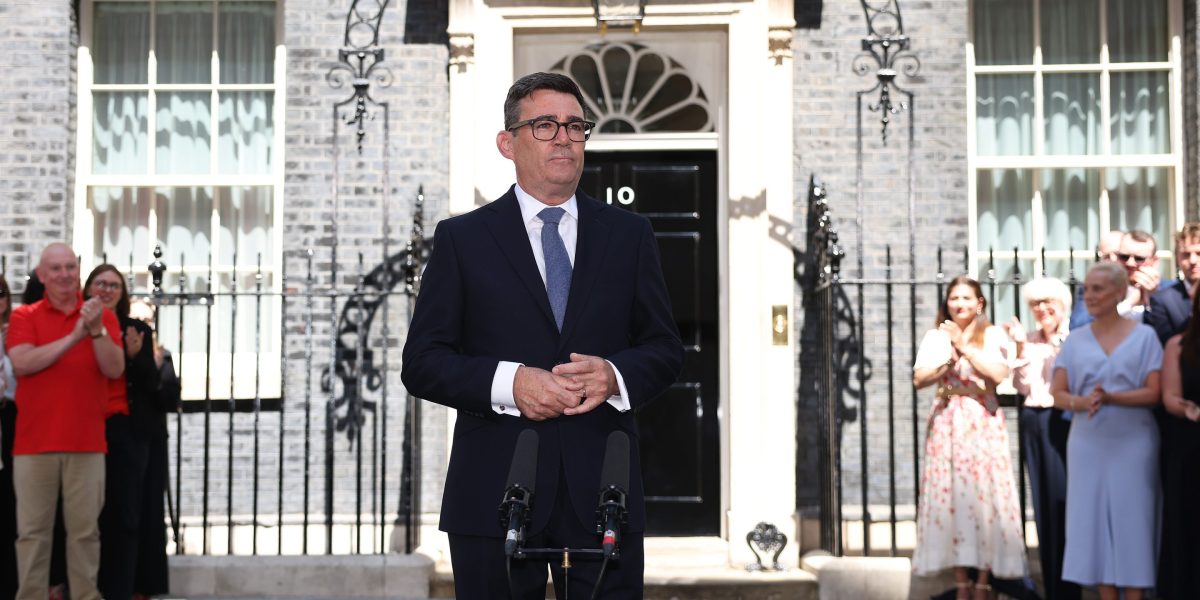
Andy Burnham’s early premiership is marked by a deliberate symbolic break from traditional leadership norms, exemplified by his inaugural speech delivered outside 10 Downing Street and his plan to relocate part of Downing Street to Manchester. This gesture underscores his commitment to decentralizing power from London to the regions, particularly championing Manchester as a new political and economic hub—a concept he terms 'Manchesterism.' As Burnham declared, 'It is time for Whitehall to accept that growth cannot be ordered from the top down,' signaling a leadership style focused on empowering local authorities and devolving governance.
Central to Burnham’s initial policy agenda is a bold and ambitious pledge to end homelessness within six months, primarily through a large-scale rebuilding of council housing reminiscent of post-World War II efforts. This housing initiative not only aims to provide shelter for the unhoused but also to increase overall housing supply, thereby driving down costs and challenging divisive narratives that blame immigrants for shortages. Burnham’s approach reflects a broader commitment to addressing entrenched social inequalities, particularly in left-behind regions that suffered from inadequate support during the pandemic lockdowns.
Infrastructure investment forms a cornerstone of Burnham’s early agenda, with a strong emphasis on regional transport connectivity that draws on his experience as Greater Manchester mayor. Proposals such as building an underground rail network for Manchester and reinstating the northern leg of HS2 highlight his strategy to stimulate economic growth through improved mobility. Complementing this is his advocacy for greater public control over essential services like energy, favoring models of municipalisation or public equity stakes over outright nationalisation, which aligns with his broader goal of making life more affordable and empowering local governance.
Burnham’s leadership transition also carries a political dimension aimed at countering right-wing populism, notably positioning himself against figures like Nigel Farage and his Reform UK party. By framing his administration as a corrective to decades of misguided policies since the 1980s, Burnham sets a tone of renewal and reform. His early speeches acknowledge past governmental shortcomings while laying out a vision for reindustrialisation, welfare reform, and fostering a new sense of national unity, thereby signaling a substantive shift in both policy direction and political ethos.




A Persona Built for Turbulence
Burnham’s blend of northern relatability, Blair-style polish, and non-factional leadership unites Labour’s warring tribes but leaves critics questioning the substance behind his carefully crafted image.
Andy Burnham’s leadership style is marked by a personable, media-savvy approach that contrasts sharply with Keir Starmer’s more reserved and ideologically opaque persona. Burnham’s comfort on camera and his relatable northern identity—despite his Cambridge and Westminster background—allow him to connect authentically with a public craving political stability and genuineness after years of turmoil. This cultivated image, blending a ‘man of the people’ ethos with establishment credentials, is further amplified by his ‘Manchesterism’ narrative, which attempts to reconcile private-sector growth with soft-left Labour values, though this duality sometimes creates ambiguity in his political messaging.
Burnham’s communication strategy, heavily influenced by Tony Blair’s confident and approachable style, employs a blend of wit and seriousness to engage diverse audiences while avoiding the pitfalls of appearing either overly negative like Starmer or excessively optimistic like Boris Johnson. His trademark rolled-up sleeves and casual attire symbolize a ‘roll up the sleeves’ ethos, and moments like his witty swearing-in retort—‘no, he’s just a very naughty boy’—demonstrate his ability to use humor strategically without sacrificing credibility. However, this polished communication must be matched by substantive policy to avoid being perceived as mere ‘lipstick on the Labour Party pig,’ as critics note the thinness of his policy proposals despite his hopeful rhetoric.
While Burnham’s non-factional, inclusive leadership style has helped him unify disparate Labour factions—from Blairites to Corbynites—this ideological malleability also fuels skepticism about the coherence and seriousness of his political vision. Observers warn that his emphasis on party appeasement and optimistic messaging risks glossing over deep ideological divides and governance challenges, with some critics highlighting the consistently weak quality of ideas attributed to him. For Burnham to succeed beyond symbolic leadership, he must demonstrate a clear governing ideology and substantive policy direction that can guide decision-making amid Britain’s complex political landscape.
Burnham’s evolving political persona reflects a strategic adaptability that balances elusiveness with a willingness to take significant risks, signaling maturity beyond the caricature of a ‘northern everyman.’ This evolution allows him to navigate the complexities of modern British politics, where authenticity and relatability are prized but must be underpinned by serious governance. As one analyst notes, the ‘idea of Andy Burnham’ may be more compelling than the reality, underscoring the critical need for him to move beyond charm and optimism to deliver tangible reforms that resonate with both the public and his party.



Ideological Ambiguity and Fiscal Tensions
Burnham’s refusal to pick a side within Labour and his contradictory economic promises expose deep uncertainties about his governing vision and the feasibility of his ambitious agenda.
Andy Burnham's premiership is marked by significant ideological ambiguity that risks replicating the rudderlessness seen under his predecessor, Keir Starmer. While Burnham rhetorically rejects factionalism, analysts emphasize that politics inherently demands clear choices amid Labour’s diverse wings, and his reluctance to decisively align with any faction fuels skepticism about his leadership vision and governance coherence. This ambiguity is compounded by early policy leaks described as 'loud-mouthed would-be advisers bullshitting to journalists,' reflecting internal governance struggles and a lack of clear direction.
Burnham’s economic policy stance is fraught with contradictions that undermine confidence in his fiscal strategy. He simultaneously critiques four decades of neoliberalism while championing private-sector growth epitomized by Manchester’s skyline boom, a tension encapsulated in the term 'Manchesterism' that blurs his economic narrative. Proposals such as rent freezes and a retreat from aggressive house-building towards a 'collaborative' approach risk alienating developers and stalling housing supply, while promises of expansive council-house building, public utility control, and increased defence spending lack credible funding plans within existing fiscal constraints.
Burnham faces daunting structural governance challenges amid Britain’s entrenched economic malaise, Brexit-induced polarization, and long-term austerity effects. His potential appointment of Shabana Mahmood as Chancellor signals a shift towards a more interventionist economic model with tighter immigration controls, reflecting efforts to balance growth with social pressures. However, with the UK economy growing at a sluggish 1% annually and immigration complexities post-pandemic, Burnham must navigate difficult trade-offs to stimulate growth sufficient to fund welfare commitments, all while lacking experience in international affairs that could influence broader policy coherence.


Party Unity, Public Doubt
Despite near-unanimous Labour backing, Burnham faces a deeply skeptical public and party base concerned about his high-risk strategy, fiscal discipline, and ability to deliver real change amid national malaise.
Andy Burnham's ascension to Labour leadership appears nearly uncontested, buoyed by strong party backing including endorsements from figures like Wes Streeting, signaling a consolidation of support within the party despite lingering questions about his ability to distinctly differentiate his agenda from Keir Starmer's. Yet, the transition period before he formally assumes power raises practical challenges for the UK’s diplomatic representation and policy clarity, notably at international events such as the Ankara summit, underscoring a politically inert interregnum that complicates Labour's positioning amid public uncertainty about the party's identity and direction.
Public expectations for Burnham's premiership are finely balanced, with polls showing an evenly split electorate—29% positive, 29% negative, and 33% neutral—reflecting cautious optimism tempered by widespread pessimism about Britain's trajectory. Nearly half the public (48%) prefer a Labour Party under Burnham to win the next General Election, yet Labour's overall favourability remains negative at -22 net, and 62% of Britons believe the country is heading in the wrong direction. This ambivalence is compounded by deep voter concerns over healthcare (59%), inflation (57%), and immigration (50%), issues that will heavily influence Burnham's ability to deliver substantive reform and reset Labour's national appeal.
Burnham's leadership is seen as a potential pivot point for Labour to reconnect with disillusioned voters, particularly through his focus on regional inequality and productivity outside London, targeting medium-sized cities like Bradford and Manchester. Analysts express cautious optimism that if Burnham can successfully drive 'good growth' in these regions, it would represent a significant win for Labour's national reset. However, internal party skepticism persists, with many MPs wary of Burnham's perceived high-risk approach, concerns over fiscal discipline reminiscent of the Liz Truss era, and doubts about his capacity to enact meaningful change given the constraints inherited from Starmer’s tenure.
The fragmented British political landscape, now characterized by seven significant parties and a divided electorate, poses a formidable challenge to Labour's traditional dominance and complicates Burnham's path to a clear majority. While some within Labour push for Starmer's resignation and a leadership reset, there is no consensus on a reform agenda or successor, and Burnham himself must secure a parliamentary seat before fully stepping into leadership. Moreover, the prospect of an early election to secure a stronger mandate carries high risks given the rising polling strength of Nigel Farage's Reform UK, highlighting the precarious political calculus Burnham faces as he seeks to unify a fractured party and electorate.
