CATL's sodium surge: cold-proof batteries spark EV and grid shakeup
The gist
CATL’s sodium-ion batteries are storming the market with cold-proof power, billion-dollar deals, and promises to upend the EV and grid game.
What to know
- CATL and Changan will debut EVs with sodium-ion batteries by mid-2026, boasting 400–500 km range and performance down to –50°C at lower costs.
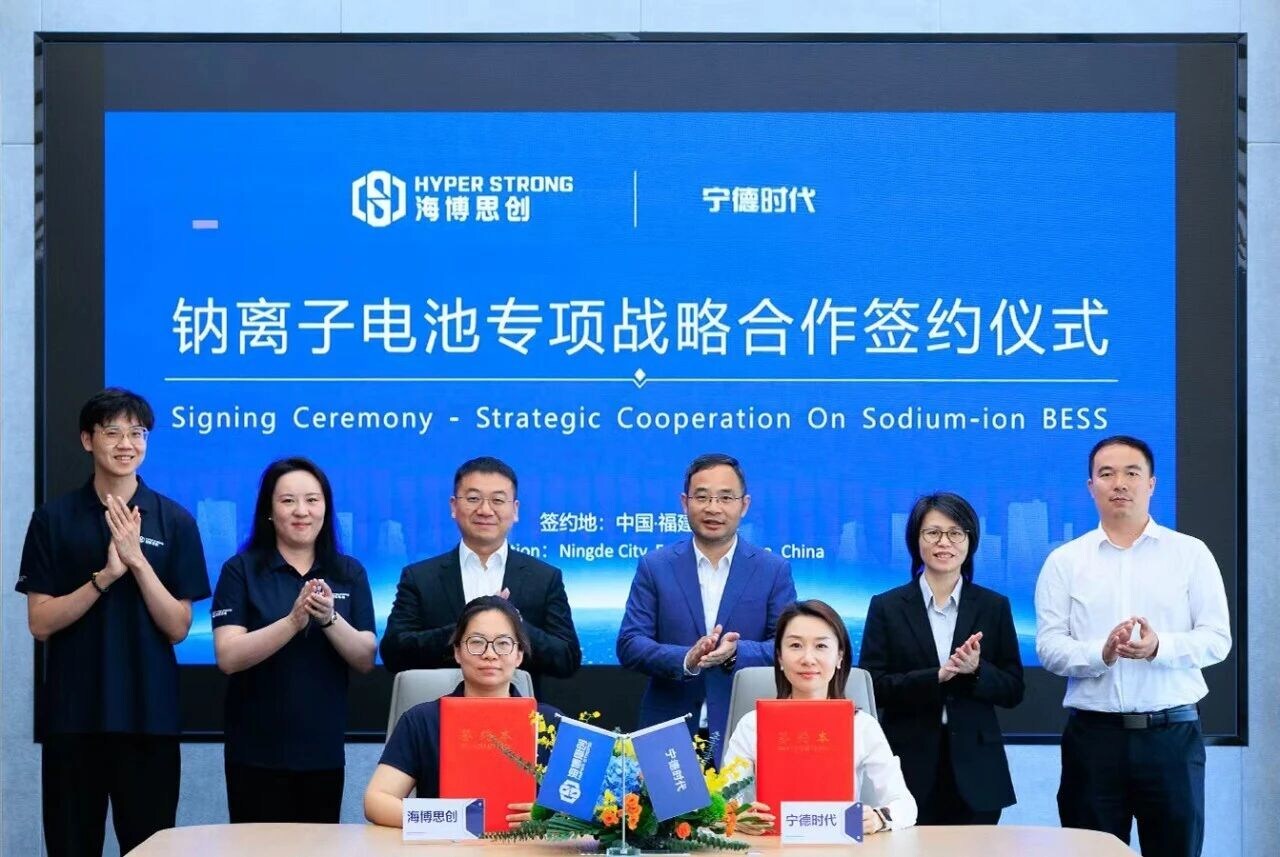
- CATL inked a record $1.47B, 60 GWh supply deal with HyperStrong in April 2026, aiming to snag 30–40% of the global sodium-ion battery market.
- CATL’s TENER sodium grid battery, launched June 2026, delivers 30+ MWh per unit, 15,000-cycle life, and enhanced safety for large-scale energy storage.
Sodium-Ion’s Cold Test
CATL and rivals are racing to prove sodium-ion batteries can outlast lithium in brutal winter conditions, but real-world durability and cost hurdles remain.
By early 2026, sodium-ion batteries were gaining traction as a promising solution to the cold-weather challenges faced by electric vehicles. CATL and Changan's planned mid-2026 launch of EVs equipped with CATL’s Naxtra sodium-ion batteries in China represents a pivotal real-world test, building on the battery’s engineered capability to maintain stable performance even at –50°C. This advantage stems from sodium ions’ greater mobility in cold conditions, which potentially reduces the typical winter range loss and slow charging issues that lithium-ion EVs endure.
Complementing CATL’s advances, Hina’s sodium-ion batteries showcased in 2026 further validated the technology’s cold-weather prowess, delivering strong low-temperature performance between –20°C and 45°C with uniform temperature distribution thanks to a tabless, double-aluminum current collector design inspired by Tesla’s lithium-ion cells. However, despite impressive power capabilities, both lab and real-world tests highlighted persistent challenges such as lower energy density and suboptimal charging efficiency at low temperatures, underscoring the need for enhanced thermal management and operating strategies.
While these early validations underscore sodium-ion batteries’ potential to rival established lithium-ion technologies in harsh climates, experts caution that CATL’s cold-weather performance figures likely reflect best-case laboratory conditions. Coupled with higher manufacturing costs and an immature supply chain, these factors currently confine sodium-ion batteries to niche applications unless improvements in real-world durability and cost competitiveness are realized. Ongoing research in 2026 is targeting material optimizations—such as reducing uneven copper distribution in cathodes and enhancing low-temperature charging—to propel commercial viability forward.


CATL’s Billion-Dollar Bet
A record $1.47B supply deal with HyperStrong cements CATL’s decade-long push to industrialize sodium-ion batteries and seize a massive share of the market.
By April 2026, CATL had firmly positioned itself at the forefront of sodium-ion battery commercialization through a landmark $1.47 billion, 60 GWh supply agreement with Chinese energy storage provider HyperStrong, marking the largest global deal in this space. This strategic partnership not only underscores CATL's ambition to industrialize sodium-ion technology across the full value chain but also signals a pivotal shift from pilot projects to large-scale deployment, with projections that sodium-ion batteries could capture 30–40% of the current battery market share.
CATL’s ability to secure such a massive deal is rooted in nearly a decade of dedicated investment, having poured approximately 10 billion yuan (about $1.47 billion) into sodium-ion battery R&D since 2016. These sustained efforts have yielded critical technical innovations enhancing energy density, manufacturability, and system integration, thereby enabling the transition from experimental stages to mass production and industrial-scale deployment.

Sodium-Ion Hits the Road
CATL’s sodium-ion batteries are set for mass production in 2026, promising affordable EVs and grid storage that thrive in extreme climates.
By April 2026, CATL announced the unveiling of its new sodium-ion battery products and fast-charging technologies, signaling a pivotal move toward commercializing these innovations. Notably, the sodium-ion battery boasts exceptional cold-weather resilience, maintaining 90% capacity even at -40°C, underscoring its suitability for extreme environments and broad geographic applicability.
CATL's sodium-ion batteries are poised for mass market entry by mid to late 2026, with commercial production set to begin in partnership with Changan Automobile and mass production for sedans scheduled for Q4 2026. Offering a driving range of 400 to 500 km and significantly lower costs that could rival lithium-ion prices by next year, these batteries promise to make electric vehicles more affordable and competitive, especially given CATL's vertical integration advantages that enable rapid scaling and cost reductions.
In June 2026, CATL further expanded its sodium-ion portfolio by launching the Tener Sodium Energy Storage System at a global event in Munich, marking the world's first field-validated sodium-ion battery for grid-scale applications. With a modular design exceeding 30 MWh capacity, ultra-long cycle life of up to 15,000 cycles, and enhanced safety and supply-chain stability, the system targets initial deliveries in China by September 2026 and global shipments starting mid-2027, backed by a 60 GWh supply agreement with HyperStrong and aiming for 1 GWh cumulative shipments by year-end.


China’s Truck Electrification Surge
AI-powered battery swapping, ambitious government targets, and innovative business models are rapidly transforming China’s heavy-duty trucking sector.
By mid-2026, China has made significant strides in electrifying its heavy-duty trucking sector, exemplified by Bosch and Mitsubishi Corporation's launch of the first truck battery swap station in Chizhou. Utilizing an AI-powered Battery-as-a-Service (BaaS) model, this infrastructure innovation enhances fleet management and battery health monitoring through Bosch's 'Battery in the Cloud' solution, which optimizes battery lifecycle and supports connected services like insurance and maintenance, addressing critical challenges such as battery capacity decline.
The rapid growth of electric heavy-duty trucks in China is underscored by projections that nearly 30% of trucks sold in 2025 will be New Energy Vehicles, with Bosch forecasting over half of new trucks to be electric by 2030. This momentum aligns with China's ambitious government plan to deploy 1.6 million new-energy heavy trucks by 2030, targeting 40% market penetration and 18% of highway freight volumes, supported by an extensive network of 30,000 kilometers of zero-carbon freight corridors and approximately 3,000 charging and battery-swapping stations.
China's electrification strategy for heavy trucks is bolstered by a comprehensive policy framework that includes financial incentives, regulatory reforms, and innovative business models such as battery leasing. This government-backed initiative not only aims to reduce emissions and modernize logistics infrastructure but also projects significant cost savings—estimated at 1.2 million yuan per truck over a decade—highlighting the economic as well as environmental benefits driving the transition.
FAW Jiefang's pioneering trial of a sodium-ion battery-powered heavy-duty truck marks a breakthrough in commercial vehicle electrification, demonstrating the technology's viability through over 15,000 kilometers of testing and retention of more than 90% usable capacity even at -40°C. The 339-kWh sodium-ion battery offers fast charging in just 20 to 25 minutes and an impressive cycle life exceeding 8,000 cycles under rapid charging, addressing key industry challenges like cold-weather performance and charging speed, and positioning sodium-ion as a promising alternative to lithium for China's green logistics ambitions.

Grid Storage Reinvented
CATL’s TENER system debuts as the first field-validated, mass-produced sodium-ion solution for grids, boasting unmatched cycle life and supply chain resilience.
CATL's landmark $1.47 billion, 60 GWh sodium-ion battery deal with HyperStrong in April 2026 signals the dawn of large-scale commercialization for grid energy storage, underpinned by a decade of R&D investment that has enhanced energy density, manufacturability, and system integration. This strategic pact positions sodium-ion batteries as a cost-effective, high-performance alternative capable of capturing 30–40% of the battery market, reflecting a significant shift in energy storage paradigms.
The unveiling of CATL's TENER Sodium Energy Storage System in June 2026 marks a pivotal milestone as the world's first field-validated, mass-producible sodium-ion battery tailored for grid-scale applications. Featuring a modular design with 42-tonne units delivering over 30 MWh each, the system boasts an ultra-long cycle life of up to 15,000 cycles and enhanced safety with 20% higher overcharge tolerance than lithium-ion counterparts, underscoring sodium-ion's strategic advantage in operational flexibility and supply chain resilience.
CATL envisions sodium-ion batteries not as a lithium-ion replacement but as a complementary 'twin foundation' for future energy storage, leveraging sodium's abundance and superior performance in extreme temperatures to mitigate lithium supply chain risks and environmental concerns. The TENER system's flexible architecture supports storage durations from one to eight hours, enabling diverse grid applications from frequency regulation to long-duration energy shifting, thus broadening the scope and adaptability of grid-scale storage solutions.
Early commercial momentum is evident with CATL projecting cumulative sodium-ion battery shipments reaching 1 GWh by the end of 2026, supported by initial deliveries in China starting September 2026 and global shipments slated for mid-2027. This rapid scale-up highlights the commercial maturity and scalability of sodium-ion technology, reinforcing its role as a transformative force in the global energy storage landscape.

Sodium’s Strategic Edge
CATL positions sodium-ion as a crucial complement to lithium, leveraging abundant resources and flexible grid applications to future-proof global energy storage.
CATL positions sodium-ion as a crucial complement to lithium, leveraging abundant resources and flexible grid applications to future-proof global energy storage.