Chevron’s $100b venezuela bet sparks control, transparency fears
The gist
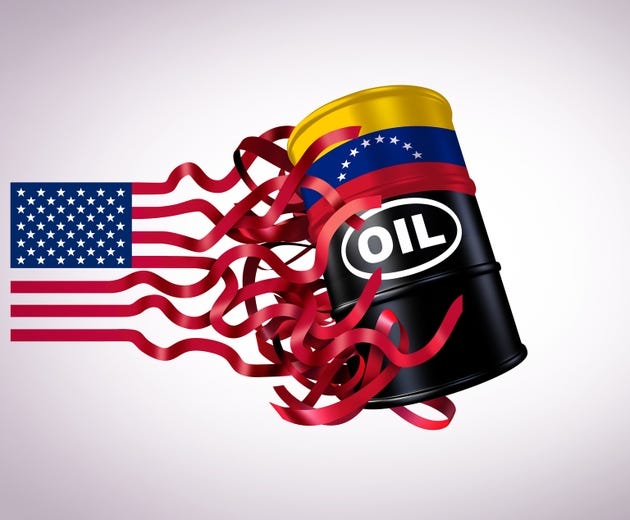
Chevron’s $100 billion plunge into Venezuela’s oil sector has handed the U.S. unprecedented control over Caracas’ oil riches—stoking fears of overreach, legal chaos, and a transparency deficit that’s rattling investors and politicians alike.
What to know
- By July 2026, U.S. policy—dubbed the ‘Don Row Doctrine’—eliminated Saudi oil imports and aimed to disrupt Maduro’s networks by leveraging Chevron’s record investment.
- Washington controls roughly $13 billion in Venezuelan oil revenues via U.S.-managed escrow accounts, but bipartisan critics slam the lack of transparency and oversight.
- Despite reforms ending PDVSA’s monopoly and boosting oil exports to 1.25 million barrels/day, legal and political uncertainty still spooks global energy giants.
Chevron as U.S. Proxy Power
Chevron’s $100 billion investment in Venezuela is the centerpiece of a revived Monroe Doctrine, aiming to topple Maduro’s networks, cut Cuba’s oil lifeline, and reassert U.S. dominance over rivals like Russia and China.
By early 2026, the U.S. geopolitical strategy toward Venezuela’s oil sector was explicitly framed around reasserting hemispheric dominance and countering adversarial influence from Russia and China, consistent with a revived Monroe Doctrine—rebranded as the 'Don Row Doctrine'—that endorses economic and military control including regime change if necessary. The Trump administration prioritized leveraging private U.S. oil companies, notably Chevron with its exclusive operating license, to invest over $100 billion in Venezuela’s oil infrastructure, signaling a market-driven approach rather than direct government expenditure. This strategy aimed not only to disrupt Maduro’s shadow oil trade networks but also to increase Venezuelan production to lower global oil prices to the low $50s per barrel, thereby addressing domestic political concerns over gasoline affordability and reducing U.S. reliance on Middle Eastern oil, as evidenced by the dramatic drop from 800,000 barrels per day of Saudi crude imports to zero by July 2026.
Beyond energy supply, U.S. engagement in Venezuela’s oil sector serves broader geopolitical objectives including severing Venezuela’s financial support to Cuba, a key focus of Senator Marco Rubio’s policy agenda, thereby linking Venezuelan oil control to wider regional influence and regime change efforts. This multifaceted approach underscores the administration’s expansionist posture, described as the most imperialist since George W. Bush, with ambitions extending beyond Venezuela to countries like Cuba and Iran, reflecting a comprehensive strategy to reassert U.S. dominance in the Western Hemisphere through strategic resource control.


Sanctions Loosen, Strings Tighten
Sweeping U.S. general licenses let Western oil giants re-enter Venezuela, but every dollar must flow through U.S.-controlled escrow accounts, giving Washington near-total leverage over Venezuela’s oil income.
By early 2026, the U.S. Treasury's Office of Foreign Assets Control (OFAC) transitioned from issuing individual licenses to a series of broad general licenses, such as General Licenses 46A, 48, and 49, which systematically eased sanctions on Venezuela’s oil sector. These licenses authorized established U.S. and allied companies—including major players like Eni, Repsol, and Shell—to engage in activities ranging from crude oil purchase and export to supply of diluents and oilfield services, all under stringent compliance regimes that mandate contracts be governed by U.S. law and detailed reporting to U.S. authorities every 90 days. However, despite this controlled reopening, certain financial mechanisms remain prohibited, including debt-for-oil swaps and payments in Venezuelan digital currencies, reflecting a cautious and tightly regulated investment environment. (Insights 1, 3, 8, 9, 24, 25, 26, 27)
A critical feature of the regulatory reforms is the U.S.-mandated financial control over Venezuela’s oil revenues, where royalties and taxes must be deposited into U.S.-controlled Foreign Government Deposit Funds rather than directly to PDVSA or the Venezuelan government. This mechanism, enforced through Executive Order 14373 and related general licenses, effectively grants Washington oversight over Venezuela’s oil income and requires the acting Venezuelan government to submit budget requests to U.S. authorities for fund access, underscoring the geopolitical leverage embedded within the sanctions framework. (Insights 2, 10, 12)
Venezuela’s own regulatory landscape has evolved significantly with the 2026 hydrocarbons law reforms that ended PDVSA’s decades-long monopoly, allowing foreign companies to independently operate oil and gas fields and increase their stakes in joint ventures. These reforms also clarify fiscal terms across greenfield and brownfield projects and mandate environmental and infrastructure investments, such as associated gas recovery and power generation, thereby enhancing transparency and operational responsibilities. Yet, the absence of explicit provisions for contracts governed by U.S. law and international arbitration introduces legal uncertainties that complicate compliance with U.S. sanctions requirements. (Insights 7, 19, 20, 21, 22)
Despite these regulatory advances, investor confidence remains fragile due to the overarching influence of U.S. foreign policy and the executive branch’s broad discretion to modify or revoke sanctions authorizations based on political developments. Analysts emphasize that sustainable investment conditions hinge on Venezuela’s political transition, as locking in reforms through a stable and self-reinforcing governance framework—potentially under leaders like Delcy Rodriguez—is essential to mitigate risks of policy reversals and ensure long-term sector viability. (Insights 4, 5, 6, 11, 16, 17, 18)

Investors Remain Wary Despite Reforms
Even as Venezuela ends PDVSA’s monopoly and opens its oil fields, global majors remain skeptical, haunted by past expropriations and legal gray zones that persist under U.S. sanctions.
By early 2026, U.S. and international oil companies exhibited deep skepticism toward investing in Venezuela’s oil sector, primarily due to the country’s political instability, a fraught history of asset nationalization, and the technical difficulties posed by its heavy, high-sulfur crude. Exxon CEO Darren Woods bluntly described the sector as 'uninvestable,' citing repeated past losses and the nightmare of handling oil with the consistency of cold peanut butter that freezes in equipment. This pervasive caution was compounded by uncertainty over U.S. policy continuity, with companies privately questioning whether reforms and agreements would survive beyond the current administration.
Despite these entrenched risks, a series of U.S. policy shifts in early 2026 began to open a cautious window of opportunity for investors. The issuance of multiple OFAC General Licenses (46A, 47, 48, 49, 50A) gradually dismantled sectoral embargoes, allowing controlled engagement with Venezuela’s oil industry, albeit under stringent financial safeguards like Executive Order 14373, which requires royalties and taxes to be held in U.S.-controlled escrow accounts. However, regulatory complexity remained high, as exemplified by General License 48’s prohibition on forming new joint ventures without separate approval, reflecting ongoing wariness about Venezuela’s investment environment.
By mid-2026, investor sentiment showed signs of cautious optimism fueled by significant reforms under acting President Delcy Rodríguez, who dismantled PDVSA’s longstanding monopoly by allowing private companies to operate oil fields directly, hold larger stakes, and retain more profits. This historic shift, the first since the 1970s nationalization, was complemented by a clarified fiscal framework that differentiated royalties by field type and mandated investments in associated gas recovery and power generation to address Venezuela’s chronic infrastructure decay. Yet, contractual uncertainties lingered, as new regulations failed to explicitly guarantee investor protections such as U.S. law governance and international arbitration, critical under U.S. sanctions.
While political stability remains fragile following Maduro’s ouster, foreign investors increasingly view Venezuela as a medium-term opportunity, recognizing that durable reforms and a two-year transition to democratic elections—as outlined by Secretary Rubio—are underway. Investors like Apertura Energy’s CEO Greig Gilbert emphasize that 'there is a window opening' despite ongoing challenges from infrastructure decay and natural disasters. The prevailing view is pragmatic: a full democratic transition is not a prerequisite for investment, but a stable and predictable policy environment is essential for unlocking Venezuela’s vast oil potential.






Technical Hurdles and Fragile Gains
Venezuela’s heavy crude demands U.S. diluents and logistical acrobatics, while crumbling infrastructure and regulatory uncertainty threaten to derail production gains despite Chevron’s exclusive license.
Reviving Venezuela’s oil production is hampered by the technical complexity of its heavy, sour crude, particularly the Merey-16 grade with an API gravity around 16 degrees, which necessitates blending with critical diluents like naphtha for transport and loading. The U.S. General License 47 permits supply of these U.S.-origin diluents, yet the prohibition on forming new joint ventures without separate licensing (General License 48) and restrictions against alternative payment methods such as debt-for-oil swaps (General License 50A) constrain operational flexibility and capital access, complicating efforts to scale production efficiently.
Years of underinvestment have left PDVSA’s infrastructure severely deteriorated, with aging facilities, unreliable power, and depleted workforce capacity undermining production restoration efforts. Although reforms under acting President Delcy Rodríguez now allow private companies to operate fields independently and hold larger stakes—potentially boosting operational control and profitability—these gains are tempered by unresolved PDVSA financial liabilities, regulatory uncertainty, and ongoing security risks amid Venezuela’s incomplete political transition, creating a complex risk landscape for investors and operators alike.
Operational logistics add another layer of complexity, as companies like Vitol and Trafigura leverage large, flexible tanker fleets and floating storage hubs in Malaysia to navigate sanctioned-route challenges and manage cargo timing. Meanwhile, refiners such as Valero benefit from specialized facilities designed for heavy sour crude, and Chevron’s exclusive Venezuelan operating license positions it uniquely with both elevated political risk and upside potential. However, the entire sector’s revival remains contingent on the continuation of U.S. Treasury sanctions licenses, which can be amended or revoked at any time, injecting significant uncertainty into production growth projections that the EIA estimates could reach 1.1 to 1.2 million barrels per day by mid-2026.
Despite these formidable challenges, Venezuela’s oil exports have climbed to approximately 1.25 million barrels per day as of June 2026—the highest since sanctions were imposed in 2019—signaling cautious optimism amid operational hurdles. Yet, recent natural disasters like the June earthquake and persistent political instability continue to threaten the fragile progress, underscoring that while the sector’s resurgence is underway, it remains a high-stakes endeavor fraught with infrastructure decay and evolving geopolitical risks.
Transparency Crisis Shadows Recovery
With $13 billion in Venezuelan oil funds locked in opaque U.S. accounts and bipartisan outrage over missing oversight, doubts grow about whether oil revenues will ever reach the Venezuelan people or rebuild the shattered economy.
By mid-2026, the U.S. government controls approximately $13 billion in Venezuelan oil revenues through Treasury-managed escrow accounts established under Executive Order 14373. However, there is a profound lack of transparency regarding the exact amounts held, the flow of these funds, and how much is returned to Caracas or spent on Venezuela’s urgent humanitarian and economic needs. This opacity has drawn bipartisan criticism, including from Democratic Congressman Joaquin Castro and Republican Congresswoman Maria Elvira Salazar, who emphasize that the absence of clear financial controls and public reporting undermines both investor confidence and the credibility of U.S. policy amid Venezuela’s ongoing crises, including devastating earthquakes causing $37 billion in damages.
The persistent political uncertainty surrounding Venezuela’s leadership, particularly the contested tenure of figures like Delsey Rodriguez and her siblings—whom opposition voices deride as 'gangland killers' rather than economic managers—casts a long shadow over efforts to stabilize and revitalize the oil sector. Analysts stress that reforms and regulatory changes cannot be viewed as sequential but must proceed in tandem with a credible political transition to lock in improvements and reduce risks tied to U.S. foreign policy shifts. Without a legitimately elected government ensuring transparency and accountability in revenue management, the prospects for attracting foreign investment and achieving a sustainable recovery remain bleak.
The scarcity of reliable economic and oil sector data over the past decade has compounded the challenges of policy-making and investor trust, creating a 'complete obscurity' around Venezuela’s oil exports and revenues. Efforts to increase transparency, such as a Venezuelan government website tracking U.S.-controlled oil funds, have been minimal and largely ineffective, with only a single $300 million transfer publicly recorded. This lack of clarity not only frustrates U.S. policy goals but also impedes Venezuela’s normalization and recovery by perpetuating uncertainty and governance deficits that were starkly revealed by the recent earthquakes.
The evolving U.S. political landscape, including potential shifts toward administrations prioritizing climate change over fossil fuel production, introduces additional uncertainty into Venezuela’s oil sector recovery trajectory. Investors must weigh risks associated with policy reversals and regulatory instability, which are deeply intertwined with the unresolved political transition in Caracas. The return of Venezuelan diaspora capital and the creation of a virtuous economic cycle hinge on resolving these governance challenges, underscoring that transparent financial controls and a legitimate government are prerequisites for any meaningful revitalization of Venezuela’s oil industry.