China’s brainwave blitz: BCI leap leaves US playing regulatory catch-up
The gist
China just leapfrogged the world by fast-tracking brain-computer chips and wearables into everyday life, leaving US innovation tangled in red tape.
What to know
- China approved NEO, the world’s first invasive BCI chip for routine use in March 2026, and plugged it straight into national health insurance.
- With $280 million in government-backed investment, China is betting big on non-invasive BCI wearables from firms like BrainCo and rolling out new devices at record speed.
- US leaders like Neuralink and Meta face stalled trials and a patchwork of neural data privacy laws, as China’s BCI roadmap rapidly expands from healthcare to cars and consumer tech.
China’s BCI Masterplan Unveiled
China’s government-led BCI push fuses rapid regulatory approvals, national insurance coverage, and a phased strategy to embed brain interfaces across healthcare, industry, and consumer tech—outpacing global rivals through state-backed speed and scale.
China has surged ahead in brain-computer interface (BCI) technology by securing groundbreaking regulatory milestones, notably approving NEO as the world’s first invasive brain-computer chip for everyday use in March 2026. This rapid regulatory progress was fueled by NEO’s safer design and robust government backing, allowing China to outpace competitors like Neuralink. Furthermore, the government’s integration of these devices into the national health insurance system underscores a strategic prioritization of BCIs as a cornerstone of future industry development.
Beyond implantables, China is aggressively advancing non-invasive BCI technologies, exemplified by companies like BrainCo, which has raised 2 billion yuan ($280 million) to develop wearable devices featuring dry electrode sensors and AI-driven brain signal decoding. This focus aligns with the Chinese government’s designation of BCI as a strategic 'future industry' in its latest Five-Year Plan, highlighted by the recent approval of Neuracle Medical Technology’s minimally invasive BCI device for commercial use. By emphasizing wearables, China aims to accelerate mass-market adoption and diversify applications beyond medical uses.
China’s national roadmap for BCI technology envisions a phased evolution starting with medical applications, progressing through autonomous driving and smart manufacturing, and culminating in widespread consumer products. This staged development strategy, articulated by researchers at the Chinese Academy of Sciences, reflects a comprehensive approach to embedding BCIs across multiple sectors, thereby reinforcing China’s ambition to dominate the global BCI landscape through both innovation and strategic deployment.


US BCI Stalled by Red Tape
America’s fragmented neural data laws and stringent medical regulations are stalling Neuralink’s human trials and raising ethical concerns, leaving US neurotech innovators tangled in bureaucracy as China races ahead.
By mid-2026, Neuralink's path to human trials remains obstructed by stringent regulatory requirements, notably the absence of an ambulatory surgical center license in Texas, a legal prerequisite for conducting high-volume procedures outside hospital settings. This regulatory bottleneck exemplifies broader systemic challenges that threaten to slow US innovation in brain-computer interfaces compared to international competitors.
The United States faces a fragmented and nascent regulatory landscape for neural data privacy, with only four states—Colorado, California, Montana, and Connecticut—having enacted specific neural data laws by mid-2025. This patchwork underscores the urgent need for comprehensive federal frameworks to safeguard the ownership, storage, and ethical use of neural data, especially as companies like Neuralink amass vast repositories of human thought with minimal transparency, raising profound ethical and privacy concerns.
Regulatory and ethical hurdles extend beyond human trials to include oversight of animal experimentation, as evidenced by Neuralink’s ongoing compliance with Institutional Animal Care and Use Committee (IACUC) protocols in Austin, Texas. These layers of scrutiny, while essential for ethical standards, may inadvertently impede the pace of innovation, placing US neurotechnology firms at a competitive disadvantage amid accelerating global advancements.
Reflecting strategic military priorities, US defense research agencies like DARPA are investing in non-invasive neurotechnology through programs such as N3, aiming to enable hands-free interaction for able-bodied warfighters. However, these ambitions are tempered by complex regulatory and ethical challenges that necessitate a delicate balance between rapid innovation and responsible governance to maintain US leadership in neurotech amid intensifying global competition.

Meta’s Non-Invasive BCI Breakthrough
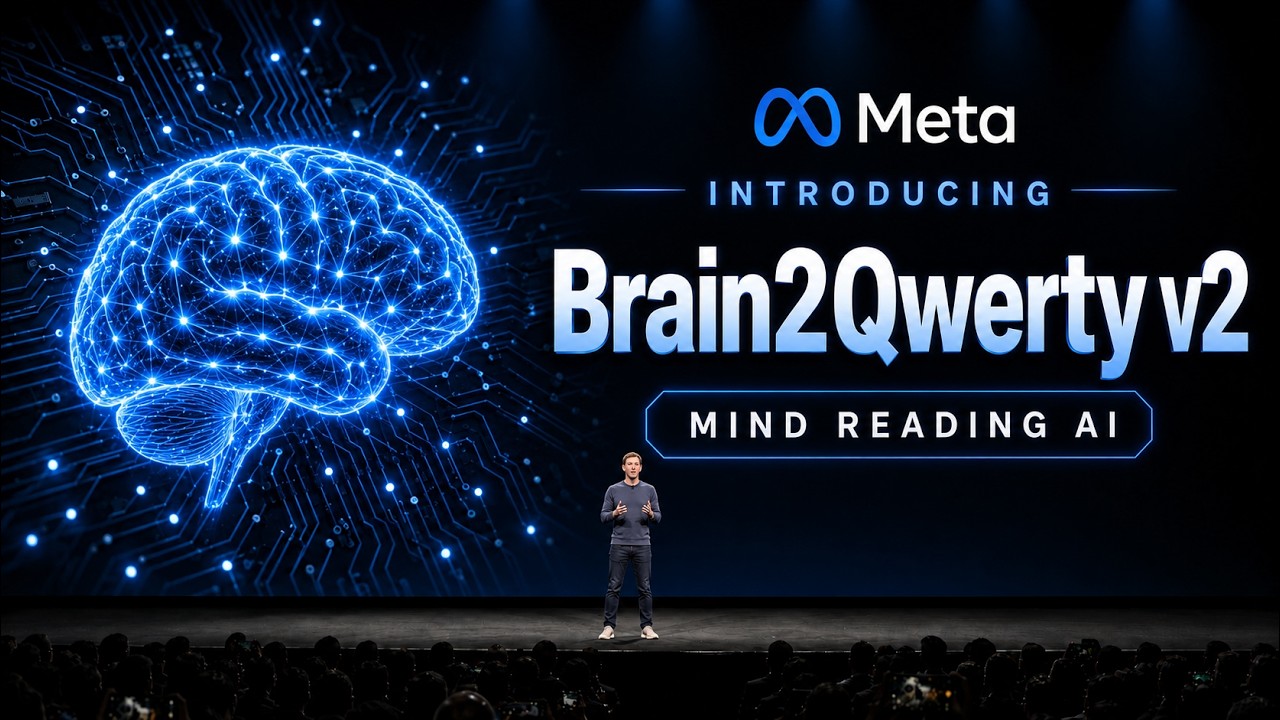
Meta’s Brain2Qwerty v2 slashes the gap between non-invasive and implantable BCIs, but scaling neural data collection and ethical hurdles highlight both the promise and perils of AI-driven brain decoding.
Meta AI's Brain2Qwerty v2 has marked a significant breakthrough in non-invasive brain-to-text decoding by achieving an average word error rate of 39%, with the best participant reaching an impressive 78% word accuracy. This level of performance approaches the accuracy traditionally associated with invasive brain-computer interfaces, signaling a narrowing gap between non-invasive and implant-based technologies. Despite these advances, Meta acknowledges that the system still makes too many word and character-level errors to be practical for everyday communication, underscoring that this remains a pioneering research milestone rather than a finished product.
A key driver behind the improving accuracy of Meta’s Brain2Qwerty v2 is the log-linear relationship between decoding performance and the volume of neural data collected. This suggests that current results are far from a ceiling and that further scaling of neural data could substantially enhance decoding precision. However, the collection of high-quality magnetoencephalography (MEG) data is complex, costly, and fraught with ethical considerations, prompting Meta and collaborators like BCBL to release open training codes and datasets to accelerate innovation and democratize research in non-invasive neural decoding.
Meta’s breakthrough in non-invasive AI-powered neural decoding not only advances the technical frontier but also highlights the growing intersection of artificial intelligence and neural signal processing in 2026’s fiercely competitive AI landscape. This progress positions non-invasive brain-computer interfaces as increasingly viable contenders in the evolving neural interface ecosystem, while simultaneously underscoring the urgent need for regulatory oversight amid the intensifying AI arms race and governance debates.