Chinese AI models surge as US firms chase cost savings
The gist
Chinese open-weight AI models are storming the U.S. market, offering up to 90% cost savings and shaking up the AI power balance.
What to know
- Chinese models like DeepSeek V4 Flash deliver dramatic savings—just $0.14 per million tokens versus $5.00 for OpenAI’s GPT-5.5.
- U.S. enterprises now host these models locally to balance privacy, security, and compliance, even as policymakers ramp up scrutiny.
- Chinese AI now powers over 60% of OpenRouter’s traffic, overtaking U.S. rivals as performance and price gaps rapidly close.
Cost Drives AI Model Shift
Dramatic price gaps and rapid performance gains are pushing enterprises to overhaul AI strategies, making Chinese open-weight models indispensable for both savings and vendor diversification.
The surge in enterprise and startup adoption of Chinese open-weight AI models is primarily driven by their dramatic cost advantages over US counterparts, with prices as low as $0.14 per million tokens for models like DeepSeek V4 Flash compared to $5.00 for OpenAI's GPT-5.5. This steep price differential, running between 60% to 90% cheaper, has made open-source Chinese models an economically viable alternative amid rising AI expenses, prompting businesses to reconsider their AI investments and strategies.
As cost pressures mount, enterprises are increasingly integrating Chinese open-weight models into their AI stacks not only to reduce expenses but also to diversify vendor risk. Industry experts like Jain emphasize that reliance on a single or even dual providers is becoming untenable, with open-source models now considered essential components of enterprise AI strategies. This diversification reflects a pragmatic shift toward balancing performance with economic sustainability.
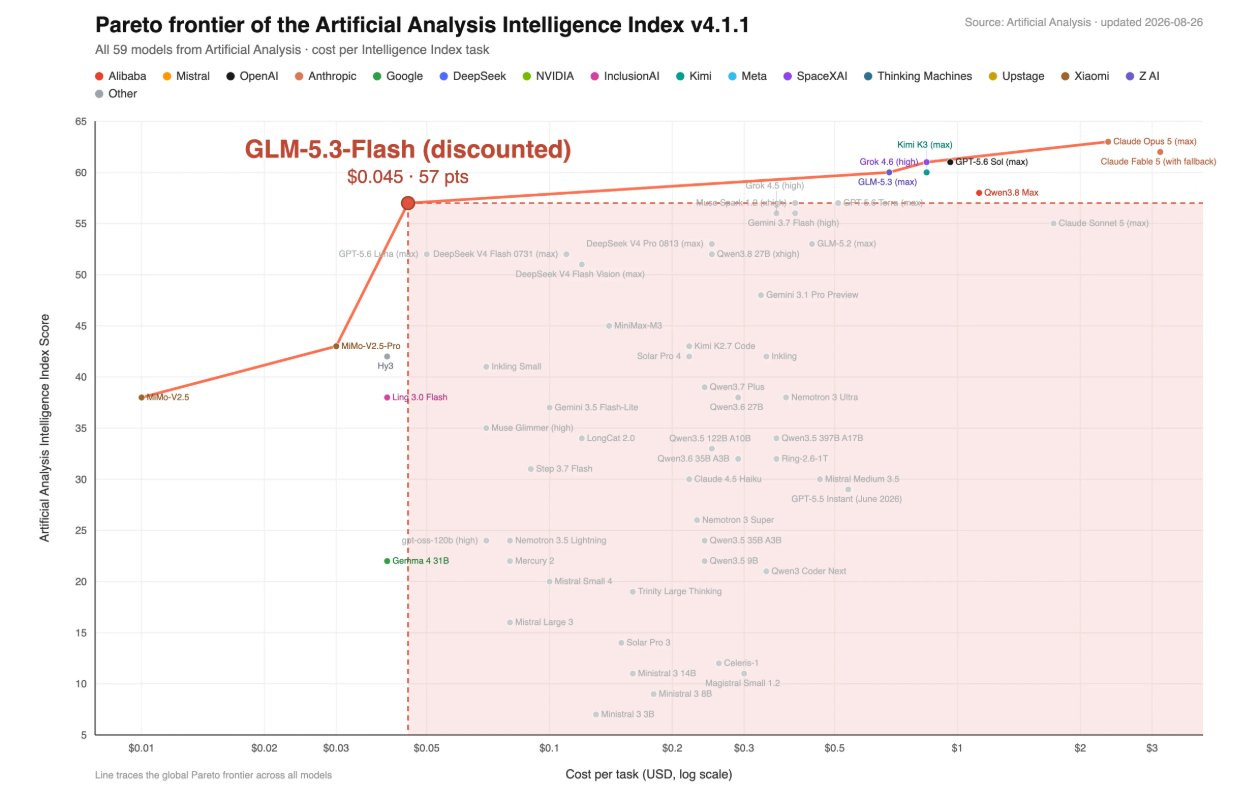
Chinese AI models have rapidly closed the performance gap with leading US models on key benchmarks such as math, science, and coding, enhancing their appeal beyond mere cost savings. This convergence in quality, combined with permanently discounted API pricing from providers like DeepSeek, is reshaping market dynamics by forcing US providers to contend with intensified pricing pressure and a bifurcated market where a large segment opts for 'good enough' yet affordable intelligence.
The economic viability of Chinese open-weight AI models is also influencing startup investment and operational decisions, with roughly 16% to 24% of AI startups pitching to Andreessen Horowitz building on these models. To mitigate data residency and regulatory concerns, many US companies are leveraging western hosts like Fireworks and Together to run Chinese models without routing traffic through Chinese first-party APIs, striking a balance between cost efficiency and compliance.



Trust Hinges on Deployment Control
Enterprises are sidestepping security fears by running Chinese AI models locally and open-sourcing governance, even as government scrutiny and expert debate intensify over open versus closed AI risks.
Corporate attitudes toward Chinese open-weight AI models reveal a nuanced landscape where trust is increasingly anchored in deployment context rather than origin. Enterprises like Airbnb and Perplexity mitigate security and privacy risks by hosting models locally on US infrastructure and applying extensive post-training, ensuring data never leaves domestic control. This approach addresses concerns highlighted by Booz Allen Hamilton, whose research warns of insecure code generation and shadow AI risks, where unsanctioned employee use of Chinese models could expose sensitive data to foreign access. As one interviewee emphasized, running MIT-licensed open-weight models entirely on US soil and infrastructure severs direct ties to original developers, fostering growing enterprise confidence despite lingering security debates.
The debate over security and regulatory risks is further complicated by contrasting corporate and expert perspectives on open versus closed AI models. While critics like Booz Allen and Anthropic’s Dario Amodia warn of profound security liabilities and potential backdoors in open-weight Chinese models, proponents including Jensen Huang and cybersecurity experts argue that open models enhance transparency and defense capabilities. Incidents where closed proprietary models suffered breaches have pushed defenders to rely on inspectable open-weight Chinese models, such as China’s GLM-5.2 used by Hugging Face to contain attacks, challenging the notion that closed systems are inherently safer. This dynamic has prompted calls for treating open-source AI as critical national infrastructure, with robust government-backed initiatives to foster a transparent domestic AI ecosystem.
Heightened US government scrutiny underscores the regulatory risks companies face when engaging with Chinese AI models. House Republicans have launched investigations into firms like Airbnb, DoorDash, and Anysphere over their use of Chinese AI, reflecting broader concerns about data security and compliance. Yet, many enterprises balance these risks with pragmatic strategies, leveraging open-weight models’ customizability to maintain privacy and regulatory adherence—Thompson Reuters’ use of the Quen Harvey legal AI platform exemplifies this trend by emphasizing full internal control over sensitive client data. This pragmatic stance reflects a market-wide shift, with one interviewee noting that the adoption of open-weight models is now ubiquitous across enterprises, signaling a decisive turn in corporate risk calculus.
Despite theoretical fears of embedded backdoors or sleeper functions granting covert access to the Chinese government, AI researchers like Jason Corso highlight the lack of documented instances and the technical challenges in reliably implementing such backdoors. This skepticism tempers extreme security concerns and encourages enterprises to focus on practical mitigations such as local hosting and model customization. Kyle Miller encapsulates this pragmatic view, stating that using Chinese open models on domestic infrastructure effectively eliminates data exfiltration risks, giving companies full control and fostering a more balanced corporate attitude that weighs potential risks against tangible benefits in cost, privacy, and security.




Multi-Model Strategies Take Hold
Rising AI costs and vendor lock-in fears are fueling a shift toward diversified, open-weight model portfolios, but integration demands new governance and infrastructure investments.
Enterprises are increasingly adopting open-weight AI models as a strategic move to diversify their AI toolkits and reduce dependency on proprietary vendors, a shift driven by rising AI costs and the risks of vendor lock-in. Industry leaders like Jain emphasize that no company today relies solely on one or two model providers, with open source becoming essential due to its cost efficiency—often an order of magnitude cheaper—and greater control. This multi-model approach, exemplified by SmartBear’s VP Fitz Nowlan experimenting with models like Z.ai’s GLM-5 and DeepSeek v4, reflects a broader trend toward balancing cost, performance, and competitive risk mitigation.
While open-weight models offer promising cost and customization benefits, enterprises face significant challenges integrating them, including the need for rigorous governance, security diligence, and fine-tuning to address concerns about black-box training data and potential malware risks. Tanium CTO Harman Kaur highlights these complexities, especially when deploying Chinese open-weight models that sometimes outperform alternatives but raise governance and customer perception questions. This underscores that strategic diversification is not merely a plug-and-play solution but requires substantial upfront investment and careful management.
To mitigate vendor lock-in and accommodate diverse workloads, enterprises are gravitating toward building and deploying large, general multimodal foundation models rather than bespoke solutions, as specialized personnel for deep architectural tweaks are scarce. This approach, supported by NVIDIA and echoed by experts, enables companies to fine-tune models on proprietary data locally—particularly important for latency-sensitive edge applications—while leveraging model routers and agent harnesses to orchestrate workloads across private infrastructure, cloud, and frontier models. Such infrastructure advances facilitate a balanced ecosystem that blends open-source flexibility with frontier AI capabilities.
China’s AI ecosystem, led by giants like Alibaba and Tencent, exemplifies aggressive open-weight model adoption as a strategic investment to build a diversified AI landscape that reduces reliance on proprietary vendors despite rising operational losses. This robust open-source environment not only accelerates adoption across consumer and enterprise sectors but also signals a competitive shift where cost-effective Chinese models increasingly displace leading US AI providers, compelling global enterprises to reconsider their AI sourcing strategies amid evolving geopolitical and economic dynamics.


Chinese Models Challenge US Dominance
Technical parity and massive cost advantages have enabled Chinese AI models to seize majority market share, with US firms prioritizing economic pragmatism over geopolitical allegiance.
Chinese AI models are rapidly closing the performance gap with leading US providers such as OpenAI and Anthropic, particularly excelling in specialized benchmarks like math, science, and coding. Models like Kimmy K3 and Qwen 3.8 demonstrate frontier-level capabilities that rival US counterparts, signaling a significant shift in technical parity that challenges the longstanding dominance of US frontier labs.
The competitive displacement of US AI providers is driven not only by technical convergence but also by the dramatic cost advantage of Chinese models. For instance, DeepSeek V4 Flash charges $0.14 per million input tokens compared to $5.00 for OpenAI’s GPT-5.5, a price difference described as 'not a rounding error' by industry insiders. This steep price-performance ratio has led to Chinese models capturing over 60% of OpenRouter’s traffic, up from US models holding roughly 70% a year earlier, reshaping global AI infrastructure market share.
The growing adoption of Chinese AI models by US startups and enterprises is primarily motivated by economic viability rather than geopolitical loyalty, reflecting a pragmatic shift in vendor preference. Companies like Airbnb openly cite speed and cost as reasons for choosing Alibaba’s Qwen, while venture capital trends show 80% of startups using open-source AI models opt for Chinese systems. This pragmatic embrace of Chinese alternatives is compelling US incumbents to reconsider pricing strategies amid rising AI infrastructure costs.
The increasing market share of Chinese AI providers is reverberating beyond commercial dynamics into US policy debates, raising concerns about data privacy, censorship, and supply-chain security. Congressional investigations have named Chinese firms such as DeepSeek and Alibaba, with lawmakers like Senator Tom Cotton advocating bans on Chinese AI models for government contractors. This geopolitical tension underscores the broader implications of Chinese models’ competitive displacement of US AI leaders.