Chip talent crunch spurs surge in fast-track training
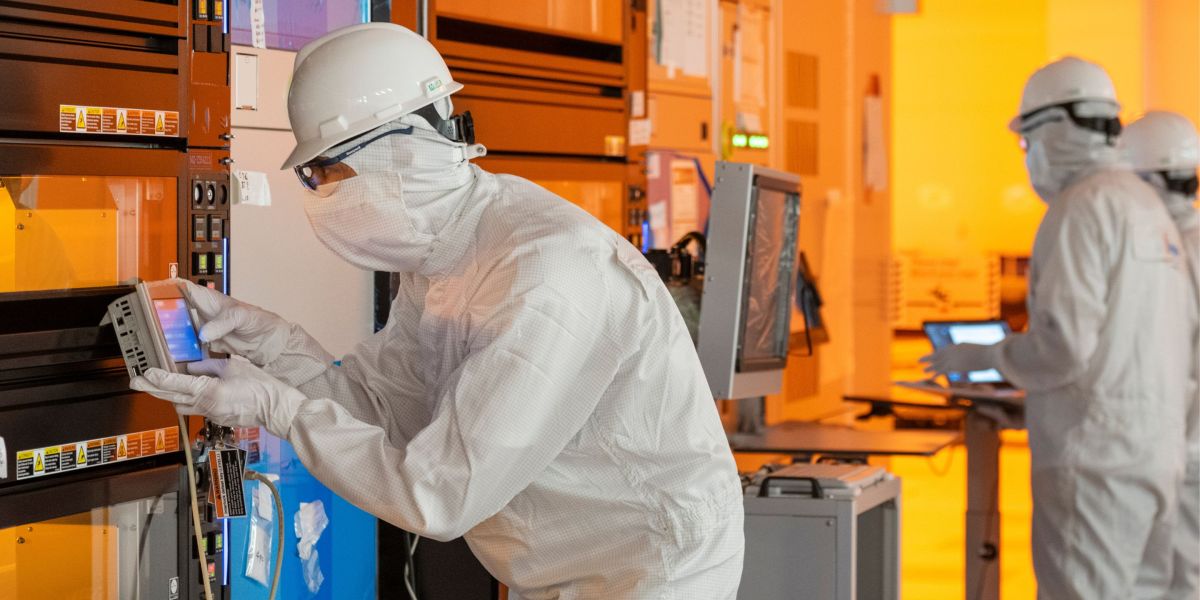
The gist
A critical shortage of 157,000 chip workers is forcing U.S. factories—and industry giants like Samsung—to hit pause on billion-dollar expansions until a new wave of fast-track, tuition-free training can catch up.
What to know
- Samsung warns its $35B Texas chip factory could stall without more skilled technicians, as the talent gap bites.
- Community colleges like Rio Salado are rolling out free 12-week VR-driven programs built with TSMC and Intel to speed up hiring.
- Intel and partners launched a $20M Semiconductor Pathways Fund in late 2026, while South Korea’s Chungbuk Semiconductor High is seeing a 96.4% job-offer rate for grads.
Crisis Spurs Rapid Action
Samsung’s warning of a 157,000-worker shortfall forced chipmakers and colleges to launch emergency training programs, shifting talent development from long-term planning to a race against stalled factory timelines.
The pressure behind late-2026 training launches was not abstract workforce planning but a shortage severe enough to threaten expansion timelines. CNBC reported that Samsung EVP Jon Taylor warned of a 157,000-worker chip talent gap, tying the shortfall directly to a Texas $35 billion expansion that “stalls,” a concrete sign that labor scarcity had become an operational constraint rather than a distant risk for semiconductor manufacturers trying to add capacity.
That warning helps explain why community colleges and corporations moved in late 2026 toward accelerated, tuition-free training programs and apprenticeships aimed at producing technicians quickly. The late-2026 evidence shows the semiconductor talent gap was worsening enough to drive new workforce actions, with the scale of the shortage making faster, more targeted talent pipelines a practical response to immediate hiring pressure rather than a long-term educational experiment.

Short Courses, Fast Hires
Community colleges are bypassing traditional degrees with 12-week, VR-driven crash courses that funnel graduates directly into chip technician jobs—no debt or four-year wait required.
What makes the new pipeline work is not a rebranding of college, but a compression of it: Rio Salado opened a “free, 12-week program to the public” after consulting with “TSMC and Intel,” and the cohort “first learns fabrication procedures through virtual-reality headsets” before “about 20 hours of hands-on” clean-room training. Tech Xplore reports the program is explicitly built to move people into technician work fast, with the “goal is to fill entry-level positions, such as technicians who maintain and service production equipment, more quickly,” while Rick Vaughn said, “Without a four-year commitment, they're not accumulating any debt.”
That degree-bypassing model matters because it links short training directly to hiring, turning community colleges into throughput engines rather than feeder schools for later credentials. When Ethan Mock enrolled in the “tuition-free, three-month semiconductor crash course,” Tech Xplore said the draw was “a chance to interview with major chipmakers in Arizona,” and the course sits inside “a growing network of short-term, hands-on programs at community colleges”; with the U.S. projected to face “a shortage of as many as 157,000 full-time workers by 2030,” SEMI says “over 200 community colleges and universities nationwide have coordinated with the group to prepare workers as new manufacturing plants come online.”

Work-Study for Job-Ready Grads
Chip industry apprenticeships now split time between classroom and factory floor, producing graduates who finish with both an associate’s degree and a guaranteed job offer.
What makes the new vocational model effective is not speed alone but the way training is split between classroom learning and real production work. In Stadler’s Utah apprenticeship, the CEO described a “three year program” in which students “go to school on A days and… work with us on B days,” then after high school “continue on in the program at Salt Lake Community College” while going to school part time and working part time, with the balance shifting until “by the end, they’re working about 70%… and going to school about 30%.”
That blend is reinforced by employer-linked design, so students are not trained in the abstract but for defined technician jobs. Stadler said participants finish with an associate’s degree in advanced manufacturing and “when they graduate, we give them a job offer,” while the company also described the model as one shared by several participating employers; elsewhere, Florida State College at Jacksonville has built a large, fully automated semiconductor lab, and Micron has framed its own apprenticeship as a pathway specifically for “future technicians,” underscoring how labs, coursework, and hiring partners are being aligned around role-ready preparation.
Training Becomes the New Standard
By late 2026, tuition-free semiconductor training programs surged worldwide, turning what was once a niche experiment into an industry-wide, coordinated hiring pipeline.
What changed in late 2026 was visibility and volume: launches began appearing across geographies and institutions at once, making semiconductor training look less like a niche workaround and more like a recognized hiring system. Fortune’s July reporting from South Korea captured that maturity early, with Chungbuk Semiconductor High School posting “96.4% of students are graduating with a job offer in hand,” and “roughly one in four students land jobs directly at Samsung,” including 17-year-old No Jun-sik, who had “a job offer from Samsung” before graduation.
By November, the same pattern was unmistakable in the U.S.: PR Newswire’s headline, “Intel Joins $20 Million Semiconductor Pathways Fund to Aid 6,700 Near‑Grad Students,” pointed to structured scale, not a one-off pilot, while Times Leader described a “tuition-free, three-month semiconductor crash course” at Rio Salado College that began “this fall” and fed students toward interviews with major Arizona chipmakers. The broader signal was coordination itself: “According to SEMI, over 200 community colleges and universities nationwide have coordinated with the group to prepare workers as new manufacturing plants come online.”