Chip wars whiplash: US-China AI rivalry heats up as export controls, national security fears, and tech self-reliance collide
The gist
The US-China AI chip rivalry is entering a fever pitch, with export controls, tech self-reliance, and geopolitical brinkmanship colliding to reshape the future of global innovation—and national security.
What to know
- US policy on advanced AI chip exports to China is swinging wildly, with Trump-era greenlights for Nvidia sparking bipartisan outrage over fears of losing America’s tech edge.
- China is pouring over $100 billion into homegrown semiconductor giants like Huawei and More Threads, but still lags in cutting-edge chip manufacturing and memory tech.
- Taiwan’s TSMC remains the world’s chip chokepoint, exposing the global supply chain to geopolitical risk and fueling urgent, but halting, US production diversification efforts.
Export Controls in Turmoil
US chip export policy has become a battleground of reversals, industry lobbying, and bipartisan outrage, with national security and tech leadership at risk amid shifting rules and opaque decision-making.
Since late 2022, US export controls on advanced AI chips have undergone dramatic tightening and subsequent reversals, reflecting a volatile policy landscape shaped by national security anxieties and economic interests. Initial bans under the Biden administration, coordinated with allies like the Netherlands and Japan, aimed to throttle China’s access to frontier chips and semiconductor manufacturing equipment, with the US holding a 31x compute advantage over China and a 70x lead in high-bandwidth memory. However, by late 2025 and into 2026, the Trump administration’s decisions—such as greenlighting Nvidia’s H200 chip sales to China with a 25% surcharge—sparked bipartisan backlash, with critics like Rep. Meeks and AI experts warning that these moves risked eroding America’s hard-won technological edge and national security for minimal economic gain.
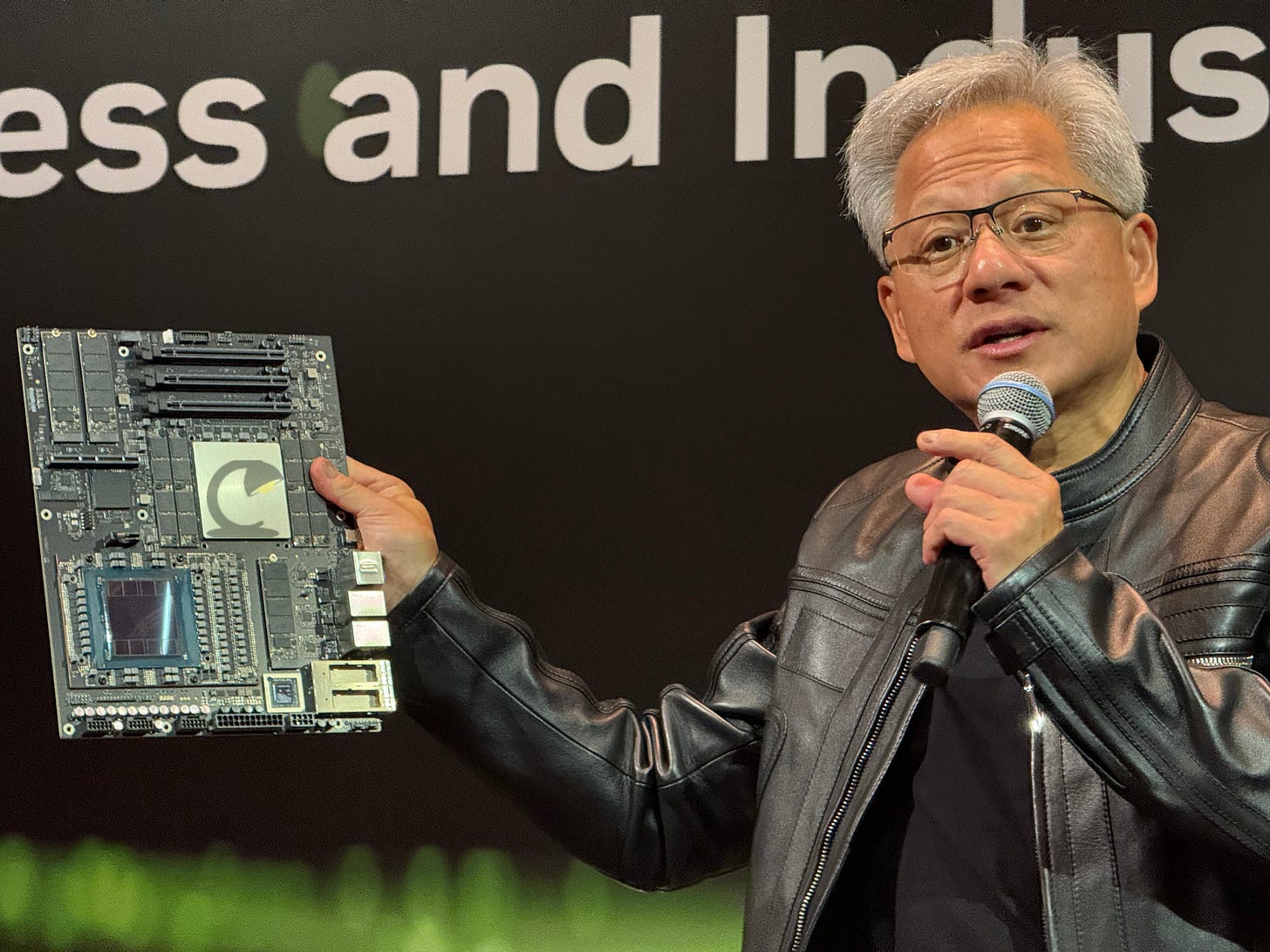
The debate over export controls has been fiercely shaped by industry lobbying, particularly from Nvidia CEO Jensen Huang, whose persistent efforts in Washington have pushed for relaxed restrictions as the company faces shrinking domestic markets and fierce competition from hyperscalers developing their own chips. While Nvidia argues that China sales are vital for R&D and maintaining global leadership, critics point out that Western demand already outstrips supply, making China’s market less essential than claimed. This tension has fueled legislative responses like the GAIN AI Act and the RESTRICT Act, as lawmakers seek to codify stricter controls and prioritize US interests amid fears that corporate profit motives are being placed above national security.
Despite the Trump administration’s approval of H200 chip exports—accompanied by conditions such as shipment limits, third-party verification, and a 25% government cut—the policy has been criticized as a strategic concession with questionable legal grounding and little reciprocal benefit. Lawmakers and national security experts argue that such moves not only risk enhancing Chinese AI capabilities, including those of competitors like Deepseek, but also threaten to unravel the collective export control regime by incentivizing US allies to relax their own restrictions. The lack of transparency, with major policy shifts announced via social media rather than formal documentation, has further fueled confusion and skepticism about the long-term effectiveness and intent of US export control policy.
The effectiveness of US export controls is further complicated by China’s own strategic responses, including recent directives for domestic firms to stop ordering Nvidia’s advanced chips and instead prioritize homegrown alternatives. This reciprocal maneuvering underscores the dynamic, tit-for-tat nature of the tech rivalry, where initial US approvals can be swiftly undermined by Chinese policy shifts, and both sides are racing to foster independent semiconductor ecosystems. As a result, the landscape remains highly unstable, with both American and Chinese tech giants hedging their bets through supply diversification and multi-chip architectures, rather than relying on any single policy or supplier.





Profit vs. Power Struggle
Industry giants and US lawmakers are locked in a fierce clash as China’s AI advances force America to choose between short-term corporate gains and safeguarding its long-term technological edge.
The debate over US AI chip exports to China has evolved into a high-stakes tug-of-war between national security imperatives and economic interests, as policymakers, industry leaders, and experts grapple with the consequences of enabling Chinese access to advanced technology. While industry giants like Nvidia and AMD argue that revenue from the Chinese market is essential for funding R&D and maintaining US technological leadership, critics—including national security experts and lawmakers—warn that such sales risk eroding America's strategic edge and empowering China's AI and military capabilities. This tension has fueled legislative efforts like the GAIN AI Act and the RESTRICT Act, bipartisan pushback in Congress, and public criticism from figures such as Dmitri Alperovitch and Anthropic CEO Dario Amodei, who likened chip sales to China to 'selling nuclear weapons to North Korea.'
Underlying this fierce debate is a shifting recognition of China's rapid progress in AI and semiconductor technology, challenging longstanding US assumptions of technological superiority. Analysts and policymakers now acknowledge that China leads in sectors like battery technology and manufacturing robotics, and is closing the gap in AI models—sometimes just 'months' behind the US, according to Google DeepMind's CEO. This reality has prompted US reindustrialization efforts and export controls to preserve a 10-15x advantage in advanced chips, but also raised concerns that embargoes may inadvertently accelerate China's domestic innovation, as seen in the rise of companies like Huawei and Deepseek.
The policy landscape is further complicated by internal US divisions, lobbying from tech giants, and fluctuating political priorities, which have led to inconsistent export controls and strategic uncertainty. While the Trump and Biden administrations initially imposed strict bans on advanced chip exports to China, recent reversals—such as allowing Nvidia's H200 sales—have sparked backlash from Congress and the national security community, who argue these moves trade long-term strategic advantage for short-term economic gain. Meanwhile, Chinese firms are forced to diversify their chip sources amid supply constraints and political volatility, reducing their dependence on US technology and potentially undermining the effectiveness of export controls.
Amid these tensions, some experts advocate for a more nuanced approach, suggesting that maintaining a controlled level of US chip exports to China could provide strategic leverage—allowing the US to disrupt China's AI ecosystem if necessary. Chris Miller and others argue that a zero-export policy may not be optimal, as embedding American technology in China's AI infrastructure could create future points of influence or pressure. However, this perspective remains contentious, with critics warning that any technology transfer risks empowering a geopolitical rival committed to a 'win-lose' economic model, as Rahm Emanuel puts it, and undermining collective efforts with allies to limit China's access to critical technology.


China’s Chip Champions Rise
Massive state backing and regulatory muscle are fueling a new generation of Chinese AI chip firms, but technological bottlenecks and reliance on foreign tech still hinder Beijing’s self-reliance ambitions.
China's campaign for semiconductor self-sufficiency has entered overdrive in the wake of US export controls, with a potent mix of state-backed investments, regulatory muscle, and capital market activity fueling the rise of domestic AI chip champions. Companies like Huawei, Baidu (via Kunlunxin), and More Threads have surged to the forefront, buoyed by initiatives such as the National Integrated Circuit Industry Investment Fund, which has funneled over $100 billion into the sector, and record-fast IPO approvals—More Threads’ 88-day sprint to listing being a case in point. This state-led urgency is matched by policy mandates: Beijing has instructed local firms to prioritize homegrown chips over Nvidia’s, while legal and software requirements guarantee demand for domestic players like Huawei, ensuring that even as supply bottlenecks persist, the ecosystem’s momentum is unmistakable.
Despite this rapid progress, China continues to grapple with formidable technological bottlenecks, particularly in advanced manufacturing and high-bandwidth memory (HBM)—critical for cutting-edge AI chips. Domestic memory leader CXMT remains two generations behind global titans like SK Hynix and Samsung, and even optimistic projections for HBM4 parity are tempered by the likelihood that global standards will have already leapt ahead. Moreover, China’s reliance on foreign-sourced wafers and memory, as well as persistent gaps in manufacturing equipment and software ecosystems (notably, a CUDA equivalent), underscore the structural challenges that state support and market enthusiasm alone cannot resolve.
China’s approach to closing the AI chip gap is both pragmatic and innovative, leveraging its strengths in mass manufacturing and supply chain integration to compensate for shortfalls in leading-edge technology. Strategies such as Huawei’s 'swarms to beat the titan'—linking vast numbers of lower-tier chips to approximate the performance of advanced US hardware—reflect a willingness to trade elegance for scale. At the same time, regulatory streamlining, aggressive talent recruitment from firms like OpenAI and ASML, and a willingness to open-source AI models out of necessity have all contributed to a domestic ecosystem that is increasingly competitive, if not yet world-beating.
While Chinese AI models and hardware have narrowed the gap with the US—Demis Hassabis of Google DeepMind recently described China as being only 'months' behind in AI models—the sustainability of this catch-up is in question. Persistent US export controls, supply chain vulnerabilities, and the West’s 10-15x advantage in advanced chips threaten to widen the gap again, especially as US infrastructure and innovation cycles accelerate. As Richard Clode of Janus Henderson cautions, we may be witnessing 'peak relative Chinese AI capability versus the US,' with future divergence likely unless China can overcome its entrenched bottlenecks.



TSMC: The Global Chokepoint
Taiwan’s dominance in advanced chipmaking leaves the world’s supply chain exposed to geopolitical shocks, as US attempts to diversify production face daunting technical and strategic barriers.
The global semiconductor supply chain remains acutely vulnerable due to its heavy concentration in geopolitically sensitive regions, with Taiwan and TSMC at the epicenter. As multiple analyses underscore, any shift in control—such as a potential Chinese takeover of Taiwan—would hand Beijing unprecedented leverage over the world's most advanced chip manufacturing, a risk described as 'bigger than rare earths.' This strategic chokepoint has led to faltering US efforts to 'friendshore' production, as even proposed deals with TSMC have reportedly collapsed amid the company's perceived alignment with Chinese interests, highlighting the immense difficulty in diversifying away from such a singular, indispensable node.
The fragility of the US semiconductor supply chain is further exposed by domestic production challenges and the slow pace of diversification. While Intel struggles to ramp up advanced nodes like 18A and 14A, even US-based TSMC fabs could fall under Chinese influence if geopolitical tides turn, intensifying the urgency for alternative strategies. This has prompted calls for deeper collaboration with firms such as IBM and Intel to foster new process technologies and knowledge transfer, aiming to reduce reliance on Taiwan-centric supply chains and build a more resilient, multi-faceted ecosystem.
Despite the existential risks posed by Taiwan's centrality, efforts to diversify and 'friendshore' semiconductor manufacturing are hampered by the sheer complexity and historical inertia of the industry. As recent analyses note, building new capacity and qualifying fabs in locations like the US will take decades, given the years-long process required to develop the necessary know-how and manufacturing capability. The market's natural drive for efficiency has led to corner solutions—single points of failure like TSMC—requiring government intervention, such as the CHIPS Act, to subsidize design and porting costs and encourage multi-location qualification, even as the US still only accounts for about 10% of global manufacturing capacity.
The push for resilience is further complicated by regulatory uncertainty and the evolving landscape of cross-border technology deals. Regulatory scrutiny, such as China's probe into Meta's $2 billion Manus acquisition, and the unpredictability of US export controls, create confusion and hesitation among global players. Meanwhile, Chinese firms are consolidating and leveraging capital markets to build domestic capabilities, with IPOs like Moore Threads and MetaX flourishing as US giants like Nvidia are sidelined from the Chinese market. This dynamic underscores how technological decoupling, shifting regulatory regimes, and the rise of local champions are reshaping the global semiconductor map, making international collaboration both more fraught and more essential.




Converging Playbooks, Diverging Risks
The US and China are blending state intervention and market forces in a high-stakes race for AI chip supremacy, even as both sides sacrifice regulatory caution for speed and supply chain control.
Both the US and China are engaged in a dynamic recalibration of their innovation and industrial models, increasingly borrowing from each other's playbooks to secure long-term dominance in AI chip development. The US, traditionally a bastion of market-led innovation, has adopted elements of state-driven capitalism—evident in the Trump administration's stake in Intel and the Biden administration's CHIPS Act, which channels public funds into domestic chip manufacturing. Meanwhile, China is countering US technological superiority by leveraging its vast manufacturing capacity, employing a 'swarms to beat the titan' strategy that links together many lower-quality chips to compete with advanced American semiconductors. This convergence of approaches underscores a broader debate over dependency versus self-reliance, as each nation seeks to blend state intervention and market forces to maintain technological leadership.
The strategic recalibration on both sides has come with a willingness to trade off regulatory caution for innovation speed, as both Washington and Beijing relax AI safety and content rules to avoid falling behind. In Silicon Valley, industry leaders argue for a 'hands off' regulatory approach to keep pace with China, while Chinese authorities have allowed companies with strong track records to bypass certain AI data reviews, accelerating deployment. This mutual race to the bottom on regulation reflects the high stakes of the tech rivalry, where the imperative to out-innovate the other side often trumps concerns about safety or ethical oversight.
The US-China contest is also shaped by a fundamental tension between dependency and self-reliance, with both countries reassessing the risks of overreliance on foreign technology and supply chains. China, for instance, is leveraging its mass production prowess to compensate for gaps in chip quality, while the US is moving beyond laissez-faire orthodoxy by injecting public funds and even taking equity stakes in key firms. This strategic convergence is further complicated by the possibility of China gaining control over TSMC in Taiwan, which would grant Beijing a supply chain lever 'bigger than rare earths.' The result is a global tech landscape where supply chain resilience, not just technological prowess, is becoming the new currency of power.
As both nations recalibrate, the debate over export controls and market access has intensified, with the US oscillating between restricting AI chip exports to stymie China's progress and allowing limited sales to maintain strategic leverage. The logic is nuanced: providing China with mid-tier chips may slow its domestic industry, but a total cutoff could accelerate Chinese self-sufficiency and erode US influence. This delicate balancing act is further complicated by the diverging interests of US national security officials and industry leaders like Nvidia, who see continued engagement as a way to retain market dominance and future leverage. Ultimately, the future balance of power may hinge less on absolute self-reliance and more on how effectively each side manages interdependence and the strategic levers embedded within global supply chains.