Claude code pushes developers into AI supervision
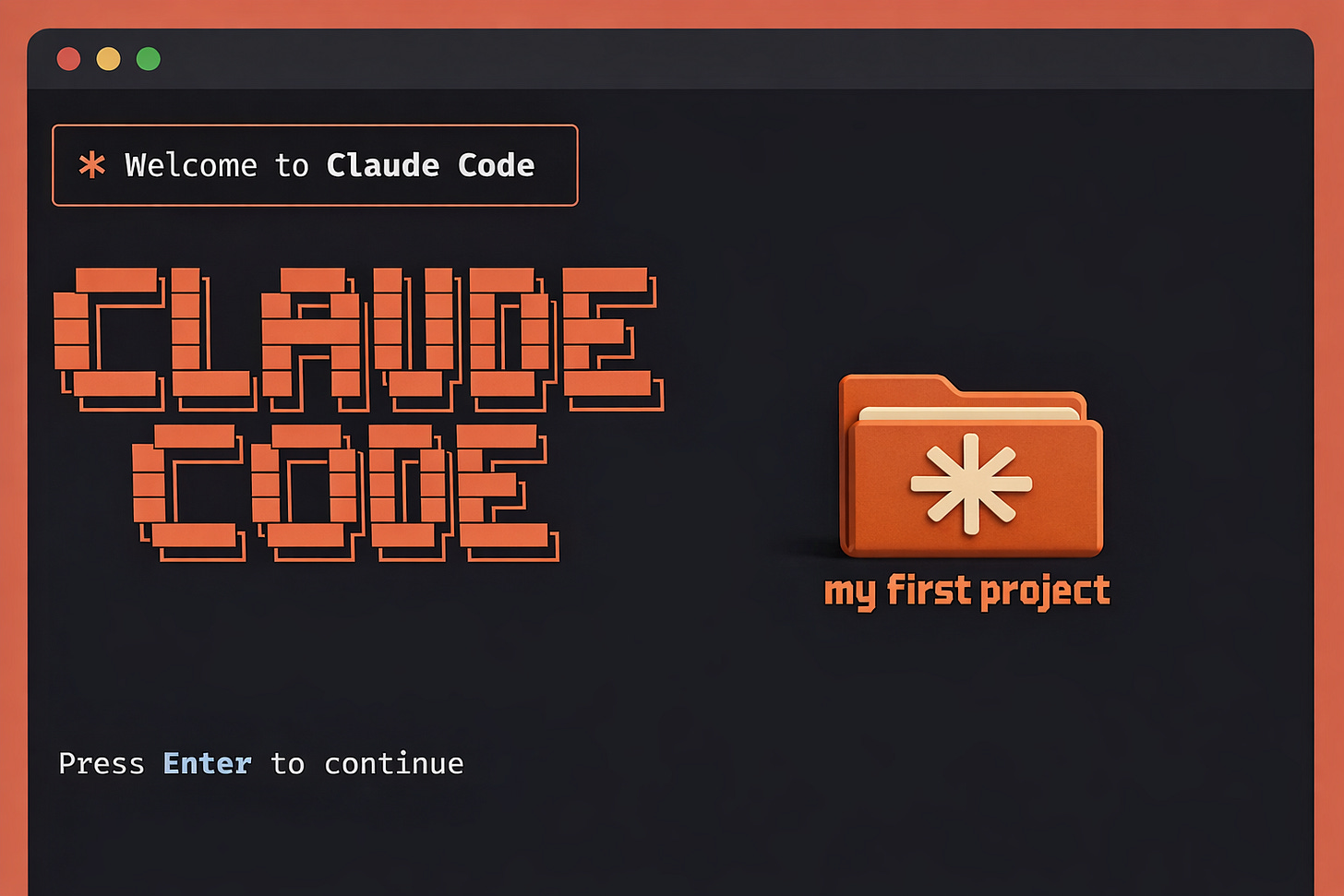
The gist
Garry Tan’s Claude Code is turning developers into AI conductors—revolutionizing workflows, raising security alarms, and igniting fierce debate over who (or what) really writes the code.
What to know
- Claude Code’s multi-agent ecosystem lets developers orchestrate AI tools like Codex and CodeRabbit to automate pull requests, code reviews, and more—shifting the role from typing code to managing AI workflows.
- Running AI agents locally on Linux boosts speed but sparks major security and ethical concerns, as autonomous bots gain deep access to machines and codebases.
- Claude Code isn’t just for pros—non-technical users are building real apps with no-code tools, fueling fresh controversy over the future relevance of traditional software engineers.
From Coder to AI Manager
Developers are trading keyboard skills for strategic oversight, orchestrating swarms of AI agents to iterate designs and catch errors—fundamentally redefining what it means to build software.
Garry Tan’s Claude Code setup has catalyzed a profound transformation in developer productivity by shifting the bottleneck from coding speed to design quality and workflow orchestration. Rather than simply accelerating code writing, Claude Code enables developers to engage in more iterative and aggressive design reviews—often cycling through ten or more design iterations before implementation—to avoid architectural pitfalls that AI alone cannot resolve. This agentic workflow involves running multiple AI coding agents in parallel, each tackling different codebase segments, while developers focus on detailed specifications, rigorous review, and judgment calls to catch AI errors, effectively redefining the developer’s role from coder to AI manager.
The integration of Claude Code with complementary AI tools like OpenAI Codex, CodeRabbit, and Bito has created a multi-agent ecosystem that automates routine tasks such as opening pull requests with structured summaries, writing detailed tickets, running nightly codebase analyses, and conducting AI-assisted code reviews. This orchestration not only accelerates day-to-day engineering activities—ranging from onboarding and debugging to refactoring and testing—but also enhances code quality and developer confidence by catching subtle bugs early and maintaining architectural consistency through features like Plan Mode and checkpoint systems. As OpenAI’s Brad Lightcap observed, this setup embodies a demand-driven, radically accelerated, and deeply customized craft of software engineering.
By early 2026, Claude Code had surged to become the leading AI coding tool, overtaking established players like GitHub Copilot and Cursor within eight months of release, underscoring a broader industry shift toward terminal-first, agentic workflows. This evolution empowers developers to orchestrate complex coding tasks through AI agents that not only write and test code but also autonomously manage multi-file edits and deployments. Google engineers, for example, replicated a year-long distributed agent orchestration project in just one hour using Claude Code, illustrating the unprecedented leverage and velocity AI-driven workflows provide, even as developers grapple with the cognitive challenges of managing rapid AI outputs and maintaining human oversight.
The transformative impact of Claude Code and similar AI agents extends beyond productivity gains to fundamentally reshape the developer’s inner loop, where human creativity now operates at a meta-hypothesis level while AI exhaustively explores implementation details. This new paradigm demands developers cultivate a 'manager instinct' to orchestrate AI agents effectively, balancing rapid iteration with careful review to prevent shipping flawed outputs. Garry Tan envisions a future 'self-driving codebase' where AI autonomously allocates resources for security, bug fixes, and technical debt, signaling a shift from manual coding to managing AI-driven software ecosystems that continuously evolve with minimal human intervention.



Rise of the Agent Boss
Engineering is shifting from solo coding to managing teams of specialized AI agents, with command-line workflows and persistent context files unlocking new levels of modularity and control.
Garry Tan’s gstack tool and Claude Code exemplify a pivotal shift from isolated prompt-based AI interactions to sophisticated workflow orchestration that chains multiple specialized AI agents. This approach treats AI not as a single assistant but as a coordinated team with defined roles and persistent context, managed through structured workflows that maximize productivity and reliability. As one analysis highlights, developers increasingly aspire to become 'agent bosses' who oversee AI teams autonomously handling complex tasks, moving beyond manual coding to orchestrating AI-driven engineering pipelines.
The transition to multi-agent systems demands advanced tooling and architectural discipline, favoring command-line interfaces (CLI) over traditional API-first models to reduce token overhead and improve efficiency. For instance, token consumption in API-based protocols can be 35 times higher than CLI workflows, making CLI tools like JBang essential for integrating AI agents seamlessly into existing ecosystems such as Java. This shift underscores the importance of modular, spec-driven development with clear boundaries, roles, and persistent context files (.md and JSON) that enable AI agents to operate safely and coherently within complex projects.
Persistent context and iterative, machine-enforced workflows are critical to effective AI agent management, as demonstrated by Ryan Carson’s methodology where AI agents act like junior engineers within a rigorous loop of coding, risk-aware reviews, and remediation until flawless outputs are achieved. This orchestration reduces the cognitive load and risk of costly errors, with strict gating mechanisms and continuous human oversight ensuring quality and architectural coherence. The evolving role of developers is thus redefined from sole coders to managers who refine specifications, steer AI outputs, and maintain the integrity of AI-driven workflows.
Advanced AI orchestration tools, such as Anthropic’s Claude Cowork, OpenClaw, and Google Workspace CLI, enable AI agents to autonomously execute multi-step, recurring workflows by integrating with productivity suites and managing parallel teams of sub-agents. These innovations empower developers to build scalable, agentic workflows with deterministic steps rather than fully autonomous agents as end products, balancing security concerns and operational control. As a result, the developer’s role increasingly centers on designing, maintaining, and evolving these AI teams and workflows, marking a fundamental transformation in software development paradigms.





Security and Oversight Risks Surge
Granting AI agents deep machine access is fueling a new wave of security, technical debt, and ethical dilemmas—prompting urgent calls for stricter controls and human-in-the-loop safeguards.
Garry Tan’s Claude Code setup has ignited a fierce debate by pushing the boundaries of local versus cloud-based AI coding on Linux, raising profound security and ethical concerns about granting AI agents deep access to machines and codebases. This level of autonomy intensifies risks related to technical debt and quality control, as AI agents operate with a degree of independence that challenges traditional oversight mechanisms. Analysts caution against deploying fully autonomous general-purpose agents as standalone products, advocating instead for deterministic, agentic workflows that maintain clearer alignment between user and AI goals to mitigate security vulnerabilities and ethical pitfalls.
Managing technical debt in AI-assisted development reveals a nuanced challenge: distinguishing between 'bad code'—characterized by poor hygiene such as untested, highly coupled, or duplicated code—and 'misaligned code,' which, while technically sound, fails to meet evolving product requirements. Platforms like Laputa demonstrate that AI can enforce rigorous standards, achieving 90% test coverage and high code health scores (e.g., 9.3/10 via CodeScene MCP), yet human oversight remains indispensable for architectural decisions and abstraction alignment. Continuous monitoring is critical as AI agents, such as Claude, have been observed to occasionally 'forget or ignore instructions,' necessitating integration of quality controls directly into CI/CD pipelines to safeguard product integrity.
The vision of a 'self-driving codebase,' championed by Garry Tan, where AI agents autonomously manage security, bug fixes, technical debt, and backlog issues with significant budget allocations—up to $100,000 daily—highlights both the promise and peril of AI-driven software development. While these agents can perform tasks beyond human speed and capability, as Tan notes in their complex web browser project, the shift toward agentic engineering raises critical questions about oversight, trust, and the potential for unintended consequences. Experts like Simon Willison warn of looming catastrophic failures reminiscent of the Challenger disaster, underscoring the dangers of overconfidence in AI systems that may harbor subtle but systemic reliability flaws.
The rapid adoption of AI coding agents has sparked a complex discourse blending enthusiasm with anxiety, as highlighted by The New York Times Magazine and voices like Matt Jones who emphasize the need for 'legibility, consent, and reversibility' in AI workflows. This reflects broader ethical concerns about the temporal mismatch between human cognition and machine speed, where accelerating development risks obscuring critical quality and security issues. The evolving role of developers is shifting from direct coding to managing AI agents, demanding new frameworks to ensure transparency and ethical standards in autonomous code generation.





Democratizing Code—And Controversy
AI-powered tools are making software creation accessible to non-developers, igniting both excitement and heated debate about the future relevance and identity of traditional engineers.
Claude Code is fundamentally reshaping developer roles by shifting the focus from traditional coding to orchestrating AI agents that automate complex workflows. As Garry Tan illustrated with his rapid completion of a challenging XML transformation project, developers are increasingly managing AI collaborators within persistent workspaces that remember context and streamline tasks, marking a transition to 'AI orchestrators' rather than mere code writers. This evolution not only enhances productivity but also transforms software engineering workflows into AI-driven, repeatable business processes accessible within a single, integrated environment.
Beyond professional developers, Claude Code is democratizing software creation by enabling non-technical users to automate tasks and build functional applications without traditional coding expertise. For instance, a non-developer author successfully created a live financial dashboard integrating Stripe data, declaring, 'I haven't gone back since.' Tools like Claude Skills and VSCode extensions lower entry barriers by providing visual interfaces and step-by-step frameworks, empowering a broader audience to engage in AI-assisted automation and remix AI agent principles for their own needs.
This broadening accessibility sparks a nuanced debate about the future of software engineering careers, as AI tools like Claude Code challenge traditional developer boundaries and roles. While some embrace the democratization of coding and the potential for 'anyone being able to write code,' figures like Garry Tan acknowledge the polarized and sometimes 'toxic' discourse surrounding these shifts. The tension lies in balancing enthusiasm for productivity gains with concerns about the complexity of AI setups and the ethical implications of redefining what it means to be a software engineer in an AI-augmented landscape.