Claude skills and MCP connectors supercharge enterprise automation
The gist
Claude’s new Skills and MCP Connectors are turning tedious enterprise automation into a click-and-go, AI-powered powerhouse.
What to know
- Claude Skills let you package expert workflows as reusable, customizable code—eliminating repetitive prompt-writing across all Claude platforms.
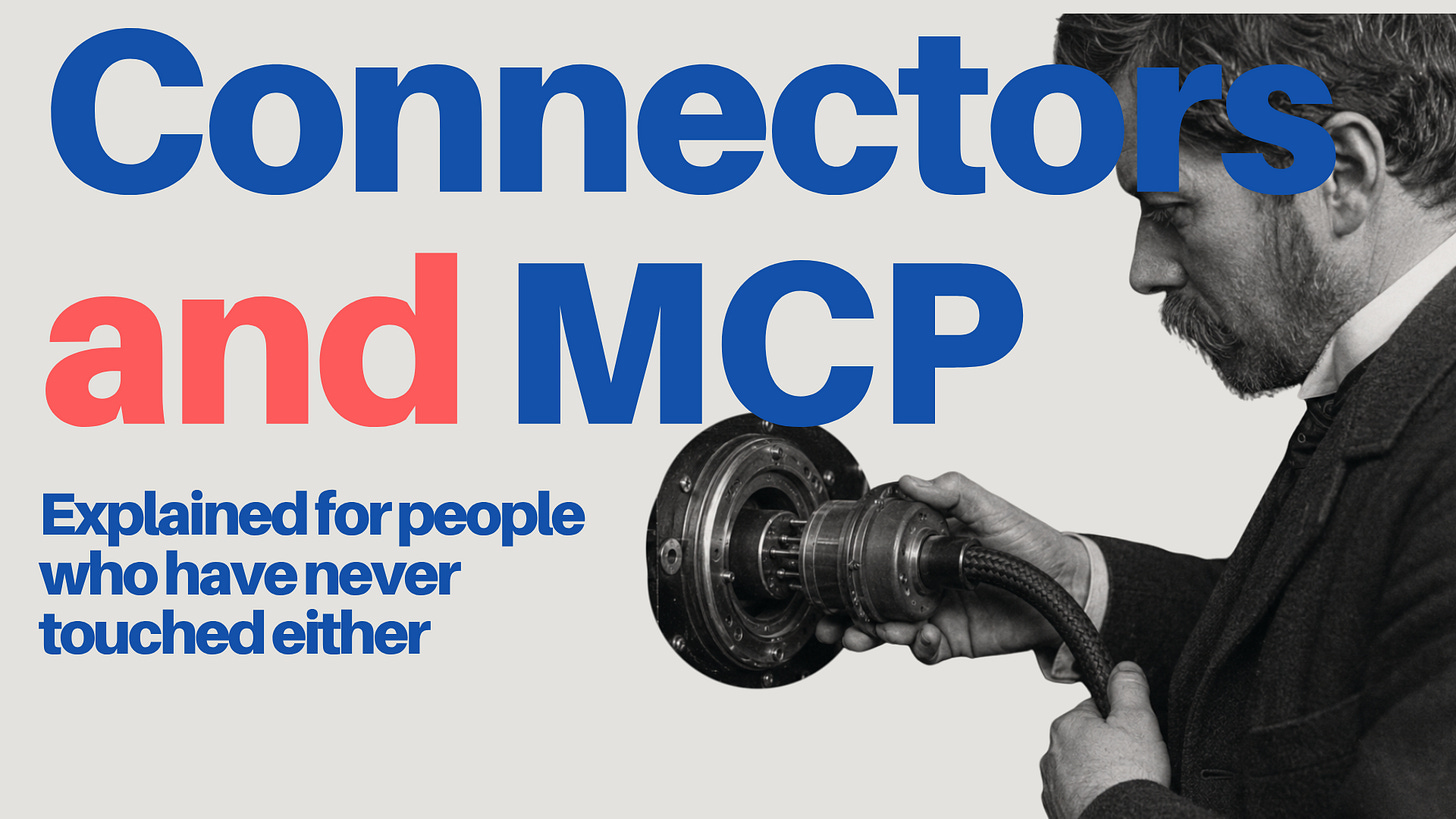
- MCP Connectors, built on a Linux Foundation standard, act as secure 'key cards' for Claude to access tools like Gmail and Slack with just a few clicks.
- Code Routines enable Claude to autonomously run cloud-based workflows—including email automation and Microsoft 365 integration—without relying on your local device.
AI Workflows, Redefined
Claude Agent Skills transform automation by embedding reusable, context-aware code and dynamic triggers that let AI act autonomously with precision and compliance.
Claude Agent Skills revolutionize AI workflows by allowing users to encapsulate their expertise and processes into reusable, customizable automation that the AI applies consistently without repeated prompting. This innovation shifts developers’ approach from repetitive prompt writing to embedding coding conventions and standards as executable code that Claude dynamically loads on demand, fundamentally transforming how AI coding tools—from autocomplete to agentic systems—are utilized.
Underpinning Claude Skills are critical technical components like MCP Servers and Hooks, which collectively enable flexible, scalable, and secure AI task execution. MCP Servers act as structured, guardrailed integrations that tightly control data exchange and process flows with external services, ensuring precision and compliance, while Hooks serve as contextual triggers—such as session start hooks—that inject relevant priorities and goals to maintain workflow continuity and prevent the AI from starting from scratch each time.
By early 2026, Claude Agent Skills had evolved beyond simple user-invoked slash commands into a more dynamic system where skills can be autonomously invoked by the AI based on contextual needs. This merging of slash commands and skills into a unified feature with explicit invocation parameters simplifies workflow automation and addresses challenges like context bloat through progressive disclosure, enabling more intelligent, context-aware, and efficient AI interactions.
Claude Skills are designed as plain English instruction files housed within structured folders containing SKILL.md files and supporting assets like templates and brand guidelines, making them both flexible and easy to create. Seamlessly integrated across all Claude interfaces—including Cowork, chat, Code Tab, and API—these skills activate automatically when relevant tasks arise, layering on top of existing workflow customization tools such as global instructions and context files to compound AI capabilities and maintain consistent, high-quality task execution.



Plug-and-Play Enterprise Access
MCP Connectors standardize secure AI integration across enterprise tools, but demand vigilant permission controls to guard against risks like prompt injection.
MCP Connectors function as secure, permissioned 'key cards' that enable AI systems like Claude to access and interact with specific enterprise tools such as Gmail, Slack, or Notion. This framework, standardized by the Model Context Protocol (MCP)—a universal 'USB-C for AI' developed by Anthropic and embraced by industry giants like OpenAI, Google, and Microsoft—has transformed AI integration from months-long custom projects into streamlined, click-based setups. Governed by the Linux Foundation, MCP ensures a stable, enduring infrastructure that facilitates seamless, secure AI connectivity across diverse enterprise applications.
While MCP Connectors empower Claude to automate workflows by securely reading and acting within external tools, experts like James McAulay caution against indiscriminate automation, especially with sensitive platforms like Gmail. Prompt injection attacks—where hidden instructions in emails could manipulate AI behavior—highlight the critical need for strict permission controls and cautious management of sensitive data. Best practices recommend limiting AI-driven automation on email and starting integration with a single, high-impact tool to avoid security risks and ensure meaningful productivity gains.
By enabling Claude to work with real context from connected enterprise applications, MCP Connectors enhance productivity through direct, permissioned access rather than guesswork. This allows Claude to perform tasks such as sending Slack messages or drafting email replies on behalf of users, effectively acting within the tools themselves without manual UI interaction. The straightforward setup process, adaptable across AI platforms, supports secure logins and configuration, making it accessible for enterprises to implement customized automations like keyword-triggered social media responses with options for staged engagement and team approvals to maintain oversight.
Importantly, simply connecting more tools does not guarantee better AI output; effective workflow design and clear use cases should guide which MCP Connectors to enable. Enterprises are advised to balance automation complexity with the value delivered, ensuring multi-step workflows justify user engagement and maintain security through draft approvals and controlled permissions. This measured approach maximizes the benefits of AI integration while mitigating risks, fostering sustainable productivity improvements across enterprise environments.




Skills: Modular, Shareable Power
Claude Skills function as customizable, portable blueprints that teams can chain, refine, and share—enabling consistent, collaborative automation across any workflow or platform.
By early 2026, Claude introduced a powerful concept called Skills—modular, reusable sets of instructions that automate specific tasks consistently across all Claude platforms without requiring repeated prompt input. These Skills function as persistent task blueprints, automatically activating whenever a relevant request is made, thus eliminating manual prompt management and ensuring uniform output whether accessed via Claude Cowork, chat, Code Tab, or API. This seamless integration across platforms underscores Claude’s commitment to workflow consistency and user convenience.
Skills in Claude are not just static instructions but comprehensive folders containing templates, brand guidelines, and example outputs, enabling deep customization and iterative refinement. Users can build complex, multi-layered workflows by layering Skills atop context files, global instructions, and projects, which collectively define identity, communication style, and task focus. This modular architecture allows for chaining Skills—such as combining brand and web artifact Skills—to produce sophisticated outputs like interactive apps or dashboards that adhere to multiple standards simultaneously.
The portability and shareability of Skills significantly enhance collaboration and cross-platform utility. Teams using Claude’s team edition can share Skills internally, while individual users can export and import Skill files to share externally or even use them across different AI platforms like ChatGPT or GitHub Copilot. This flexibility supports diverse collaboration models and ensures that custom workflows evolve through community and organizational input, fostering continuous improvement and adaptability.
Claude’s multi-version ecosystem—from the standard web app to agentic AI tools and browser extensions—offers users varying degrees of control and integration for deploying custom Skills. Interactive customization is further enhanced by built-in capabilities like the 'ask user questions' Skill, which guides users through iterative Q&A to tailor workflows precisely to their needs. Practical applications span personalized executive briefings, social event recommendations, and contextual data summarization, demonstrating how customizable AI Skills can enrich both professional productivity and personal decision-making.


Autonomous Cloud Routines
Claude Code Routines enable always-on, connector-driven workflows that automate complex business tasks in the cloud—integrating deeply with email, calendars, and enterprise apps without manual oversight.
Claude Code Routines revolutionize enterprise productivity by enabling autonomous, cloud-based AI workflows that operate continuously without relying on local devices. By leveraging existing project assets such as research methods, writing instructions, and connectors, these Routines seamlessly execute complex tasks in the cloud, allowing workflows to trigger automatically based on schedules or events. Anthropic’s design ensures that even when laptops are closed, critical processes like content research or inquiry processing proceed uninterrupted, eliminating the traditional bottleneck of manual initiation.
The integration of secure connectors within Claude Code Routines significantly enhances automation capabilities by enabling direct interaction with external applications, including email providers like Gmail, Outlook, and Hostinger Mail. This allows Claude to autonomously search, read, draft, and send emails from within conversations, streamlining communication workflows. For enterprise users, Microsoft 365 integration tied to a Microsoft Entra tenant further extends these capabilities, permitting Claude to manage emails, calendar events, and files securely under organizational controls, thereby embedding AI deeply into daily business operations.
To sustain continuous cloud automation for repetitive tasks such as form replies or customer engagement, Claude integrates smoothly with automation platforms like Zapier and n8n. These platforms complement Claude’s capabilities by handling high-volume, repetitive email sends autonomously, ensuring workflows remain uninterrupted even when connectors require active chat sessions. Additionally, Claude Connectors empower AI to perform complex actions across popular enterprise tools like HubSpot, Airtable, and Slack, enabling autonomous message sending, email drafting, and social media engagement triggered by keywords, which can be fine-tuned through A/B testing and approval workflows for enhanced control.