Congress supercharges AI research and education amid fierce national standards showdown
The gist
Congress is turbocharging U.S. AI research and education with record funding and sweeping new standards, igniting a fierce federal vs. state showdown over the future of American innovation.
What to know
- The CREATE AI Act and an $800 million NSF boost are fueling the rapid expansion of the National AI Research Resource, aiming to support over 100,000 students and projects by late 2026.
- A $299,990 NSF grant is powering a National Applied AI Consortium initiative to bring free, industry-linked AI education to high schools and teachers nationwide.
- The bipartisan Great American Artificial Intelligence Act proposes $300 million for unified federal AI standards—and a controversial three-year freeze on state-level AI laws.
NAIRR: Leveling the AI Field
The CREATE AI Act aims to permanently democratize U.S. AI research resources, breaking tech giant monopolies and securing America’s global edge amid legislative wrangling over federal versus state power.
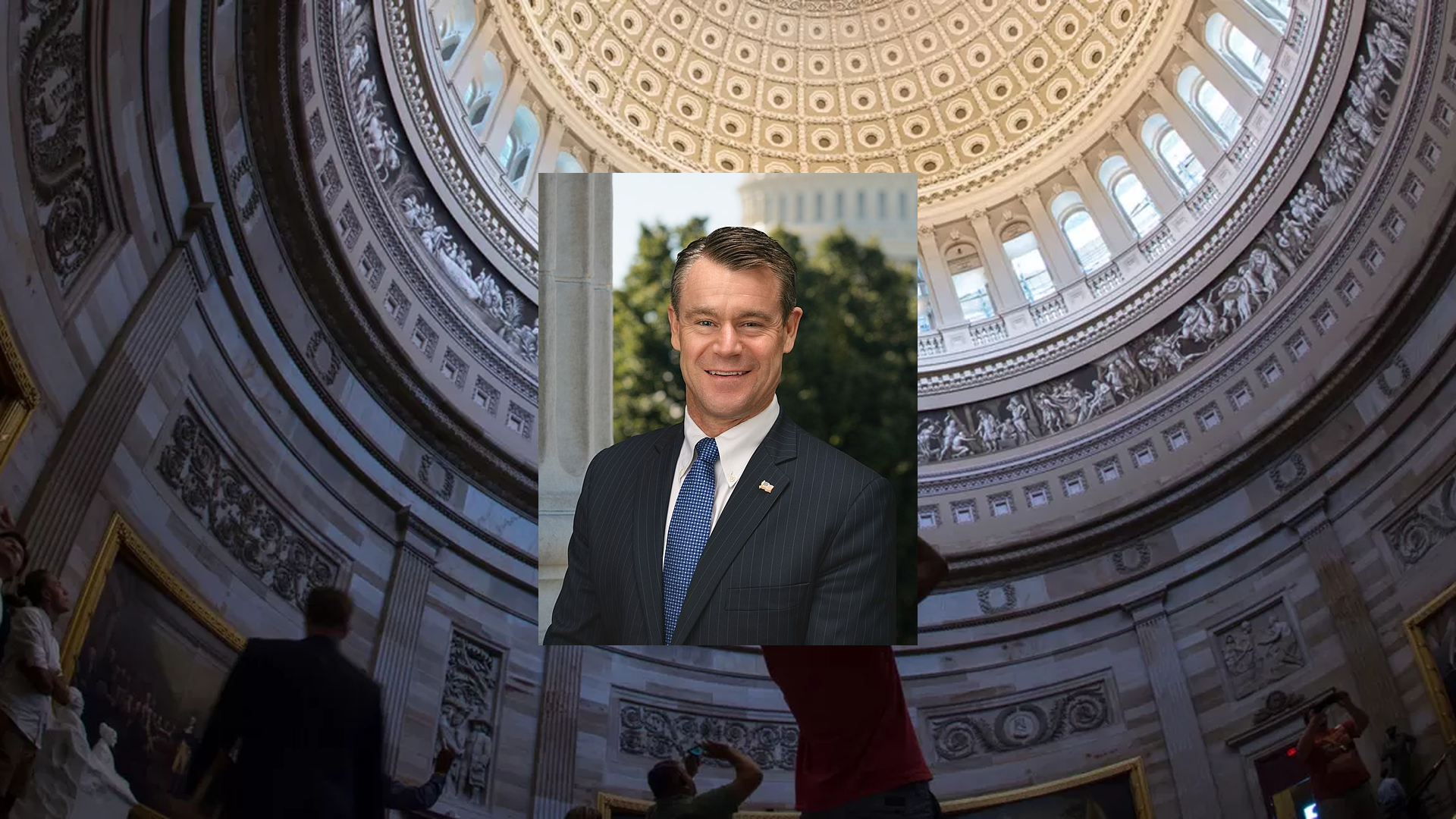
The CREATE AI Act, championed by Senator Todd Young and reintroduced in mid-2026 as a bipartisan effort, seeks to formally establish and fund the National Artificial Intelligence Research Resource (NAIRR) under the National Science Foundation. This legislation codifies NAIRR as a permanent, congressionally authorized infrastructure designed to democratize access to AI computational resources, datasets, and educational tools, thereby enhancing U.S. AI research capabilities beyond the dominant tech giants like Google, Microsoft, Amazon, and IBM. By institutionalizing NAIRR, the Act aims to sustain American leadership in AI amid global competition, particularly from China.
Operational since 2024 following a Biden executive order, NAIRR has provided broad access to AI research infrastructure in collaboration with NIST, but the CREATE AI Act and related legislative efforts seek to secure its long-term federal backing and expansion. The Senate bill has garnered broad bipartisan and industry support and is advancing through congressional committees, signaling strong momentum for formalizing national AI infrastructure. However, the legislative landscape remains complex, as evidenced by a concurrent House bill proposing $300 million over three years for a new Center for AI Standards and Innovation within NIST, which has sparked controversy over federal preemption of state AI safety laws and faces uncertain prospects ahead of the 2026 elections.



Supercomputing Fuels AI Growth
A dramatic NSF funding surge is scaling NAIRR’s infrastructure to support over 100,000 students and projects, with supercomputers like Anvil and KnotGym driving breakthroughs through instant access to massive, specialized datasets.
By mid-2026, the National AI Research Resource (NAIRR) is undergoing rapid operational expansion, fueled by a substantial $800 million funding boost from the NSF. This investment is enabling NAIRR to scale its AI research infrastructure dramatically, with plans to support over 100,000 students and projects nationwide, a significant leap from the 7,000 students and 700 projects supported just a month earlier. As NSF’s Katie Antypas emphasized, this growth reflects a strategic commitment to nurturing fundamental AI research that remains too early-stage or risky for private sector investment, leveraging academic supercomputing centers like SDSC and TACC to drive AI-powered scientific discovery.
Purdue University’s Anvil supercomputer exemplifies the infrastructural advancements underpinning NAIRR’s scaling efforts by providing researchers with immediate, high-performance access to extensive, domain-specific AI datasets. Hosting nine specialized AI datasets across fields such as computer vision, PhysicalAI, and robotics, alongside over 215TB of scientific data, Anvil reduces data management overhead and eliminates delays related to data transfer or storage constraints. This centralized repository, funded through NSF initiatives, facilitates seamless nationwide access and accelerates AI and machine learning workflows, showcasing how integrated data resources are critical to advancing AI research at scale.
The integration of AI datasets with powerful computational resources is accelerating cutting-edge research projects across the country, as demonstrated by Cornell’s KnotGym simulation. Utilizing NSF-funded supercomputers Frontera at UT Austin and Delta at the University of Illinois Urbana-Champaign, KnotGym advanced AI capabilities in spatial reasoning and was spotlighted at the NeurIPS conference. This synergy between data repositories and high-performance computing exemplifies NAIRR’s mission to provide a cohesive ecosystem that propels AI research beyond traditional boundaries, enabling breakthroughs that require both massive datasets and computational muscle.

AI Education Hits High Schools
A new NSF-backed consortium is embedding hands-on, industry-linked AI learning in high schools nationwide, arming teachers and students with real-world skills and credentials to meet surging workforce demand.
By mid-2026, the National Applied AI Consortium (NAAIC) significantly broadened its educational reach by launching an ambitious initiative to integrate AI education into high schools, backed by a $299,990 National Science Foundation grant. This strategic expansion aims to cultivate an early talent pipeline that aligns closely with evolving industry demands, ensuring students are better prepared for the AI-driven economy ahead.
Central to NAAIC’s high school initiative is a comprehensive support system for educators, offering free professional development and access to AI education resources that have already engaged over 600 teachers nationwide. By fostering a robust national AI education network, NAAIC not only equips educators with cutting-edge curriculum tools but also creates career-connected learning opportunities that directly link classroom experiences to real-world AI applications.
To further motivate students toward AI careers that meet workforce needs, NAAIC’s program incorporates hands-on training with industry partners, self-guided certification pathways, and a centralized resource hub. This multifaceted approach ensures that learners gain practical skills and credentials valued by employers, effectively bridging the gap between education and industry demand in the rapidly evolving AI landscape.

AI Forge Tackles Security Gaps
DARPA and NSF’s AI Forge unites academia, industry, and government to address national security AI challenges that commercial players avoid, accelerating university-led R&D for defense-critical solutions.
In June 2026, DARPA and the NSF jointly launched AI Forge, a pioneering pre-competitive R&D program designed to tackle national security AI challenges that lack immediate commercial incentives. By focusing on critical issues such as AI interpretability, control, and adversarial robustness, AI Forge aims to ensure the safe and reliable deployment of AI technologies vital to national defense and intelligence operations.
AI Forge is deeply integrated with America’s AI Action Plan and was developed in collaboration with the Center for AI Standards and Innovation (CAISI) at NIST, reflecting a coordinated federal effort. The program convened representatives from leading AI companies alongside over 15 Department of War and Intelligence Community agencies to identify and prioritize 15 university research challenges, underscoring a strategic alignment between academia, industry, and government in advancing national security AI.
Demonstrating a strong commitment to academic partnership, AI Forge invites universities to submit their capabilities by June 22, 2026, to participate in fast-paced, university-led projects. This approach not only accelerates innovation but also fosters a collaborative ecosystem where cutting-edge research is directly channeled into addressing pressing national security AI needs.
Federal Push for Unified AI Rules
Congress and NIST are driving a centralized, multi-stakeholder AI standards regime—with a controversial freeze on state laws—by expanding CAISI and mandating strict risk management, whistleblower protections, and penalties for AI misuse.
By mid-2026, the federal government significantly advanced efforts to unify AI governance and standards through both legislative and collaborative initiatives. The National Institute of Standards and Technology (NIST) expanded the AI Safety Institute Consortium (CAISI) to encompass AI measurement, innovation, and adoption, establishing six specialized task groups focused on testing, risk annotation, bias, and documentation to foster interoperable AI standards. Concurrently, the House introduced the Great American Artificial Intelligence Act, a bipartisan $300 million bill that not only mandates catastrophic risk management and reporting for leading AI developers but also proposes a three-year federal preemption of state AI laws to replace the current regulatory patchwork with a unified national framework. This legislation earmarks $100 million annually from 2027 to 2029 to fund CAISI as a centralized hub for AI standards and innovation, underscoring a comprehensive approach that integrates content moderation, cybersecurity, research security, and international standards to safeguard national security and economic interests.
The federal approach to AI governance emphasizes collaboration and accountability, as evidenced by NIST’s open call for new technically capable members to join CAISI under Cooperative Research and Development Agreements, fostering a multi-stakeholder ecosystem for AI standards development. The Great American Artificial Intelligence Act complements this by instituting whistleblower protections and heightened penalties for AI-enabled fraud, signaling a robust regulatory framework aimed at ensuring AI safety and ethical deployment. However, the bill’s three-year preemption of state AI laws has sparked backlash from state lawmakers and House Democrats, highlighting ongoing tensions between centralized federal oversight and state regulatory autonomy.

Balancing AI Innovation and Security
Massive federal investments and new regulatory bodies are fortifying AI infrastructure and cybersecurity, while the White House insists on avoiding stifling regulations to keep U.S. innovation at the forefront.
By mid-2026, the federal government significantly ramped up its commitment to AI innovation and cybersecurity through a $70 million AI Accelerator program designed to enhance research and deployment across agencies like Veterans’ Affairs and the National Library. This initiative exemplifies a broader strategy to foster interagency collaboration while simultaneously safeguarding AI infrastructure. Complementing this, a White House executive order mandated the rapid establishment of a centralized AI cybersecurity clearinghouse within 30 days, tasked with coordinating vulnerability scanning and remediation efforts between government entities and critical industry operators, thereby streamlining federal-industry cooperation in AI security.
In tandem with innovation efforts, the federal government created new regulatory bodies such as the AI Safety Institute and the AI Employment and Workplaces Forum to oversee AI technology governance, reflecting a strategic emphasis on protecting intellectual property and ensuring safe AI deployment. The White House further expanded cybersecurity defenses by directing the Committee on National Security Systems and the Secretary of War to prioritize cyber defense, mandating the Secretary of Homeland Security to issue Binding Operational Directives, and broadening hiring pathways for cybersecurity specialists. These measures collectively underscore a robust, coordinated federal approach to fortifying AI infrastructure against emerging threats.
Despite the heightened focus on cybersecurity, the administration maintained a clear stance against overly restrictive regulations that could stifle innovation. President Biden emphasized that the United States’ leadership in AI stems from its immense talent and innovation capacity, asserting, 'we refuse to stifle this innovation with overly burdensome regulation.' This balance between fostering cutting-edge AI development and ensuring national security highlights a nuanced federal strategy that promotes technological advancement while proactively managing associated risks.