Crypto crime crackdown: high-profile scams, lavish lifestyles, and law enforcement’s mid-2026 wake-up call
The gist
Crypto’s wild west era hit a wall in 2026 as law enforcement cracked down on high-rolling fraudsters, from teen masterminds to politically connected moguls.
What to know
- Geoffrey Auyeung laundered $97.1 million through Binance and Coinbase, landing five years in prison and $9 million in asset seizures.
- Canadian teen Trenton Johnston pleaded guilty after stealing $13 million by impersonating Google, Coinbase, and Trezor reps in a slick social engineering scam.
- Goliath Ventures CEO Christopher Alexander Delgado and exiled tycoon Guo Wengui both ran nine-figure Ponzi schemes, exploiting celebrity endorsements and political narratives before facing hefty federal sentences.
Crypto Laundering Tactics Exposed
Criminals now exploit mainstream exchanges like Binance and Coinbase with rapid, multi-asset transfers to mask illicit funds, forcing law enforcement to rethink their approach to digital money trails.
By mid-2026, the case of Seattle’s Geoffrey Auyeung starkly illustrates how mainstream cryptocurrency exchanges like Binance and Coinbase have become conduits for laundering vast sums of illicit funds. Auyeung exploited these platforms, along with traditional bank accounts, to funnel $97.1 million derived from a fraudulent oil-and-gas investment scheme, employing rapid transfers across multiple crypto assets such as Bitcoin, Ethereum, USDT, and USDC to obscure the money’s origins. This case underscores the sophisticated layering techniques criminals use to evade detection while leveraging the liquidity and anonymity features of major exchanges.
The successful prosecution of Geoffrey K. Auyeung, culminating in a five-year prison sentence and the seizure of over $9 million in assets, signals a growing resolve among law enforcement agencies to dismantle large-scale crypto money laundering operations. This enforcement milestone not only disrupts a significant criminal network but also sends a clear message that authorities are intensifying their scrutiny of illicit flows through high-profile exchanges, challenging the perception that crypto platforms offer safe havens for laundering proceeds from fraud.

Social Engineering’s Price Tag
Lavish lifestyles funded by impersonation scams reveal how trust in major brands is weaponized for multi-million dollar crypto thefts, prompting tougher sentencing and swifter crackdowns.
By mid-2026, social engineering and impersonation scams had emerged as a dominant vector for crypto theft, with perpetrators like Canadian teen Trenton Johnston exploiting the trust victims placed in reputable companies such as Google, Coinbase, and Trezor. Johnston and his co-conspirators orchestrated a $13 million heist by masquerading as company representatives to gain access to victims’ cryptocurrency accounts, underscoring how identity manipulation remains central to facilitating large-scale crypto fraud. This case also highlighted the tangible consequences of such scams, as Johnston lavished his ill-gotten gains on luxury cars, private jets, and high-end rentals, illustrating the lifestyle transformations enabled by these crimes. Meanwhile, law enforcement’s response intensified, with Johnston pleading guilty to conspiracy to commit money laundering and facing a substantial prison sentence, signaling a growing crackdown on crypto-related social engineering offenses.
Shortly after Johnston’s case, another facet of impersonation scams surfaced with Noman Saleem’s fraudulent Telegram scheme, where he impersonated well-known crypto influencers to lure victims into fake staking programs promising guaranteed returns. By exploiting the trust inherent in influencer followings, Saleem collected at least $1.4 million from unsuspecting investors without ever actually staking the funds, demonstrating how social engineering scams often prey on the allure of passive income in the crypto space. The swift legal repercussions, including Saleem’s 15-month prison sentence and recovery of much of the stolen money, reflect ongoing efforts by prosecutors to dismantle these deceptive networks and restore victim funds.

Ponzi Schemes’ Celebrity Facade
Fraudsters leverage false endorsements and political ties to lure investors, with even institutional partners missing red flags as luxury and legitimacy mask massive crypto cons.
Ponzi and investment fraud schemes in the crypto space often hinge on the allure of guaranteed, no-risk returns, as exemplified by Daniel Chartraw’s conviction for a scheme that defrauded investors of nearly $1 million. These fraudulent operations exploit social proof and false credibility to ensnare victims, a tactic vividly illustrated by Christopher Alexander Delgado’s $400 million Ponzi scheme through Goliath Ventures, which attracted over 1,600 investors by associating with high-profile entities and political figures such as President Donald Trump and Governor Ron DeSantis.
Delgado’s scheme, running from January 2023 to January 2026, was bolstered by lavish displays of wealth—including eight Orlando-area properties and luxury vehicles like a Lamborghini and Rolls Royce—and endorsements that falsely positioned Goliath Ventures alongside reputable organizations like Disney and the Orlando Magic. This veneer of legitimacy was so convincing that the Orlando Economic Partnership continued to promote Goliath as a top investor even after receiving detailed warnings about the scheme in September 2025, underscoring systemic failures in institutional vigilance against crypto fraud.
Political Narratives Fuel Fraud
Guo Wengui’s billion-dollar scam shows how political activism can be a smokescreen for personal enrichment, leading to unprecedented penalties for weaponizing ideology in crypto crime.
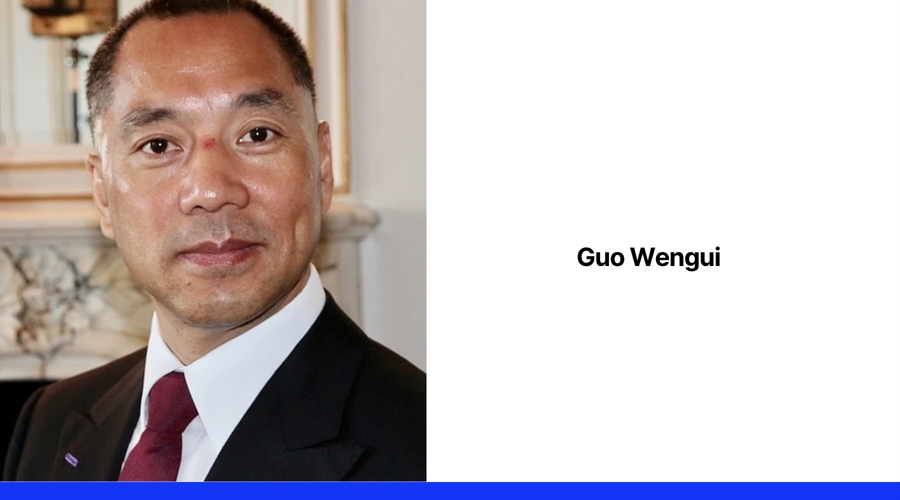
Guo Wengui, a self-exiled Chinese tycoon and vocal critic of Beijing, orchestrated a sprawling $1 billion crypto fraud between 2018 and 2023 by leveraging politically charged narratives to attract investment from his online followers. While he claimed these funds supported political activities opposing the Chinese government, court findings revealed that Guo diverted the money to finance lavish personal assets, exposing how political messaging can serve as a deceptive facade in illicit crypto fundraising schemes.
The legal repercussions of Guo’s scheme underscore a growing willingness among judicial systems to impose severe penalties on high-profile individuals who weaponize political narratives for financial gain. By early 2026, Guo was sentenced to 30 years in a US federal prison on charges including racketeering, fraud, and money laundering, signaling a robust crackdown on politically motivated international crypto fraud and a clear message that such abuses will face stringent consequences.
Institutional Blind Spots Revealed
Delayed responses and ignored warnings from major organizations highlight systemic failures in detecting crypto fraud, even as prosecutors close in on high-profile ringleaders and their enablers.
By mid-2026, law enforcement achieved a significant victory with Christopher Alexander Delgado, CEO of Goliath Ventures, pleading guilty to conspiracy, wire fraud, and money laundering tied to a sprawling $400 million crypto Ponzi scheme that spanned from 2023 to 2026. This case underscores the complexity of prosecuting crypto crimes, as authorities continue to identify uncharged co-conspirators while investors aggressively pursue legal action against major institutions like JPMorgan Chase, Alston & Bird, and Coinbase for their entanglements with the fraudulent enterprise.
Despite the eventual prosecution, the Goliath Ventures saga highlights critical challenges in timely detection and intervention within the crypto space. Notably, a September 2025 warning to the Orlando Economic Partnership about the Ponzi scheme went unheeded by all 38 recipients, illustrating institutional inertia and the difficulties regulators and law enforcement face in responding swiftly to sophisticated crypto frauds before they escalate.